



George IV Dining Table
When you search for a george iv dining table, you find sturdy timber, clever extension mechanisms and substantial forms built for formal dining.
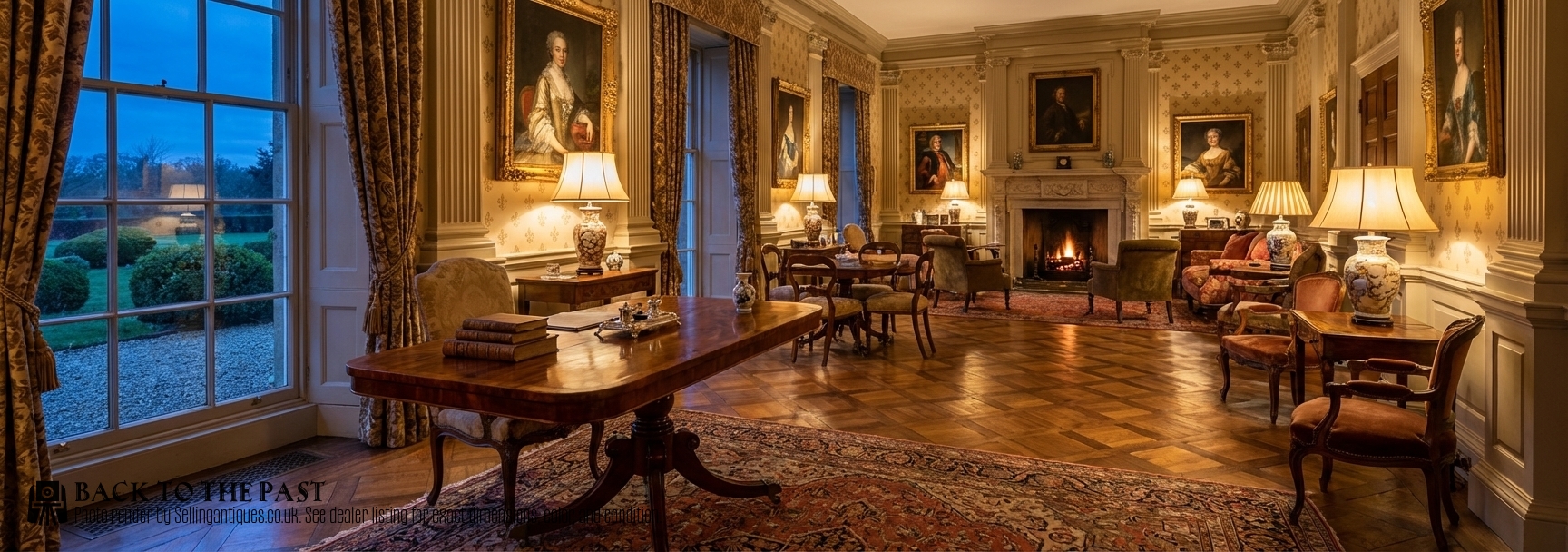
George IV Dining Table
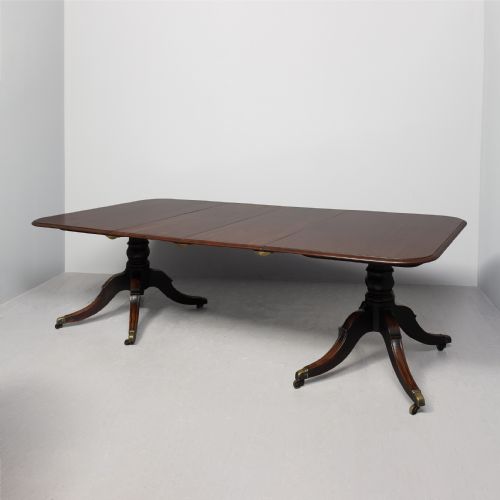
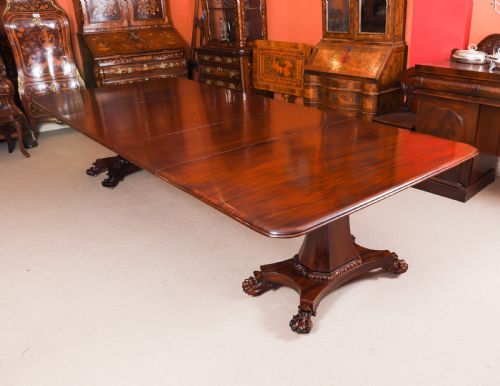
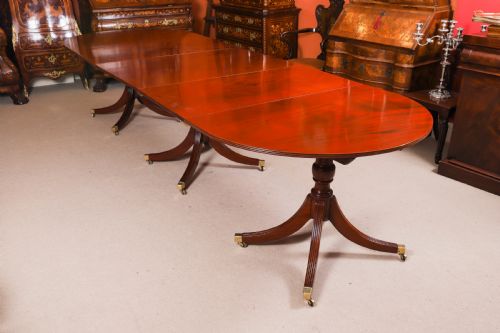
A george iv dining table brings together the substantial dining furniture produced during the early nineteenth century under Georgian, Regency and George IV styles. The pieces on this page appear most frequently as twin or triple pillar dining tables in mahogany, often fitted with extra leaves to alter the length.
Beyond the standard pillar designs, the selection includes extending dining tables with patent actions, drop-leaf variants, and circular breakfast or centre tables in rosewood and pollard oak. Makers and cabinet-makers working in London, Dublin and regional workshops produced these adaptable forms for large households.
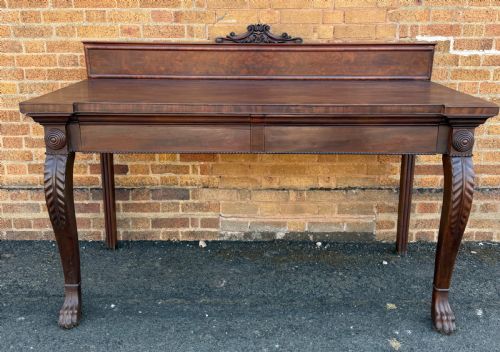
The periods recorded span the early nineteenth century, predominantly covering the 1800s up to around 1830. These dining tables sit alongside related serving pieces such as buffets, console tables and wine coasters designed in matching timber.
Materials and Construction
Makers relied heavily on solid mahogany for its durability and rich grain, occasionally employing rosewood, pollard oak, goncalo Alves and marquetry inlay for grander centre and breakfast tables. Brass featured prominently in castors, fittings and mechanical components.
Extension systems defined the construction of dining tables from this period, utilising pull-out actions, imperial actions, patent mechanisms and drop leaves to support heavy timber tops. Joinery methods included sturdy pedestals, D-end configurations and pillar supports secured to heavy plinths.
George IV Dining Table Retail Price Guide 2026
Typical asking prices for george iv dining table among the pieces listed under this phrase on Sellingantiques today, from the lower quarter to the upper quarter. They describe what is for sale here now, not the wider market.
Some wine coasters are large enough to roll down mahogany dining tracks like miniature ships.
Craftsmanship and Selection
Quality rests in the choice of timber and the precision of the extension mechanism, where superior pieces use dense, well-figured mahogany or exotic veneers like rosewood alongside smooth-operating patent actions. Heavy pillars and substantial brass castors indicate a higher standard of construction.
Proportion and scale separate standard regional pieces from important workshop output, with ambitious examples featuring bold design, marquetry inlay or attribution to notable makers. The integration of original leaves and balanced structural proportions dictate the standing of each dining table.
Cope & Collinson·James Mein of Kelso·Gillows·Mack, Williams and Gibton·M. Willson
The George IV Dining Table Glossary
- Twin Pillar
- A dining table supported by two central pedestals resting on branched legs with castors. This construction allows greater legroom than traditional four-leg tables.
- Imperial Action
- A mechanical extension system used in nineteenth-century dining tables to facilitate the smooth insertion of multiple leaves. It allowed domestic staff to lengthen heavy mahogany surfaces with minimal effort.
- Goncalo Alves
- A dense exotic hardwood with striking dark brown and golden figuring utilised for decorative tabletops and crossbanding. Cabinet-makers favoured it for pieces intended to display wealth.
- Pollard Oak
- Timber taken from pollarded oak trees, noted for its clustered knot formation and rich, mottled grain patterns. It provided a dramatic surface for centre tables.
- D-End
- A table end shaped in a semi-circular outline resembling the letter D, often used in modular dining furniture. These sections could stand alone as console tables or join together to form a long oval.
George IV Dining Table: Frequently Asked Questions
How do I extend the table?
Many tables utilise a pull-out or patent action where winding handles or sliding frames separate the pedestals to accept extra leaves.
Once the gap is wide enough, drop-in leaves lock securely into place using brass pins and alignment grooves.
How were these tables used daily?
These pieces served as the centrepiece for formal household dining, hosting large dinner parties before being cleared or reduced in size between meals.
Smaller variants functioned as breakfast or centre tables positioned in hallways or drawing rooms for daily convenience.
How do I care for the wood?
Maintain timber surfaces by dusting with a soft dry cloth and applying traditional beeswax periodically to nourish the grain.
Keep tables away from direct heat sources and strong sunlight to prevent the mahogany or rosewood from drying and splitting.
Are the extra leaves original?
Extension leaves sometimes match the main timber closely while occasionally showing slight variations in colour due to different exposure to light over time.
Examine the grain continuity and edge matching to determine whether leaves were made alongside the original top.