
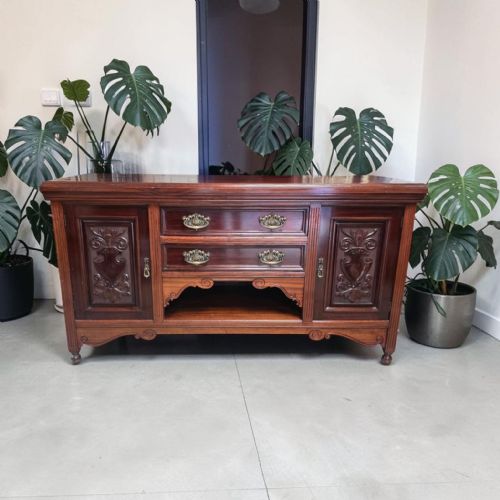
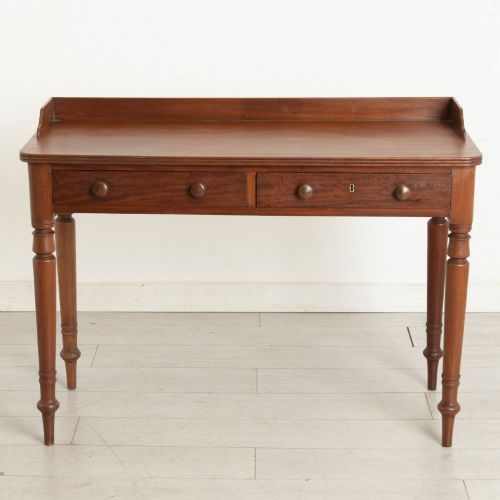
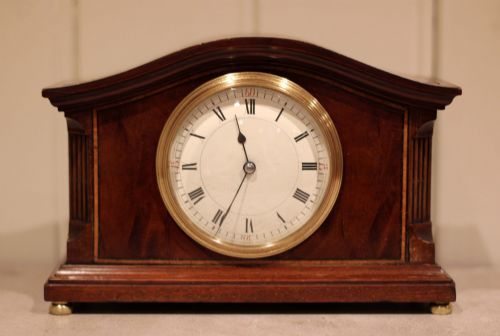


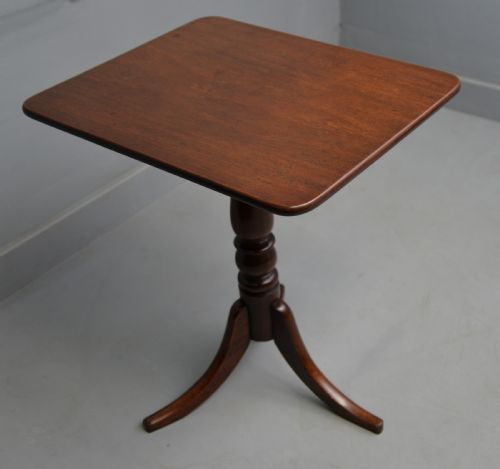

Solid Mahogany Table
When you search for a solid mahogany table, you enter a lineage of domestic timber framing that stretches from the Georgian period through to the Edwardian era.
Solid Mahogany Table
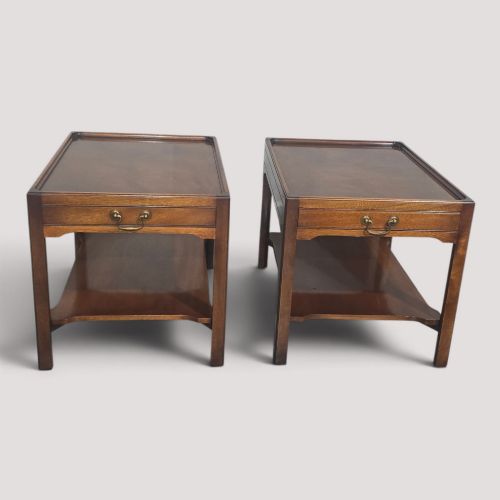
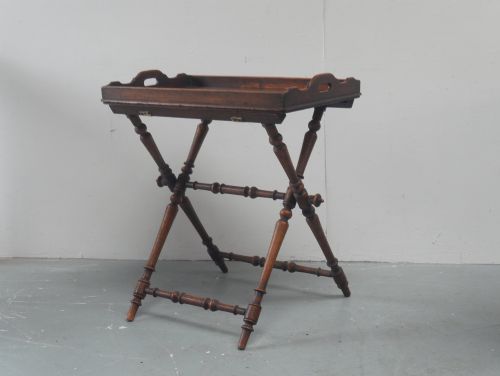
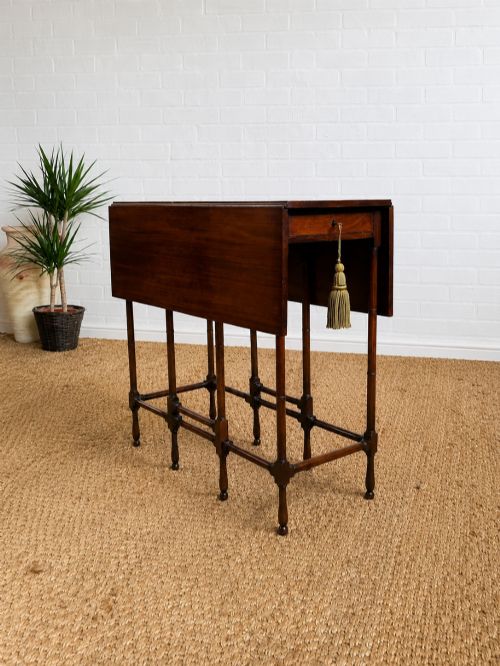
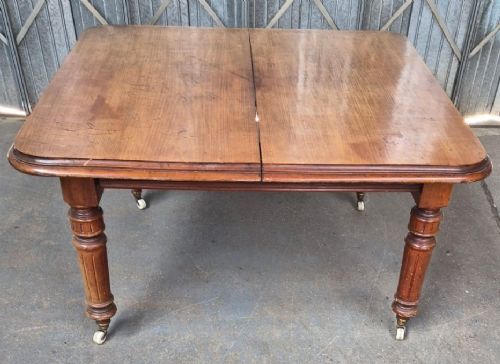
A solid mahogany table encompasses a range of domestic timber furniture designed for dining, writing, and occasional use across several centuries. The selections span from large extending dining tables and partners desks to compact tripod tables, Pembroke tables, and drop-leaf forms.
Victorian and Edwardian iterations appear frequently alongside Georgian and Regency examples, demonstrating how cabinet makers continually adapted this dense hardwood to meet changing household requirements. Dining tables and smaller side or lamp tables dominate the forms available.
The material's natural durability meant these pieces were built for daily utility, resulting in surviving examples that retain their structural integrity while displaying the rich grain patterns characteristic of the timber.
How they were made
Makers utilised solid mahogany timber, often chosen for its deep grain and resistance to warping, combined with secondary woods for internal framing. Brass castors, handles, and swing brackets frequently accompanied the timber construction, particularly on extending dining tables and campaign desks.
Joinery methods relied on traditional techniques such as mortise and tenon joints, dovetailing for drawer construction, and intricate turning for legs and pedestals. Tilt-top mechanisms incorporated clever birdcage hinges and pivot blocks to allow circular table tops to stow vertically when not in use.
Solid Mahogany Table Retail Price Guide 2026
Typical asking prices for solid mahogany table among the pieces listed under this phrase on Sellingantiques today, from the lower quarter to the upper quarter. They describe what is for sale here now, not the wider market.
Several tables include clever reading desks and birdcage tilts, proving our ancestors took afternoon reading and table storage remarkably seriously.
What varies in quality
The grade of the timber itself dictates much of the visual appeal, with heavily figured grain patterns commanding greater visual depth than plain cuts of wood. Fine figuration is distributed evenly across the surface without relying on heavy stain to mask irregularities.
Proportion and execution of detail separate utilitarian workshop output from master cabinet work. Clean lines in turned legs, crisp edge moulding, and smooth operation in wind-out dining mechanisms or drop-leaf hinges reflect the skill invested in the construction.
M. D. Miller & Sons·John Carter
The Solid Mahogany Table Glossary
- Pembroke table
- A small occasional table with hinged drop leaves on two opposing sides, frequently fitted with a single drawer. This form emerged in the 18th century and remained popular through the Victorian period.
- Wind out table
- A dining table utilising a mechanical screw mechanism operated by a removable crank handle to separate sections and accommodate extension leaves. This system allowed households to alter table length easily.
- Tilt top table
- A round or oval table featuring a mechanism that allows the top to pivot upright against the pedestal base for compact storage. These were often utilised in smaller rooms or pulled aside when not in active service.
- Pedestal desk
- A flat-topped writing desk supported by two banks of drawers or pedestals resting on the floor. Variations include kneehole desks and campaign styles equipped with brass mounts.
- Solid mahogany
- Timber derived from tropical hardwood trees, utilised in mass without veneer coverings to provide structural strength and deep natural colour. It accepts polishing well and develops a rich patina over time.
Solid Mahogany Table: Frequently Asked Questions
How do I care for a solid mahogany table?
Maintain the timber by dusting regularly with a dry cloth and avoiding placement near direct heat sources or strong sunlight, which can dry out the wood. Occasional application of suitable wax polish helps nourish the surface and preserve the natural sheen.
Keep liquids away from the untreated underside and use protective mats beneath hot dishes or damp glassware to prevent marking the polished finish.
How can I tell a Georgian table from a Victorian one?
Examine the timber finish, leg style, and construction methods to help establish the period of manufacture. Georgian pieces often display lighter proportions and simpler tripod or tapered leg designs, while Victorian examples frequently feature heavier pedestals, bolder carved decoration, and mechanical winding systems.
Secondary woods used in drawer linings and the type of fixings also offer clues, as screw types and saw marks changed between the 18th and late 19th centuries.
How were drop leaf tables used historically?
Drop leaf tables served as flexible items of furniture that could expand for dining or tea and fold down compactly against a wall when floor space was required. Their ability to alter footprint made them practical for smaller parlours and dining rooms.
In many households, these tables were moved around easily to accommodate shifting daily activities before being tucked away after use.
What is a wind out dining mechanism?
A wind out mechanism is an internal wooden and brass screw system built into extending dining tables. Turning a removable handle parts the table halves smoothly to create a gap for insertion leaves.
This innovation allowed Victorian and Edwardian hosts to lengthen large dining surfaces safely without damaging the outer frame or pedestal mounts.