
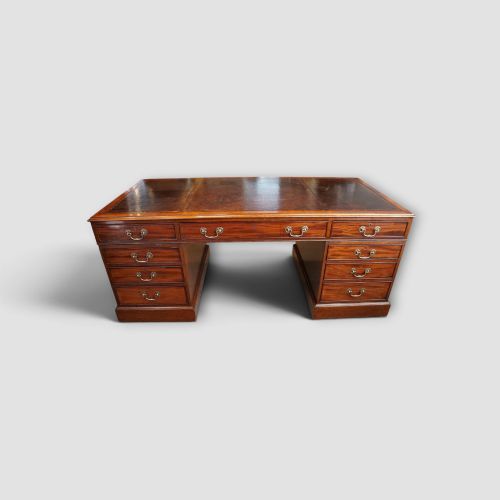
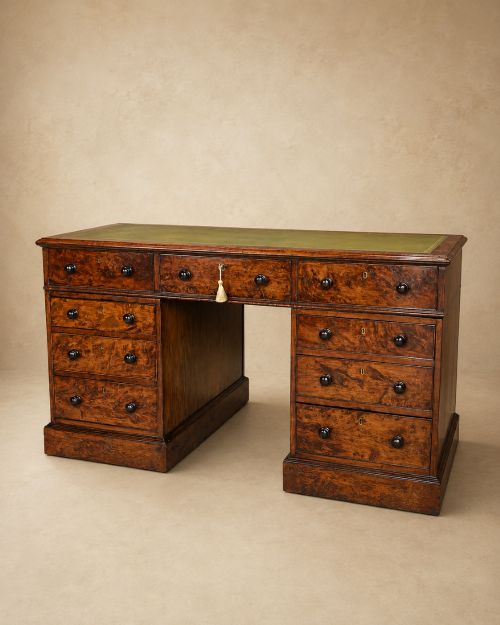
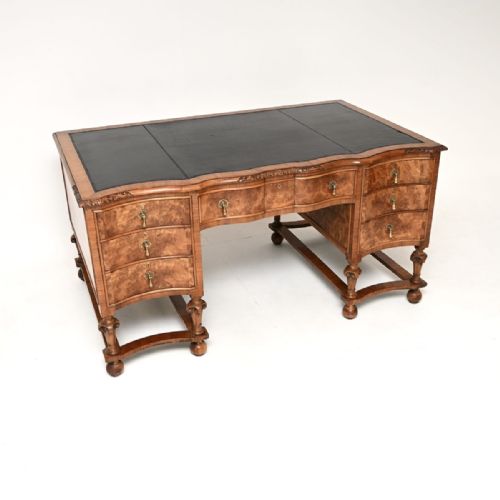
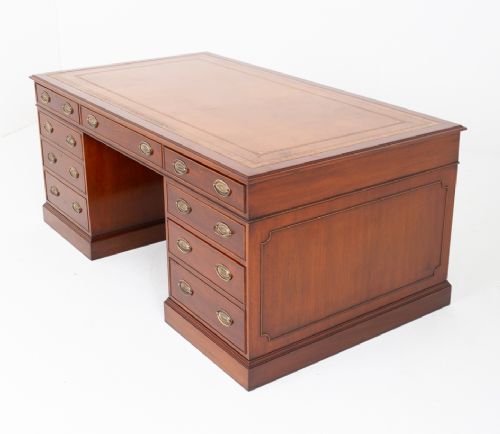


Double Pedestal Table
A double pedestal table provides the grandeur of formal dining with the practical agility of twin central supports.
Identifying a double pedestal table
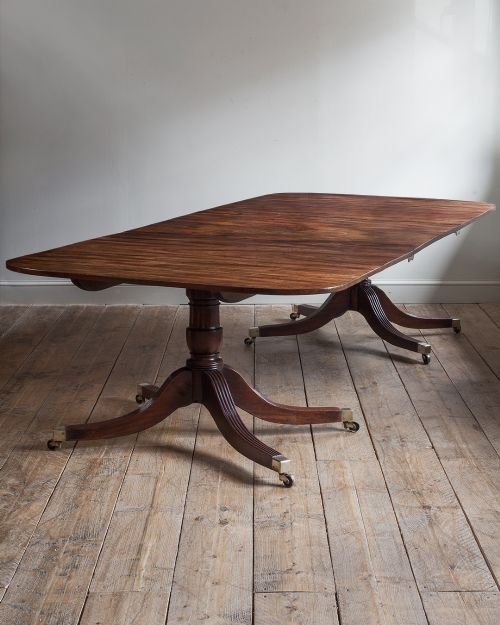
A double pedestal table brings together two distinct pillar supports beneath a shared timber top, designed specifically for dining rooms. When searching for a double pedestal table, buyers encounter forms spanning the Regency period, the early nineteenth century, and later twentieth-century revivals in the Georgian and Regency styles.
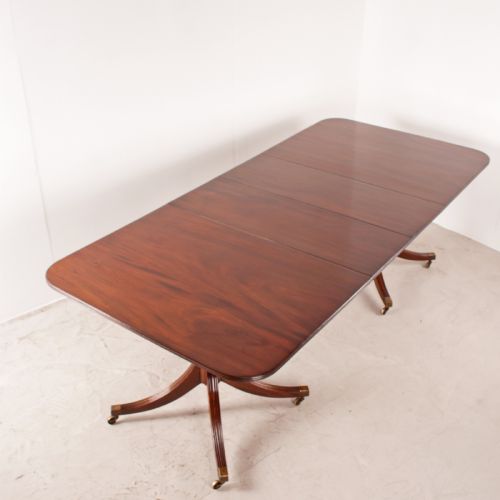
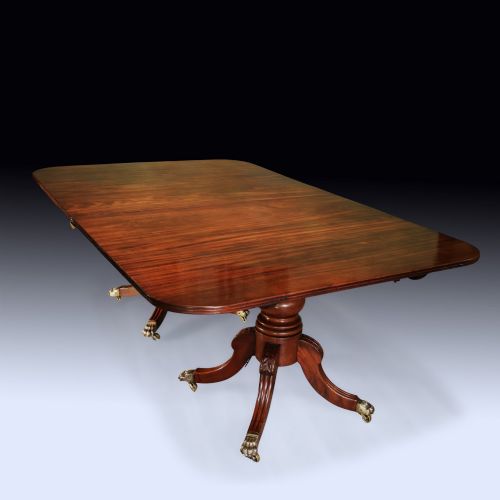
The format typically manifests as a twin pillar or twin pedestal dining table, often incorporating removable leaves to extend the surface area. Mahogany dominates the examples recorded on this page, occasionally complemented by brass fittings such as castors.
Originating predominantly in the Regency era, these dining tables frequently feature D-end sections that separate to form console tables or smaller independent units. The configuration allows substantial seating capacity without the heavy corner legs characteristic of traditional refectory designs.
Materials and construction
Makers constructed these dining tables primarily using solid and figured mahogany, selected for rich grain patterns and deep natural tones. Spanish mahogany appears in specific revival pieces, prized for distinct figure and dense weight.
The foundational architecture relies on twin wooden pedestals supporting a central leaf system, often secured with brass hardware. Original leaves and extending mechanisms allow the top to expand outward from the centre columns.
Retail Price Guide 2026
Typical UK retail prices for double pedestal table, calculated from the Sellingantiques database of over a million retail prices indexed since 2003. This retail price guide relies exclusively on Sellingantiques data; no external sources or auction records are used, so the figures do not describe the wider market.
Tables often separate into graceful D ends, ready to double as lonely console tables when the dinner party ends.
Judging quality in double pedestal tables
Differentiation across the range rests upon the choice of timber and the depth of figuring in the mahogany veneer or solid surfaces. Finer examples display carefully matched grain across multiple removable leaves, whereas simpler iterations show less deliberate timber selection.
Proportional harmony between the twin pillars and the extended top dictates visual balance. Superior craftsmanship shows in the crispness of the pedestal turnings and the integration of quality brass fittings.
The Double Pedestal Table Glossary
- Pedestal
- The central upright pillar supporting the tabletop. It usually terminates in branching legs rather than a single flat foot.
- D End
- A semicircular table end that resembles the letter D. These sections detach to function independently or create modular dining arrangements.
- Extending
- A mechanical property allowing the table to lengthen through the insertion of removable leaves. This mechanism operates via slides beneath the top.
- Figured Mahogany
- Timber exhibiting decorative grain patterns such as flame or curl. This material enhances the visual texture of the surface.
Frequently Asked Questions
What is a double pedestal table?
A double pedestal table is a dining table supported by two central pillars rather than four corner legs. This construction frees up legroom around the perimeter.
The format typically includes extending mechanisms and removable leaves to accommodate larger gatherings.
How do I use removable leaves?
Removable leaves slot into the centre of the table when the top pulls apart on its extending runners. They allow the table to expand for guests.
When not in use, the leaves store separately, reducing the overall length of the furniture.
How do I date a pedestal table?
Dating relies on timber characteristics, pedestal turning styles, and construction methods. Regency period examples date to the early nineteenth century.
Later pieces from the twentieth century often replicate these earlier Georgian and Regency styles using similar mahogany timbers.
How do I live with mahogany furniture?
Mahogany dining tables require consistent indoor humidity and protection from direct sunlight to preserve the rich timber colour. Regular polishing maintains the surface sheen.
Using coasters and placemats protects the wood from heat and moisture during everyday dining.