
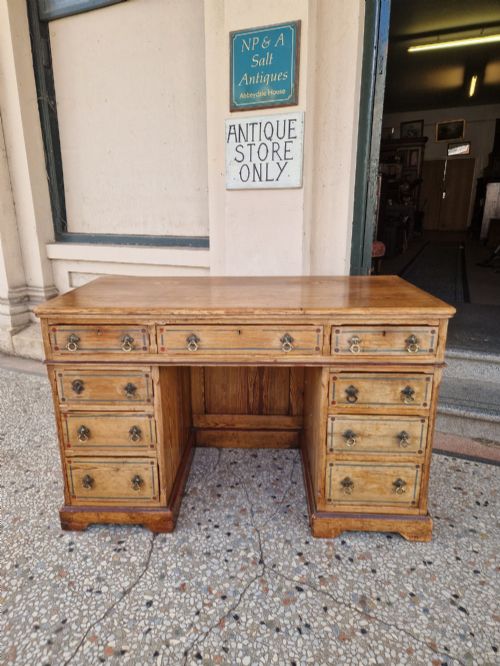
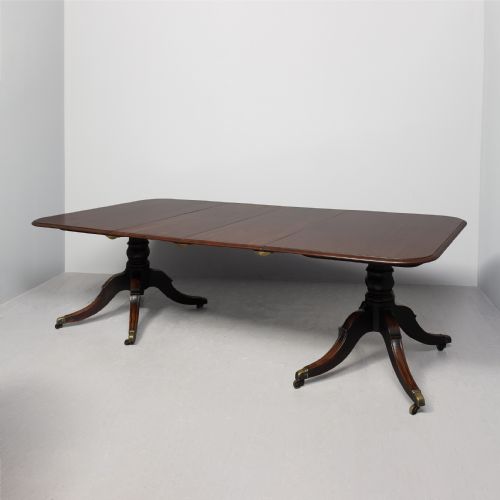
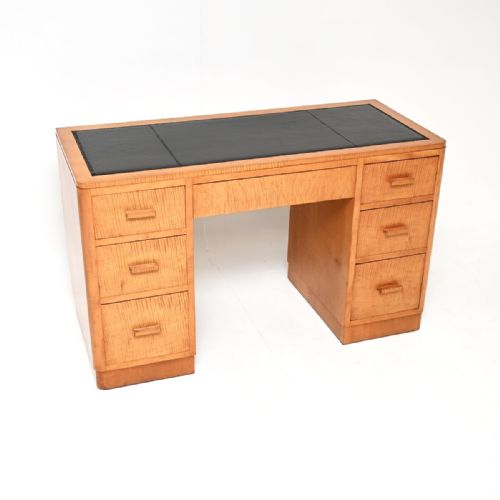
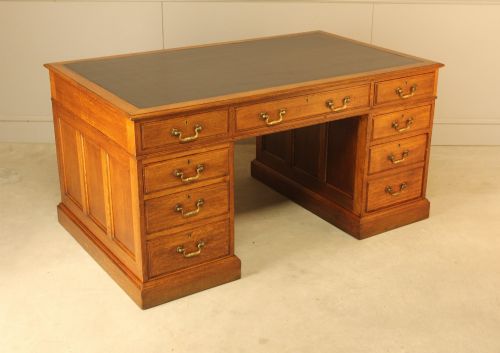
Vintage Twin Pedestal Table
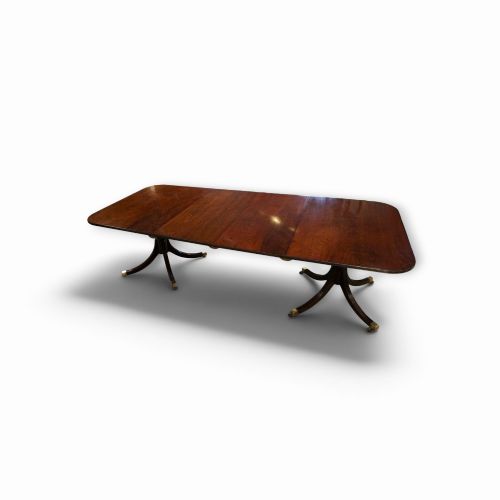
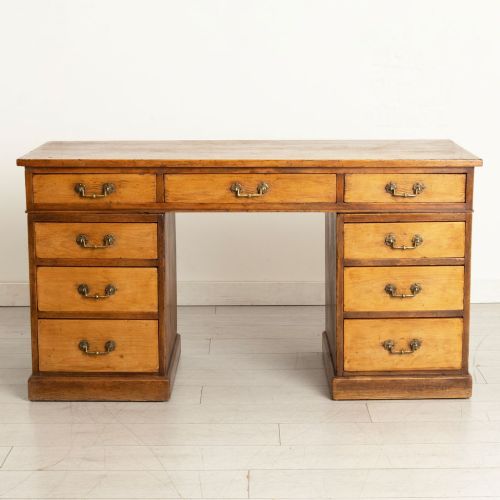
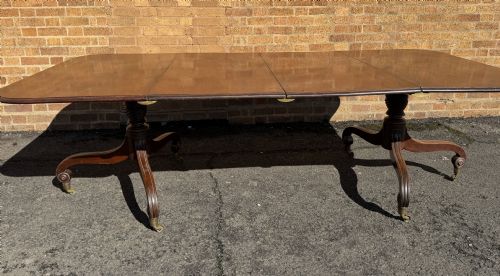
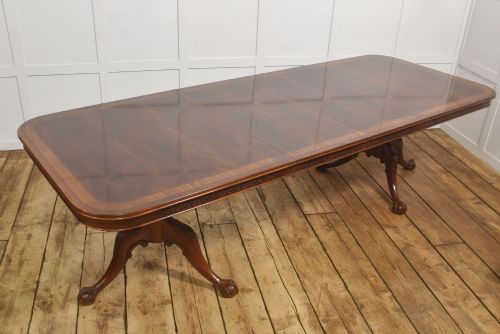
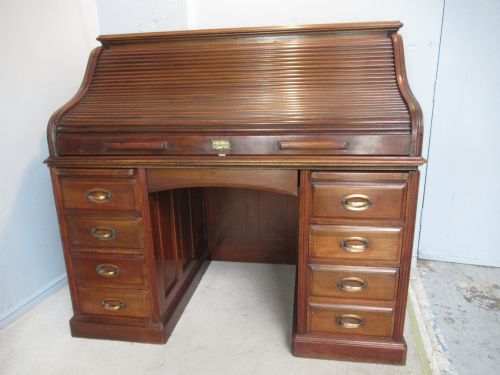
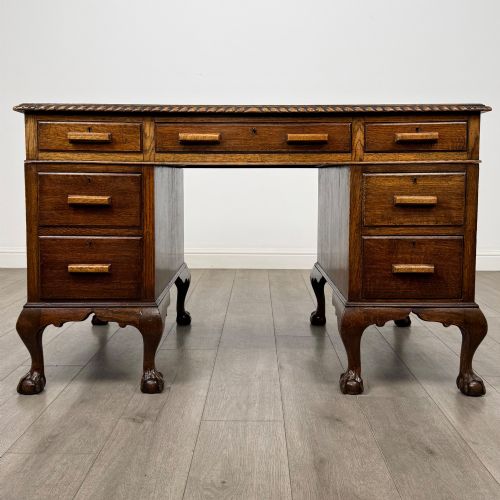
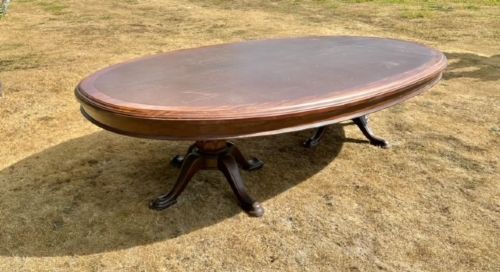
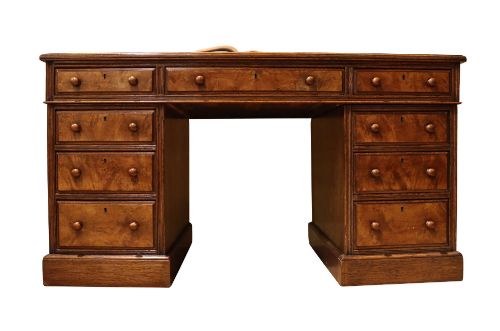
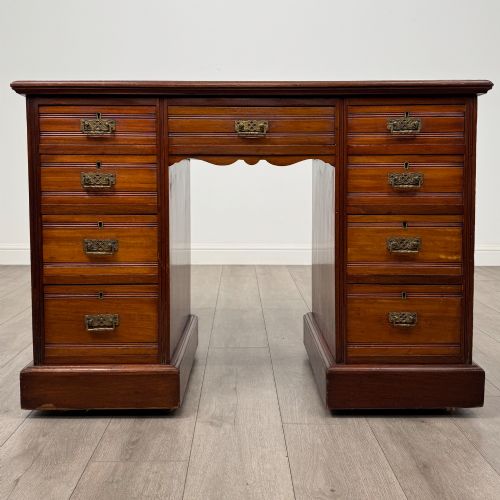
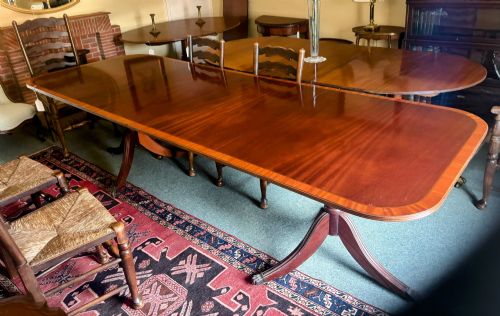
A vintage twin pedestal table brings sturdy proportion and practical surface space to a room, most often appearing as a mahogany dining table or a pedestal desk.
Vintage Twin Pedestal Table
When you search for a vintage twin pedestal table, you encounter practical furniture designed around two independent support columns or pedestals rather than four corner legs. These pieces serve primarily as dining tables or writing desks, offering stability and generous knee clearance.
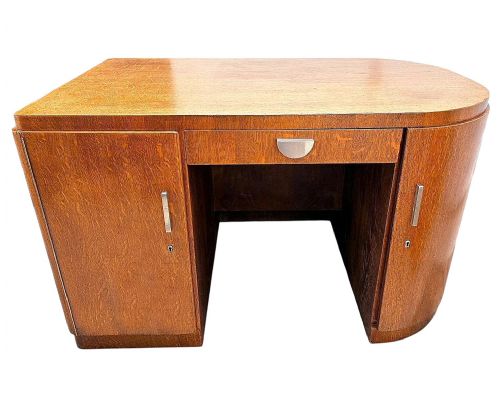
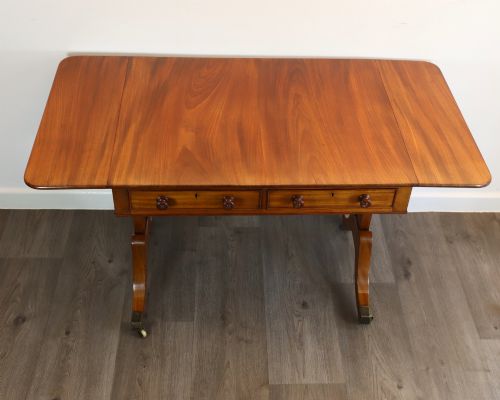
The selections on this page span several distinct forms, most frequently seen as mahogany dining tables supported by twin pillars or pedestal desks equipped with banks of drawers. You will also find boardroom tables, partners desks, and occasional writing tables spanning from the nineteenth century into the twentieth.
Origins stretch from the late Georgian and Regency eras through Victorian craftsmanship, Edwardian workshops, and into Art Deco and Arts and Crafts designs. Mahogany remains the dominant wood, accompanied by oak, walnut, burr walnut, and birch.
How they were made
Cabinet makers utilised solid timbers such as mahogany, oak, and walnut, often applying figured veneers like burr walnut or satin birch to primary surfaces for visual depth. Secondary structural elements frequently relied on softer woods.
Table pillars and desk pedestals required precise joinery to bear substantial weight, particularly on extending dining tables fitted with removable leaves and brass claw feet or castors. Writing surfaces were routinely inset with tooled leather panels.
Finishing techniques involved hand-applied polish that highlighted the natural grain of the wood, while revival styles incorporated carved mahogany details or inlaid borders characteristic of Chippendale and Regency designs.
Periods represented span from late George III and Regency through Victorian, Edwardian, and Art Deco eras.
What varies in quality
The choice of timber underpins the piece, distinguishing high-grade Spanish mahogany or finely figured burr walnut from standard commercial hardwoods. Superior examples display careful book-matching on veneers and substantial timber thickness.
Construction methods dictate durability, seen in the solidity of drawer linings, the smooth operation of runners, and the stability of the twin pillar joints. Pieces designed by documented makers or specific firms command particular attention for their refined proportions.
The integrity of secondary materials, such as original brass hardware, castors, and properly fitted leather writing inserts, elevates the overall standing of the desk or dining table.
Betty Joel
The Vintage Twin Pedestal Table Glossary
- Pedestal desk
- A flat-topped writing desk supported by two separate pedestals containing drawers, commonly featuring a central kneehole.
- Twin pillar dining table
- A dining table supported by two distinct central columns, frequently fitted with brass castors and designed to accept extension leaves.
- Partners desk
- A large pedestal desk designed with drawers and cupboards on both sides, allowing two people to work opposite one another.
- Burr walnut
- A veneer sliced from the gnarled growth of a walnut tree, prized for its swirling, decorative grain patterns on desk surfaces.
- Leather top
- A writing surface inset into a desk top, typically bordered with gold tooling and manufactured from coloured or black leather.
Vintage Twin Pedestal Table: Frequently Asked Questions
What is a twin pedestal table used for?
These tables function primarily as large dining surfaces or heavy-duty office desks, providing ample surface area for daily tasks or hosting guests.
The dual pedestal structure maximises legroom beneath the top, making them practical for prolonged sitting whether in a dining room or a study.
How do I identify a Georgian style table?
Georgian and Regency examples rely heavily on dense solid mahogany, classical proportions, and often incorporate brass castors beneath triple-reeded or turned pillars.
Revival pieces from later decades often imitate these exact classical outlines while utilising twentieth-century construction methods.
How do I care for a leather desk top?
Leather inserts require gentle dusting and occasional treatment with neutral leather balms to prevent drying and cracking over time.
Avoid placing damp items directly onto the leather surface to protect the gold-tooled borders from staining.