

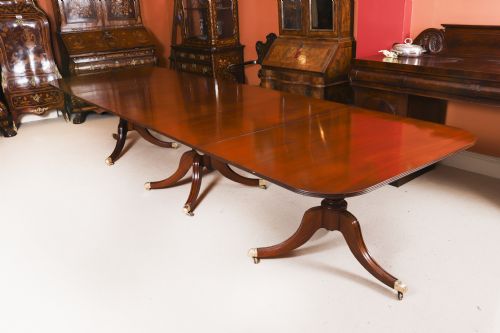


Pedestal Boardroom Table
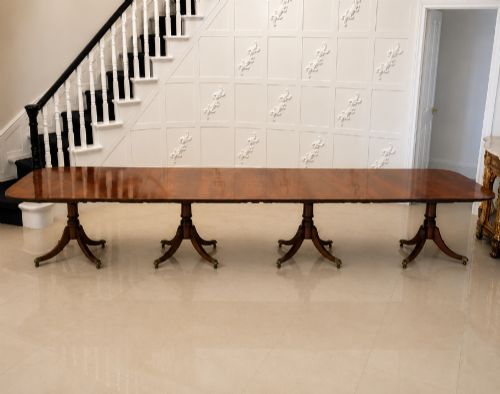
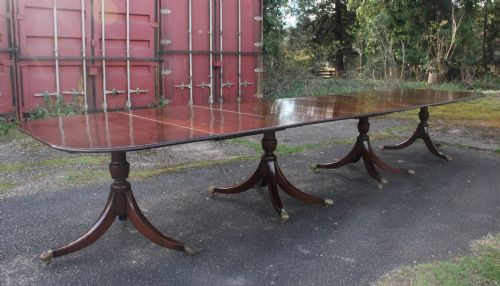
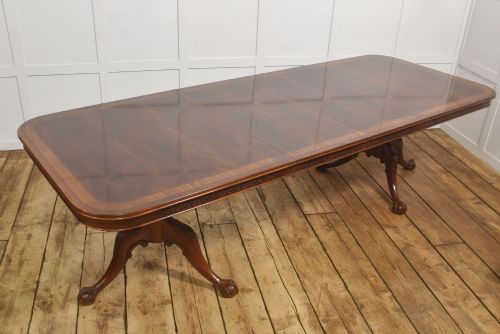
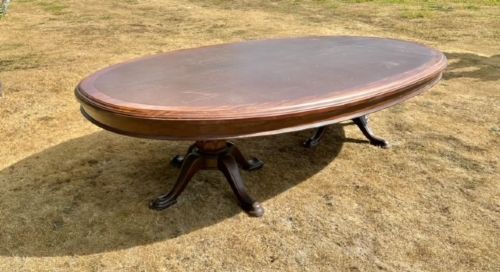
A pedestal boardroom table provides a grand scale and sturdy footprint for large gatherings, uniting substantial timbers with classic multi-pillar engineering.
Pedestal Boardroom Table
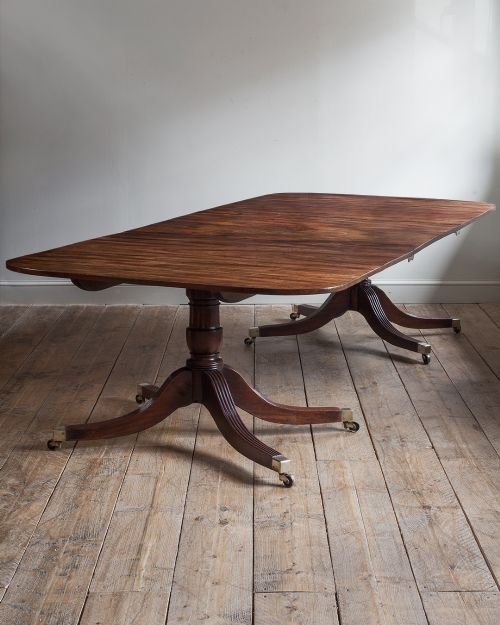
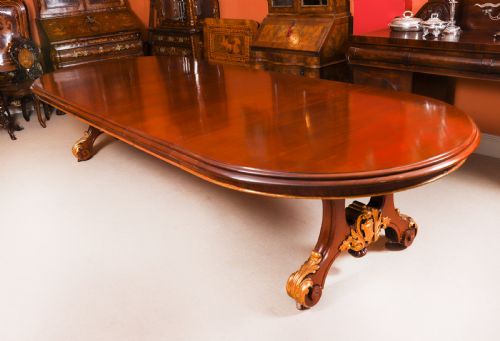
A pedestal boardroom table serves large gatherings through extended timber surfaces supported by multiple central pillars. These pieces primarily span the nineteenth century and the early twentieth century, drawing heavily on Regency and Georgian design traditions.
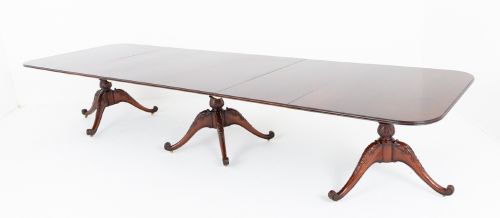
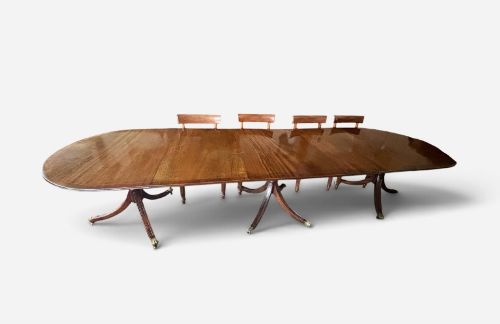
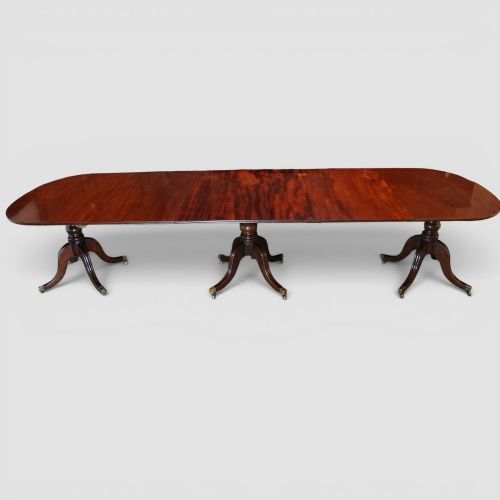
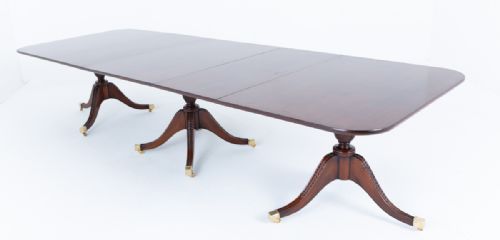
The buyer encounters twin, triple, and four-pillar formats designed to seat sixteen to over twenty guests. Mahogany remains the dominant timber across these grand proportions, frequently complemented by rosewood and walnut in later twentieth-century interpretations.
Materials and Construction
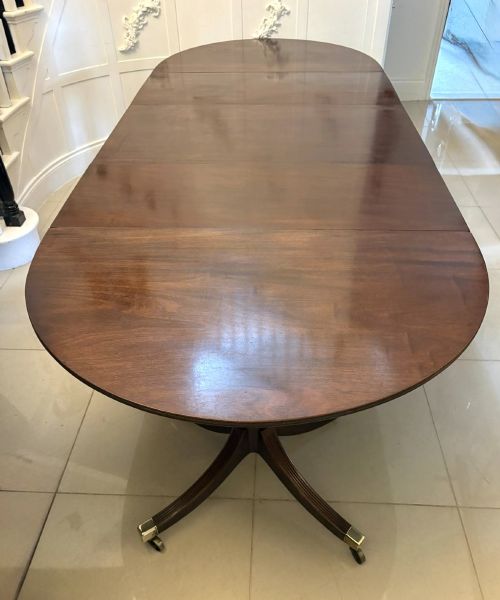
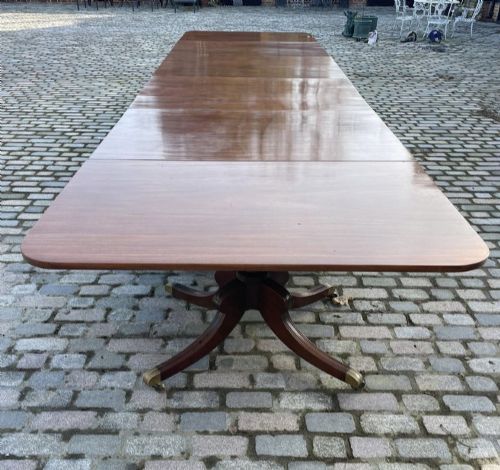
Craftsmen utilised solid and figured mahogany, rosewood, and walnut for the primary surfaces, often incorporating brass castors on the pedestal feet for mobility. Timber leaves allowed the tables to expand securely for large dining or meeting capacities.
Pedestals relied on heavy turned or carved pillar supports rising from splayed legs to distribute the substantial weight evenly. Inlaid borders and polished finishes highlighted the natural grain of the wood.
Some tables stretch long enough to require four separate wooden pillars just to keep the midday feast from sinking.
Evaluation of Quality
Quality rests upon the selection of figured timber veneers and the structural integrity of the pillar supports under heavy loads. Superior examples maintain balanced proportions across multiple leaves and pedestals without sagging.
The finesse of the joinery and the original brass hardware distinguish workshop pieces from later revival items. The crispness of the pedestal carvings and the uniformity of the timber grain determine the standing of each table.
Wylie & Lochead·Whytock & Reid
The Pedestal Boardroom Table Glossary
- Pedestal
- A central column support that holds up the main table surface. It typically branches into splayed legs for stability.
- Extending dining table
- A table designed with removable leaves to alter its overall length. This mechanism accommodates variable seating numbers.
- Figured mahogany
- Timber featuring an attractive, wavy grain pattern used on high-grade surfaces. It reflects light differently depending on the angle of view.
- Brass castor
- A small wheel fitted to the base of the table legs for easy movement. These components often include small metal sockets.
- Leaf
- A separate board inserted into the centre of an extending table to increase capacity. Leaves are removed and stored separately when not in use.
Pedestal Boardroom Table: Frequently Asked Questions
How do I seat twenty people?
These large pieces utilise multiple pedestals and removable leaves to span significant lengths. They accommodate massive seating numbers while keeping leg room unobstructed beneath the top.
Arranging chairs around a multi-pillar format requires careful measurement of the room dimensions to ensure adequate clearance on all sides.
What timber was used?
Mahogany forms the vast majority of these large surfaces, complemented by rosewood and walnut in later periods. Craftsmen selected these hardwoods for their durability and rich grain patterns.
Satinwood and brass frequently appeared as decorative inlay and hardware accents, enhancing the visual depth of the timber.
How do I care for the surface?
Polished timber surfaces require regular dusting with a soft cloth and occasional treatment with appropriate wax. Direct sunlight and excessive heat sources should be avoided to prevent warping.
Using protective mats for hot dishes and liquids preserves the traditional finish against accidental rings and marks.
How many pedestals do I need?
Twin pillar formats generally suit rooms requiring moderate extension, while triple and four-pillar versions support twenty or more seated guests. The number of pillars correlates directly with the overall length and weight of the structure.
More pillars provide essential structural support for tables exceeding standard domestic lengths.