
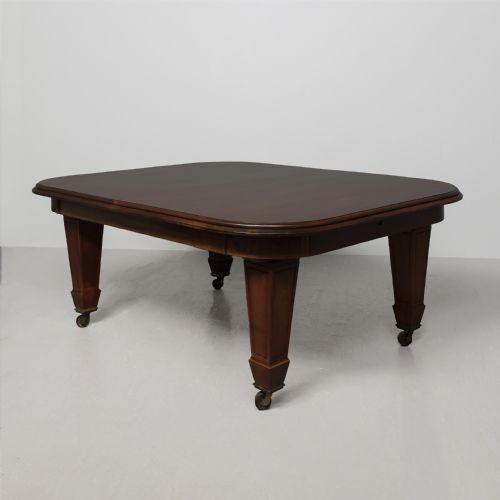
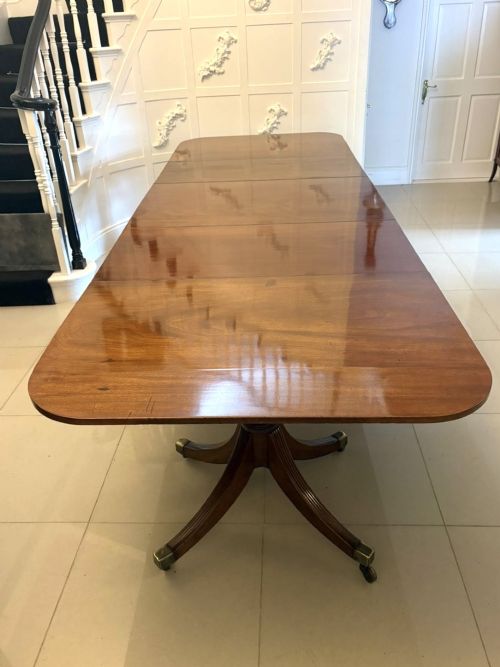
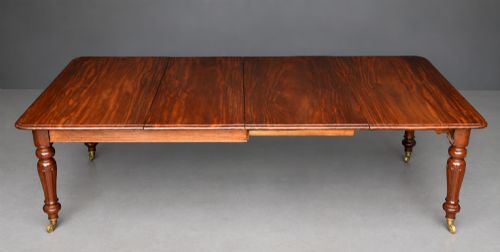
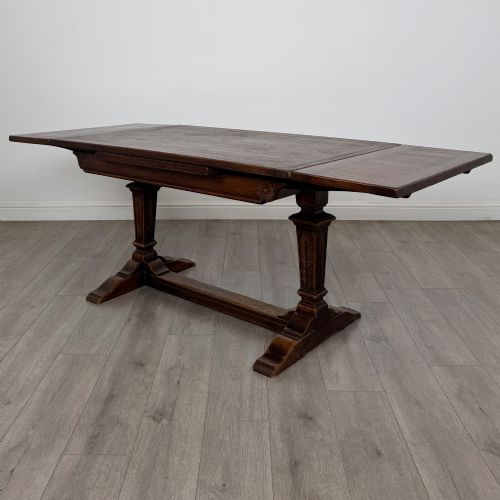
Antique Extended Table
An antique extended table brings versatile scale to a room, offering the sturdy mechanism needed to gather family and guests.
Antique Extended Table
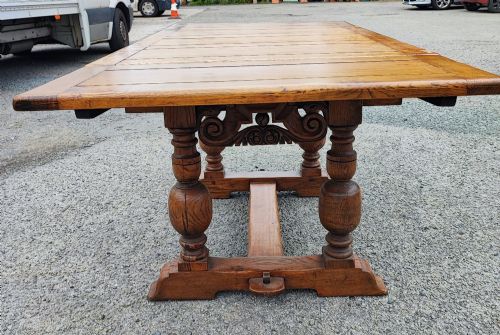
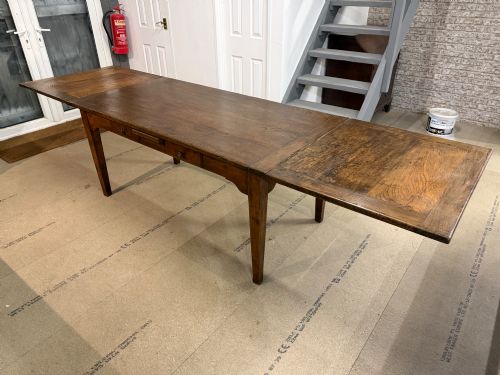
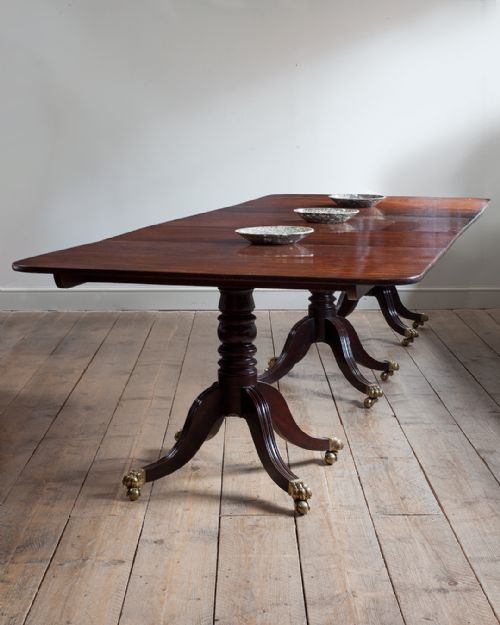
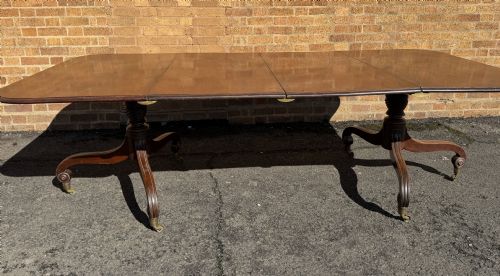
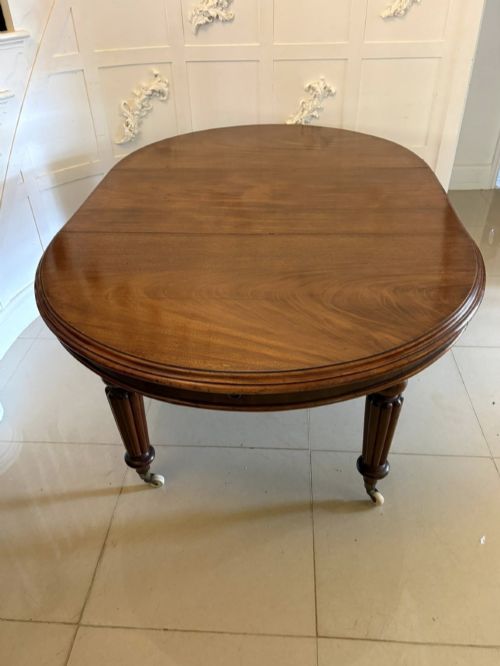
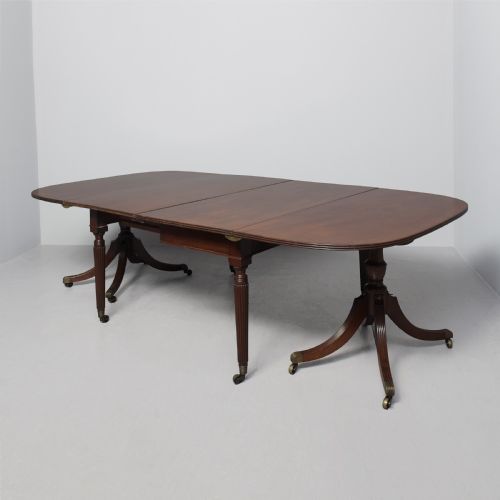
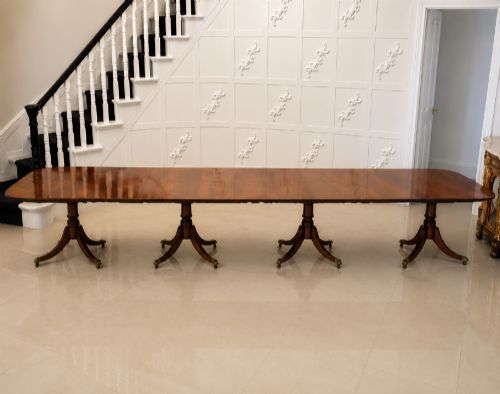
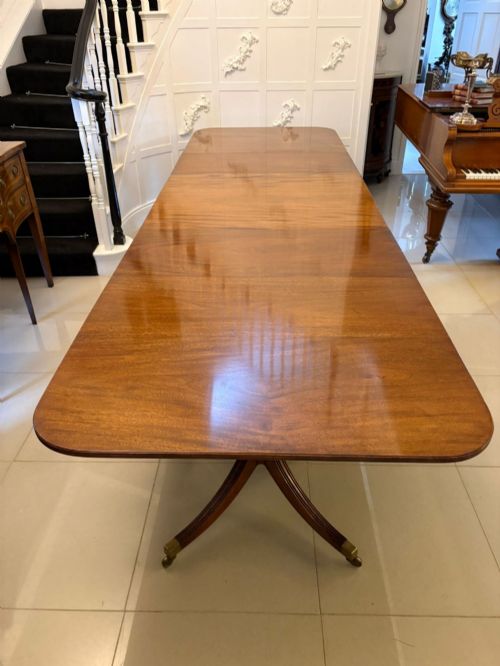
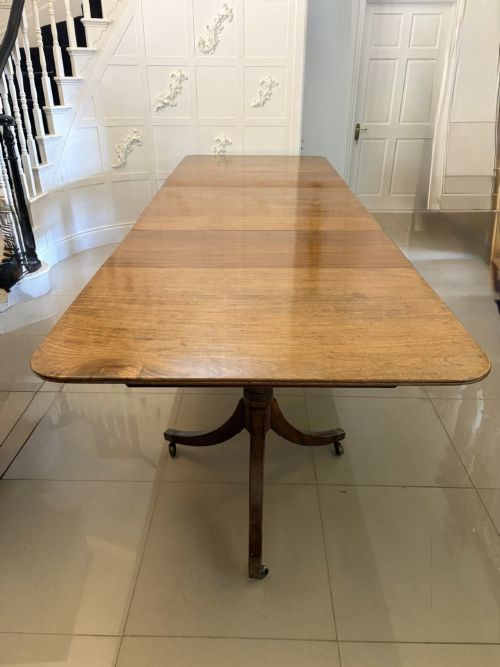
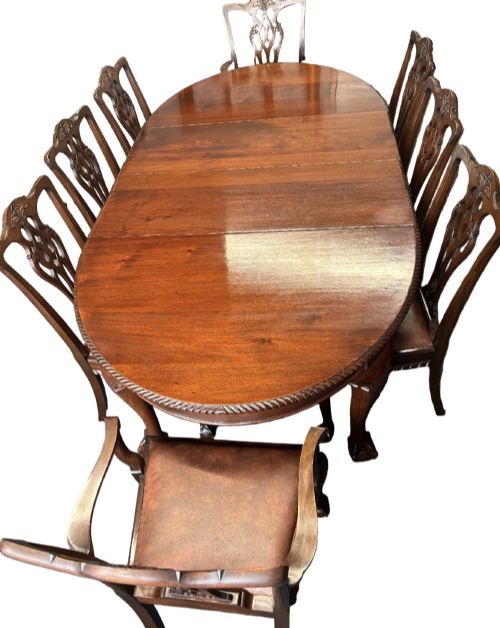
An antique extended table provides a flexible dining surface that adapts from a compact footprint to a large banquet length using internal leaves or draw mechanisms. When you search for an antique extended table, you meet pieces built across several centuries, from early oak examples to grand nineteenth-century mahogany pedestals. These items serve the practical demand of seating large parties while retaining period craftsmanship.
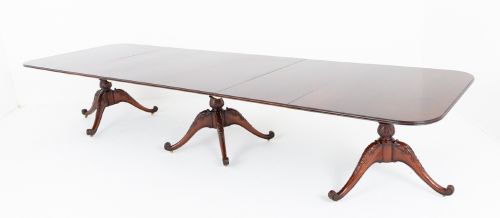
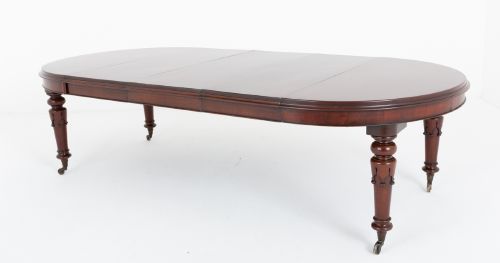
Mahogany examples from the Georgian, Regency, and Victorian eras dominate the selection, often utilising pillar-and-scroll supports or wind-out systems. Oak pieces also appear frequently, including seventeenth-century designs and later draw-leaf versions from the Edwardian period and nineteen-hundreds. Buyers encounter everything from intimate six-seater models to twenty-four-seater banquet tables.
What varies in quality
The sophistication of the mechanism dictates much of the value, distinguishing simple manual pull-out leaves from complex geared wind-out systems. Smooth operation of the winding gear and precise alignment of the leaves indicate superior workshop production.
Timber selection and the preservation of original leaves create further distinctions across the range. Matched grain patterns across multiple inserted leaves show careful initial planning by the maker, whereas mismatched secondary timbers suggest later replacements.
Materials recorded on this page include walnut, ceramic, leather, and solid oak alongside traditional brass hardware.
Gillows of Lancaster·Thomas Butler of London
The Antique Extended Table Glossary
- Draw leaf table
- A table with two leaves stored beneath the main top that pull out from each end to extend the surface. This clever design allows one person to lengthen the table without removing separate boards.
- Wind out table
- An extending table operated by inserting a crank handle into a socket that turns an internal screw mechanism. This system separates the table halves smoothly to drop in extra leaves.
- Pedestal table
- A table supported by one or more central pillars rather than four corner legs. These pillars often stand on reeded or splayed brass-castor legs for stability.
- Refectory table
- A long, narrow dining table traditionally used in monasteries and large halls, usually made of oak with sturdy stretcher bases.
- Leaf
- A removable board inserted into a table top to increase its length. Original matching leaves significantly improve the desirability of an antique dining piece.
Antique Extended Table: Frequently Asked Questions
How do wind out tables work?
These tables contain an internal metal screw mechanism operated by a detachable crank handle inserted into the side apron. Turning the handle drives the two halves of the table apart to create a gap for the extra leaves.
Once the gap reaches the correct width, the loose leaves drop into place and the mechanism is tightened back to secure the whole surface firmly.
How do I know if the leaves are original?
Examine the grain pattern, timber colour, and fading across the main top and the extra leaves in strong daylight. Original leaves share the same board stock and age at an identical rate.
Look at the underside for matching workshop numbers, chalk marks, or corresponding dowel placements that connect the leaves to the main frame.
How many people can sit at these tables?
Seating capacity ranges dramatically based on the number of pedestals and inserted leaves, spanning from intimate six-seaters up to grand twenty-four-seater banquet tables. Length measurements dictate the capacity rather than age alone.
Allow roughly sixty centimetres of lateral space per diner to ensure comfortable seating along the extended length of the rails.