
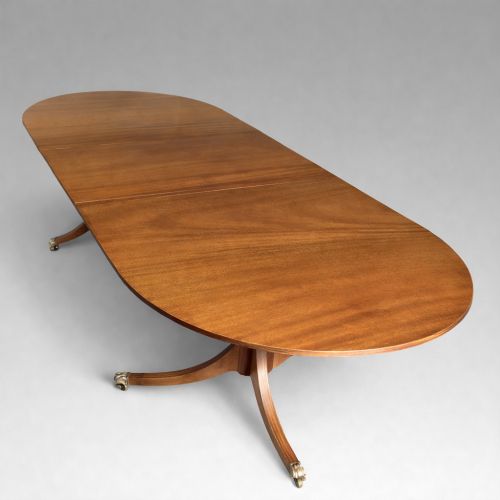


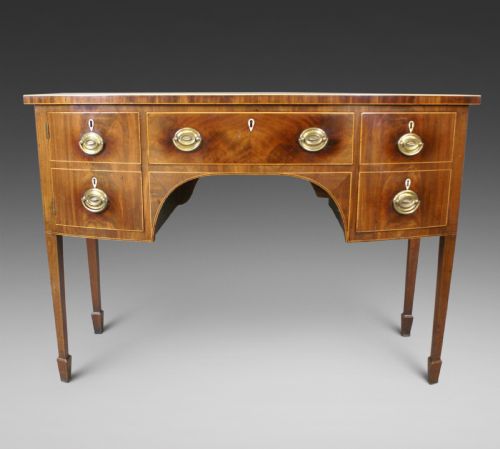


Classical Mahogany Dining Table
A classical mahogany dining table brings profound architectural presence to a room, offering rich timber grain and enduring form.
Classical Mahogany Dining Table
A classical mahogany dining table embodies the balanced proportions and refined timber work prized in Georgian and Regency interiors. These pieces anchor a dining room with rich reddish-brown tones and solid architectural framing.
The selections available here range from twin pillar extending forms to pedestal designs and drop-leaf formats. Regency and Georgian influences dominate the offerings, showing both original period execution and later interpretations.
Buyers will encounter tables fitted with multiple leaves as well as compact centre tables suitable for versatile placement. Mahogany remains the constant medium, often enriched with subtle boxwood stringing or classical brass details.
Materials and construction methods
Makers utilised dense Cuban and Honduras mahogany, selected for deep colour and stable grain when forming large tabletops and solid pedestals. Cabinet makers turned heavy timber into robust columns and supported them on tripartite or quadrupartite legs.
Inlay work required precise hand-cutting of contrasting timbers like boxwood and satinwood to create geometric borders and neo-classical motifs. Brass castors and paw mounts were integrated to allow movement of heavy dining furniture without straining the joints.
Some tables hide their extra leaf storage internally, ready for unexpected dinner guests.
Distinctions in quality and execution
Superior examples demonstrate careful timber selection, where the grain pattern of the mahogany top matches harmoniously across inserted leaves. Lesser pieces show disjointed grain matching or heavier, coarser secondary timbers used in the framing beneath.
The refinement of the carving on pedestal mounts and pillar collars separates standard workshop production from exceptional cabinet work. Crisp mouldings and well-fitted brass hardware indicate a higher standard of original craftsmanship.
George Hepplewhite·Mack Williams and Gibton·Gillows
The Classical Mahogany Dining Table Glossary
- Mahogany
- A durable tropical hardwood prized for its reddish-brown colour and stability in furniture construction. It takes a high polish and resists warping.
- Twin pillar
- A table design featuring two separate central pedestals supporting a long top, often adaptable with additional leaves. This configuration allowed diners more legroom than traditional four-legged tables.
- Boxwood inlay
- Contrasting light wood inserted into recesses in the darker mahogany surface to form geometric lines or decorative patterns. It provides a sharp visual border.
- Pedestal
- A central vertical support, often turned or carved, rising from a plinth with splayed legs. It is typical of nineteenth-century dining and centre tables.
- Drop-leaf
- A table with a fixed central section and hinged flaps that fold down to save space. Brackets or swing legs support the leaves when raised.
Classical Mahogany Dining Table: Frequently Asked Questions
How do I check if leaves match?
Examine the grain direction and colour tone across the main top and the extra leaves in natural light. Consistent figuring indicates they were cut from the same log.
Differences in polish depth or timber age suggest replacement leaves added at a later date.
Are pedestal tables stable?
Weight distribution across splayed legs provides reliable stability for everyday dining use. The heavy timber base keeps the centre of gravity low.
Ensure the central fixing block beneath the top remains firm and free from movement.
How should I care for mahogany?
Keep timber surfaces away from direct sunlight and strong heat sources to prevent the polish from fading or drying out. Apply beeswax periodically to nourish the grain.
Use coasters and felt mats to protect the finish from moisture and heat marks.
What defines Regency style?
Regency design draws inspiration from ancient Greek and Roman architecture, featuring clean lines, restrained carving, and classical brass mounts. Proportions tend to be balanced and formal.
Dark timbers like mahogany are often contrasted with lighter inlay details or gilt bronze accents.