


Georgian Extendable Dining Table
A georgian extendable dining table offers clever mechanical expansion wrapped in rich timber, designed to seat large dinner parties without permanent bulk.
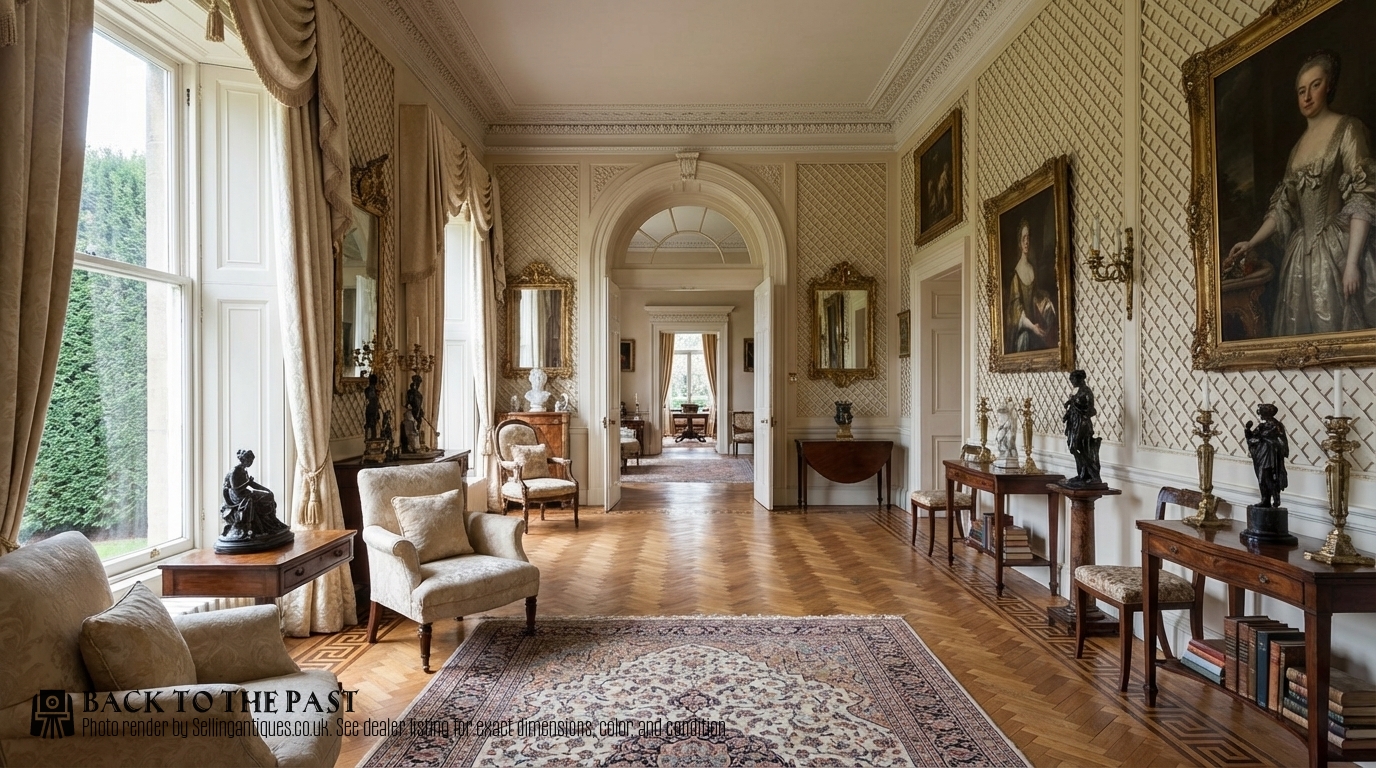
What a Georgian Extendable Dining Table Is
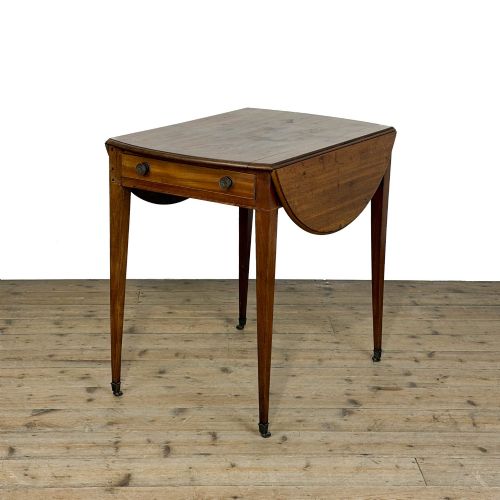
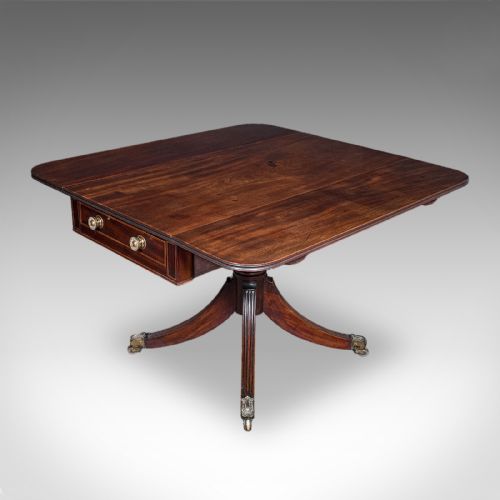
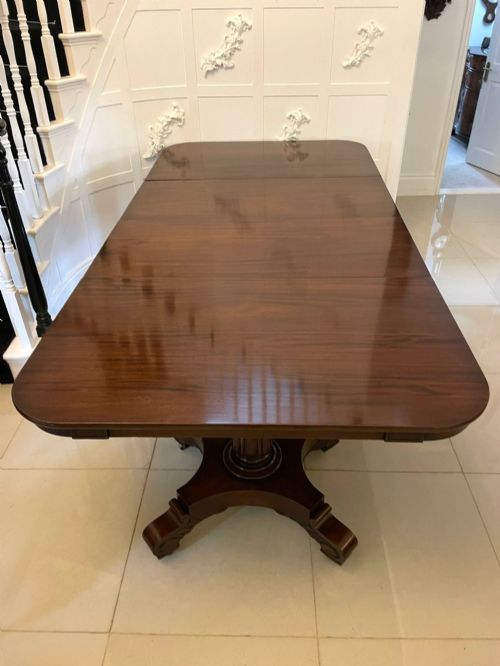
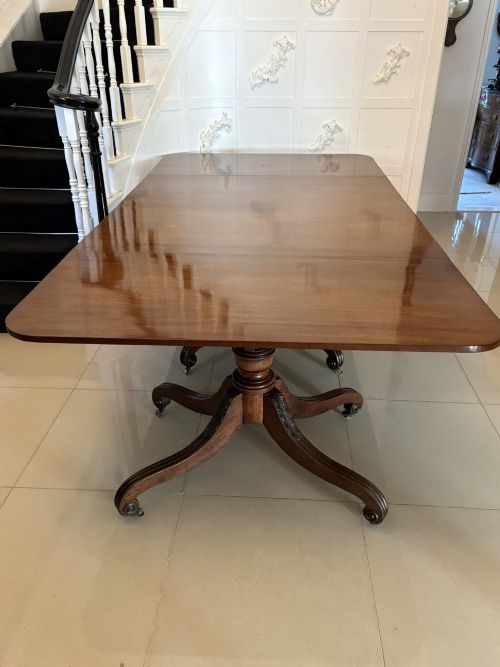
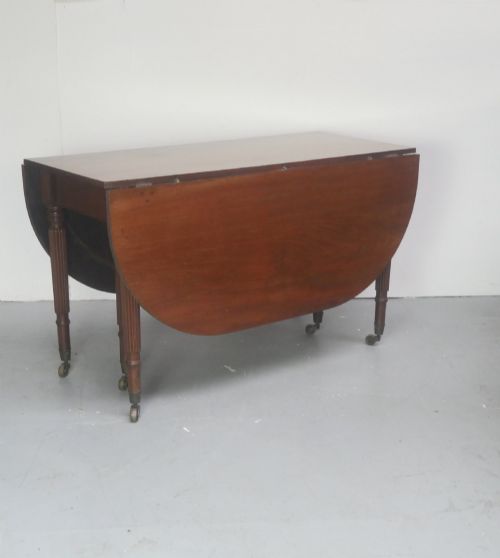
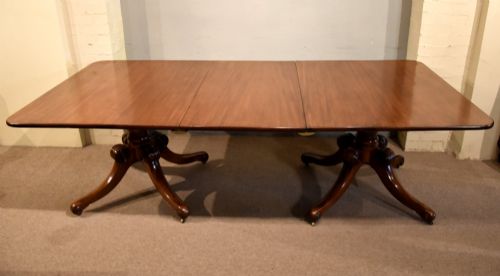
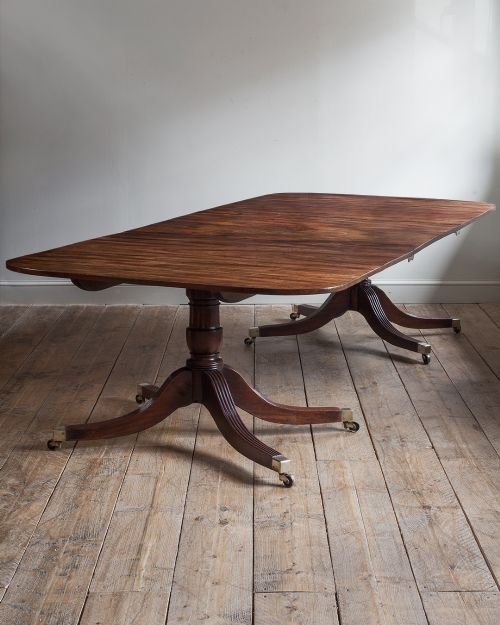
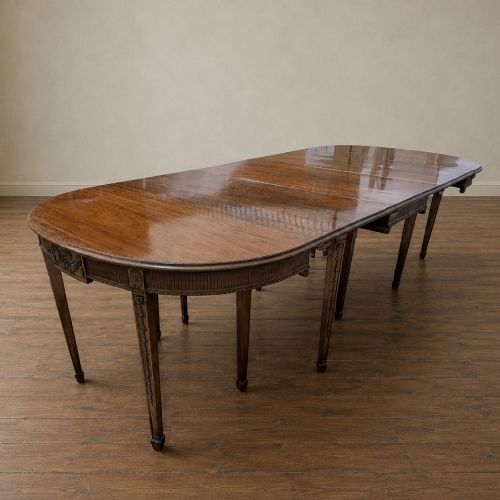
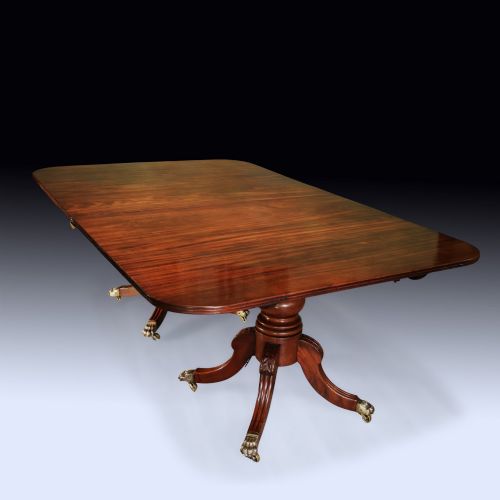
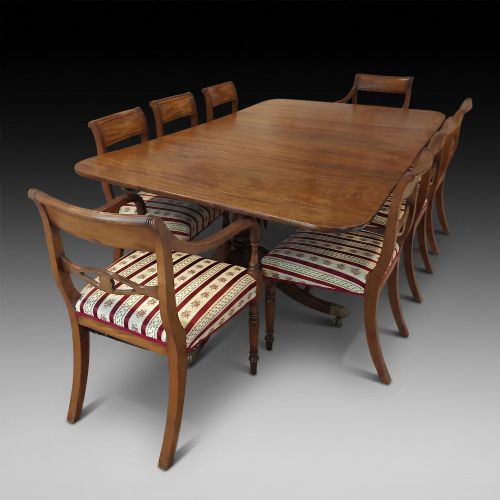
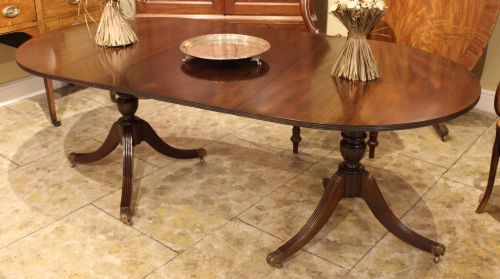
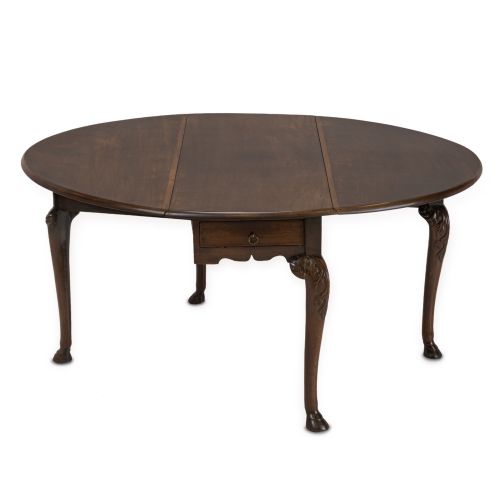
A georgian extendable dining table is a versatile dining room centrepiece designed to accommodate changing numbers of guests through clever modular or drop leaf construction. The selection includes twin pedestal forms, gateleg designs, and drop leaf tables with demi lune ends.
The pieces span the 18th and 19th centuries, capturing both authentic George III craftsmanship and later 19th century interpretations. Buyers commonly encounter mahogany construction across these various extendable formats.
How They Were Made
Cabinet makers built these tables primarily using solid mahogany and mahogany veneers, occasionally incorporating satinwood inlay for decorative contrast. Structural stability relied on dense hardwoods paired with functional brass mechanisms.
Construction techniques included drop leaf joints, gateleg actions, and removable leaves supported by pedestals or folding legs. These methods allowed heavy timber tables to expand smoothly.
Retail Price Guide 2026
Typical UK retail prices for georgian extendable dining table, calculated from the Sellingantiques database of over a million retail prices indexed since 2003. This retail price guide relies exclusively on Sellingantiques data; no external sources or auction records are used, so the figures do not describe the wider market.
The inventory combines pieces from the 1800 period, the broader Georgian era, and the 19th century, utilising mahogany, brass, and satinwood inlay.
What Varies in Quality
The distinction between standard examples and superior pieces rests on timber selection, such as figured or flame mahogany figures. Finer tables display meticulous attention to grain matching across additional leaves and D ends.
Execution of mechanical parts also sets tables apart, with robust brass clips and solid pedestals distinguishing better workshop output from simpler domestic joinery.
The Georgian Extendable Dining Table Glossary
- Gateleg table
- A table with hinged flaps supported by legs that swing outward like a gate. This design provides sturdy support when extended while folding down compactly when not in use.
- Demi lune
- A half moon shape used for table ends. These sections join together to form a circle or oval when the table is fully configured.
- Flame mahogany
- A highly figured wood veneer featuring a flamelike pattern created by slicing through diverging branches. It was utilised by cabinet makers to create dramatic visual movement on tabletops.
- Pedestal table
- A table supported by one or more central pillars rather than four corner legs. This configuration allows greater legroom for seated guests.
Frequently Asked Questions
How do these tables extend?
These tables typically extend using drop leaves, gateleg actions, or removable central leaves supported by pedestals or additional legs. This modular approach allows the surface area to increase or decrease based on dining requirements.
Mechanisms vary from simple folding wooden supports to brass fittings designed to hold multiple leaves securely in alignment.
What woods were used?
Mahogany is the primary timber found in these pieces, appearing as solid wood or as fine veneers over secondary woods. Figured and flame mahogany variations provide distinct surface patterns.
Satinwood inlay also appears on select pieces to add contrasting borders and geometric decoration to the primary mahogany surfaces.
How do I seat more guests?
Extending the table usually involves pulling apart pedestal sections to insert additional leaves, or lifting hinged drop leaves and swinging support legs into position. D end configurations separate to accept central filler leaves.
Proper alignment ensures the extended surface remains level and stable for dining use.
Are these tables solid mahogany?
Construction includes both solid mahogany timbers and mahogany veneers applied over stable underlying woods. Figured and flame mahogany selections utilise veneer to showcase dramatic grain patterns.
Secondary woods provide internal structural support while primary visible surfaces display the rich brown tones characteristic of the period.