
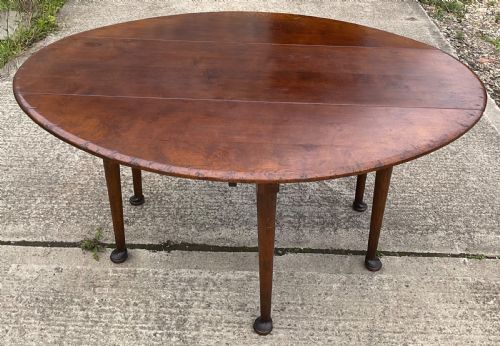


18th Century Dropleaf Table
An 18th century dropleaf table offers versatile folding leaves and rich timber surfaces that anchor a room with practical period utility.

What an 18th century dropleaf table is
An 18th century dropleaf table is a versatile surface featuring hinged flaps that drop down to save space or lift up to accommodate diners. These pieces appear in forms designed for dining, side use, or seating up to eight people.
The versions most commonly met on this page belong to the Georgian era and use mahogany timber. Earlier Welsh examples and walnut pieces from the eighteenth century also surface in the record.
Makers fashioned these tables to function primarily as dining tables or side tables within period interiors. Their folding flaps make them adaptable for rooms requiring flexible floor plans.
How they were made
Cabinetmakers constructed these tables using solid mahogany or walnut, occasionally incorporating veneer work. Timber selection drove the structural integrity of the folding flaps and their supporting legs.
Iron components appear in the construction to reinforce hinges and joints. Joinery methods of the Georgian and George II periods ensured the drop leaves remained stable when raised.
Retail Price Guide 2026
Typical UK retail prices for 18th century dropleaf table, calculated from the Sellingantiques database of over a million retail prices indexed since 2003. This retail price guide relies exclusively on Sellingantiques data; no external sources or auction records are used, so the figures do not describe the wider market.
Listings feature mahogany and walnut materials across Georgian and George II styles, dating from the eighteenth century and the year 1800.
What varies in quality
Quality separates through the choice of timber and the handling of veneer surfaces. Finer examples display superior grain figures in the mahogany or walnut across both the top and the folding leaves.
The sophistication of the Georgian style dictates the level of refinement in the legs and frame. Sturdier dining versions built to seat eight demonstrate robust carpentry compared to simpler side tables.
The 18th Century Dropleaf Table Glossary
- Dropleaf table
- A table with a fixed central section and hinged flaps that fold down at the sides. These leaves are supported by swing legs or brackets when raised.
- Georgian
- The period of British history covering the reigns of the first four Georges, spanning much of the eighteenth century. Furniture from this era often utilises mahogany and distinct regional styles.
- Mahogany
- A durable, reddish-brown tropical hardwood favoured by eighteenth-century cabinetmakers. Its stability made it ideal for tables with moving flaps.
- Veneer
- A thin layer of fine wood applied to a base timber surface. This technique allowed craftsmen to display decorative grain patterns.
Frequently Asked Questions
How do I use an 18th century dropleaf table today?
These tables adapt easily to modern rooms by dropping the leaves against a wall when floor space is tight. Raising both flaps creates a full dining surface for meals or gatherings.
Larger Georgian examples can seat up to eight people, making them practical for hosting dinner guests without dominating a dining room permanently.
What woods were used for these tables?
Makers relied heavily on mahogany for eighteenth-century tables due to its strength and rich colour. Walnut also appears on pieces from the same era.
Timber choice influences the weight and appearance of the folding leaves, with veneer sometimes applied to enhance the decorative grain.
How do I identify a Georgian dropleaf table?
Look for the characteristic structural layout featuring a fixed centre panel flanked by two hinged flaps. Mahogany timber and specific Georgian design proportions are typical markers.
Hardware such as iron reinforcement in the joints often indicates the period methods used to secure the swinging supports.
Are these tables suitable for small rooms?
The dropleaf design was originally conceived to save space when the leaves hung down vertically. Side table variants and smaller Georgian dining versions tuck neatly against walls.
Lifting one or both leaves allows the furniture to expand only when needed for dining or working.