





Vintage Elephant Head Table
A vintage elephant head table brings colonial character and dense carving into a room through sturdy hardwoods and distinctive animal supports.

Vintage Elephant Head Table
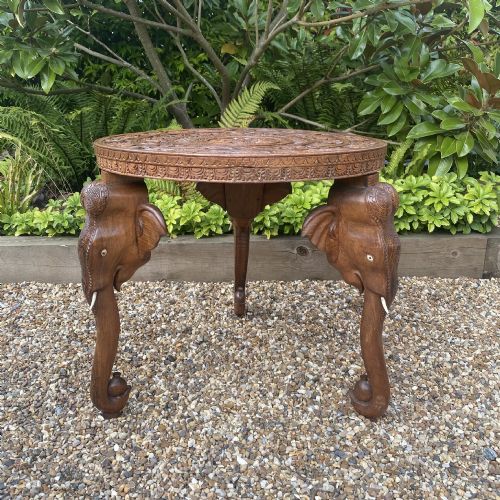
A vintage elephant head table is a low or occasional furniture piece supported by carved animal forms, originating primarily from South Asia during the nineteenth and early twentieth centuries. These works span side tables, coffee tables, and plant stands created under Anglo-Indian, Anglo-Indian Colonial, and Anglo-Burmese Colonial traditions.
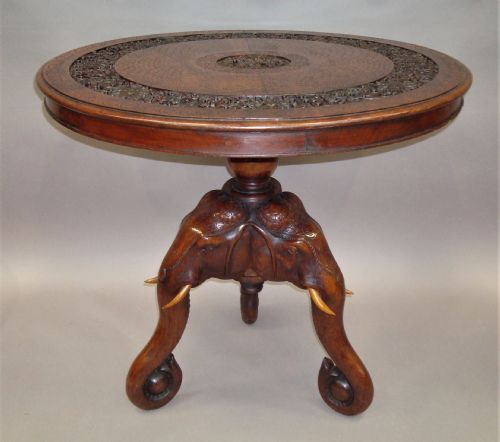
Buyers on this page will most frequently encounter solid rosewood, teak, and hardwood examples dating from the late nineteenth century up through the nineteen-twenties. Forms range from tripod tables featuring Taj Mahal motifs to small occasional tables with distinct carved elephant leg supports.
Originating from craft centres such as Hoshiarpur and broader Burmese workshops, these tables combine utilitarian domestic function with elaborate regional ornamentation. The surviving pieces show a distinct reliance on local timbers carved by hand to meet the export and domestic colonial markets.
How they were made
Makers fashioned these tables from dense tropical timbers including solid teak, rosewood, and hardwood, which provided the structural weight needed for intricate carving. These materials were worked by hand to create the sculptural elephant head and trunk supports that define the form.
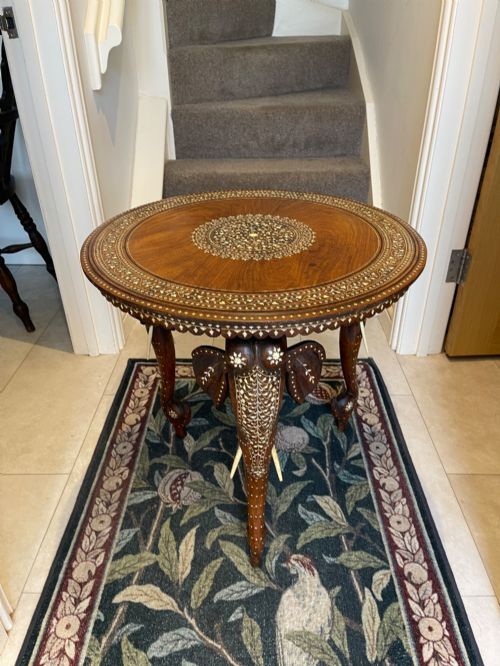
Surface ornamentation relied heavily on bone, bone inlay, and ebony inlay, set directly into the timber to form geometric and floral patterns. Artisans also utilised brass elements for structural reinforcement and decorative detailing across the tops and aprons.
Vintage Elephant Head Table Retail Price Guide 2026
Typical asking prices for vintage elephant head table among the pieces listed under this phrase on Sellingantiques today, from the lower quarter to the upper quarter. They describe what is for sale here now, not the wider market.
Listings span periods from eighteen-eighty to nineteen-twenty, featuring teak, rosewood, bone inlay, and brass.
What varies in quality
The standard of carving defines the upper tier of these pieces, separating deeply undercut, expressive animal figures from simpler, more rigid profiles. Crisp detailing around the tusks, eyes, and ears indicates greater artisan skill during production.
The complexity and integration of inlay work separate finer examples from plain timber versions. Dense application of bone and ebony inlay across the surface elevates a basic occasional table into a more intricate decorative object.
The Vintage Elephant Head Table Glossary
- Anglo-Indian
- A design style produced during British rule in India, blending British furniture forms with traditional Indian craftsmanship and motifs. These pieces often feature dense surface carving and exotic timbers.
- Hoshiarpur
- A Punjabi town renowned for intricate woodwork, particularly tables featuring dense bone and ebony inlay set into teak or shisham wood. Artisans from this region produced distinctive occasional and tripod tables.
- Tripod table
- A small freestanding table supported by three legs, frequently utilised for displaying decorative objects or serving tea. In this category, the three legs often take the sculptural form of elephant heads and trunks.
- Bone inlay
- A decorative technique where small pieces of animal bone are shaped and pressed into carved recesses within the wood. This method creates contrasting pale geometric patterns against dark timber grounds.
Vintage Elephant Head Table: Frequently Asked Questions
Where were these tables made?
These pieces were produced primarily in workshops across India and Burma during the nineteenth and early twentieth centuries. Specific regional centres, such as Hoshiarpur, developed distinct local styles involving intricate inlay work.
They were created both for the domestic colonial market and for export to Britain.
What woods were used?
Maker workshops utilised dense regional timbers such as teak, rosewood, and general hardwood. These materials provided the necessary structural strength for heavy carving and supported fine inlay.
Surfaces were frequently left in their natural timber tone to highlight the grain and contrast with bone or ebony additions.
How do I date a table?
Dating relies on stylistic markers, construction methods, and materials recorded from the nineteenth and early twentieth centuries. Pieces often span from the eighteen-eighties through the nineteen-twenties based on carving depth and inlay complexity.
Earlier examples generally show heavier proportions and more traditional regional joinery.