

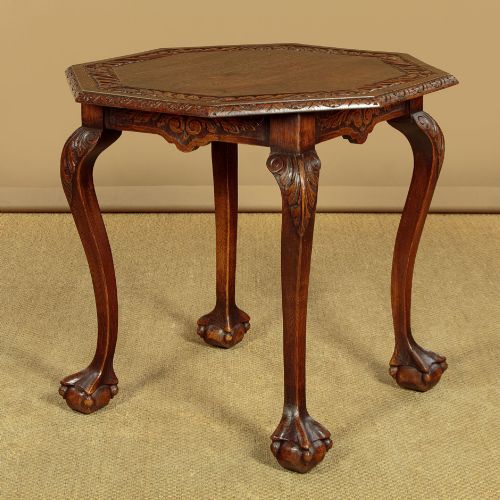


Carved Wood Corner Table
A carved wood corner table makes clever use of overlooked rooms, bringing useful surface space and architectural interest to awkward domestic angles.
Carved Wood Corner Table
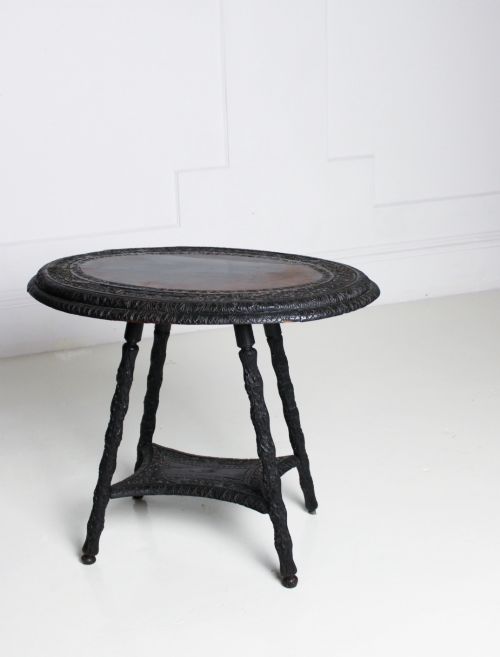
When searching for a carved wood corner table, buyers encounter a diverse selection of occasional furniture designed to fit snugly into room junctions. The examples appearing on this page span several distinct periods, most notably the Victorian era and the early twentieth century, alongside earlier George III forms.
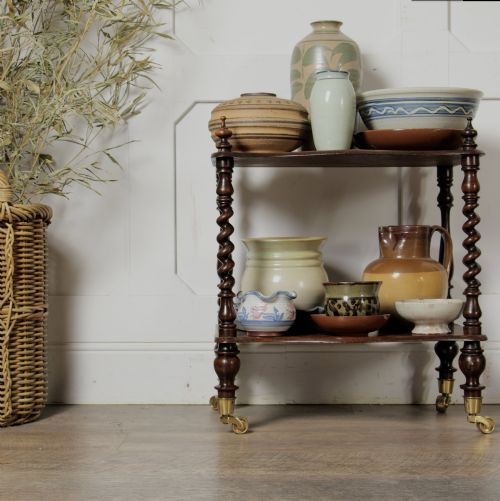
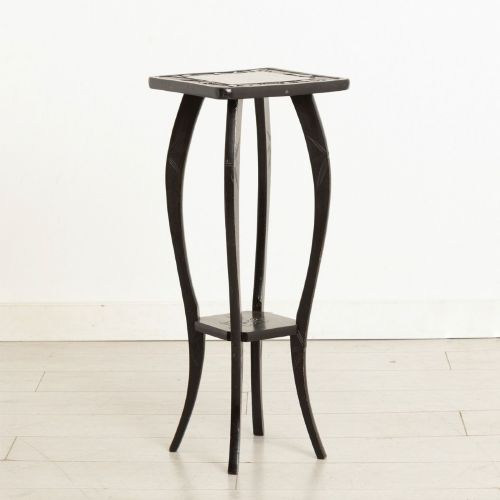
The objects take various functional shapes, ranging from dedicated folding corner tables to occasional pieces, plant stands, and tiered whatnots. Woods such as mahogany, walnut, and oak dominate the selection, often enriched with detailed carving and regional stylistic influences from Moorish revival to Arts and Crafts designs.
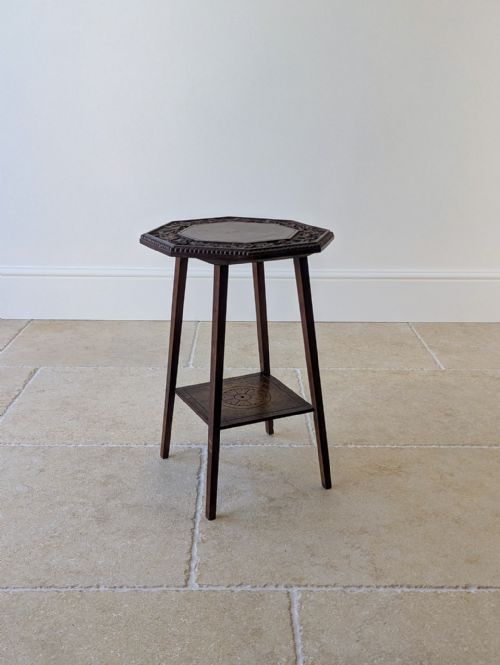
Origin and maker signatures further define the range, with specific pieces linked to firms like Liberty of London or exhibiting Anglo-Indian and Chinese craftsmanship. Buyers are most likely to find nineteenth-century walnut and oak iterations featuring turned legs, barley twist supports, or octagonal tops.
How they were made
Cabinetmakers utilised robust hardwoods including mahogany, walnut, oak, and ebonised wood to construct these tables, ensuring structural stability for corner placement. Burr veneers frequently embellished table tops, providing rich, figured grain patterns that contrasted with solid framing.
Manual carving techniques defined the ornamentation, producing intricate floral motifs, barley twist legs, and structural turnings by hand. Supplementary decorative elements such as bone inlay, brass hardware, and marquetry further enriched the timber surfaces.
Carved Wood Corner Table Retail Price Guide 2026
Typical asking prices for carved wood corner table among the pieces listed under this phrase on Sellingantiques today, from the lower quarter to the upper quarter. They describe what is for sale here now, not the wider market.
Periods represented across the available inventory span from George III and William IV eras through the Victorian and Edwardian decades.
What varies in quality
The calibre of a carved wood corner table rests upon the crispness of the hand-carved detail and the selection of timber used for the top and supports. Finely figured burr walnut or substantial mahogany denote superior construction compared to plainer domestic hardwoods.
Attribution to known retailers or workshops elevates a piece, as seen in items bearing connections to Liberty and Co. Furthermore, exhibition-quality examples display sophisticated joinery, harmonious proportions, and integrated decorative accents such as bone inlay.
Liberty and Co·Liberty of London
The Carved Wood Corner Table Glossary
- Burr walnut
- A highly figured timber harvested from the growths of walnut trees, prized for its swirling grain patterns. Cabinetmakers frequently sliced this wood into thin veneers to ornament table tops and cabinet fronts.
- Barley twist
- A decorative turning technique resembling a spiral rope, popular in furniture production during the Victorian period. This profile was carved or turned onto table legs and vertical supports.
- Whatnot
- A set of open shelves used for displaying decorative objects or books, often designed with multiple tiers. These pieces were developed in the nineteenth century to maximise vertical space in parlours.
- Marquetry
- The art of applying decorative veneer pieces to a structure to form intricate pictorial designs or geometric patterns. Craftsmen utilised contrasting coloured woods and sometimes bone to create these surface pictures.
- Arts and Crafts
- A design movement advocating traditional craftsmanship and simple forms over mass production, prominent in the late nineteenth and early twentieth centuries. Furniture from this style typically highlights plain oak and structural honesty.
Carved Wood Corner Table: Frequently Asked Questions
Where should I place a corner table?
These tables fit naturally into unused room angles, turning dead architectural space into a practical display or writing area. They anchor empty wall junctions without obstructing central walking paths in smaller rooms.
Matching the scale of the table to the specific corner is essential. A taller whatnot or tiered stand draws the eye upward, while a folding corner table provides a temporary surface when needed.
How do I identify a Victorian piece?
Victorian furniture often employs dense timbers like mahogany and walnut, frequently decorated with deep hand-carving or turned barley twist legs. Stylistic variety during this era ranged from heavy revival designs to lighter Arts and Crafts interpretations.
Examining the construction methods underneath and inside the piece helps confirm the period. Hand-cut joints and timber shrinkage offer reliable clues to nineteenth-century manufacture.
What is an occasional table used for?
An occasional table serves a flexible purpose in a home, moved easily to hold drinks, lamps, or decorative items where needed. Their compact dimensions made them especially popular during the Victorian and Edwardian periods.
Many surviving examples feature specialised tops, such as octagonal or six-sided shapes, designed to fit specific domestic layouts. Their light construction allowed residents to rearrange parlours with minimal effort.
How do I care for antique wood?
Maintaining antique wooden surfaces requires protection from direct sunlight and sudden humidity changes to prevent the timber from splitting. Regular dusting with a soft cloth preserves the natural finish without building up heavy wax residues.
Avoiding synthetic cleaning products ensures the historic polish remains intact. Occasional application of a suitable beeswax preserves the moisture in older hardwoods like mahogany and walnut.