





Colonial Carved Side Table
A colonial carved side table brings dense tropical hardwoods and intricate regional carving into domestic spaces.
Colonial Carved Side Table
A colonial carved side table encompasses diverse low tables, occasional tables, and console tables produced across British and European colonial territories.
The pieces appearing most frequently here are Anglo-Indian and Burmese examples shaped from dense timbers during the nineteenth century.
Makers adapted traditional local motifs into forms suited to European drawing rooms, creating functional furniture with distinct regional ornamentation.
Materials and technique
Craftsmen utilised heavy exotic woods including padouk, rosewood, teak, and ebony as the structural foundation for these detailed items.
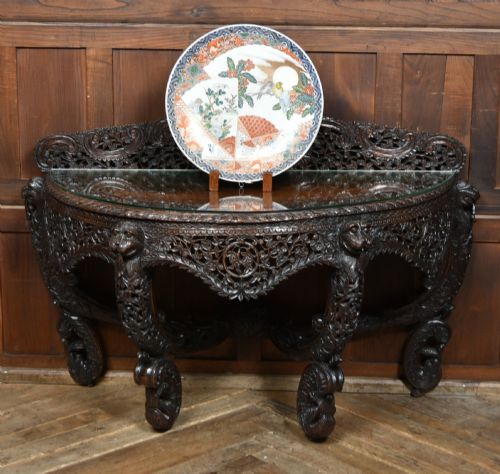
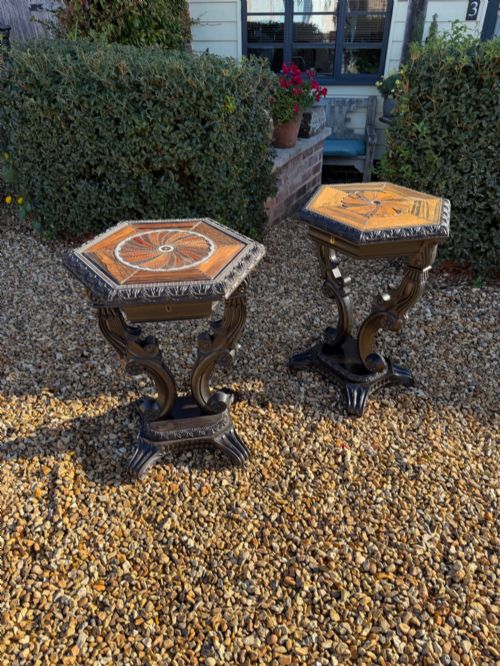
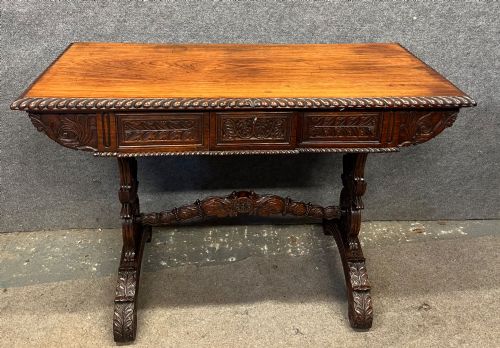
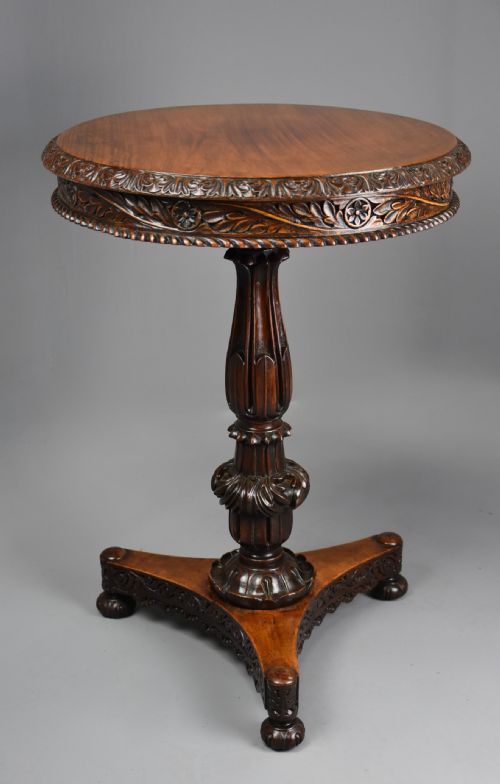
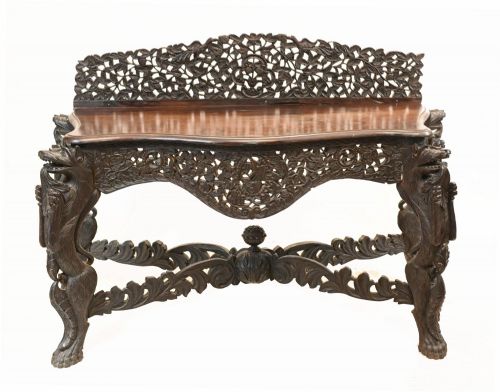
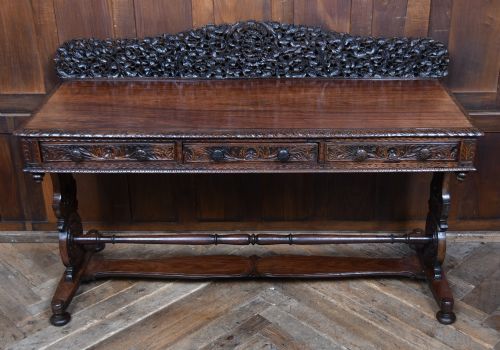
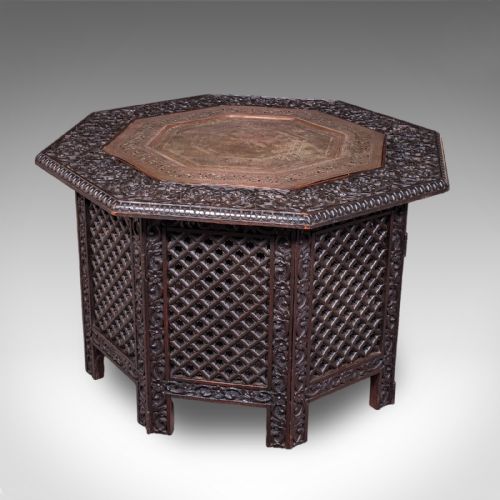
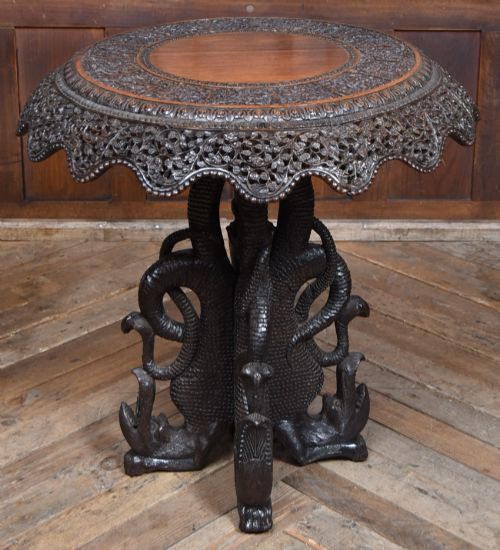
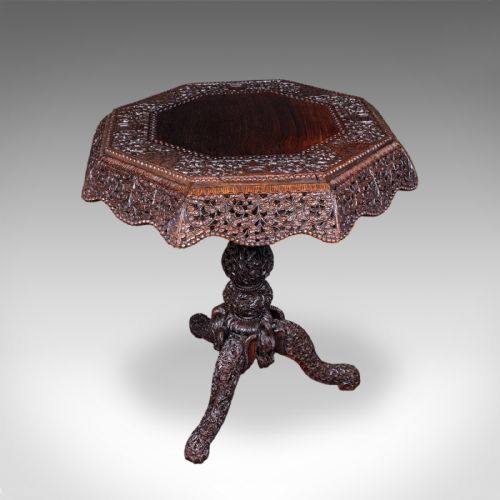
Surfaces feature deep relief carving depicting foliage, animals, and geometric patterns, often complemented by contrasting inlay work in brass or bone.
Colonial Carved Side Table Retail Price Guide 2026
Typical asking prices for colonial carved side table among the pieces listed under this phrase on Sellingantiques today, from the lower quarter to the upper quarter. They describe what is for sale here now, not the wider market.
Several tables feature painted wooden tusks projecting from carved elephant heads beneath the top.
Craft and definition
The distinction between ordinary and exceptional examples rests upon the crispness of the chisel work and the depth of the relief carving.
Superior items display careful selection of timber grain and precise integration of inlay materials, whilst simpler pieces rely on repetitive surface pattern.
The Colonial Carved Side Table Glossary
- Anglo-Indian
- Furniture made in India during the British period, combining local timber and carving skills with European furniture forms. This fusion created unique tables suited to colonial and domestic interiors.
- Padouk
- A heavy tropical hardwood valued for its durability and rich reddish-brown colour. It provided a stable ground for intricate carving on nineteenth-century tables.
- Hoshiarpur
- A town in Punjab renowned for intricate woodwork involving delicate inlay. Tables from this centre feature complex geometric patterns in bone or brass.
- Teapoy
- A small table traditionally used for holding tea equipment or serving refreshments. Many surviving examples incorporate lidded compartments or carved surfaces.
- Tilt-top
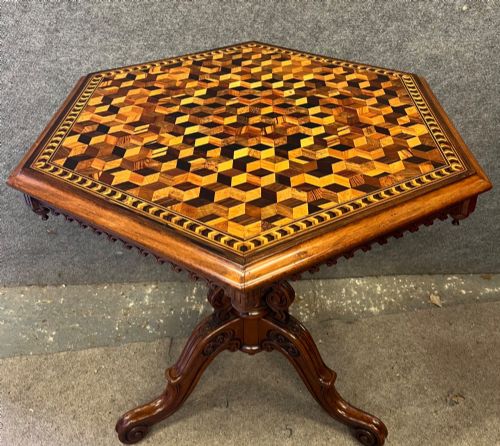
- A tabletop hinged to a central pedestal allowing the surface to fold vertical when not in use. This mechanism appears on various nineteenth-century occasional tables.
Colonial Carved Side Table: Frequently Asked Questions
What is a colonial carved side table?
These tables are functional items of furniture produced in colonial territories such as India and Burma during the nineteenth and early twentieth centuries. They combine European forms with traditional local craftsmanship.
Craftsmen utilised native timbers like teak and padouk to build occasional, console, and side tables. The resulting pieces reflect historical cross-cultural design exchanges.
How do I identify an Anglo-Indian table?
Anglo-Indian tables typically feature dense tropical hardwoods covered in deep, intricate floral or figural carving. Common motifs include elephants, peacocks, and dense foliage.
Many examples incorporate contrasting inlay materials such as bone or brass set into octagonal or circular tops. The construction methods blend British furniture patterns with local woodworking traditions.
How were these tables used originally?
Colonials and wealthy locals utilised these tables in sitting rooms and parlours for serving tea, displaying ornaments, or playing games. Smaller occasional tables could be moved easily around domestic interiors.
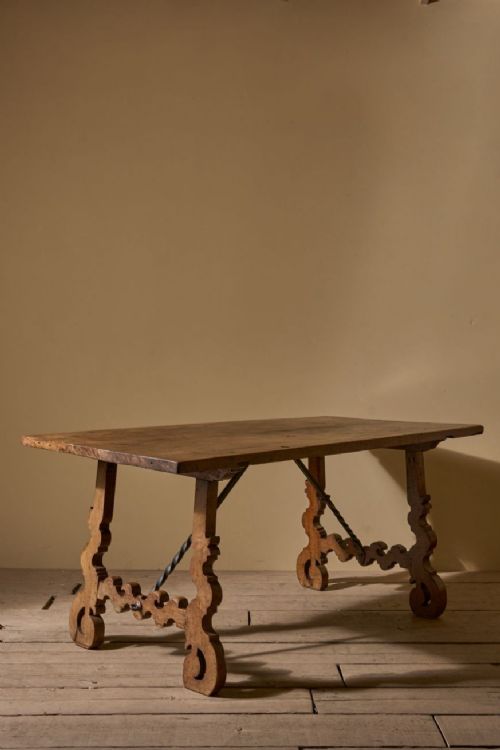
Chess top variants provided specific surfaces for recreation, whilst three-tier buffets and console tables offered storage and display space in reception rooms.
How do I care for a carved wooden table?
Preserve the timber by keeping the table away from direct heat sources and sudden humidity changes. Regular dusting with a dry, soft cloth prevents particle buildup in the carved recesses.
Avoid using silicone-based polishes which can discolour the wood and settle permanently within the intricate relief work. Occasional application of suitable wax maintains the natural sheen of the hardwood.