

19th Century Center Table
These pieces stand free in a room rather than against a wall, bringing rich timber and considered proportion to the floor.
19th Century Center Table
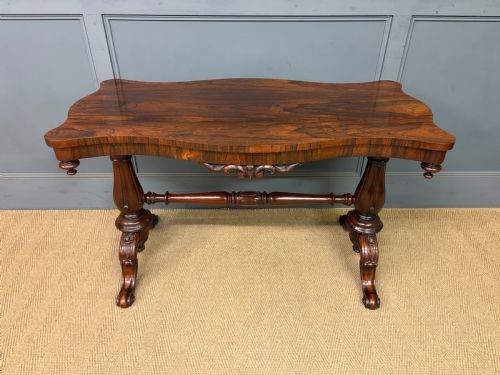
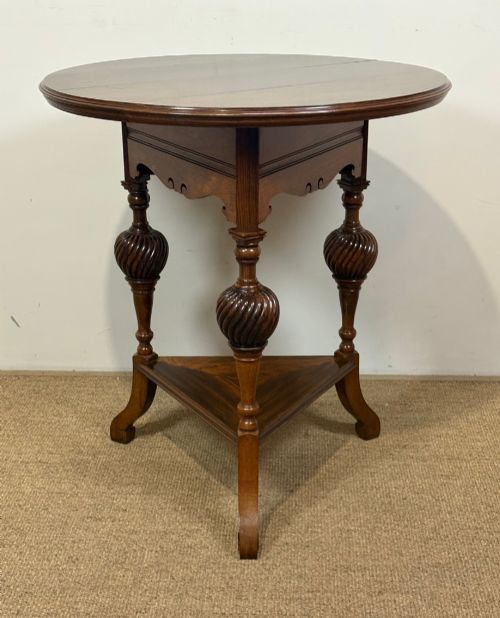
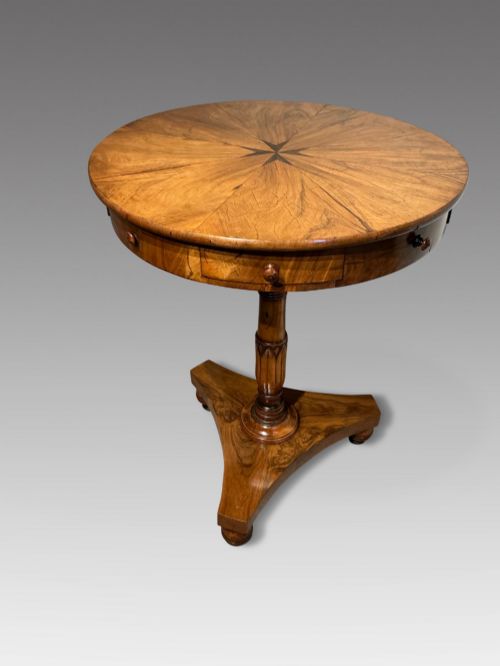
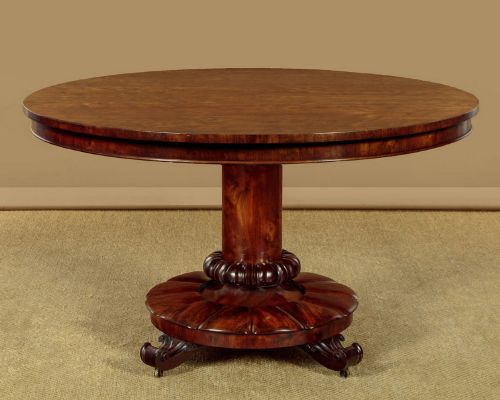
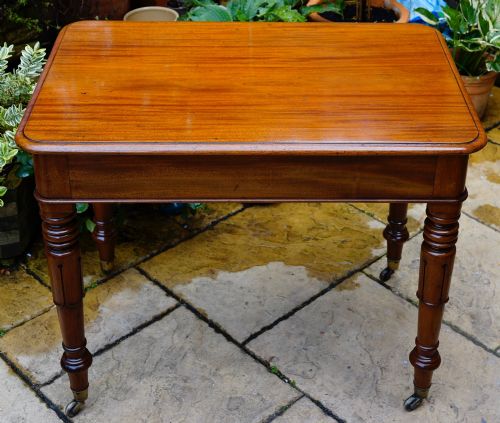
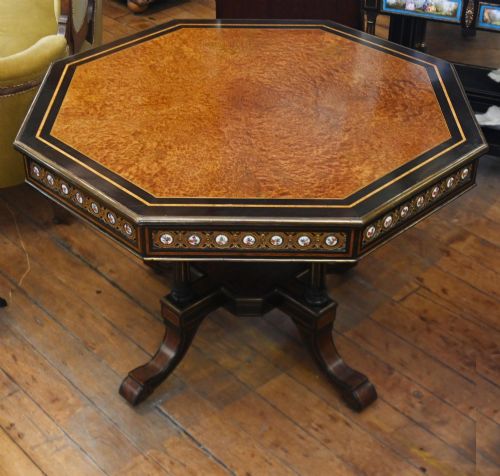
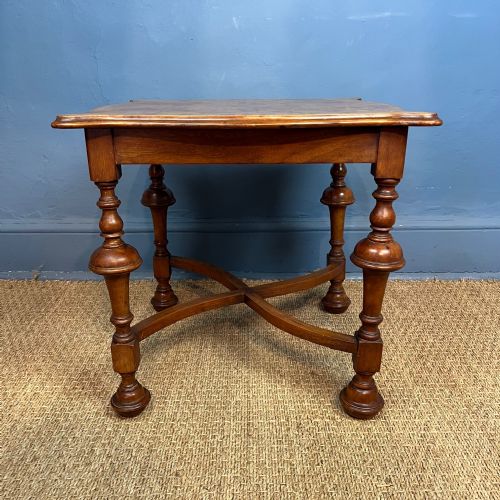
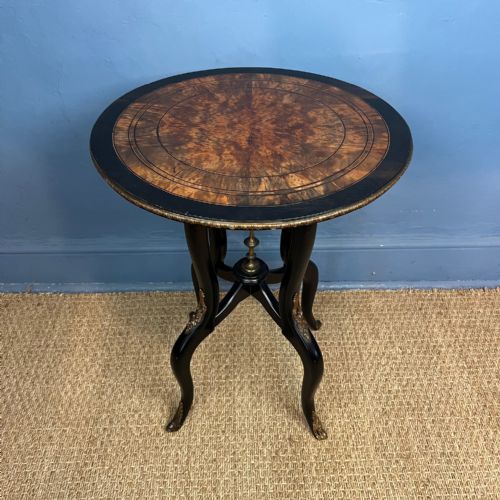
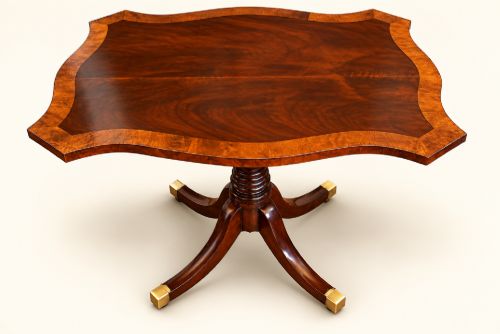
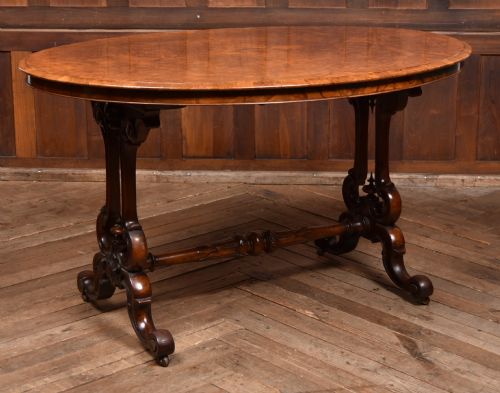
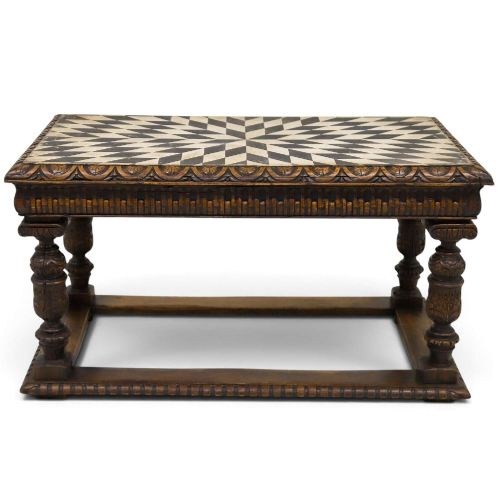
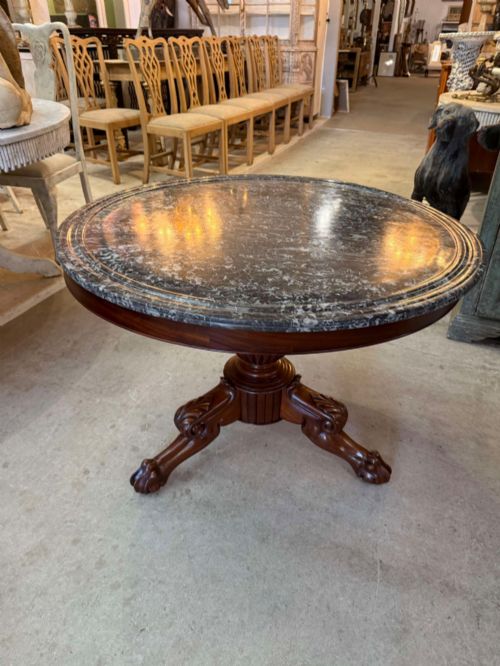
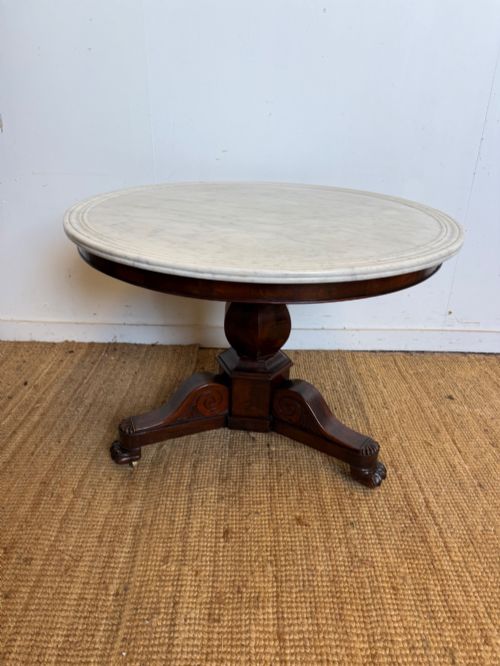
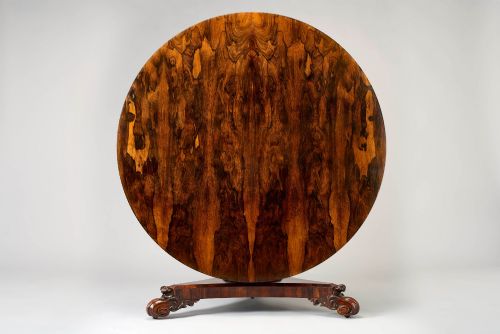
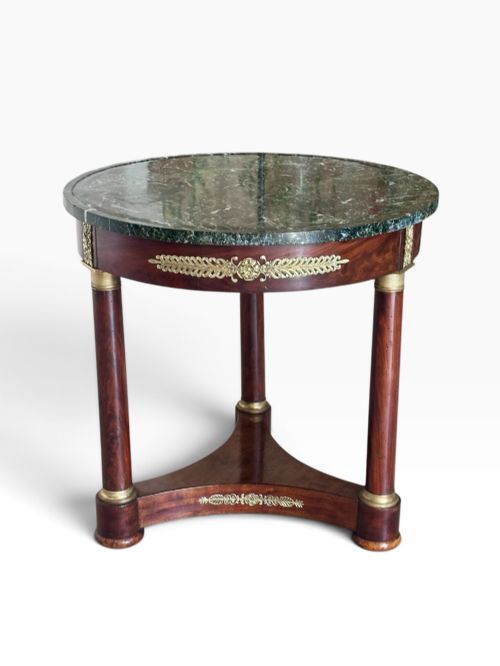
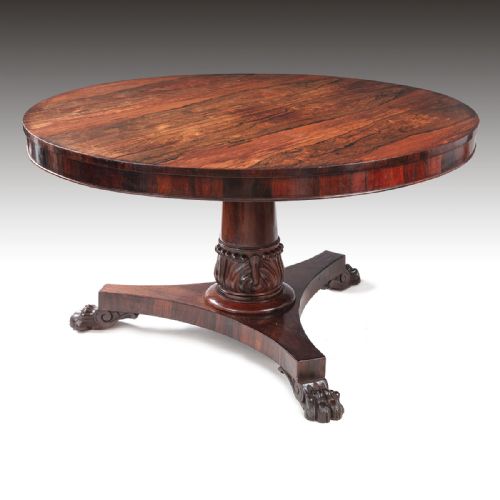
A 19th century centre table takes many forms across this selection, from circular rosewood breakfast tables and oval burr walnut loo tables to marquetry-inlaid library tables and French ormolu-mounted gueridons. These freestanding pieces were designed to be viewed from all sides, frequently sitting in the middle of principal rooms as decorative surfaces or gathering points.
The materials and styles span Victorian, Regency, William IV, and French Revival periods, incorporating hardwoods like mahogany, satinwood, and kingwood alongside detailed marquetry and marble tops. Buyers encounter everything from compact occasional and lamp tables to large dining and pedestal tables supported by triform or quadrapod bases.
Materials and construction methods
Cabinet makers utilised dense exotic timbers such as rosewood and burr walnut, frequently applying intricate marquetry, brass inlay, and gilt-bronze ormolu mounts to enhance the visual weight of the frame. Tops were often constructed with tilt mechanisms or fixed heavily carved pedestals, relying on solid timber subframes to support substantial marble or veneered surfaces.
Joinery techniques combined traditional hand-cut framing with turned and carved solid supports, pedestals, and paw feet. Marquetry panels brought together contrasting veneers like satinwood and kingwood, whilst French polishing finished the timber to highlight natural grain patterns.
19th Century Center Table Retail Price Guide 2026
Typical asking prices for 19th century center table among the pieces listed under this phrase on Sellingantiques today, from the lower quarter to the upper quarter. They describe what is for sale here now, not the wider market.
The listings here incorporate timber species from mahogany and rosewood to coromandel, padauk, and burr walnut.
Distinctions in execution and design
The standard of a 19th century centre table rests upon the crispness of its hand-carving, the precision of its marquetry inlay, and the depth of figure within the rosewood or burr walnut veneers. Superior examples display seamless alignment in complex wood patterns and use heavy, fire-gilded ormolu mounts rather than simpler cast metal.
Structural integrity of the central pedestal or leg assembly dictates the resilience of the piece, particularly on tilt-top or heavy marble designs. Maker attribution, through stamps or known workshop signatures, separates standard domestic production from pieces produced by premier cabinet makers.
Edward Holmes Baldock·Francois Linke·Gillows
The 19th Century Center Table Glossary
- Marquetry
- Decorative veneer work forming pictures or geometric patterns using various woods, shells, or metals. This technique adorned the tops of many formal Victorian and French pieces.
- Ormolu
- Gilded bronze mounts applied to furniture edges, legs, and aprons. This decorative metalwork is typical of French Empire and revival tables.
- Tilt-top
- A hinged table top that folds vertically to store against a wall when not in use. This mechanism is common on breakfast and loo tables from the period.
- Pedestal
- A central supporting column rising from a footed base rather than conventional corner legs. These often feature carved scrollwork, triform shaping, or paw feet.
- Gueridon
- A small French freestanding table designed for display or holding lights. These circular pieces frequently incorporate marble tops and ormolu mounts.
19th Century Center Table: Frequently Asked Questions
Where did these tables sit?
These tables stood unanchored in the middle of drawing rooms, libraries, and grand hallways. Their freestanding design allowed people to walk entirely around them.
In period homes, they acted as central display surfaces for lamps, books, and decorative objects, or served practical purposes for dining and breakfast.
What is a loo table?
A loo table is a large circular or oval table designed for the nineteenth-century card game of loo. These heavy pieces usually feature tilt tops and sturdy pedestal bases.
Because of their generous proportions, they frequently double as large dining or centre tables in modern interiors.
How do I tell Regency from Victorian pieces?
Regency tables, dating from the early nineteenth century, tend to show cleaner classical lines, flame mahogany veneers, and restrained brass detailing. They reflect a strong influence of ancient Greek and Roman design.
Victorian pieces, produced later in the century, often embrace heavier proportions, elaborate carved walnut, intricate marquetry, and revival styles like French Louis XV.