




Teak Occasional Table
A teak occasional table brings rich colonial craftsmanship and intricate carving into a modern room as a striking side or coffee table.
Teak Occasional Table
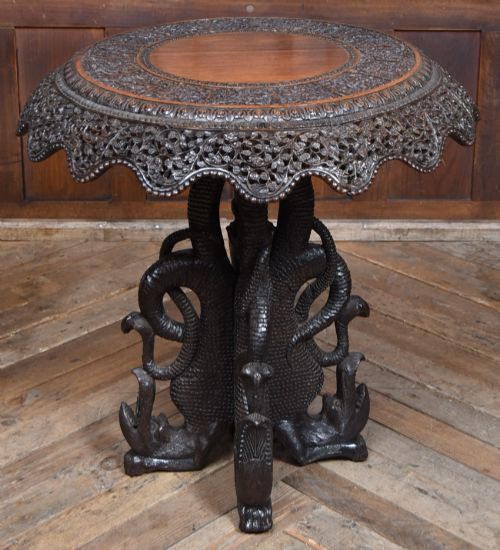
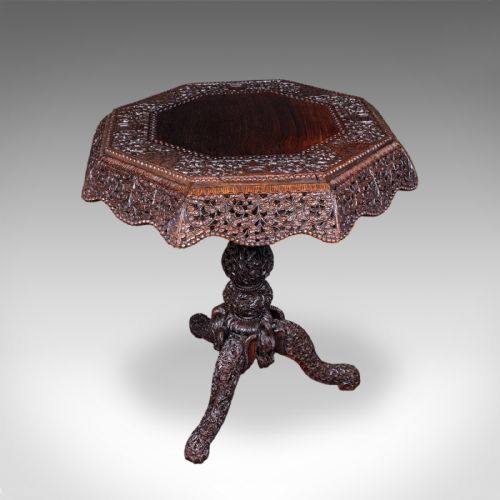
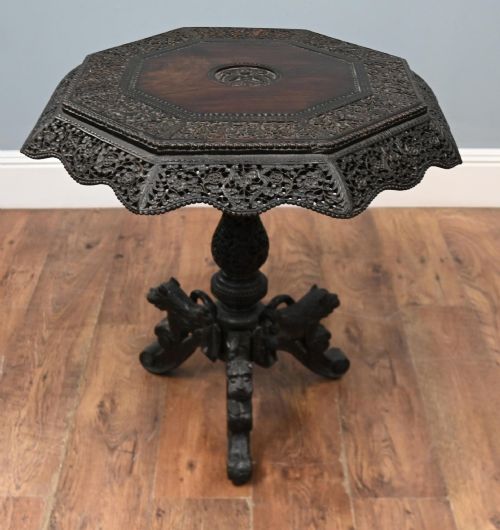
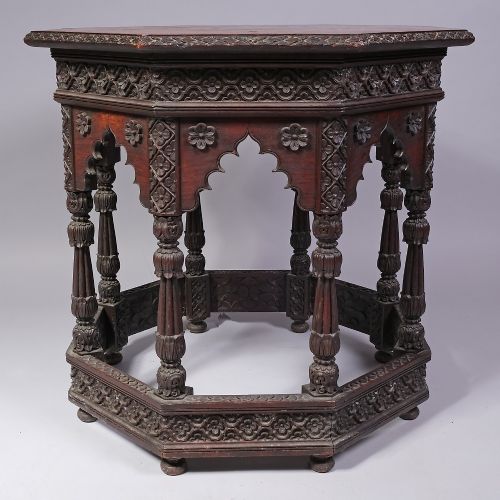
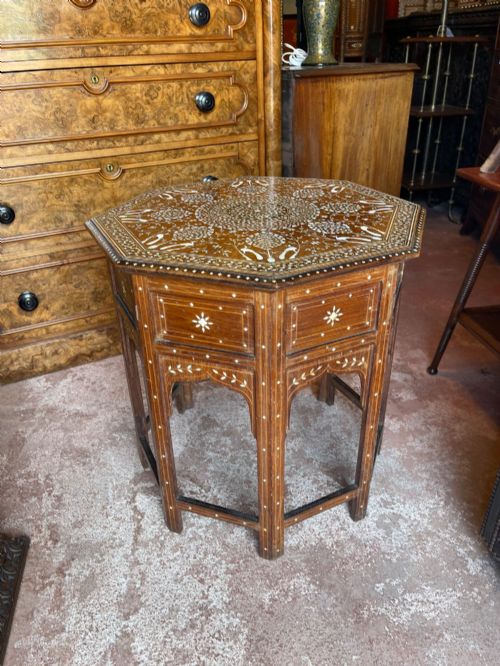
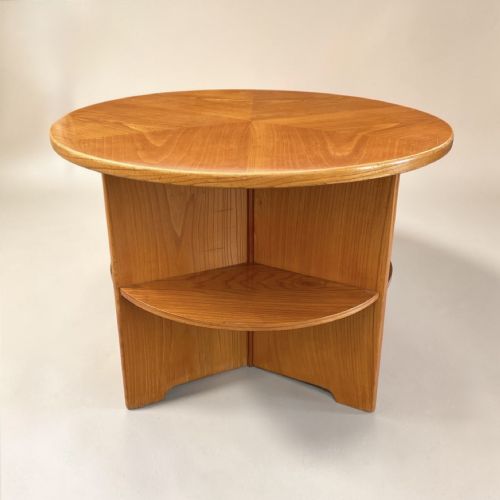
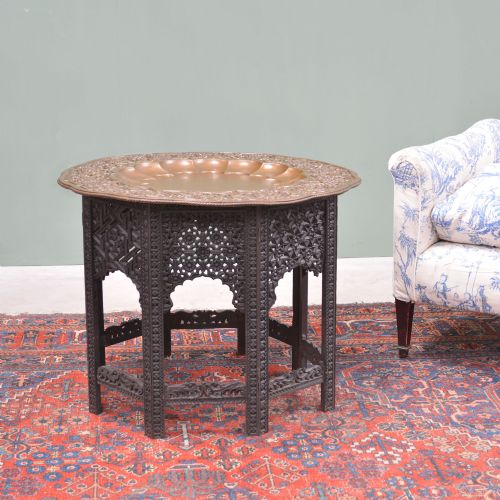
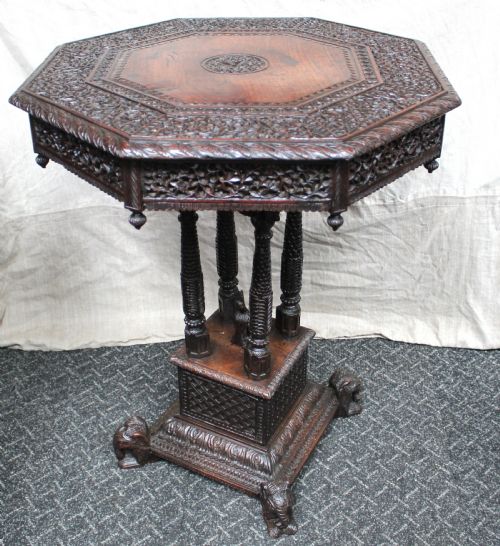
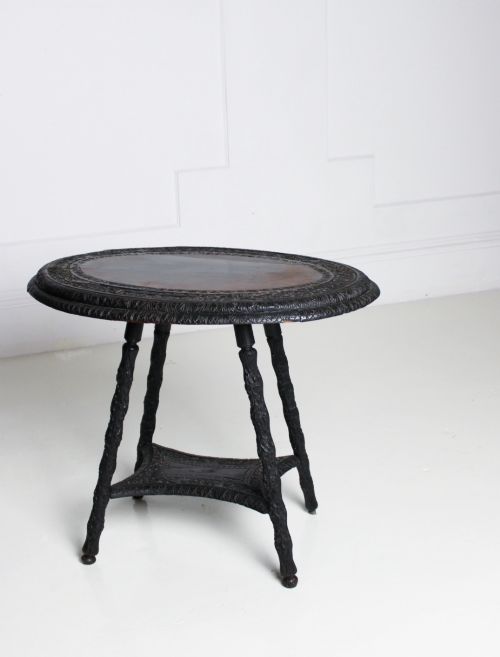
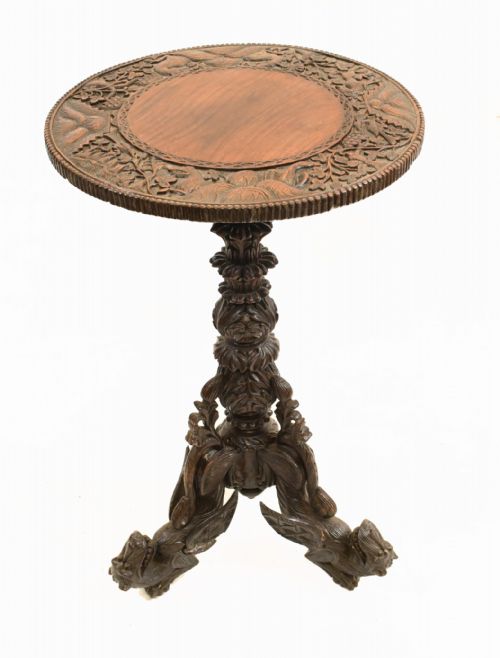
When searching for a teak occasional table, buyers encounter a rich variety of nineteenth- and early twentieth-century pieces originating predominantly from the Indian subcontinent and Burma. These include octagonal folding tables, tray top tables, nests, and low coffee tables produced during the Victorian and Edwardian eras.
The regional styles represented are largely Anglo-Indian, Burmese, and colonial, often displaying distinct local motifs such as elephants, peacocks, and intricate geometric fretwork. Side tables and plant stands designed for campaign or domestic use form the core of what is available on this page.
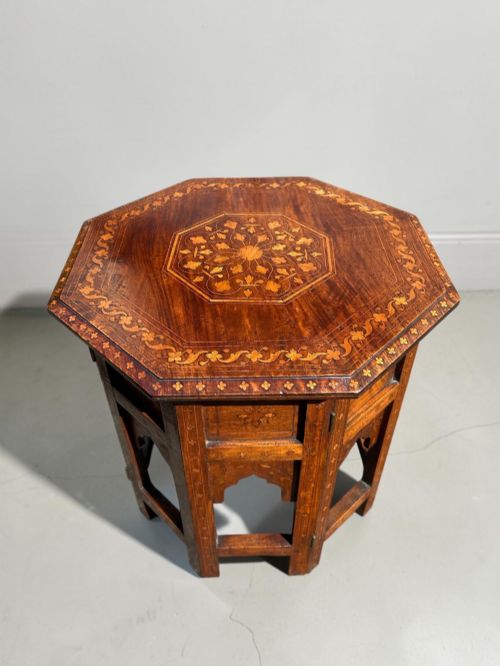
Many examples utilise the folding arcaded base, reflecting the practical portability required by nineteenth-century households while delivering dense surface decoration. Whether circular, oval, or octagonal, each form serves as a functional small table with a distinct historical narrative.
Materials and Construction
The primary structural timber across these pieces is dense teak, frequently supplemented by rosewood, padouk, and various exotic hardwoods chosen for their durability and deep grain. Artisans employed traditional joinery combined with collapsible folding mechanisms that allowed heavy occasional tables to be packed flat.
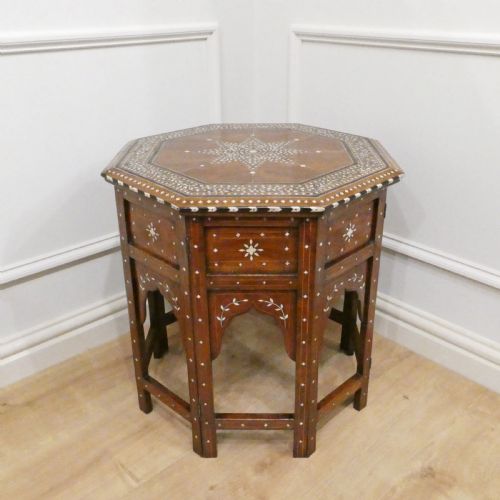
Inlaid elements, particularly bone inlay and brass stringing, were meticulously set into recesses within the hardwood top. The construction ranges from rigid pedestal and tripod bases to clever pivoting tray tops and collapsible spider-web folding stands.
Teak Occasional Table Retail Price Guide 2026
Typical asking prices for teak occasional table among the pieces listed under this phrase on Sellingantiques today, from the lower quarter to the upper quarter. They describe what is for sale here now, not the wider market.
Listings feature teak occasional tables spanning the Victorian era through the early twentieth century, incorporating bone, brass, and copper inlay.
Assessing Quality
Quality in these pieces is dictated by the depth, sharpness, and ambition of the hand-carving across the top and base. Finer examples display crisp undercutting and well-defined animal figures rather than shallow, hurried incisions.
The precision of the inlay work further separates standard items from exceptional ones, with tight joints between the teak ground and the bone or brass inserts. Furthermore, the structural integrity of folding mechanisms and the choice of dense, highly figured timber elevate the standing of a piece.
The Teak Occasional Table Glossary
- Anglo-Indian
- Descriptive of decorative arts and furniture produced in India under British rule, frequently combining British furniture forms with traditional Indian craftsmanship. These pieces often feature dense carving and exotic hardwoods.
- Hoshiarpur
- A North Indian city renowned for its distinctive woodwork, particularly tables and boxes heavily inlaid with bone and resinous compounds within intricate geometric patterns. Items from this region are easily identified by their luminous, mosaic-like surfaces.
- Campaign furniture
- Portable furnishings designed to be easily dismantled and transported for military or colonial travel. Many folding occasional tables from the nineteenth century share this practical engineering.
- Tray top table
- A table featuring a removable or fixed tray with a raised rim, often paired with a folding or collapsible stand. This form allowed for easy serving and compact storage.
- Fretwork
- Ornamental design created by cutting patterns through solid wood using a piercing technique. It provides the characteristic lightweight, lace-like screens seen on many eastern occasional tables.
Teak Occasional Table: Frequently Asked Questions
How do I care for a teak table?
Maintain the timber by dusting regularly with a dry cloth and occasionally applying a light, natural wax to nourish the grain. Avoid placing the table near direct heat sources or strong sunlight to prevent the wood and delicate inlay from drying out.
Keep moisture away from the surface by using coasters, especially on pieces featuring bone or metal inlay where trapped water can cause lifting.
Are these tables sturdy enough for daily use?
Most antique occasional tables are remarkably durable due to the dense hardwoods used in their construction. Folding and campaign versions require gentle handling when opening and closing to preserve the original hinges and wooden pins.
While perfectly suited to hold lamps, books, or tea trays, heavy loads should be avoided on delicate folding bases or intricate fretwork shelves.
What does elephant table mean?
An elephant table refers to occasional furniture featuring structural supports or carved motifs shaped like elephants, often with their trunks raised. These pieces originated primarily in the Bombay presidency during the late nineteenth century.
They combine whimsical figurative carving with practical tabletop surfaces, making them highly decorative conversation pieces.
How can I date an Anglo-Indian table?
Dating relies on examining the materials, construction methods, and stylistic influences present in the piece. Late nineteenth-century examples often feature complex brass and bone inlay combined with dense, deep-relief carving.
Earlier nineteenth-century pieces may display simpler campaign folding frames or rich padouk timbers, while twentieth-century variants sometimes incorporate Art Nouveau curves or simpler geometric layouts.