





Carved Teak Tripod Table
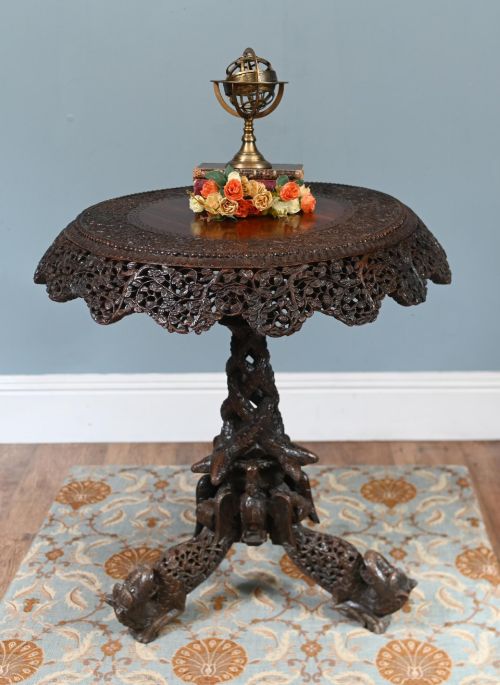
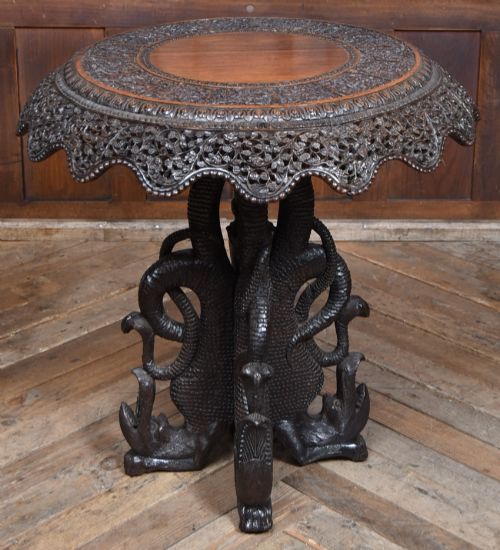
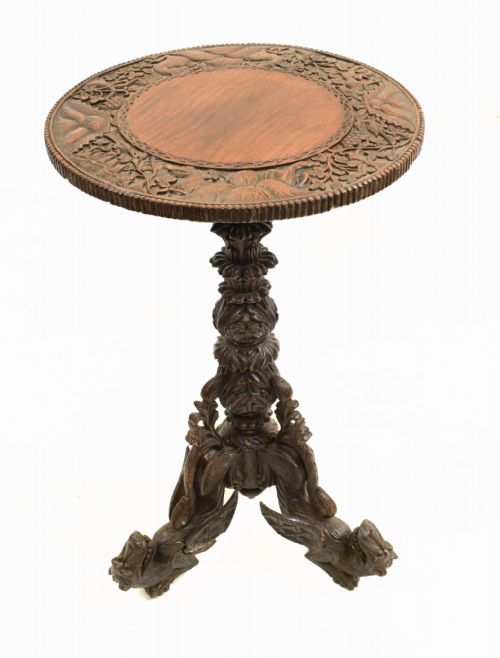
These carved teak tripod tables bring dense foliage and animal motifs straight from colonial workshops into the home.
Carved Teak Tripod Table
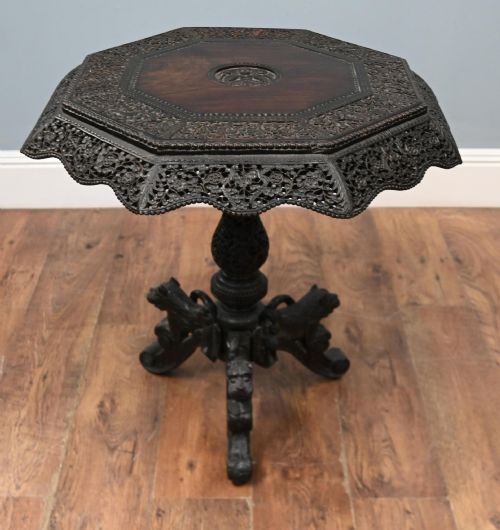
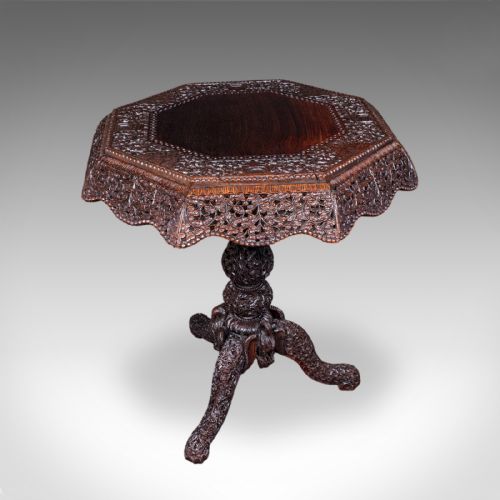
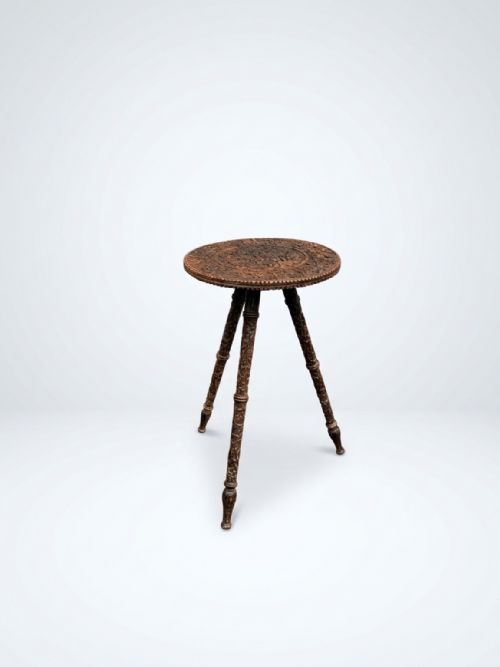
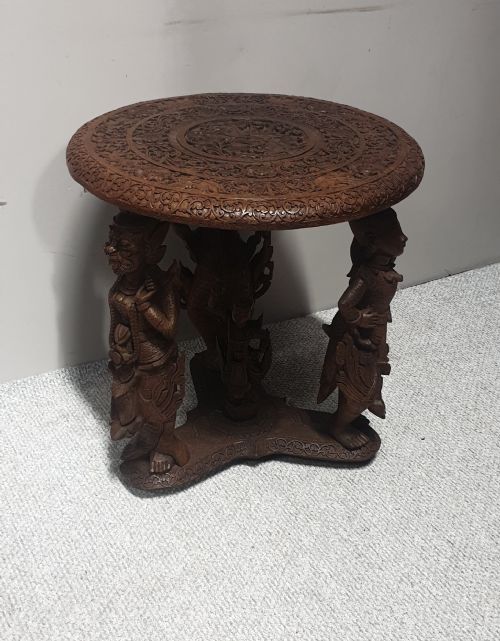
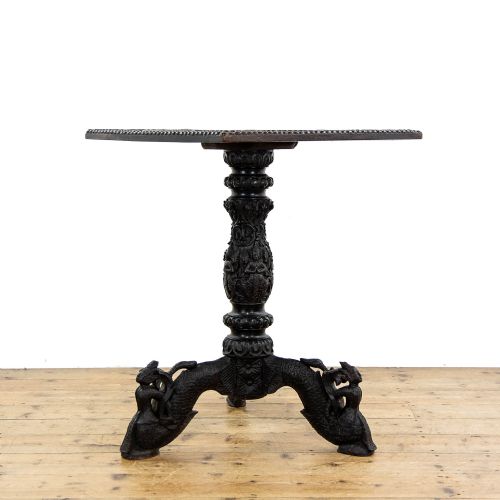
A carved teak tripod table combines a circular top with a three-legged base, taking the form of side tables, occasional tables, tilt-top tables, and plant stands. These pieces appear across styles such as Anglo-Indian, Anglo-Burmese, and Colonial, dating from the nineteenth century into the early twentieth century.
Buyers most frequently encounter Burmese side tables and Anglo-Indian pedestal forms featuring deep relief carving. Many examples incorporate tilt-top mechanisms or specific regional motifs like elephants and foliage originating from centres such as Bombay and Hoshiarpur.
How they were made
Carpenters constructed these tables primarily from solid teak, alongside secondary timbers such as padouk, rosewood, and general hardwood. Artisans shaped the tripod bases and circular tops using hand tools before executing intricate relief carvings across the surfaces.
Workshops embellished selected tables with contrasting materials, inserting bone inlay and ebony inlay to accentuate the floral and geometric patterns. These inlay techniques demand precise channel cutting and careful fitting of delicate sections into the dense wood.
Carved Teak Tripod Table Retail Price Guide 2026
Typical asking prices for carved teak tripod table among the pieces listed under this phrase on Sellingantiques today, from the lower quarter to the upper quarter. They describe what is for sale here now, not the wider market.
What varies in quality
The distinction between ordinary and exceptional work rests on the depth and sharpness of the carving. Superior pieces display crisp undercut foliage and well-defined animal figures, whereas lesser examples show shallow, softened tool marks.
Integration of the timber and secondary materials also dictates the standard of the piece. Tables featuring tight joinery in the tripod mechanism and precisely fitted bone or ebony inlay represent the upper tier of production.
The Carved Teak Tripod Table Glossary
- Tilt-top table
- A table with a hinged top that folds flat for storage when not in use. This mechanism relies on a clever catch and a block fitting to keep the surface stable.
- Tripod base
- A support structure consisting of three legs branching from a central column. This design ensures stability on uneven floors.
- Anglo-Indian
- A style describing furniture made in India during the British colonial period, often combining European forms with local carving traditions. These pieces reflect a distinct cross-cultural exchange in design.
- Bone inlay
- A decorative technique where small pieces of bone are set into carved recesses within the wood. Artisans use this method to create striking contrast and intricate geometric patterns.
Carved Teak Tripod Table: Frequently Asked Questions
Where were carved teak tripod tables made?
Makers produced these tables in various regions across the Indian subcontinent and Burma during the nineteenth and early twentieth centuries. Specific regional centres, including Bombay and Hoshiarpur, developed distinct carving traditions that identify the origin of each piece.
British colonial influence shaped the forms to suit European domestic habits while retaining traditional local ornamentation. Artisans utilised native timbers such as teak and padouk available locally.
How do I use a tilt-top table?
The tilting mechanism allows the top to pivot vertically so the table can stand flat against a wall when not in use. A small wooden catch or peg usually secures the top in the horizontal position.
Take care when operating older mechanisms to avoid straining the hinge block beneath the surface. Ensure the catch is fully engaged before placing objects on the table.
What is Hoshiarpur inlay work?
Hoshiarpur work refers to a specific style of intricate inlay originating from the Punjab region. Artisans combined delicate bone and ebony elements set into dense teak or shisham wood.
The resulting surfaces display elaborate geometric patterns and scrolling foliage. This regional technique creates a sharp visual contrast against the dark background timber.
How do I date an antique carved table?
Dating relies on examining the timber preparation, tool marks, and stylistic characteristics. Nineteenth-century examples often display hand-sawn board marks and deeper, more varied relief carving compared to later production.
Documentation, regional construction methods, and material choices help narrow down the decade. Comparing the carving depth and inlay precision against dated examples provides a reliable guide.