







Carved Hardwood Wine Table
A carved hardwood wine table brings tactile presence and rich regional character to a room, offering a compact surface suited for holding a glass or a lamp.
Carved Hardwood Wine Table
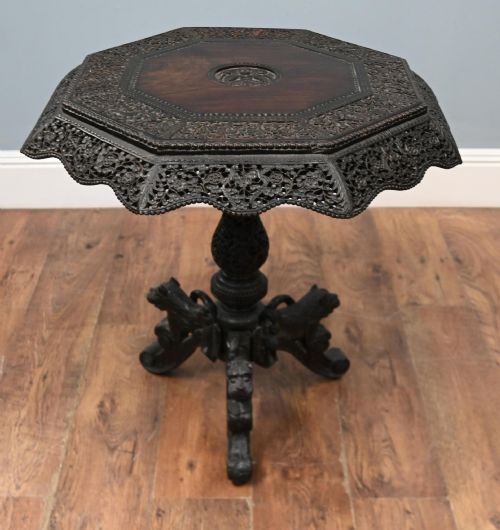
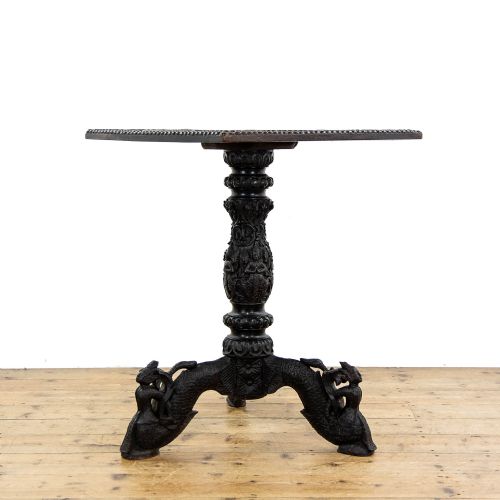
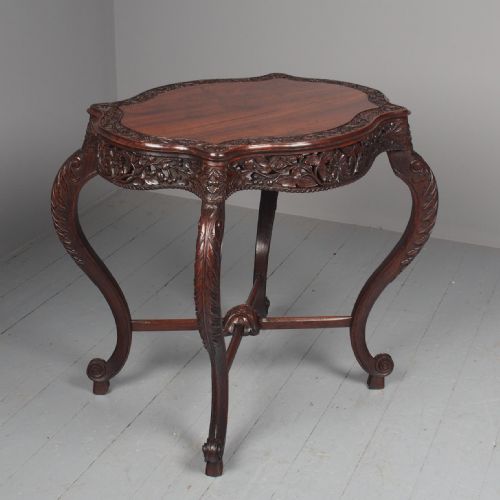
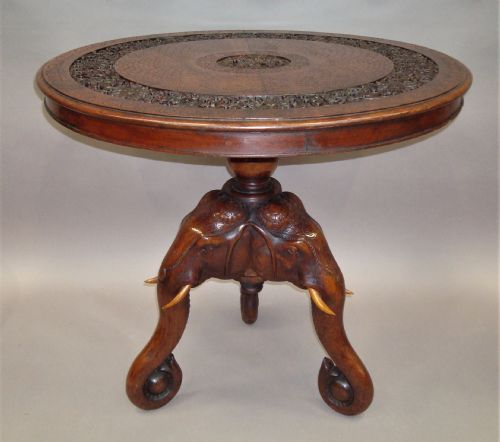
When you search for a carved hardwood wine table, you encounter a selection of nineteenth-century occasional tables, side tables, and low stands originating from regions such as China, Burma, and India. These pieces often overlap in utility with lamp tables and small centre tables, serving as versatile furnishings in Victorian interiors.
The most common examples on this page are constructed from dense timbers and feature elaborate surface decoration, including dragon motifs, foliage, and figural carving. Styles range from Anglo-Indian and Chinese Qing Dynasty to Japanese Meiji period work, reflecting nineteenth-century global trade and aesthetic exchange.
Materials and construction
Makers utilised dense timbers such as teak, padouk, rosewood, and general hardwoods, selected for their stability and capacity to hold crisp, deep relief carving. These materials are frequently left in their natural dark finish or treated with ebonising.
Selected examples incorporate contrasting inserts, such as inset marble tops or cloisonné enamel panels, requiring precise joinery to house stone or metalwork securely within a wooden frame. Folding mechanisms and tilt-top structures appear among specific campaign and occasional forms, demonstrating practical engineering alongside decorative carving.
Carved Hardwood Wine Table Retail Price Guide 2026
Typical asking prices for carved hardwood wine table among the pieces listed under this phrase on Sellingantiques today, from the lower quarter to the upper quarter. They describe what is for sale here now, not the wider market.
Listings feature nineteenth-century occasional forms utilising padouk, teak, rosewood, and ebonised hardwood alongside marble and cloisonné inserts.
Evaluating craftsmanship
The distinction between tiers of quality rests upon the depth, sharpness, and undercut precision of the carving, where master carvers achieved genuine three-dimensional relief rather than shallow surface scoring. The selection of the timber also dictates the finish, with highly figured padouk and richly grained rosewood sitting at the upper end of the scale.
Structural integrity separates functional pieces from purely decorative ones, particularly in tripod bases and folding joints where stability matters. The integration of inset elements, such as marble slabs or enamel panels, tests the precision of the underlying woodwork.
The Carved Hardwood Wine Table Glossary
- Padouk
- A heavy, durable tropical hardwood with a reddish hue that darkens with age. It responds exceptionally well to detailed hand carving.
- Anglo-Indian
- A descriptive term for furniture made in India during the British colonial period, often combining British furniture forms with traditional Indian carving techniques.
- Cloisonné
- An ancient technique for decorating metalwork objects with coloured glass pasted into compartments defined by strips of metal. In this context, panels of this work are sometimes inset into table tops.
- Tilt-top
- A table top hinged to a central pillar, allowing the surface to be tilted vertically for storage against a wall when not in use.
- Jardiniere stand
- A tall, small-topped occasional table originally designed to hold a plant pot or flower bowl.
Carved Hardwood Wine Table: Frequently Asked Questions
Where were these tables made?
The pieces originate from various regions including China, Japan, Burma, and India, reflecting nineteenth-century trade and colonial connections. Many were produced specifically for export to Western markets during the Victorian era.
Workshop traditions varied significantly by region, resulting in distinct regional motifs such as dragon carvings from China or intricate foliage from the Bombay region.
How do I care for a hardwood table?
Maintain the timber by keeping it away from direct heat sources and sudden humidity changes, which can cause the dense wood to split. Dust regularly with a soft cloth and avoid modern silicone polishes.
For tables with inset marble or cloisonné panels, clean the stone or enamel gently with a damp cloth, ensuring moisture does not seep into the surrounding wood.
Were these originally used for wine?
While nineteenth-century terminology often grouped small occasional surfaces under the heading of wine or lamp tables, their actual functions were versatile. They served as side tables, tea tables, or stands for decorative objects and lighting.
The compact proportions made them easily movable around a Victorian drawing room depending on the immediate requirement.
How can I tell the period?
Dating relies upon timber selection, construction methods, and stylistic markers associated with nineteenth-century production periods like the Victorian era or the Qing Dynasty. Catalogued pieces frequently date from the mid to late nineteenth century.
Examine the underside and joints for hand-tool marks and natural wear patterns consistent with nineteenth-century workshop practices.