

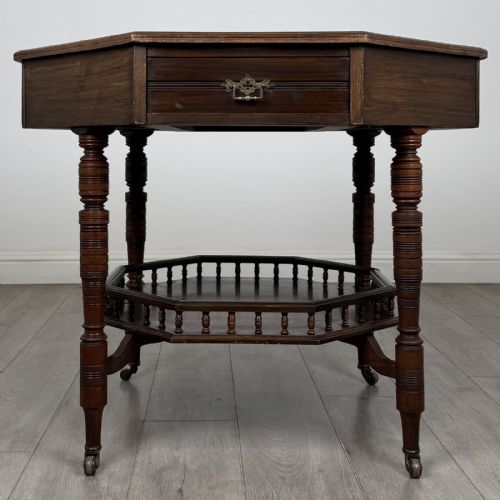
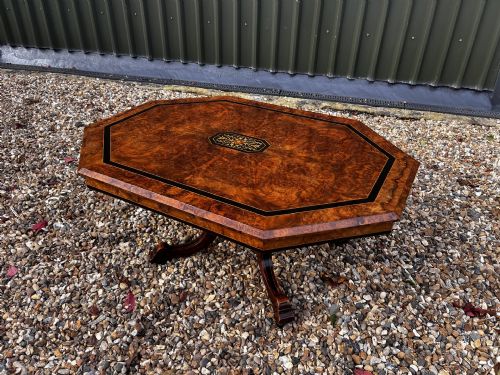
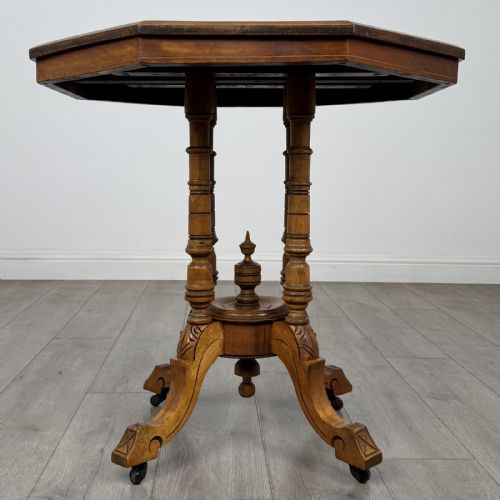
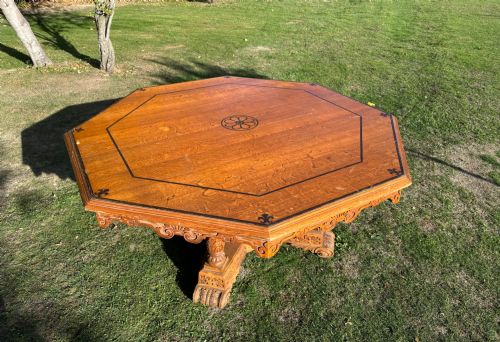
Antique Octagonal Centre Table
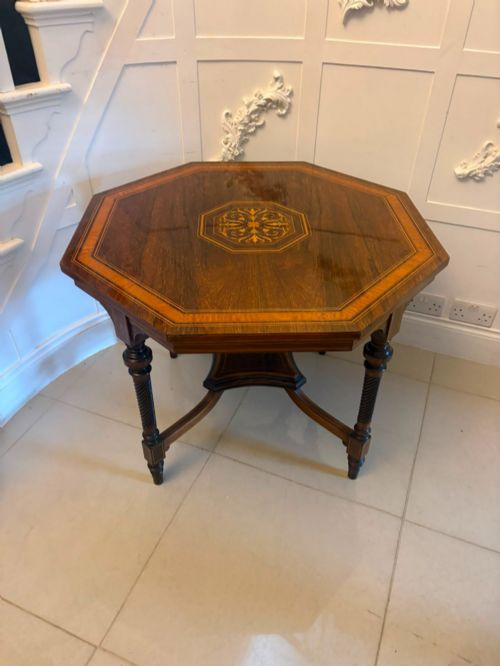
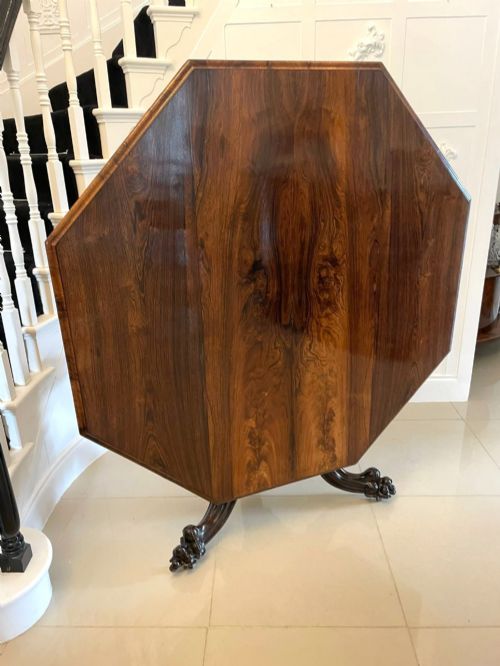
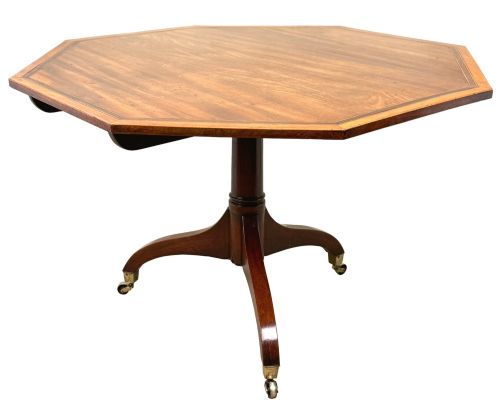
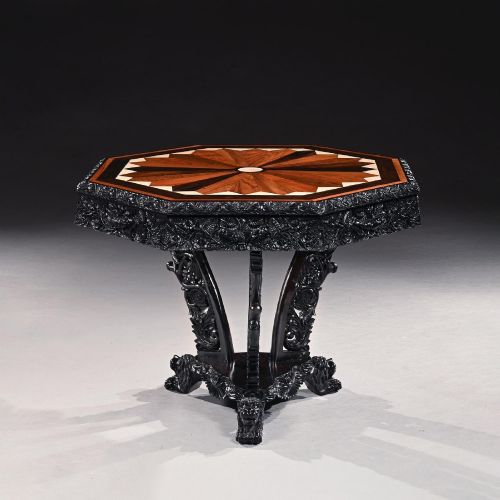
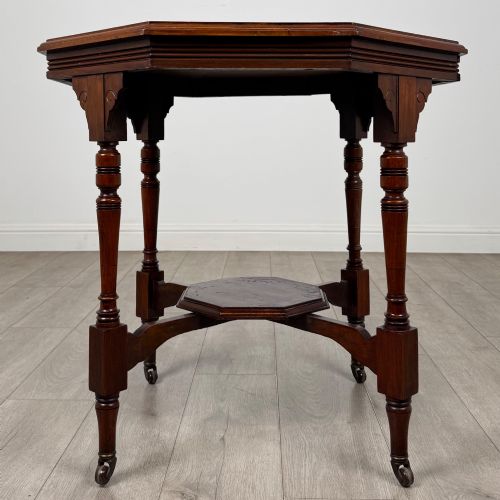
These antique octagonal centre table pieces are striking multi-sided pieces designed to stand free in a room, offering surface space from every angle.
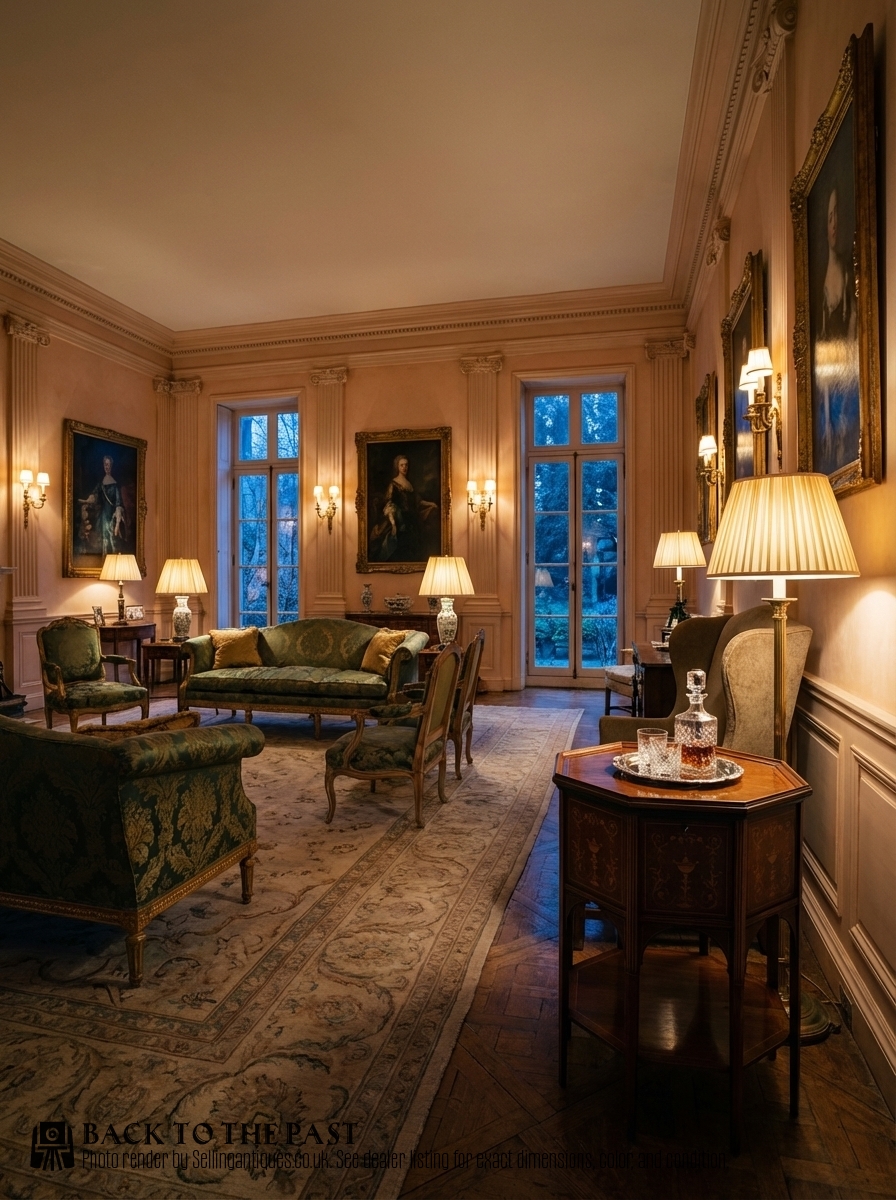
Antique Octagonal Centre Table
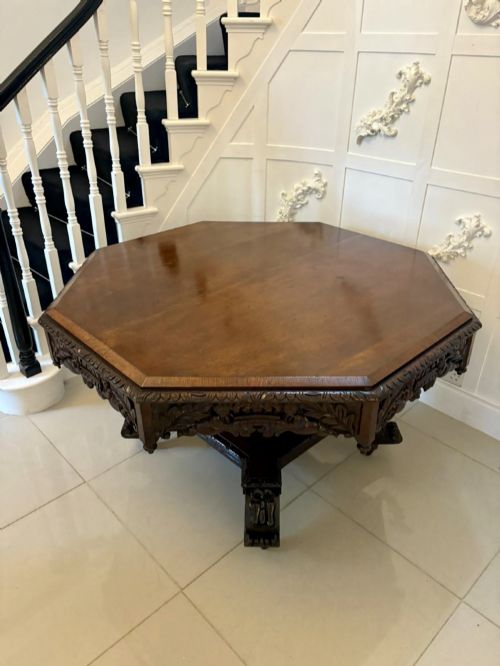
An antique octagonal centre table provides a distinctive geometric alternative to standard round or rectangular designs, typically featuring eight equal sides. These pieces function independently in a room, often positioned prominently in the middle of a library, hall, or drawing room.
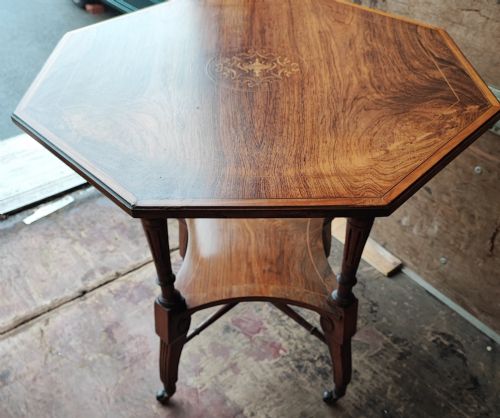
The evidence shows forms ranging from small occasional and lamp tables to larger library tables, drum tables, and chess games tables. Visitors to this page will most frequently encounter Victorian and Edwardian examples constructed for domestic and institutional display.
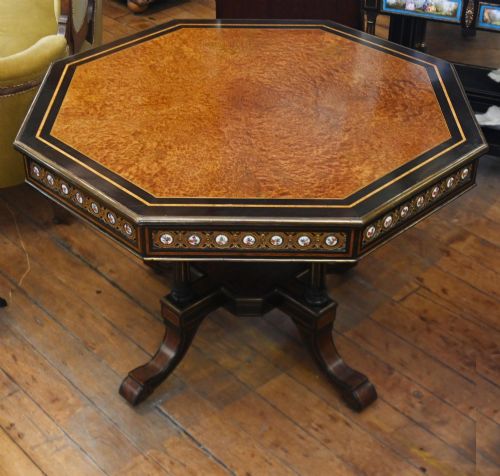
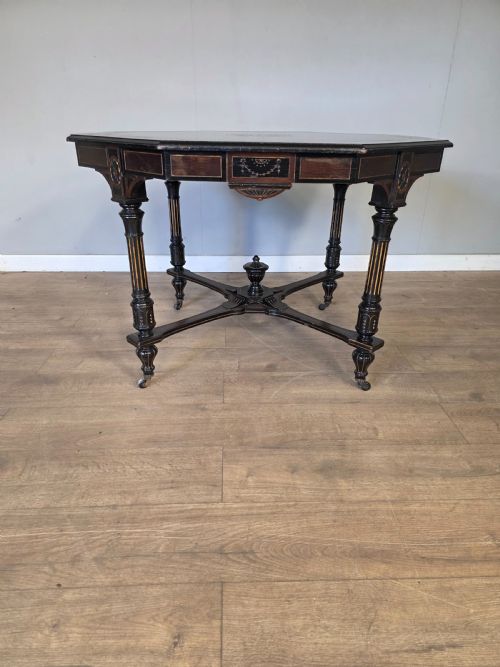
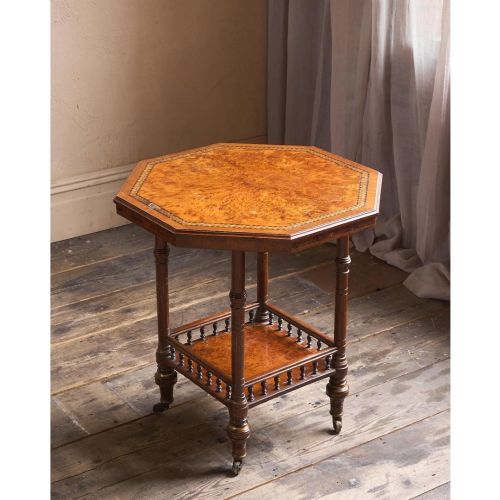
Origins and styles span the Victorian, Edwardian, Gothic Revival, Aesthetic Movement, and Anglo-Indian traditions. Materials vary from dark ebonised wood to lighter satinwood, mahogany, oak, walnut, and amboyna veneer.
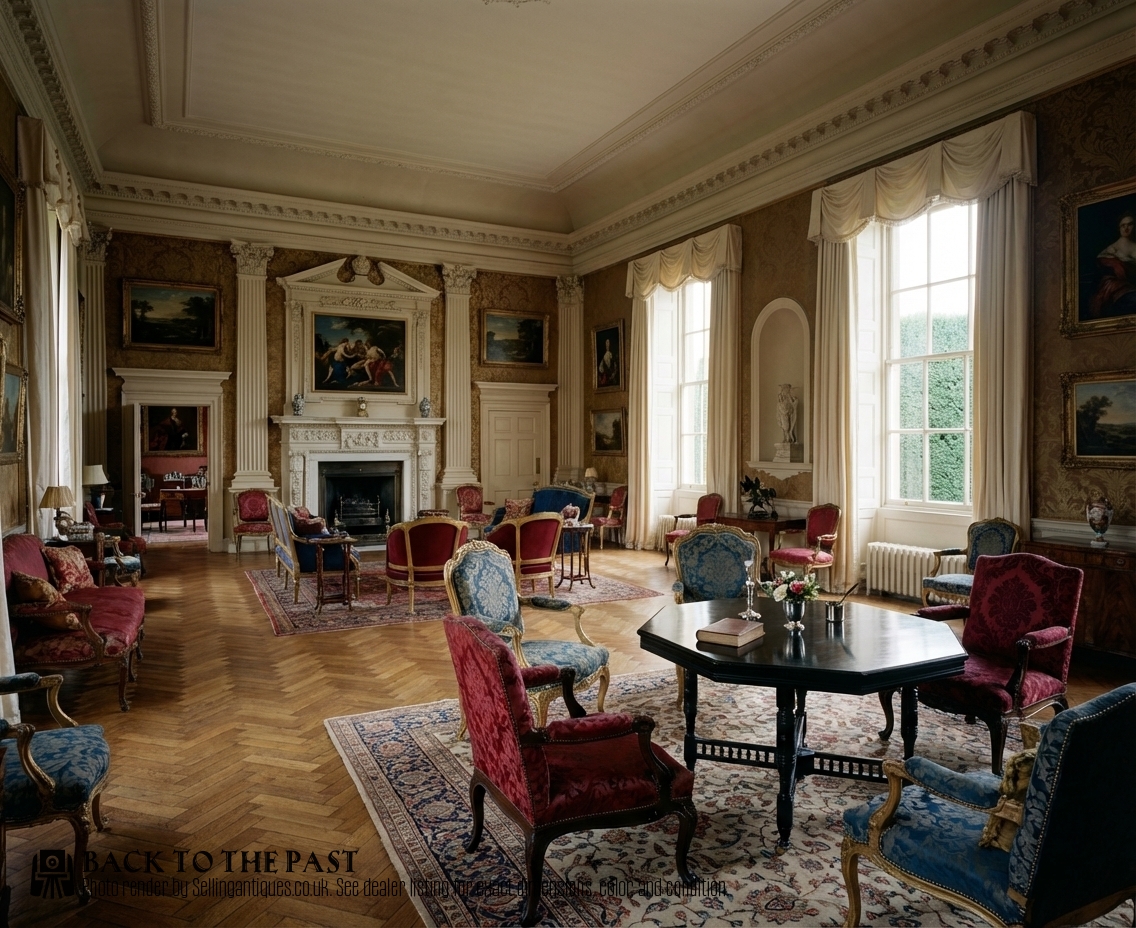
How they were made
Cabinet makers utilised a diverse range of timbers, building structural frames in oak, mahogany, and walnut while applying decorative surfaces of amboyna veneer, satinwood, and boxwood. Brass fittings appear alongside leather inset tops, offering tactile contrast to the wooden structures.
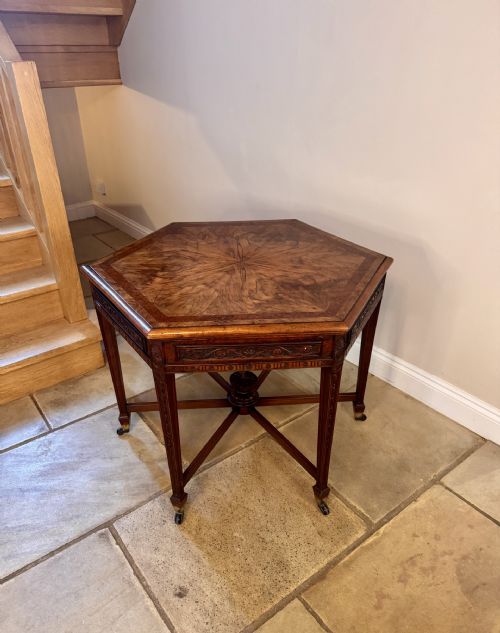
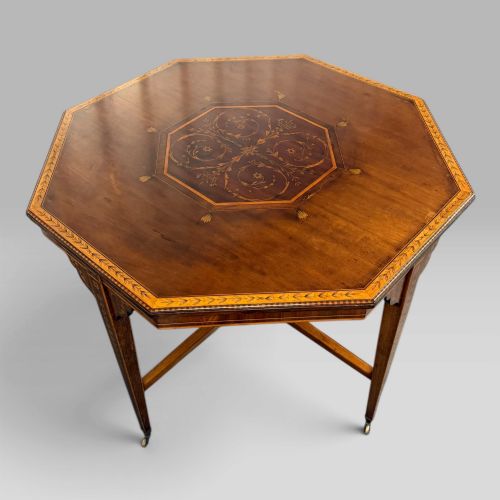
Construction techniques include intricate marquetry inlay, oriental carving, and architectural joinery associated with Gothic Reform and Pugin-inspired designs. Ebonised finishes were achieved by staining and polishing timber to mimic expensive exotic hardwoods.
The integration of multiple woods created complex chess boards and geometric patterns across the eight-sided tops. Structural stability was maintained through sturdy central pillars or four-seat pedestal bases designed to support heavy library volumes or daily use.
Antique Octagonal Centre Table Retail Price Guide 2026
Typical asking prices for octagonal centre table among the pieces listed under this phrase on Sellingantiques today, from the lower quarter to the upper quarter. They describe what is for sale here now, not the wider market.
The documented periods span the Victorian, Edwardian, and early twentieth-century eras, incorporating Gothic Revival and Aesthetic Movement styles.
What varies in quality
Quality rests upon the ambition of the timber selection and the precision of the eight-sided geometry. Pieces featuring finely figured amboyna veneer, satinwood marquetry, or intricate brass mounts sit at the upper end of the range.
The integrity of the construction distinguishes standard domestic items from high-style architect-designed pieces in the Gothic Revival or Aesthetic Movement manner. Superior examples demonstrate seamless joinery at the eight angles and sophisticated carving that respects the strict geometry of the form.
The Antique Octagonal Centre Table Glossary
- Centre table
- A piece finished on all sides designed to stand in the middle of a room rather than against a wall. They provide all-round access and visual interest from every angle.
- Drum table
- A heavy circular or multi-sided library table with a deep top, frequently containing frieze drawers. They typically rest on a central pillar with spreading feet.
- Aesthetic Movement
- A late nineteenth-century design style emphasising visual beauty over narrative meaning. It often incorporates ebonised surfaces and oriental-inspired motifs.
- Marquetry
- The art of applying decorative pieces of veneer to a structure to form intricate designs. This technique appears on high-end table tops using contrasting timbers like satinwood.
- Amboyna veneer
- A highly prized, richly figured wood sourced from tropical trees. It creates a dense, mottled grain pattern visible on select Victorian surfaces.
Antique Octagonal Centre Table: Frequently Asked Questions
Where should an octagonal table go?
These pieces suit positions where they can be viewed from all sides, such as the middle of a reception room, entrance hall, or library. Their eight-sided geometry allows them to break up the linear monotony of standard room layouts.
Because they do not require a wall for support, they function effectively as central display surfaces or large lamp tables within an open space.
How do I date an octagonal table?
Dating relies on identifying stylistic markers, timber choices, and construction methods recorded across Victorian and Edwardian periods. Gothic Revival and heavy oak examples point toward the mid-nineteenth century.
Lighter satinwood pieces with marquetry inlay or ebonised Aesthetic surfaces typically indicate later nineteenth or early twentieth-century manufacture.
Were these tables used for dining?
Certain large drum and library variants were built to accommodate multiple seats for dining or formal study. The evidence includes four-seat configurations designed for communal use.
Smaller octagonal versions served as occasional, lamp, or games tables rather than primary dining furniture.
What is the difference between a library table and an occasional table?
Library tables are generally larger, heavier constructions built to hold substantial books and working materials. They often incorporate frieze drawers and robust structural supports.
Occasional tables are smaller, lighter pieces intended for flexible placement around a room to hold lamps or decorative objects.