
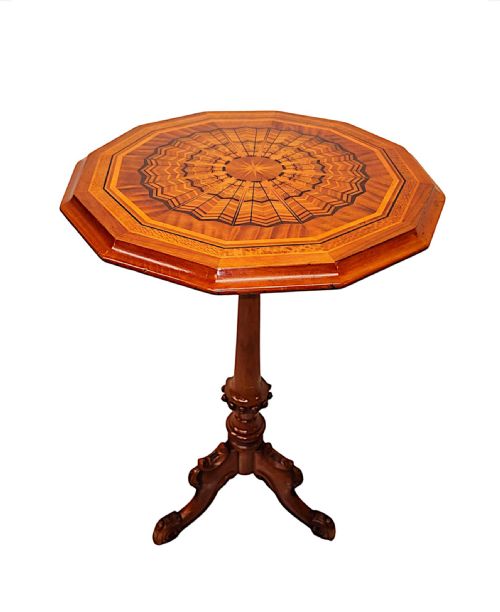
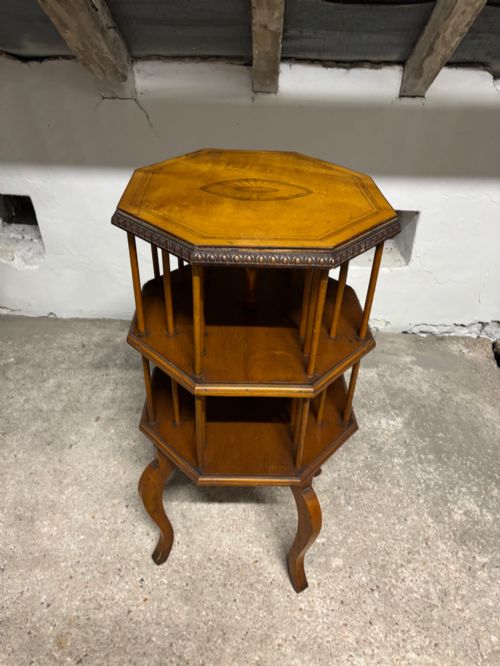
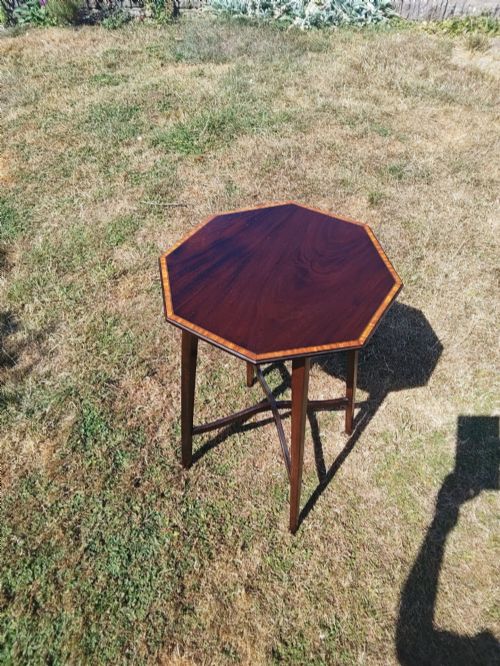
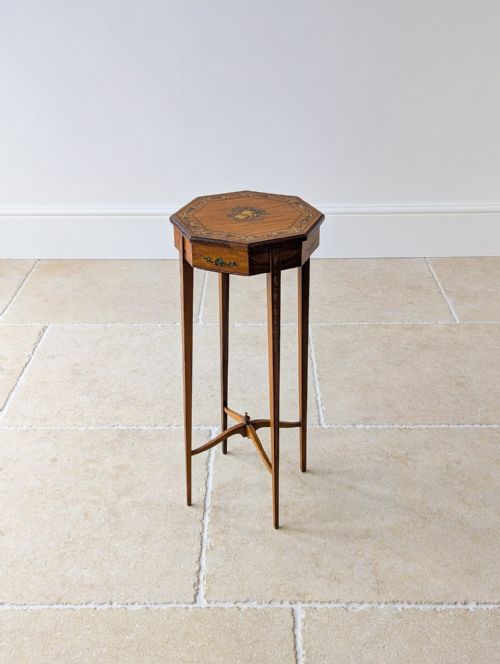
Inlaid Octagonal Table
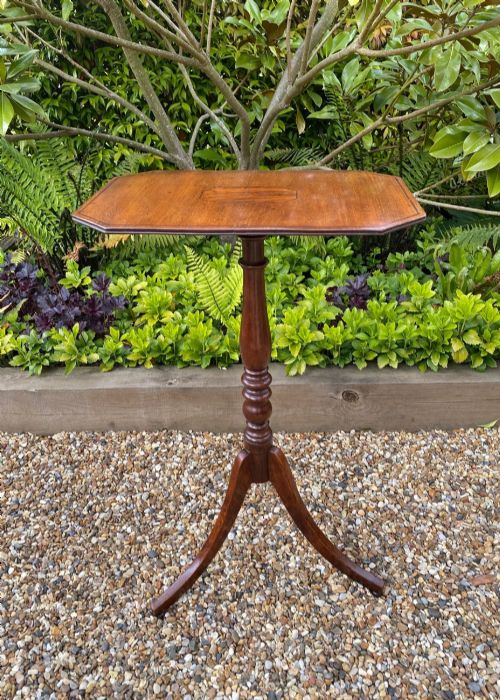
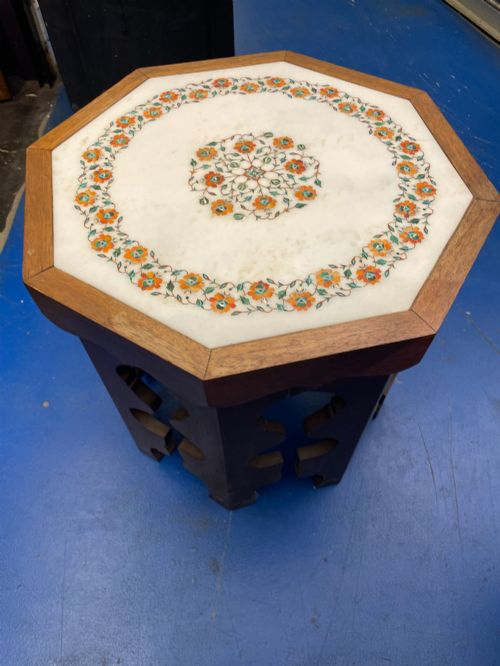
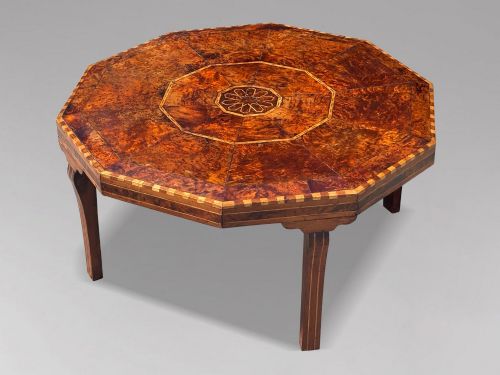
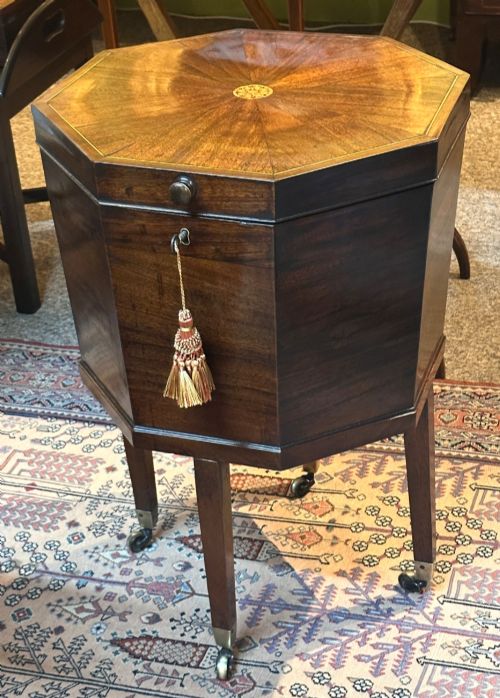
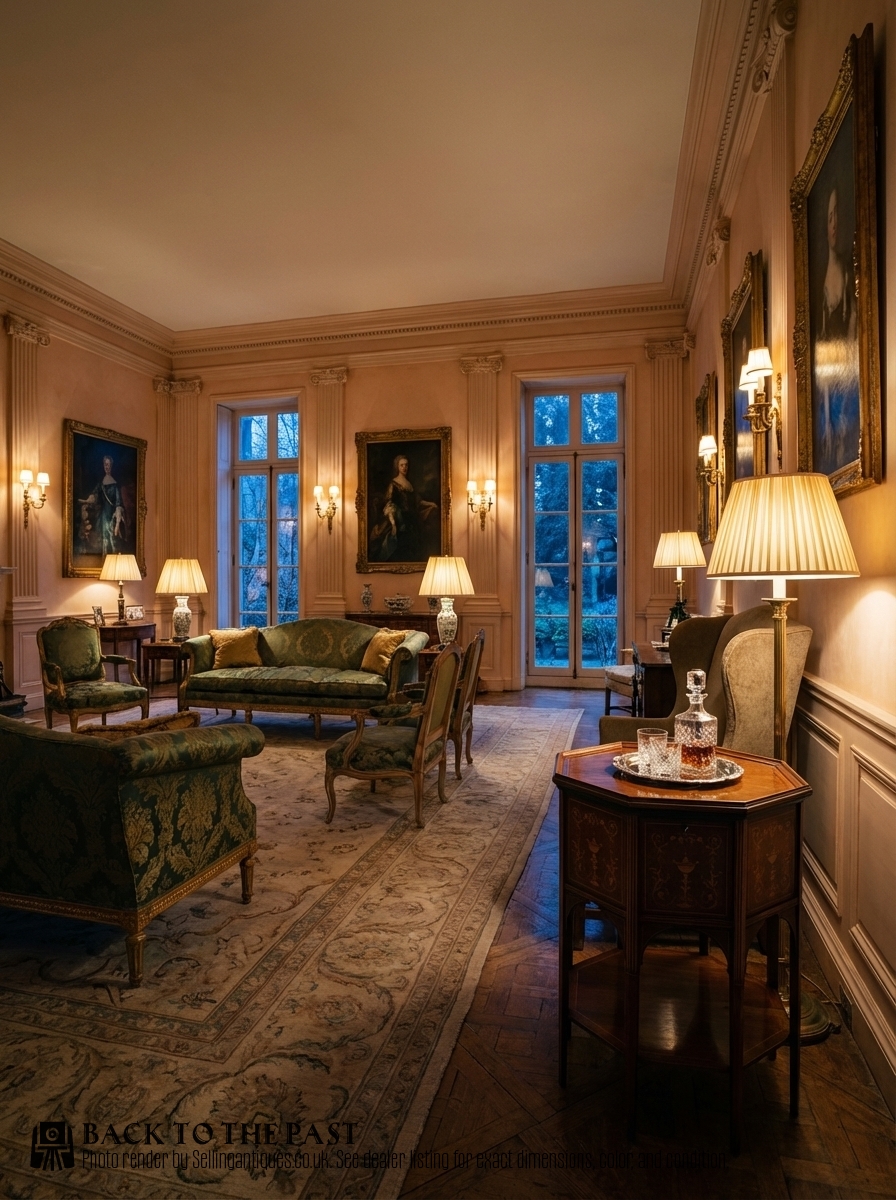
An inlaid octagonal table brings geometry and complex surface work into a room, offering a distinct surface shape that breaks the monotony of square and round furniture.
Forms and Origins
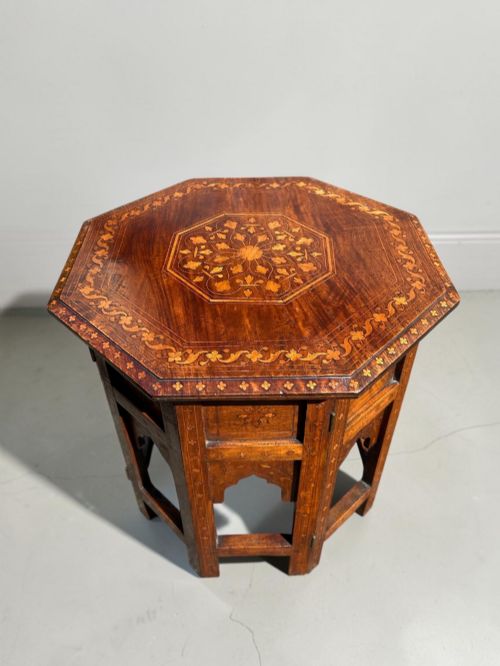
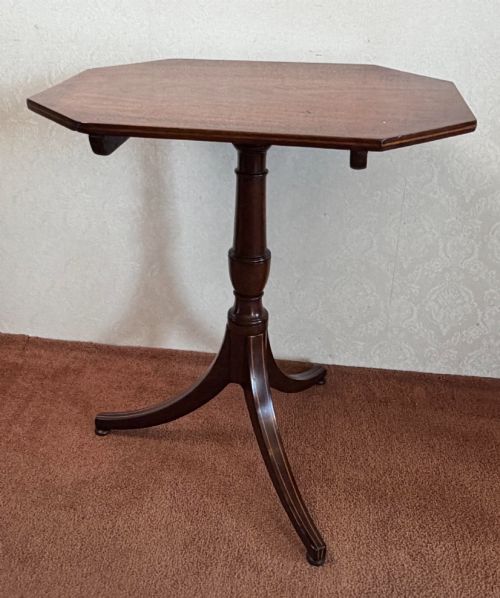
When you search for an inlaid octagonal table, you encounter pieces spanning the nineteenth century through the Edwardian period and into the early twentieth century. These function primarily as occasional tables, side tables, and centre tables.
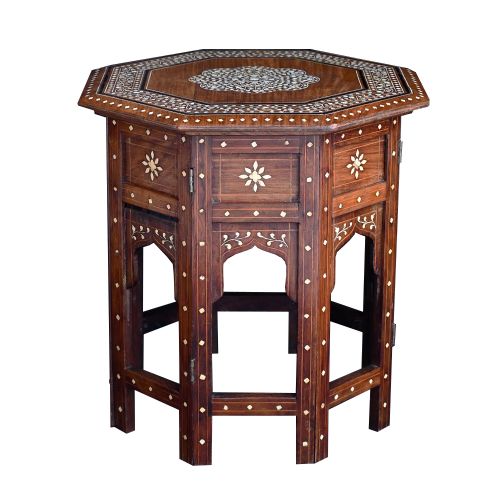
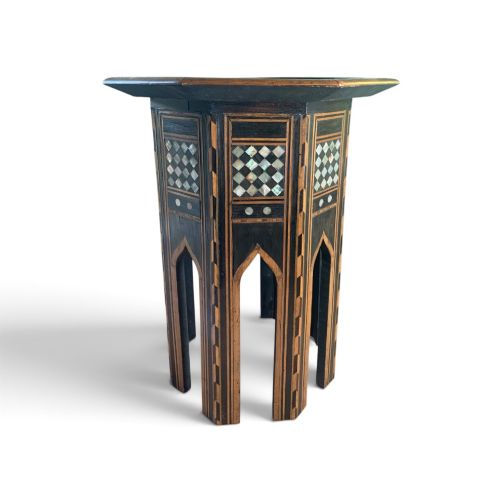
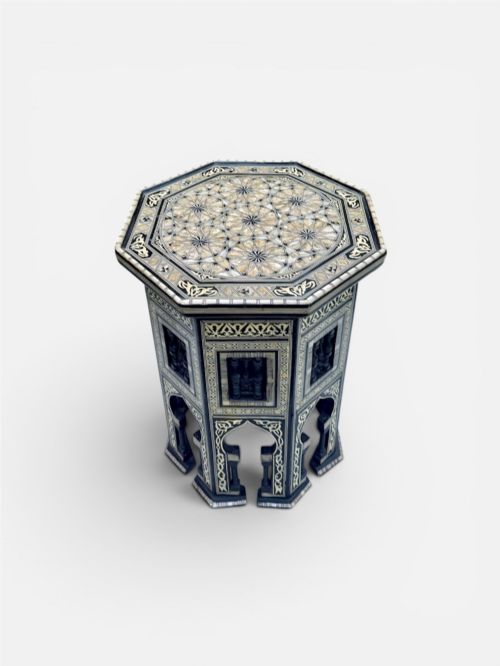
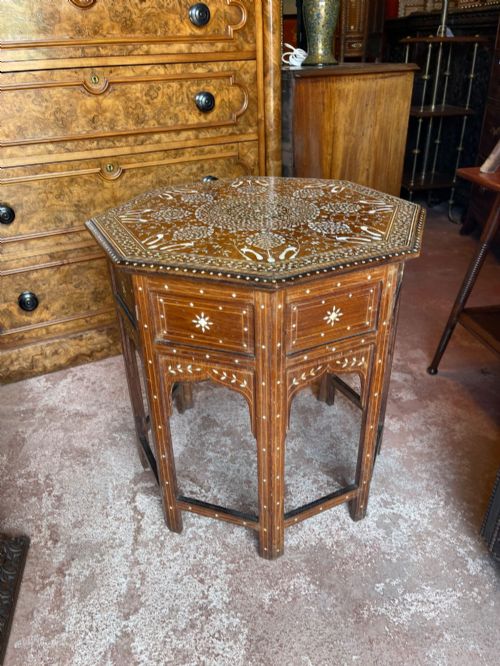
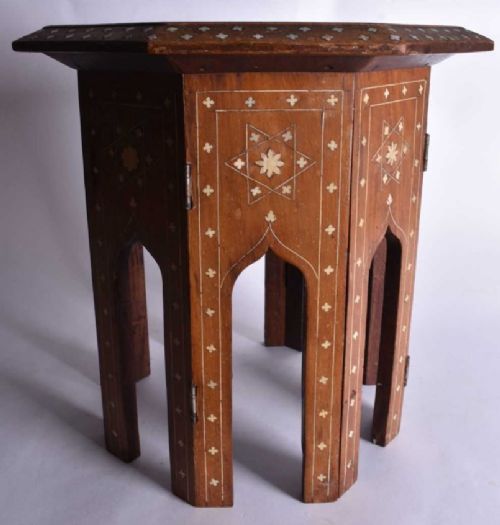
The regional origins of these works are diverse, encompassing Anglo-Indian Hoshiarpur pieces alongside Syrian, Damascus, Ottoman, and Levantine designs. British Victorian and Edwardian examples also appear frequently, often executed in rosewood, walnut, or mahogany.
Many of these tables feature folding bases or intricate carved and pierced supports, reflecting both portability and decorative ambition. The eight-sided format allows them to sit comfortably in corners or serve as central display surfaces.
Materials and Technique
Maker workshops utilised a wide array of hardwoods and softwoods, including teak, shisham, mahogany, rosewood, burr walnut, and ebonised hardwood. These structural timbers provide a stable foundation for complex surface decoration.
Inlay work involves contrasting materials set flush into the wooden ground, utilising boxwood, bone, ivory, brass, copper, nacre-shell, and mother-of-pearl. Geometric parquetry and delicate marquetry scrollwork demonstrate the high level of precision achieved by period artisans.
Some tables feature secret folding bases designed for easy packing, proving that flat-pack convenience arrived long before modern warehouses.
Assessing Craftsmanship
The distinction between standard and exceptional pieces rests in the density and precision of the inlay work. Finer examples display tightly fitted geometric patterns with minimal filler, whereas simpler items rely on broader, less intricate motifs.
Material selection also dictates the hierarchy of these tables, with dense hardwoods like shisham and rosewood carrying intricate bone or metal work holding a higher status than plain timber versions. The structural integrity of the folding or carved bases further separates ordinary items from masterwork creations.
Liberty and Co
The Inlaid Octagonal Table Glossary
- Hoshiarpur
- A city in Punjab, India, renowned for skilled woodcarving and intricate bone or brass inlay work. Pieces from this centre often incorporate dense geometric patterns on shisham or teak.
- Parquetry
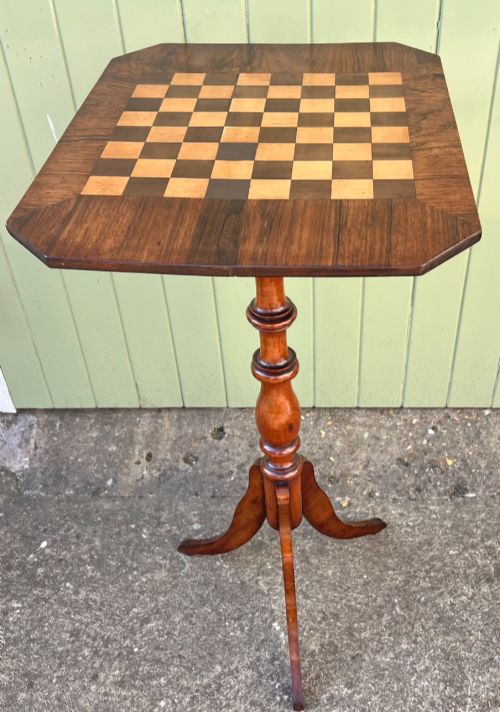
- A geometric mosaic of wood pieces used for decorative floors and tabletops. This technique creates repeating angular patterns across an eight-sided surface.
- Marquetry
- The art and craft of applying pieces of veneer to a structure to form decorative designs. It differs from parquetry by depicting pictorial or curvilinear motifs.
- Ebonised
- Wood finished to resemble ebony through a staining and polishing process. This dark treatment provides a dramatic high-contrast background for lighter inlay materials.
- Nacre-shell
- Iridescent inner layer of a shell utilised for ornamental inlay. It catches the light differently depending on the viewing angle.
Frequently Asked Questions
What is an inlaid octagonal table?
An inlaid octagonal table is a piece of furniture featuring an eight-sided top embellished with contrasting materials such as bone, brass, mother-of-pearl, or various woods. These tables serve multiple functions as occasional, side, or centre tables.
Originating from diverse traditions including British Victorian workshops, Anglo-Indian Hoshiarpur production, and Syrian craftsmanship, they combine practical surface area with complex decorative schemes.
How do you style an octagonal table?
The eight-sided top of these tables makes them particularly useful for breaking up the hard lines of rectangular rooms. They fit well beside armchairs as side tables or stand independently in hallways as lamp tables.
Because the surface geometry draws the eye, keeping decorative objects minimal on top allows the inlay work and carved bases to remain the primary focus of the room.
How do I date a Syrian inlaid table?
Dating a Syrian or Damascus table involves examining the choice of timber, the type of shell or wire used for the inlay, and the overall construction methods. Many examples date from the late nineteenth century to around nineteen hundred.
Comparing the specific geometric arrangements and the presence of retailer attributions helps narrow down the period of manufacture.