



Hoshiarpur Furniture
Hoshiarpur furniture brings intricate craftsmanship and distinctive inlaid surfaces into a room, offering the decorative depth that collectors seek in Anglo-Indian design.
Hoshiarpur Furniture
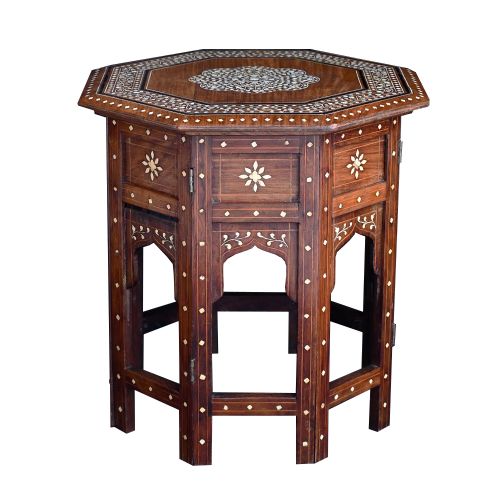
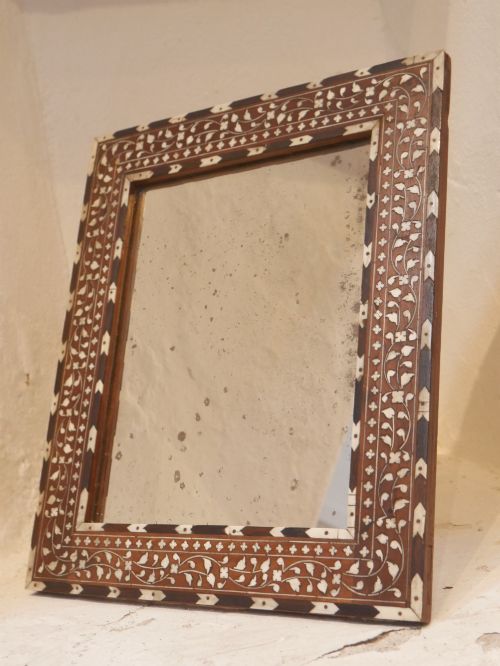
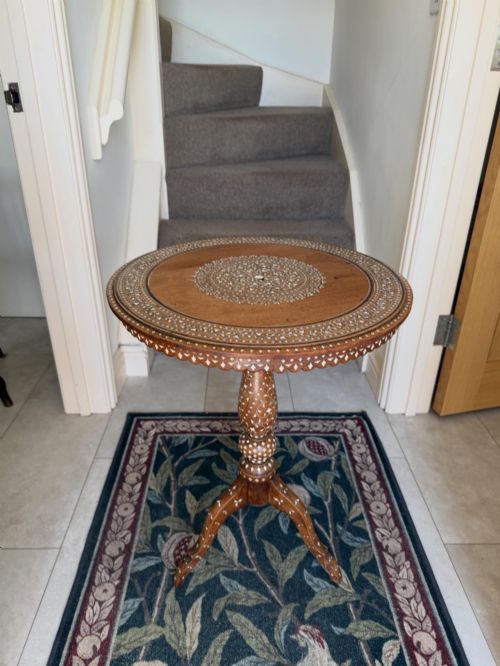
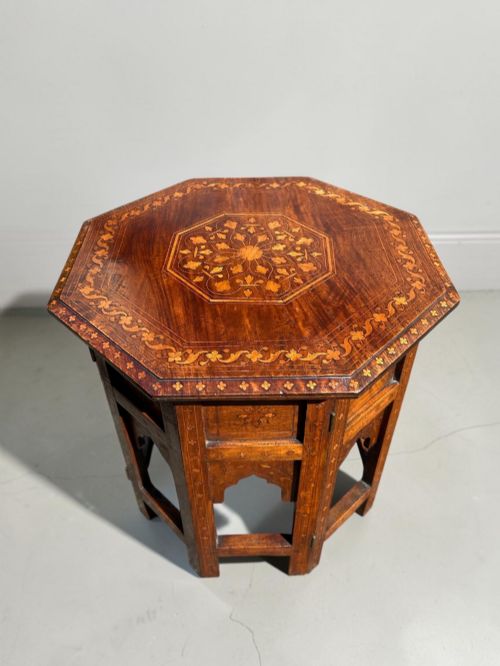
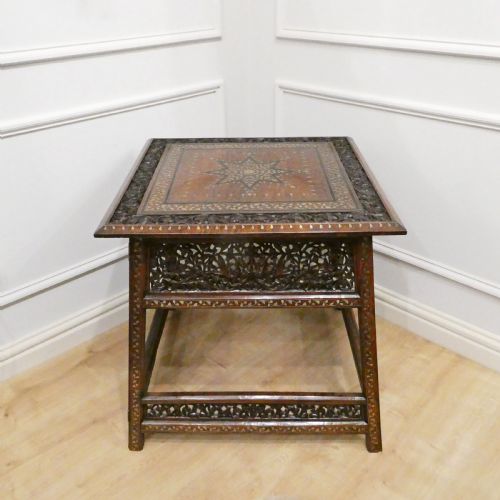
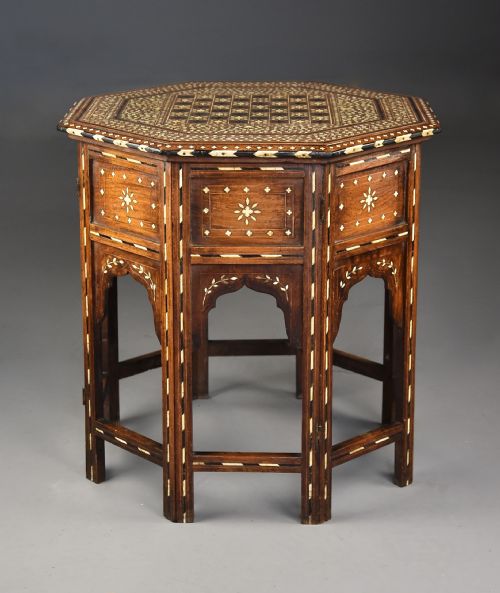
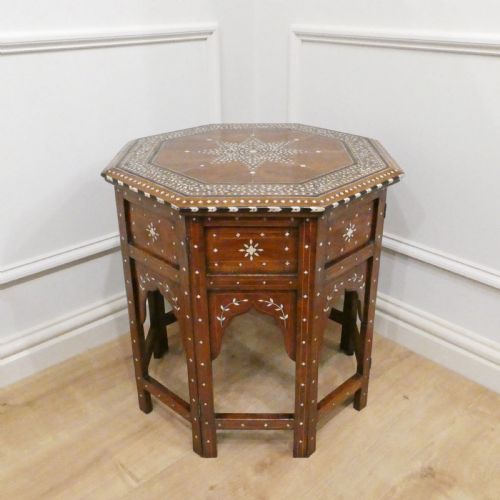
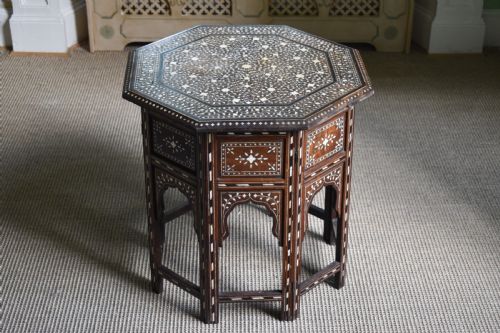
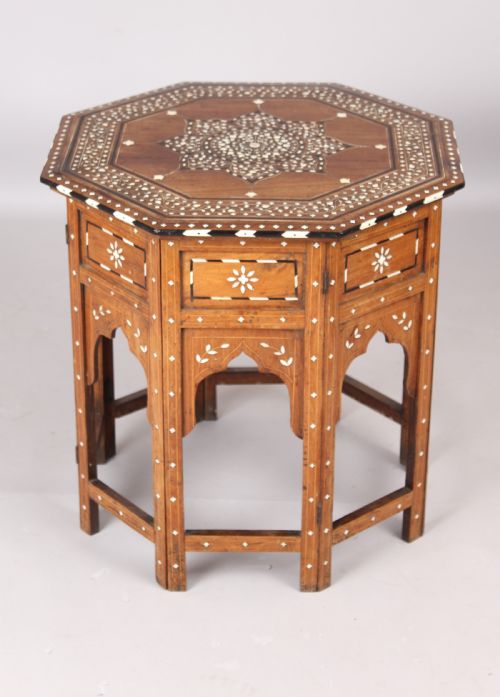
Hoshiarpur furniture encompasses distinctive tables, mirrors and armchairs originating from the Punjab region during the nineteenth and early twentieth centuries. These pieces typically manifest as occasional tables, octagonal tables and wall mirrors decorated with detailed surface embellishments.
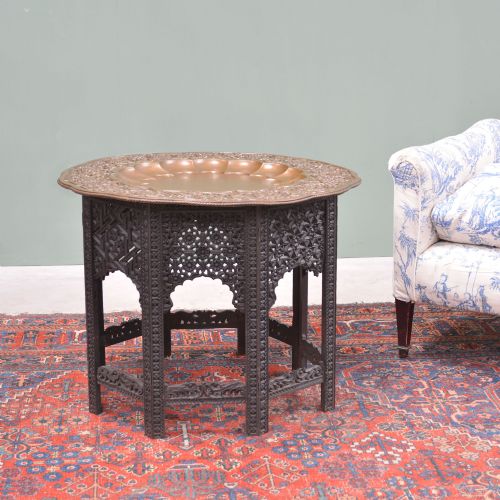
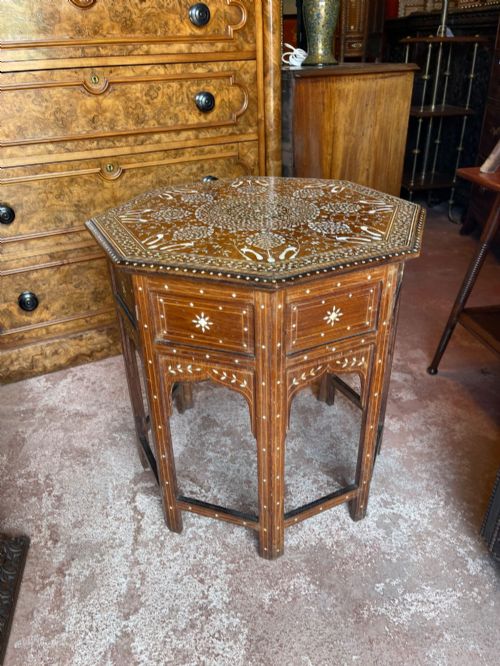
Octagonal tables and tray top tables represent the forms most commonly encountered within this category. Makers frequently employed folding or tripod bases to support intricately patterned tops.
The aesthetic bridges traditional Indian woodworking traditions with British colonial taste, resulting in the classification known as Anglo-Indian style. Pieces span from the mid nineteenth century through to the early twentieth century.
Materials and construction methods
Carpenters utilised dense foundational timbers such as teak, rosewood and general hardwood to construct the structural forms. These woods provided the stable base required for extensive surface decoration.
Artisans applied intricate bone inlay and brass wire to create geometric and floral motifs across the wooden surfaces. Wood inlay and mirror glass further supplemented the decorative schemes, set within carved frameworks.
Hoshiarpur Furniture Retail Price Guide 2026
Typical asking prices for hoshiarpur furniture among the pieces listed under this phrase on Sellingantiques today, from the lower quarter to the upper quarter. They describe what is for sale here now, not the wider market.
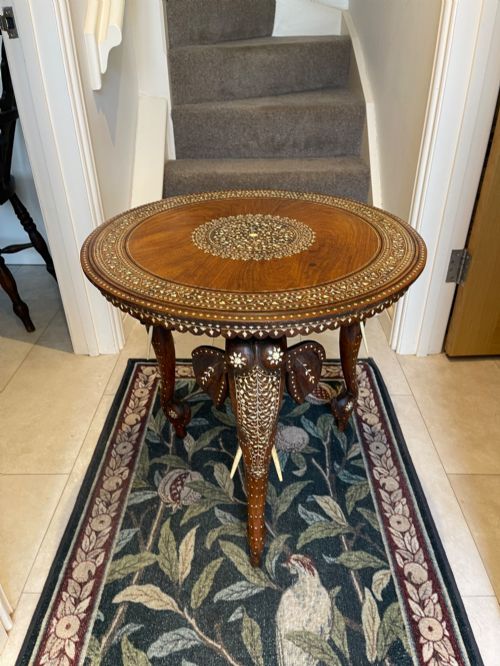
Look closely to find occasional tables shaped like elephants, complete with carved trunks supporting the tabletop.
Distinctions in craftsmanship
The density and precision of the bone and brass inlay determine the visual refinement of each piece. Superior examples display tightly fitted inlay work with minimal filler, whereas simpler items feature broader patterns.
Carving depth and timber selection also differentiate the range, with dense teak and rosewood supporting sharper relief work than softer secondary woods.
The Hoshiarpur Furniture Glossary
- Bone inlay
- A decorative technique where small pieces of bone are set into recesses carved into a wooden substrate to form intricate patterns. This method creates striking contrast against dark hardwoods like rosewood and teak.
- Anglo-Indian style
- Design characteristics resulting from the cultural exchange between British and Indian makers during the colonial period. It combines traditional Indian craftsmanship with forms suited to Western domestic interiors.
- Octagonal table
- A table featuring an eight-sided top, which is a frequent geometric form among tables from this region. These tops often lift off their folding stands for convenient storage.
- Savonarola style
- A type of folding armchair constructed with interlaced curved wooden legs forming an X-shape. The design dates to the Italian Renaissance but was adopted by Indian workshops during the colonial era.
- Tray top table
- A table designed with a removable upper tray featuring raised edges, supported by a folding or fixed base. This form allowed for practical serving use in nineteenth century households.
Hoshiarpur Furniture: Frequently Asked Questions
What is hoshiarpur furniture?
Hoshiarpur furniture refers to decorative wooden items originating from the town of Hoshiarpur in Punjab, noted for complex bone and brass inlay.
These pieces typically include small tables, mirrors and chairs produced during the nineteenth and early twentieth centuries under Anglo-Indian influence.
How were these tables used?
Tables from this region functioned primarily as occasional pieces for display, holding decorative objects or serving tea.
Many featured folding bases that allowed owners to store them away easily when not in active use within the home.
How do I date an octagonal table?
Dating relies on examining the timber species, the precision of the bone inlay and the mechanical joints of the folding base.
Earlier nineteenth century examples tend to use dense rosewood and heavier carving, while later pieces often incorporate brass wire alongside bone.
Where should I place a mirror?
Wall mirrors fit effectively in hallways, living rooms or bedrooms where their inlaid frames can catch natural light.
Their intricate surface patterns allow them to serve as focal points above mantelpieces or console tables.