



Carved Teak Plant Stand
A carved teak plant stand brings intricate colonial craftsmanship and rich timber tones into a room.
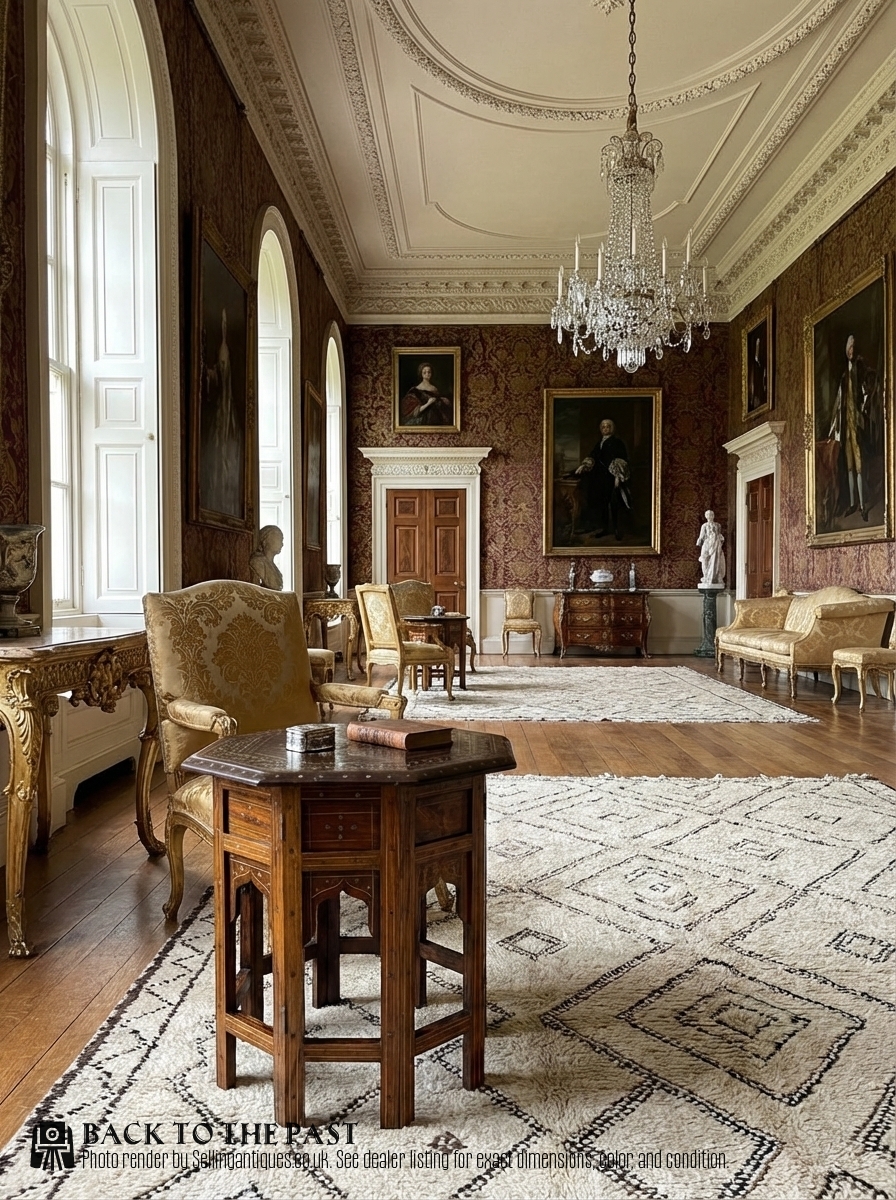
Carved Teak Plant Stand
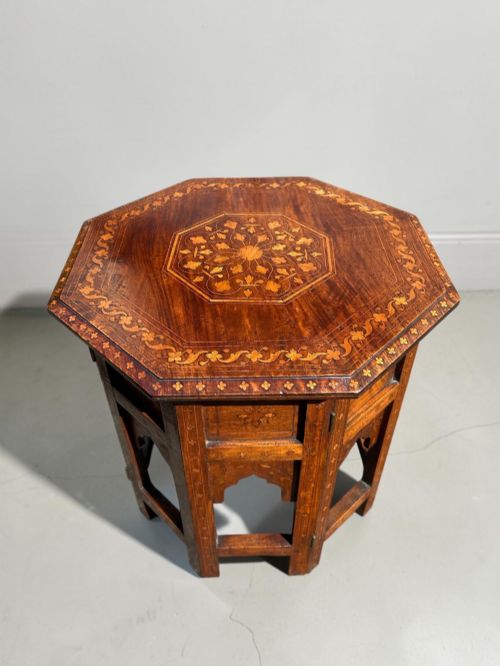
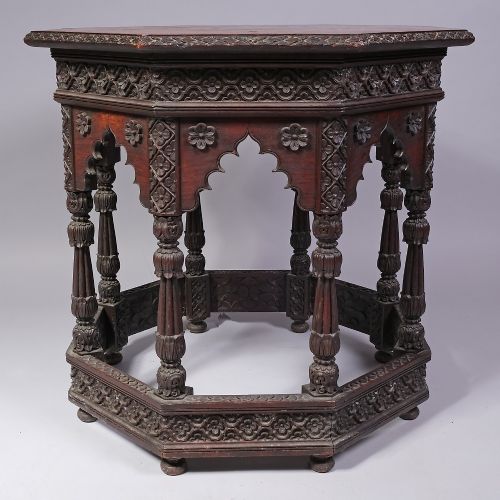
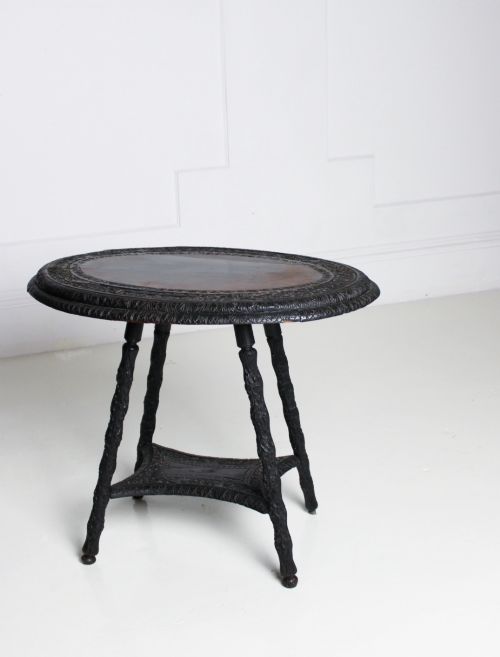
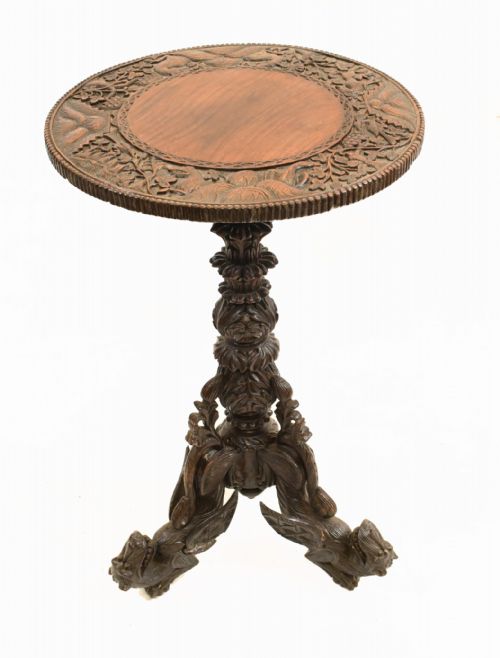
A carved teak plant stand emerges from Anglo-Indian, Anglo-Burmese, and colonial traditions spanning the nineteenth and early twentieth centuries. These works appear in forms such as occasional tables, octagonal surfaces, and pedestals designed to display decorative objects.
Most examples originate from specific regional workshops in India and Burma during the Victorian and Edwardian eras. The selection on this page centres heavily on carved hardwood tables, folding campaign furniture, and low pedestals.
Materials and construction methods
Craftsmen worked primarily with solid teak, rosewood, and dense regional hardwoods capable of holding deep, intricate relief carving. Surfaces often incorporate contrasting materials, utilising brass wire inlay and bone sections to trace geometric and floral motifs.
Many tables employ clever folding mechanisms or removable tripod bases designed for easy transport during the colonial period. Joinery relies on traditional pinning and interlocking panels rather than modern adhesives.
Carved Teak Plant Stand Retail Price Guide 2026
Typical asking prices for carved teak plant stand among the pieces listed under this phrase on Sellingantiques today, from the lower quarter to the upper quarter. They describe what is for sale here now, not the wider market.
Octagonal side tables and elephant-form supports appear frequently among the diverse regional styles.
Differentiating quality in carved furniture
The depth and clarity of the chisel work dictate the visual strength of each piece, distinguishing sharp, undercut foliage from shallow, hurried incisions. Finer workshops maintained strict symmetry across complex geometric lattices and animal motifs.
The integration of secondary materials such as bone and brass indicates superior craftsmanship when individual pieces fit flush into carved recesses without gaps. Timber selection also matters, as dense, evenly grained teak holds crisp edges far better than softer secondary woods.
The Carved Teak Plant Stand Glossary
- Anglo-Indian
- A design style produced during British rule in India, combining European furniture forms with traditional South Asian carving and inlay techniques.
- Hoshiarpur
- A town in Punjab renowned for intricate woodwork, specifically tables and screens featuring dense bone and brass inlay set into teak.
- Campaign table
- Portable furniture designed with folding legs or removable tops for military officers and travellers during the nineteenth century.
- Taj Mahal table
- An occasional table featuring specific architectural motifs and decorative domes reminiscent of Mughal monuments.
- Octagonal table
- A multi-sided surface shape frequently utilised in Indian and Burmese tables to showcase complex edge carving and geometric inlay.
Carved Teak Plant Stand: Frequently Asked Questions
Where were these pieces made?
These items originated primarily in workshops across India and Burma during the nineteenth and early twentieth centuries under British colonial administration. Regional centres such as Hoshiarpur and Bombay developed distinct styles of carving and inlay.
Craftsmen drew upon local architectural traditions and imported European furniture forms to create pieces intended both for export and local colonial use.
How do I care for teak furniture?
Keep wooden surfaces away from direct heat sources and sudden humidity changes to prevent the timber from splitting or warping. Dust regularly with a dry cloth and avoid harsh chemical polishes that can damage the aged finish.
If the piece contains bone or brass inlay, apply minimal moisture during cleaning to protect the surrounding wood and adhesive grounds.
Are these pieces stable enough for daily use?
Most examples function well as occasional tables, lamp stands, or display surfaces for plants and ceramics. Folding campaign versions require proper alignment of their hinges and joints to ensure steady weight distribution.
Heavier items possess solid hardwood frames that easily support everyday items placed upon them.
How can I tell the age of a carved table?
Dating relies on material patination, construction marks, and stylistic indicators associated with Victorian and Edwardian manufacturing periods. Nineteenth-century examples often display hand-cut joinery and darker, oxidised teak surfaces.
Later twentieth-century pieces can show machine-assisted carving or different assembly methods beneath the top surface.