

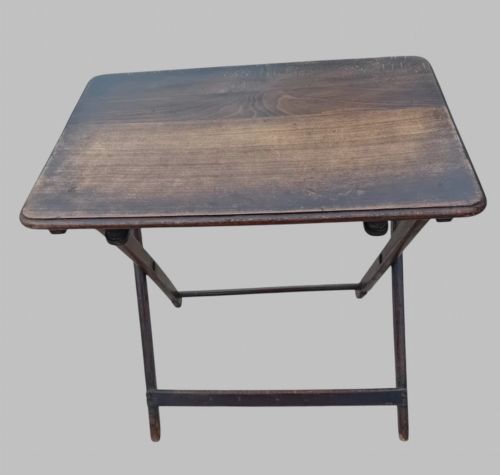
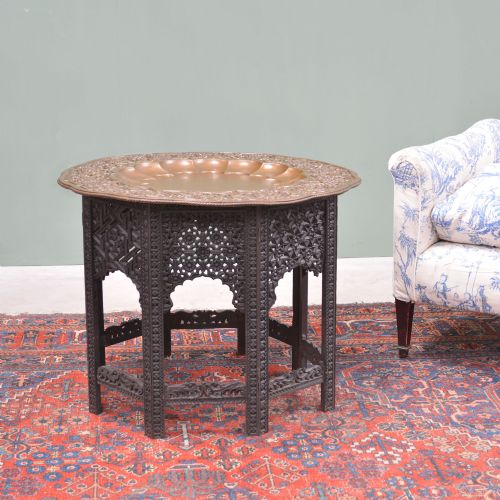


Collapsible Side Table
A collapsible side table gives you versatile surface space that folds away neatly when floor space is at a premium.
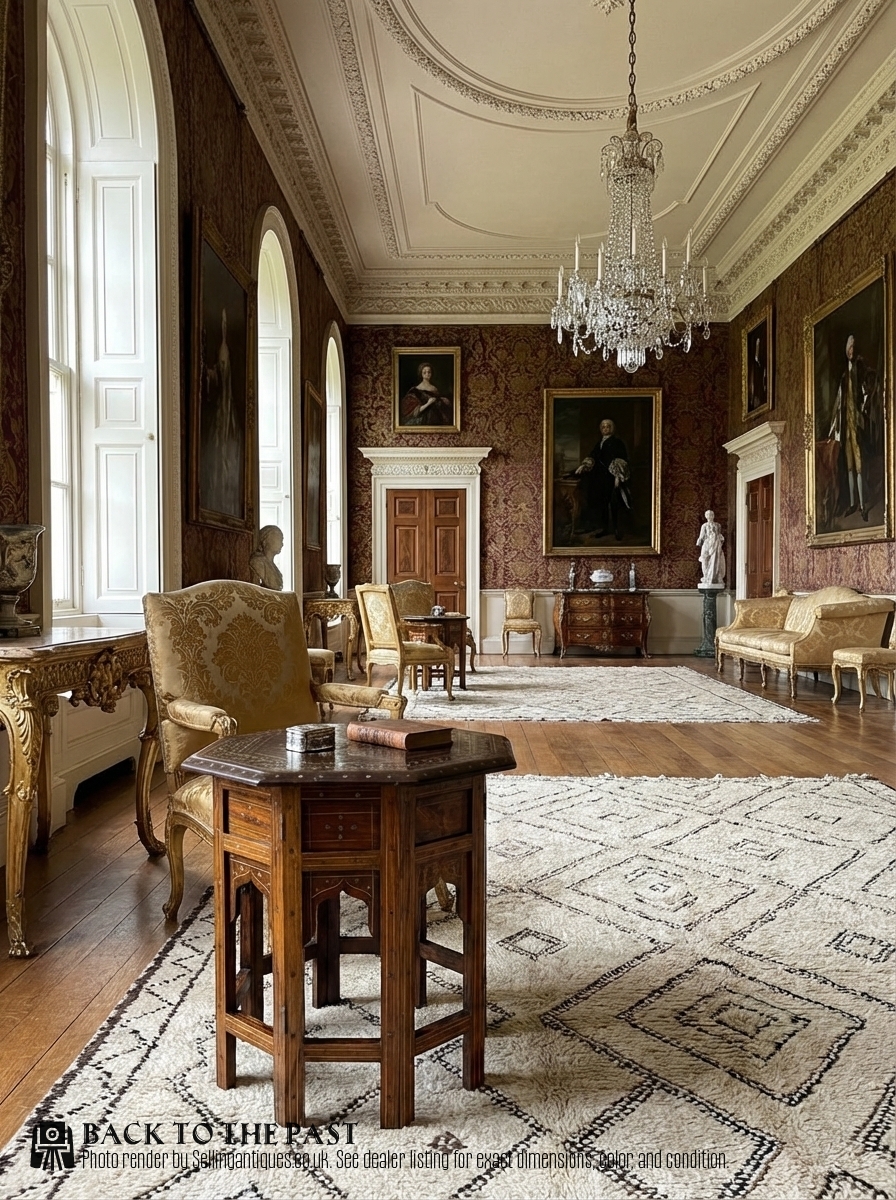
Collapsible Side Table
A collapsible side table is a portable surface designed to fold or pack down easily for storage or travel. When you search for this phrase, you find practical occasional tables that combine utility with decorative craftsmanship from various periods.
The versions most likely to meet you on this page include Anglo-Indian tray top tables and folding campaign styles from the Victorian era up to the 1920s. These pieces range from octagonal teak occasional tables to drop leaf designs with barley twist legs.
Makers utilised woods such as mahogany, teak, oak, beech and padauk, often pairing the timber with brass, copper or bone inlay. The forms vary from garden party serving tables to games tables and compact Hoshiarpur tables.
How they were made
Craftsmen shaped dense hardwoods like teak, mahogany and oak, applying intricate hand carving and fretting, particularly on Anglo-Indian pieces. Folding mechanisms relied on clever hinges, drop leaves and collapsible frames that allowed sturdy tables to pack flat.
Surface decoration frequently involved contrasting materials, embedding bone inlay into teak or mounting circular brass and copper trays onto folding wooden bases. Beech and oak served for sturdy European campaign and revival pieces, finished with turned legs like the barley twist.
Collapsible Side Table Retail Price Guide 2026
Typical asking prices for collapsible side table among the pieces listed under this phrase on Sellingantiques today, from the lower quarter to the upper quarter. They describe what is for sale here now, not the wider market.
Design styles on this page range from Anglo-Indian and campaign to Jacobean Revival.
What varies in quality
Quality rests in the crispness of the hand carving and the precision of the joinery that keeps a folding table steady when open. Pieces featuring intricate bone inlay or heavy brass tray tops require superior structural alignment to support weight without wobbling.
The choice of timber dictates the distinction between standard utility items and finer decorative examples. Denser woods like padauk and seasoned teak exhibit richer grain and hold detailed fretting far better than softer secondary timbers.
Hoshiarpur workshops
The Collapsible Side Table Glossary
- Campaign style
- Furniture designed to be easily disassembled and transported for military campaigns or travel. These pieces utilise clever folding mechanisms and durable timbers.
- Tray top table
- A table featuring a removable or hinged upper tray surface, often associated with Anglo-Indian import pieces. The raised rim prevents items from sliding off.
- Barley twist
- A spiral turning technique resembling a twisted rope, found on the legs of Jacobean revival and early twentieth century oak tables. This decorative woodwork adds traditional texture.
- Drop leaf
- A table design with hinged side flaps that fold down to save space or lift up to extend the surface area. Brackets or swing legs support the extended leaves.
Collapsible Side Table: Frequently Asked Questions
What is a collapsible side table used for?
These pieces provide portable surface space for drinks, books or decorative items in reception rooms and verandas. Their folding design makes them easy to move or store away when not in use.
Historically, campaign and folding variants served officers on the move or households needing flexible furniture for garden parties and entertaining.
How do I identify an Anglo-Indian table?
Anglo-Indian tables typically feature dense, all-over hand carving with floral or geometric motifs and use timbers like teak. Many incorporate removable brass trays or intricate bone inlay.
They often utilise clever fold up bases that collapse completely flat for storage or transport.
Are these tables sturdy when folded out?
Well made folding tables lock securely into position using hinged braces, folding X frames or drop leaf supports. The stability depends on the precision of the original joinery and the condition of the hinges.
Heavier wood and metal combinations naturally offer a more solid feel than lighter occasional pieces.