





Anglo Raj Furniture
Anglo raj furniture brings the grand colonial aesthetic of the subcontinent into British interiors through rich hardwoods and intricate carving.
Anglo Raj Furniture
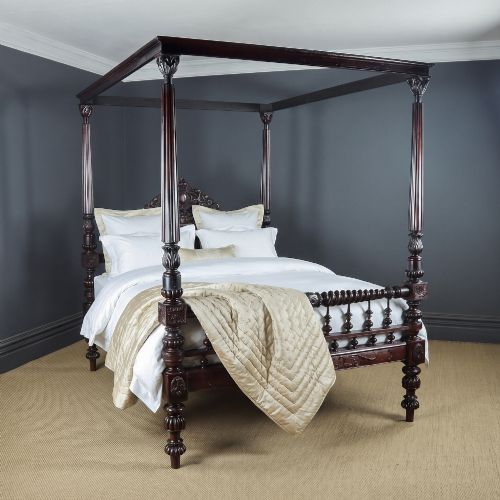
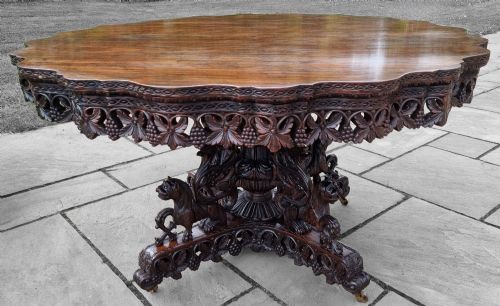
Anglo raj furniture encompasses striking items produced during the nineteenth and early twentieth centuries, merging traditional Indian craftsmanship with British colonial forms. Buyers searching this phrase encounter substantial four poster beds, centre tables, and sideboards alongside smaller occasional and coffee tables.
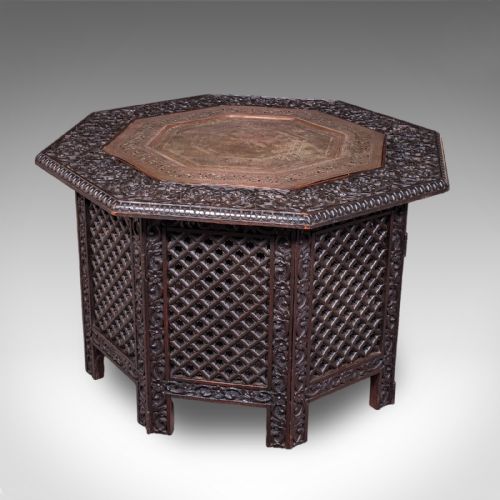
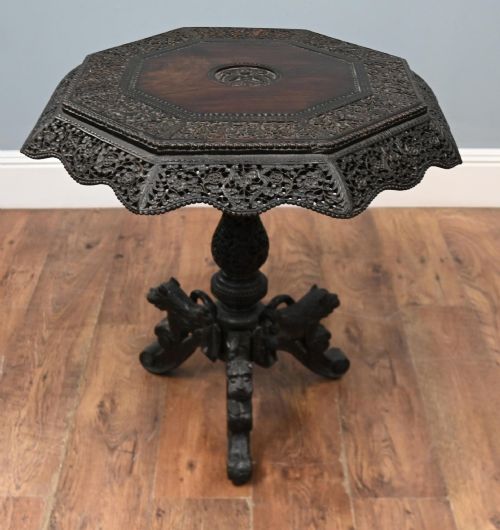
The pieces appearing on this page span the Victorian era up to the nineteen-twenties, showcasing the enduring influence of Anglo-Indian design. Side tables and elephant tables dominate the selection, offering distinct sculptural forms that reflect both British domestic utility and Indian decorative arts.
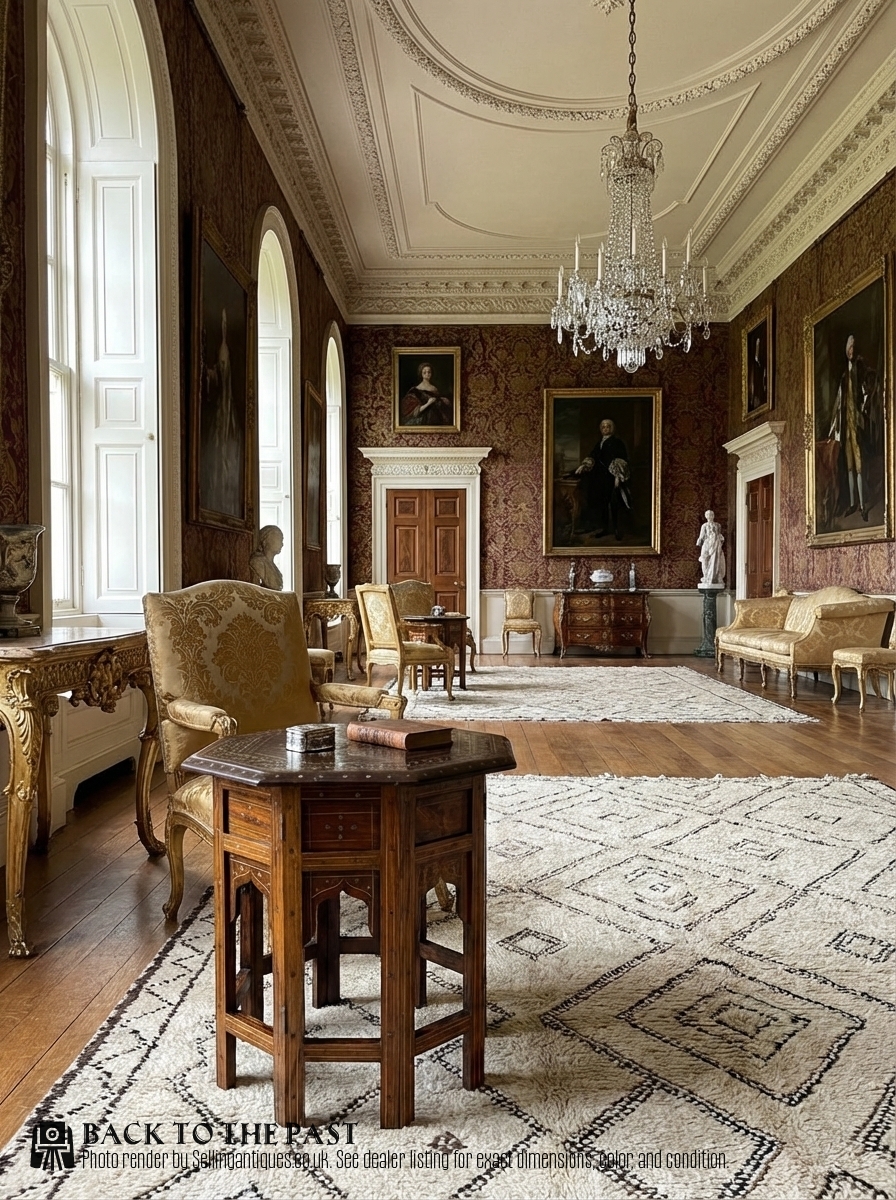
How they were made
Master artisans utilised dense tropical timbers such as teak, padauk, rosewood, and mahogany as the foundational materials for these sturdy constructions. These heavy hardwoods permitted deep, intricate carving without compromising the structural integrity of large items like four poster beds and sideboards.
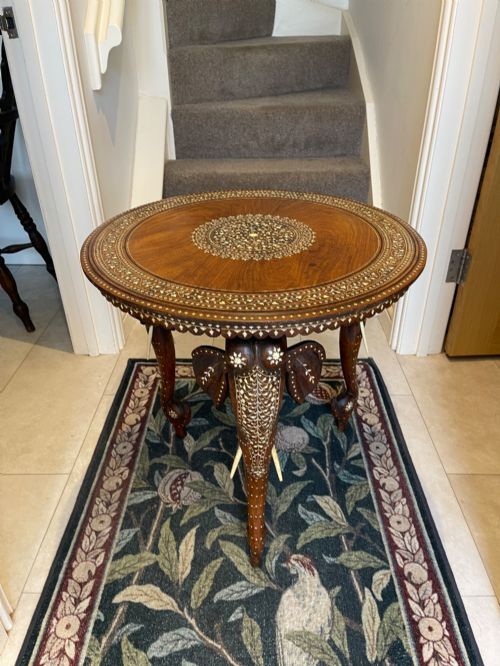
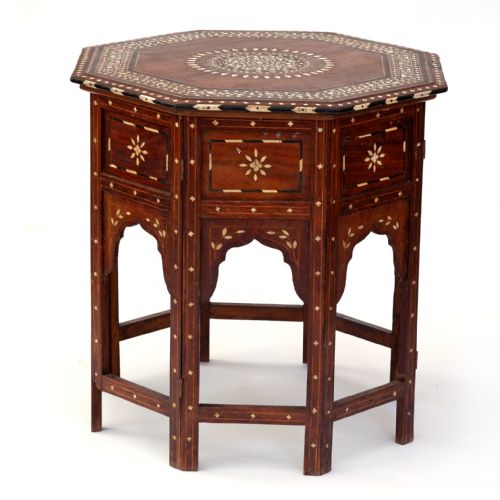
Surface decoration frequently incorporated meticulous brass and bone inlay work, creating striking geometric or floral contrasts against the dark wood. Some specialised tables also feature painted wooden elements, particularly on carved elephant tables originating from centres like Hoshiarpur.
Anglo Raj Furniture Retail Price Guide 2026
Typical asking prices for anglo raj furniture among the pieces listed under this phrase on Sellingantiques today, from the lower quarter to the upper quarter. They describe what is for sale here now, not the wider market.
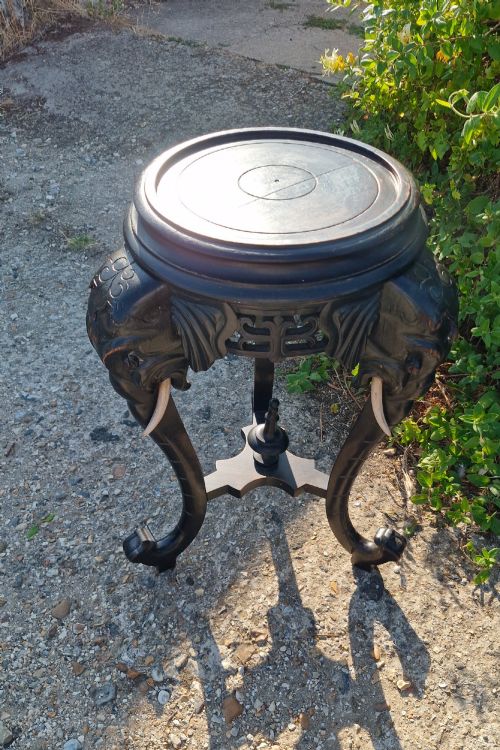
Several occasional tables feature carved wooden elephant tusks, bringing a touch of nineteenth-century menagerie charm directly into the sitting room.
What varies in quality
Quality in these pieces is dictated by the depth and crispness of the carving, where sharper, more expressive hand-chased details elevate an item far above mechanical or shallow work. The selection of timber also matters greatly, with well-figured padauk or dense teak providing a superior visual weight and durability.
The precision of the bone and brass inlay work separates standard utility items from exceptional examples of craftsmanship. Smooth flush surfaces where inlay meets timber indicate a higher standard of joinery and time invested by the maker.
The Anglo Raj Furniture Glossary
- Padauk
- A heavy, durable reddish-brown tropical hardwood favoured by colonial cabinetmakers for large tables and sideboards. It darkens gracefully with age.
- Hoshiarpur
- A town in Punjab renowned for intricate woodwork, specifically folding and occasional tables featuring dense bone and brass inlay. Pieces from this region are easily identified by their overall surface coverage.
- Four Poster Bed
- A large bed featuring four vertical columns supporting a tester or canopy frame. Colonial examples often display bold turned posts and rich mahogany or teak construction.
- Elephant Table
- A low occasional table supported by carved wooden elephant figures, sometimes featuring painted tusks. These whimsical forms reflect popular nineteenth-century taste for exotic motifs.
Anglo Raj Furniture: Frequently Asked Questions
What is anglo raj furniture?
Anglo raj furniture refers to decorative and utilitarian pieces made during the British colonial period in India. These items combine British furniture forms with traditional Indian materials and carving techniques.
The category includes large items like four poster beds and sideboards alongside smaller occasional tables featuring intricate inlay.
How old are these pieces?
The pieces seen here generally date from the nineteenth century up through the early twentieth century. Many originate from the Victorian era and the broader colonial period.
Specific dates or estimated decades help place individual items within this broader historical span of production.
What woods were used?
Maker workshops predominantly utilised dense tropical hardwoods native to the region, including teak, padauk, rosewood, and mahogany. These durable timbers supported elaborate hand carving and heavy structures.
Secondary woods and contrasting materials like bone and brass appear frequently as decorative inlay elements.
How do I care for teak and padauk?
Maintain these dense hardwoods by keeping them away from direct heat sources and sudden humidity changes to prevent timber movement. Regular dusting with a dry cloth preserves the natural finish without building up heavy wax residues.
Avoid harsh chemical cleaners that might damage delicate brass or bone inlay work set into the wood.