

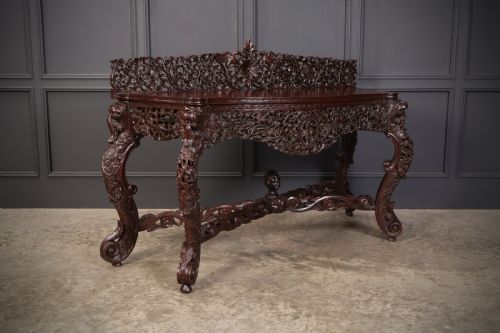


Anglo Indian Sideboard
These robust anglo indian sideboard examples bring deep colonial craftsmanship and heavy carved timber into British dining rooms.

Understanding the Anglo Indian Sideboard
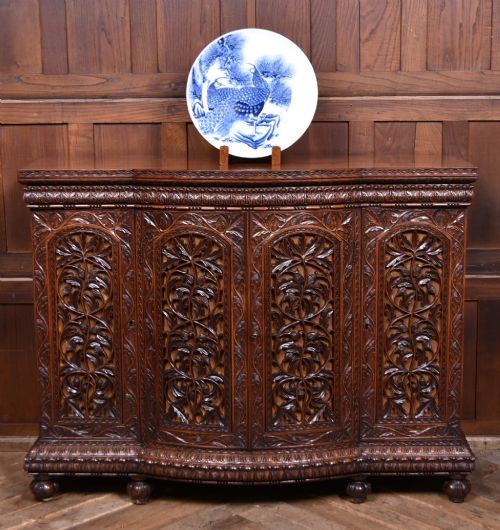
An anglo indian sideboard is a substantial dining room furnishing that combines British furniture forms with intricate Indian carving traditions. Buyers searching for this phrase encounter heavy timber constructions spanning the nineteenth century, including specific Victorian Gothic Revival interpretations and Regency influences.
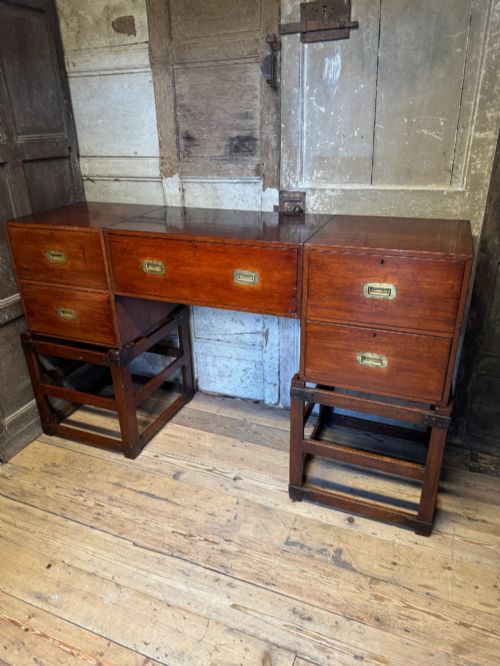
The most common formats on this page are pedestal sideboards and side cabinets featuring inverted breakfronts and deep serving surfaces. These pieces frequently appear in dense tropical hardwoods, reflecting the historical interchange of design between British patrons and local craftsmen.
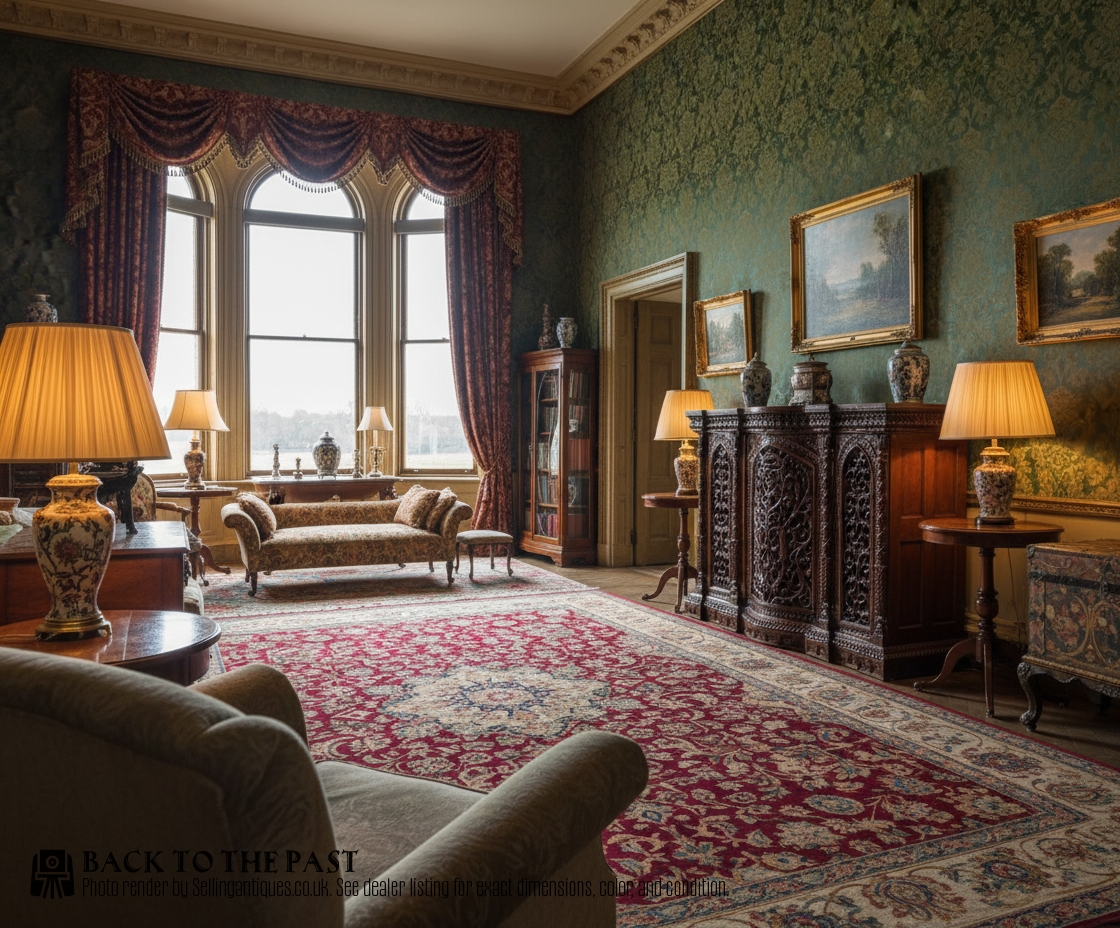
Materials and Construction
Makers utilised dense exotic timbers including padauk, rosewood, teak, and solid satinwood. These hard woods allowed artisans to carve deep, continuous relief patterns across doors, pedestals, and backsplashes without losing structural integrity.
Joinery methods combined traditional British cabinet-making frameworks with indigenous carving techniques. Surfaces are heavily worked by hand, creating tactile panels that contrast with the smooth planes of standard European furniture of the period.
Retail Price Guide 2026
Typical UK retail prices for anglo indian sideboard, calculated from the Sellingantiques database of over a million retail prices indexed since 2003. This retail price guide relies exclusively on Sellingantiques data; no external sources or auction records are used, so the figures do not describe the wider market.
Some nineteenth-century makers hid secret compartments behind deeply carved foliage panels to guard family silver.
Assessing Quality and Execution
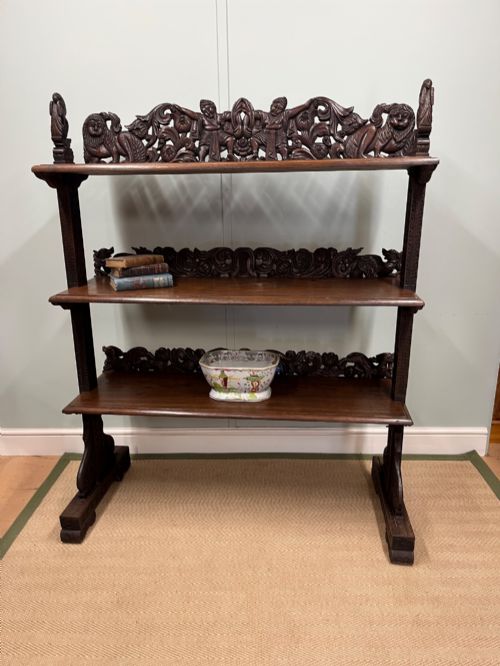
Quality rests upon the depth and precision of the hand carving and the choice of timber figure. Superior examples display crisp, undercut foliage and figures in solid padauk or satinwood rather than shallow surface scoring.
The overall proportion and architectural harmony distinguish finer commissions from simpler utility pieces. Well-balanced pedestal forms with integrated cellarette drawers and rich natural patination command greater aesthetic presence.
The Anglo Indian Sideboard Glossary
- Padauk
- A dense, durable tropical hardwood with a distinctive reddish-brown colour that darkens with age. It serves as the primary material for many nineteenth-century carved cabinets.
- Inverted breakfront
- A cabinet facade where the central section recedes rather than projects forward. This architectural shaping adds depth to pedestal sideboards.
- Pedestal sideboard
- A large dining room base featuring flanking cupboard pedestals beneath a continuous top. These units often incorporated fitted storage for bottles and linens.
- Satinwood
- A luminous, fine-grained yellow timber utilised for high-status cabinet work. Solid satinwood examples represent the more select end of the nineteenth-century range.
Frequently Asked Questions
What is an anglo indian sideboard?
An anglo indian sideboard is a heavy nineteenth-century dining room furnishing made in India for British residents or export. It merges standard British forms like pedestal sideboards with dense, intricate local hand carving.
These pieces utilise tropical hardwoods such as padauk, rosewood, and teak. They serve as striking focal points in large dining spaces.
How do I date these sideboards?
Dating relies on stylistic markers from the nineteenth century, including Regency architectural lines and Victorian Gothic Revival details. Wood selection also helps indicate the period of manufacture.
Most examples date from the mid-nineteenth century around eighteen sixty. Cabinet construction methods further confirm the manufacturing era.
Which woods were used?
Craftsmen utilised heavy tropical timbers native to the region. Padauk wood appears most frequently, alongside rosewood, teak, and solid satinwood.
These dense materials provided the stable base required for deep, ornate relief carving. They also developed rich patinas over decades of use.
How should I style one?
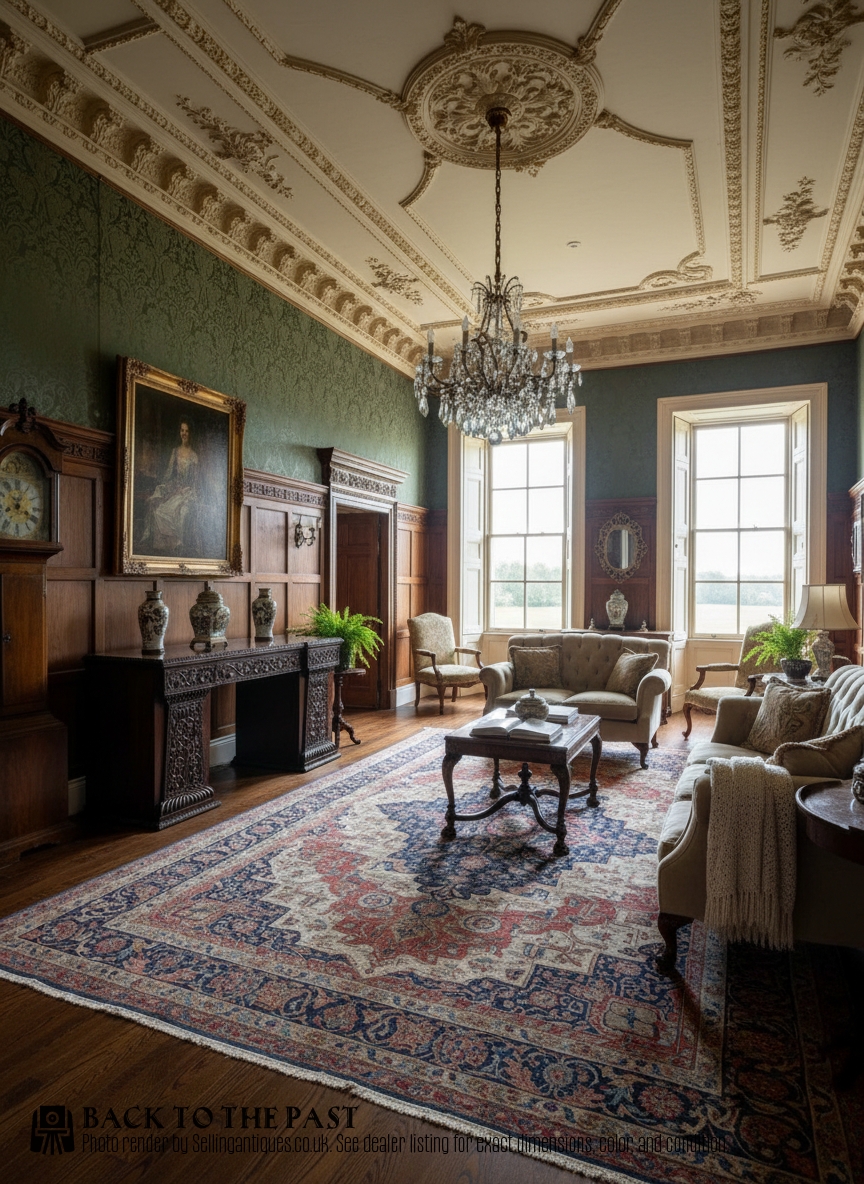
These sideboards function well as primary serving tables or statement storage units in spacious rooms. Their dark, carved timber demands balanced lighting to highlight the intricate surface details.
Pair them with neutral walls to let the dense wood grain and sculptural carving stand out. Ensure adequate floor space to accommodate their substantial pedestal proportions.