
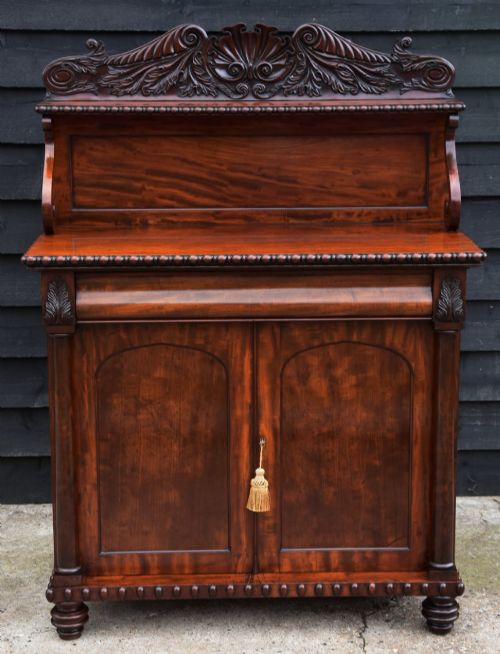
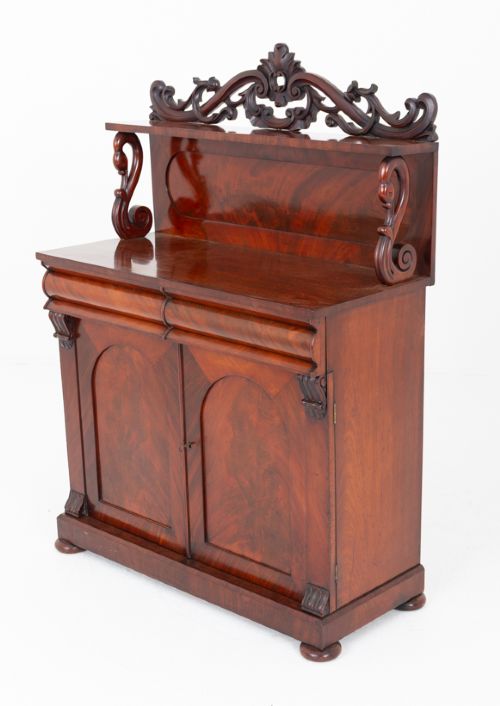


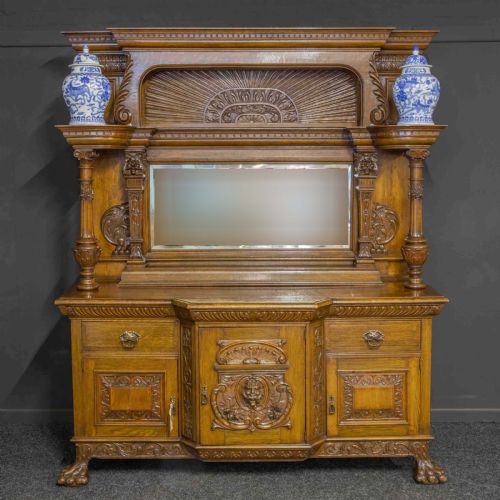
Carved Backboard Sideboard
A carved backboard sideboard provides essential dining room storage while anchoring the room with rich timber and detailed woodwork.
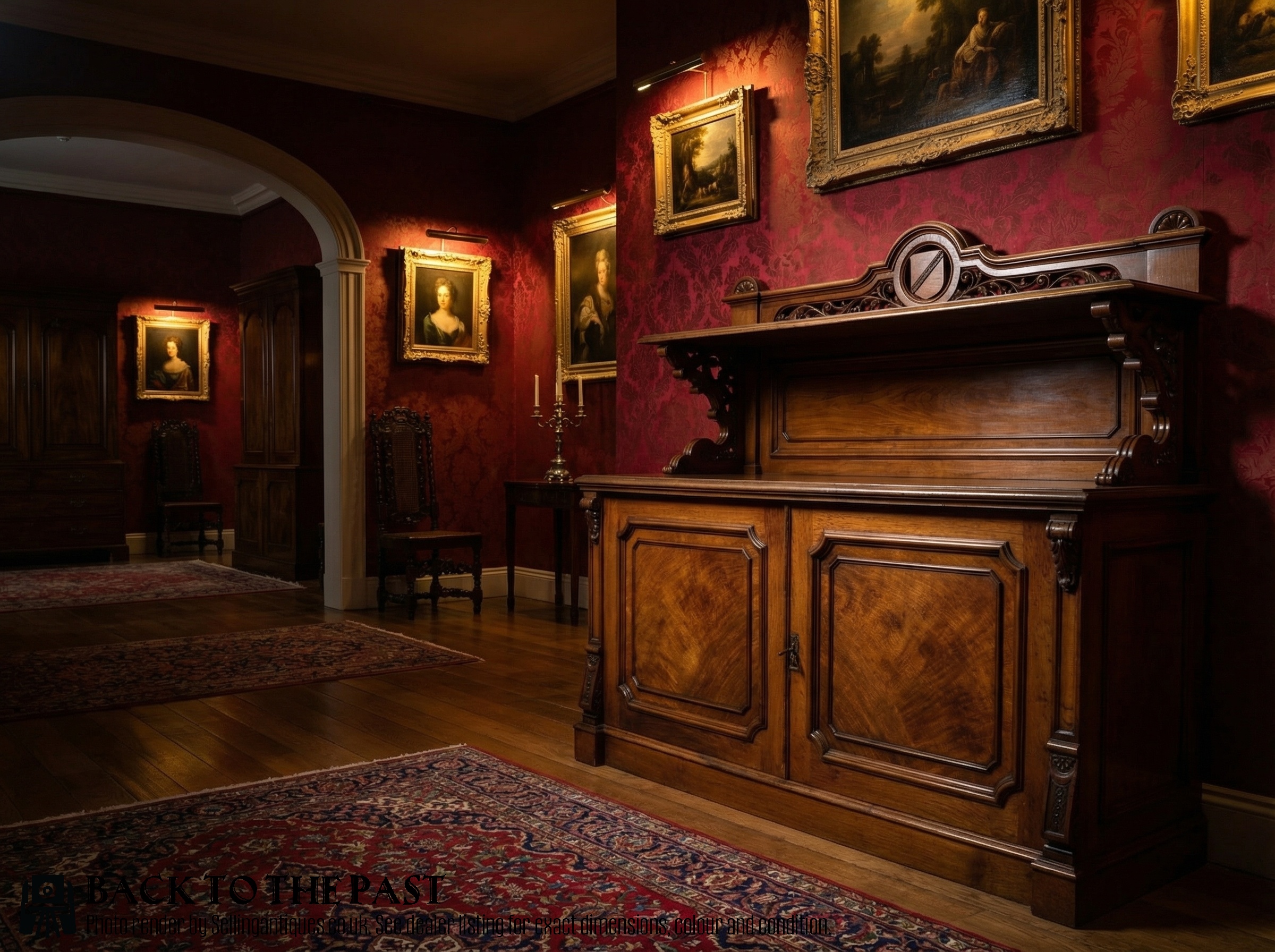
What a carved backboard sideboard is
A carved backboard sideboard combines a low or tall timber rear gallery with a robust lower cabinet or pedestal base designed for dining rooms. These pieces originate primarily from the Victorian and Regency periods, spanning dates from eighteen-fifty to eighteen-seventy.
The versions met on this page appear as pedestals, buffets, and sideboards utilising specific timbers like mahogany, flame mahogany veneer, pollard oak, oak, and padouk wood. Makers from standard Victorian workshops alongside Anglo-Indian traditions shaped these forms to serve practical storage needs.
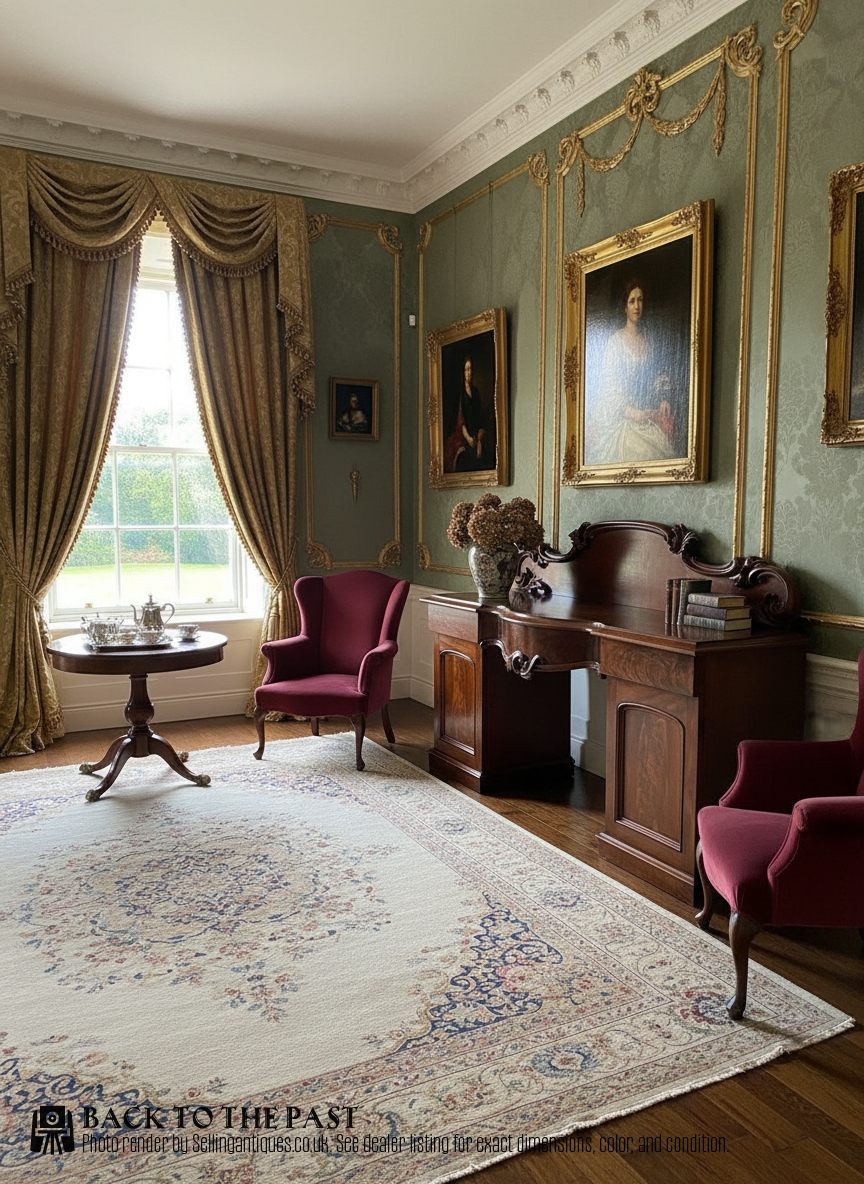
How they were made
Cabinet makers utilised solid timbers alongside veneers, applying flame mahogany veneer and pollard oak to visible exterior surfaces over secondary woods such as pine. Construction methods relied on traditional joinery to build heavy pedestal bases and support upright backboards.
Carving was executed by hand directly onto the timber of the backboard and drawer fronts, incorporating linear and organic motifs. Finishing involved polishing the wood to highlight the natural grain patterns of mahogany, oak, and padouk wood.
Retail Price Guide 2026
Typical UK retail prices for carved backboard sideboard, calculated from the Sellingantiques database of over a million retail prices indexed since 2003. This retail price guide relies exclusively on Sellingantiques data; no external sources or auction records are used, so the figures do not describe the wider market.
Early nineteenth-century dining rooms relied so heavily on heavy mahogany storage that entire floors occasionally groaned beneath the timber weight.
What varies in quality
Quality rests in the selection and matching of wood veneers, particularly where flame mahogany or pollard oak displays distinct, unbroken grain across large surfaces. Finer examples exhibit crisp, deep hand carving on the backboard rather than shallow or mechanical shaping.
Structural integrity and the choice of denser primary timbers, such as solid padouk wood or heavy mahogany, distinguish superior pieces from standard workshop output. The harmony between the proportions of the pedestal base and the decorative backboard dictates overall refinement.
The Carved Backboard Sideboard Glossary
- Backboard
- The upright wooden panel attached to the rear of the sideboard top, frequently decorated with carving. It prevents items from sliding off the back and frames the piece visually.
- Pedestal sideboard
- A form featuring two substantial cupboards or pedestals flanking a central recess or drawers, resting on a plinth base. This layout became popular during the Victorian era.
- Flame mahogany veneer
- A thin slice of mahogany timber cut from the fork of the tree where branches meet the trunk, showing a distinctive flickering flame pattern. Cabinet makers laid this over a stable secondary wood.
- Pollard oak
- Timber taken from an oak tree that has been pollarded, resulting in dense wood filled with clustered knots and intricate swirling patterns. It provides a highly decorative surface.
- Padouk wood
- A heavy, durable tropical hardwood with a reddish-brown colour used in fine cabinet making, notably seen in Anglo-Indian pieces.
Frequently Asked Questions
What is a carved backboard sideboard?
A carved backboard sideboard is a large dining room furniture piece designed for storage, featuring a decorative upright wooden panel at the back.
These items range from Victorian pedestals to Regency buffets constructed in woods like mahogany and pollard oak.
How were these sideboards used?
They served primarily in dining rooms to store serving dishes, cutlery, and glassware while displaying decorative items on the surface.
The raised backboard protected the wall from splashes and provided an area for carved ornamentation.
How do I date a sideboard?
Dating relies on observing construction materials, stylistic markers, and recorded periods such as Victorian or Regency.
Specific dates like eighteen-fifty or eighteen-seven help place the piece within nineteenth-century cabinet making traditions.
What woods were used?
Cabinet makers utilised a variety of timbers including mahogany, flame mahogany veneer, pollard oak, oak, padouk wood, and pine.
Softer woods like pine often formed the interior structure while more decorative timbers faced the exterior.