


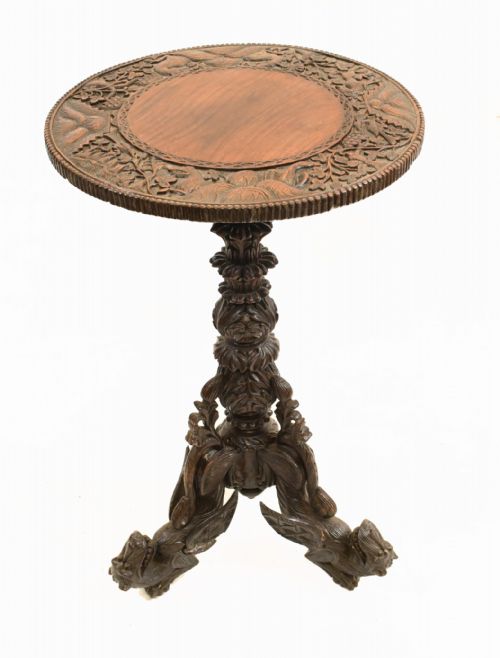


Anglo Indian Tripod Table
An anglo indian tripod table brings dense tropical hardwoods and intricate regional carving into domestic spaces.
Anglo Indian Tripod Table
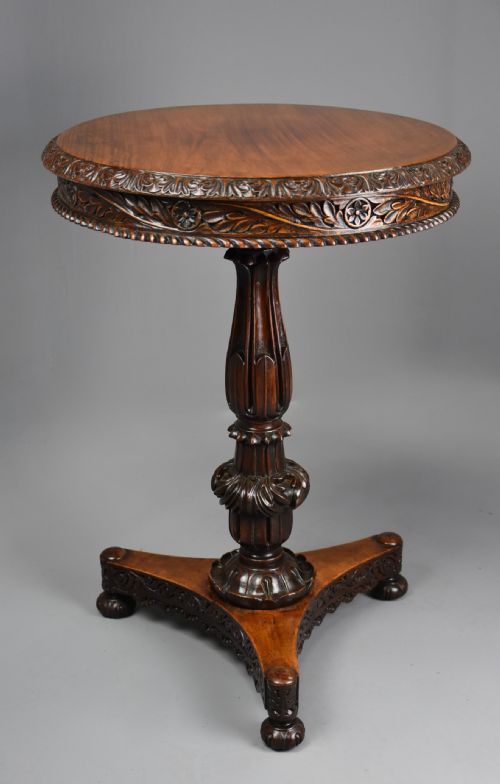
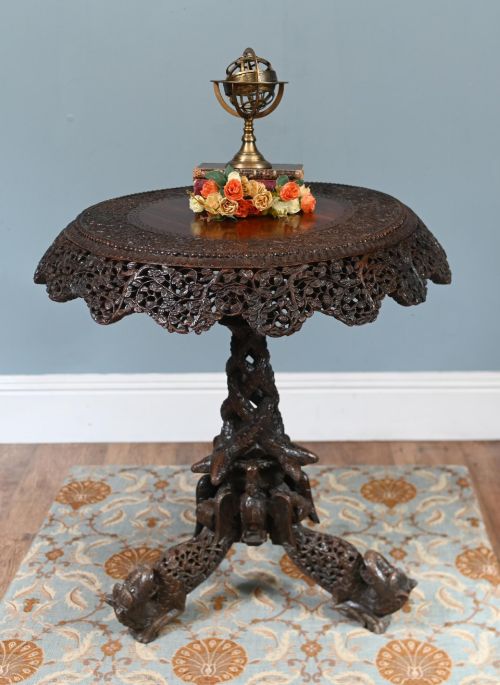
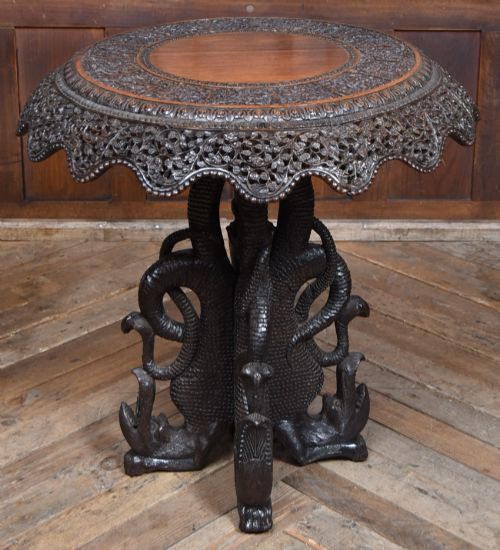
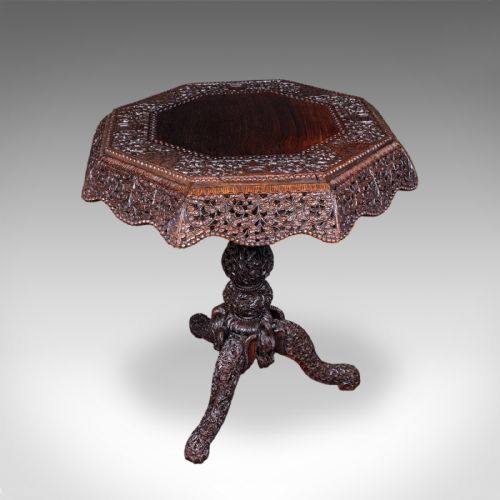
An anglo indian tripod table combines British furniture forms with South Asian woodworking traditions, spanning the nineteenth and early twentieth centuries. These pieces appear as occasional tables, plant stands, side tables, and tilt-top tables resting on three-legged supports.
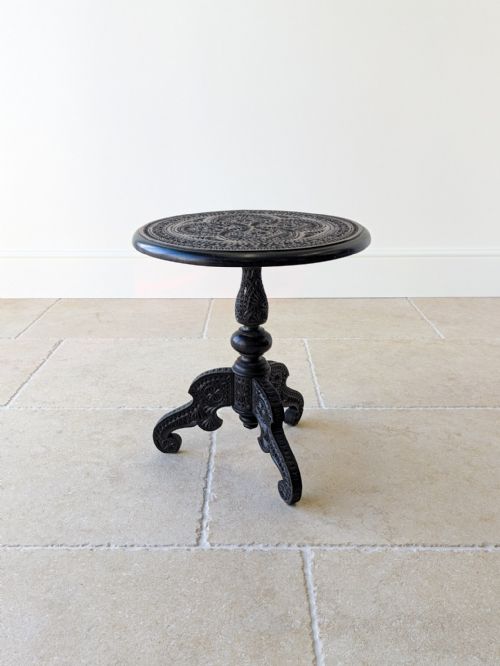
The regional origin determines the character of the piece, drawing from workshops in Bombay, Ceylon, Burma, and Kashmir. Teak, padouk, ebony, and rosewood serve as the primary foundations for carved foliage, geometric patterns, and figural motifs.
Materials and construction
Workshops utilised dense tropical timbers including padouk, teak, ebony, and rosewood, which accepted deep, crisp chisel work without splintering. These heavy woods provided the structural stability required for slender turned pedestals and three-legged bases.
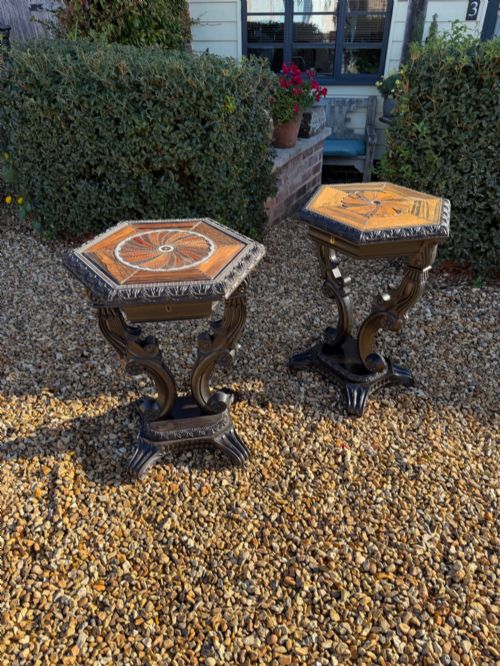
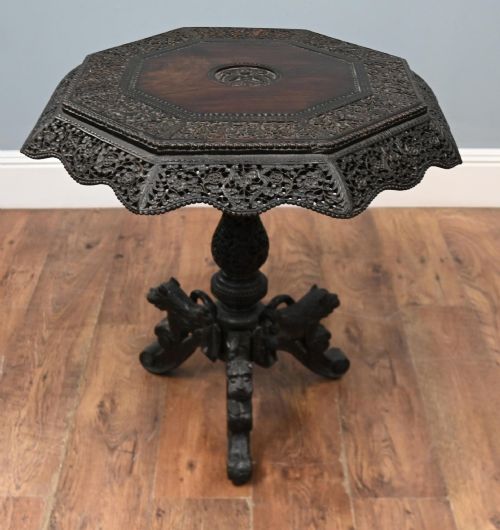
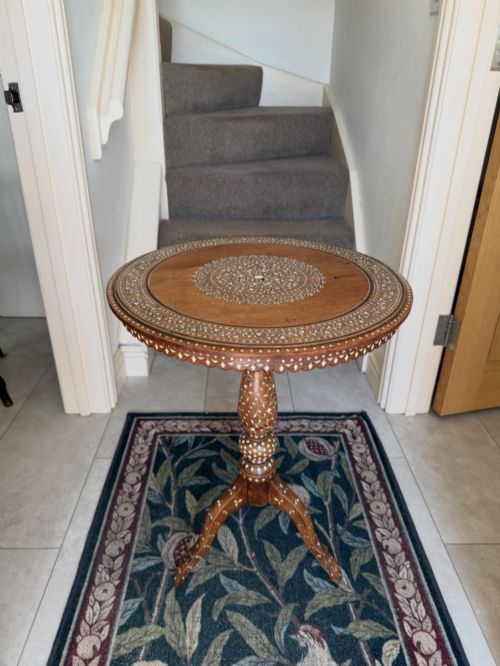
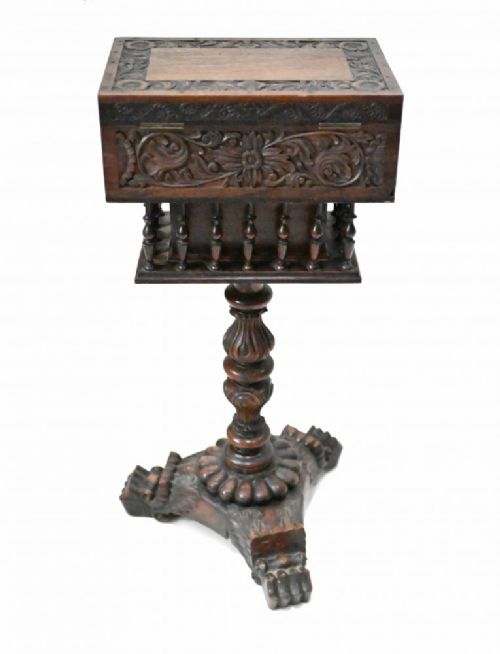
Surface enrichment involved intricate hand carving, bone inlay, mother-of-pearl embellishment, and detailed paintwork. Tilt-top mechanisms and fitted compartments appeared on specific occasional and work tables, demonstrating advanced joinery adapted to colonial utility.
Anglo Indian Tripod Table Retail Price Guide 2026
Typical asking prices for anglo indian tripod table among the pieces listed under this phrase on Sellingantiques today, from the lower quarter to the upper quarter. They describe what is for sale here now, not the wider market.
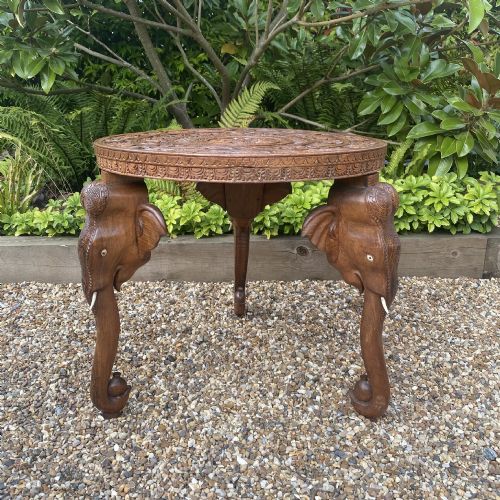
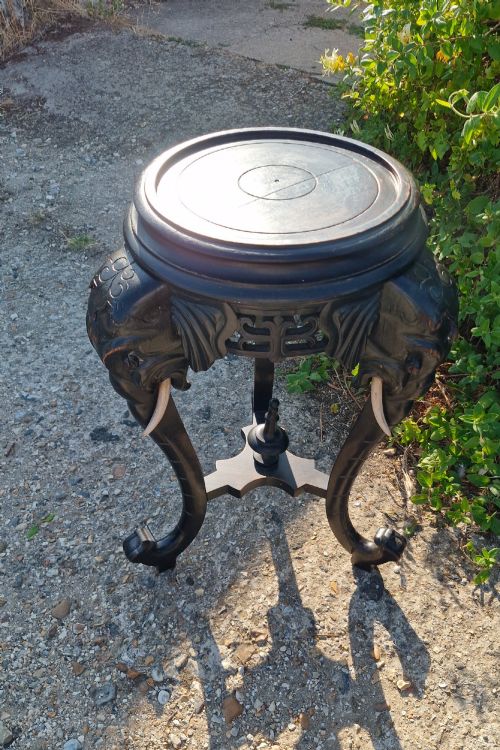
Selected tables feature painted wooden tusks projecting from carved elephant heads beneath the top.
Evaluating quality
The depth and clarity of the carving distinguish finer examples from simpler commercial production, particularly where relief work remains sharp and undercut rather than shallow and soft. The selection of timber also dictates grade, with dense, figured ebony or heavily grained padouk marking superior output.
Integration of secondary materials such as bone inlay, painted details, or mother-of-pearl demonstrates greater workshop skill when fitted flush and secure within the hardwood ground. Proportions between the top, the central turned pedestal, and the splayed legs govern the visual balance of the piece.
The Anglo Indian Tripod Table Glossary
- Teak
- A durable, oil-rich tropical hardwood utilised extensively for colonial furniture. It resists moisture and accepts fine carving.
- Padouk
- A heavy, reddish-brown timber favoured by regional workshops for circular and tilt-top occasional tables. Its dense grain holds crisp detail.
- Tilt top
- A tabletop mounted on a catch mechanism that allows the surface to fold vertically when not in use. This arrangement saved space in colonial interiors.
- Teapoy
- A small occasional table or stand originally designed for serving tea. Surviving examples often feature compartmented interiors or carved pedestals.
- Bone inlay
- Sliced animal bone set into recessed channels within the wooden surface to form geometric or floral patterns. It provides high contrast against dark hardwoods.
Anglo Indian Tripod Table: Frequently Asked Questions
What are these tables?
These tables are nineteenth and early twentieth-century pieces produced in South Asia under British colonial influence, combining European furniture forms with local carving traditions.
They utilise dense tropical timbers such as teak, padouk, and ebony, shaped into three-legged supports for domestic use as side, occasional, or tilt-top tables.
How were they used?
Colonial households utilised these small tables for serving tea, holding lamps, displaying plants, or as movable work surfaces in reception rooms.
Tilt-top variants allowed households to fold the surfaces upright against walls when floor space was needed for other activities.
How do I live with one?
These tables function well beside seating or as accent pieces in hallways and living spaces, where their carved surfaces and dark timbers provide strong visual contrast.
Maintenance requires simple dusting with a dry cloth and avoiding placement near direct heat sources that might dry out dense tropical hardwoods.
How do I date them?
Dating relies on stylistic shifts recorded across the nineteenth century, moving from heavy padouk and ebony pedestal designs toward inlaid teak and painted Kashmir surfaces toward the end of the Victorian era.
Joinery methods, turning styles, and regional decorative motifs help narrow the period of manufacture between the early nineteenth and early twentieth centuries.