



Antique Burmese Furniture
These antique Burmese furniture pieces bring dense hand-carved tropical timber and colonial craftsmanship straight into traditional and modern rooms.
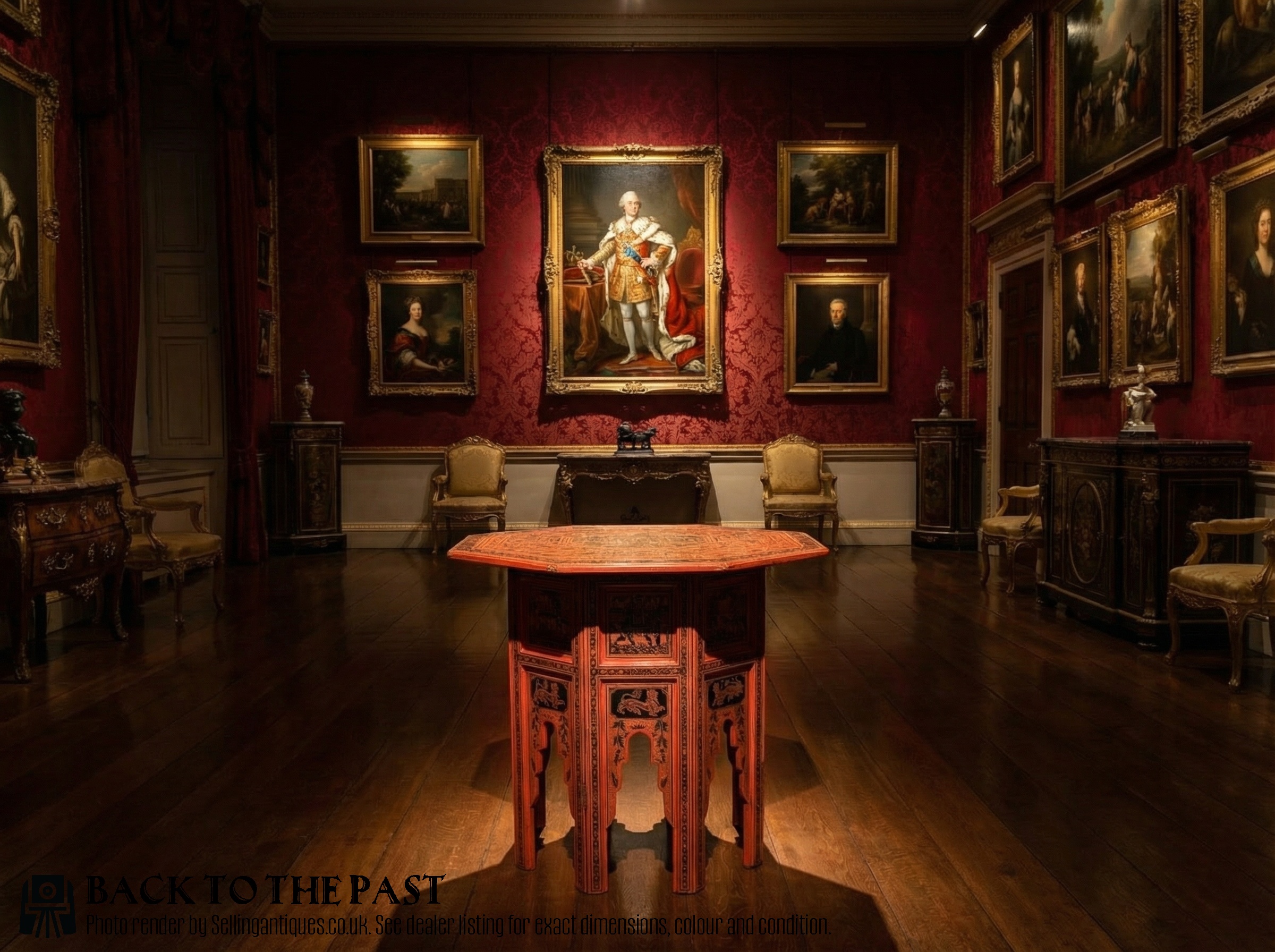
Antique Burmese Furniture
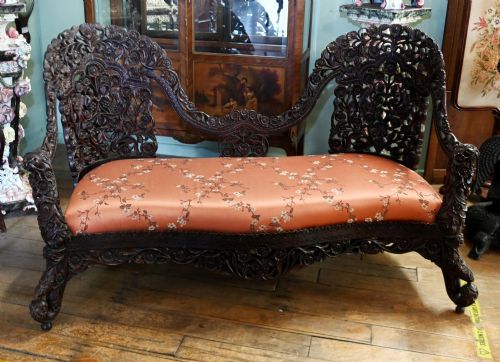
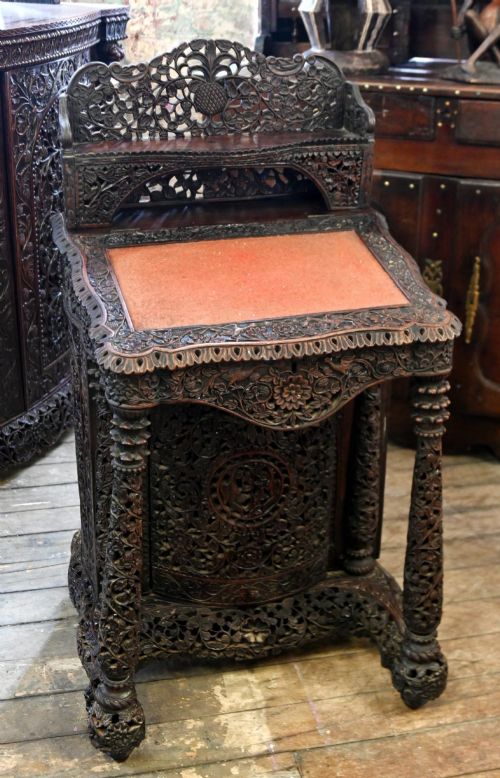
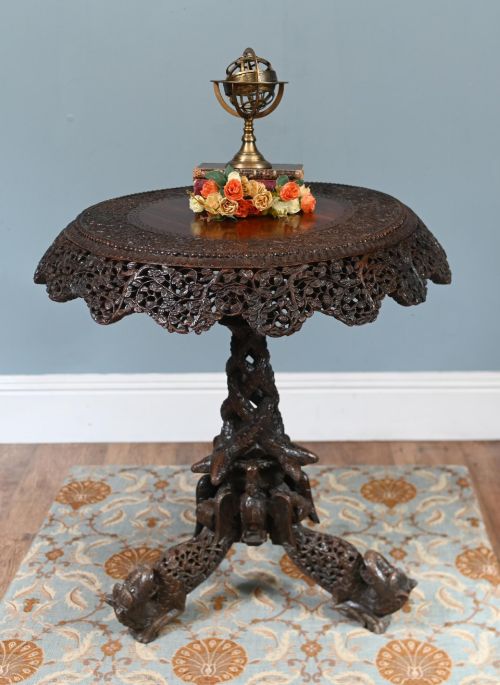
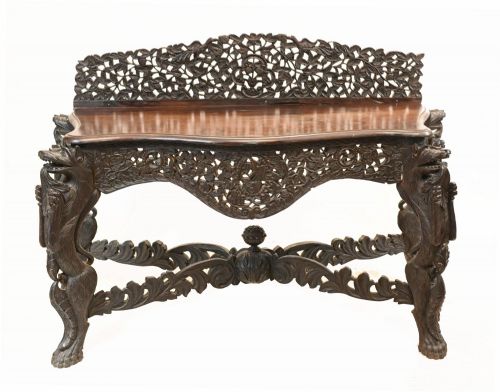
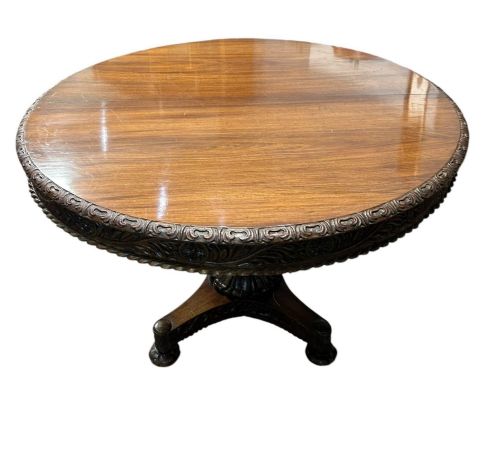
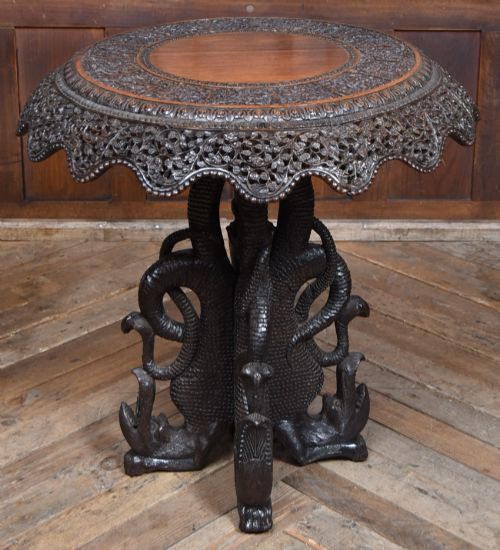
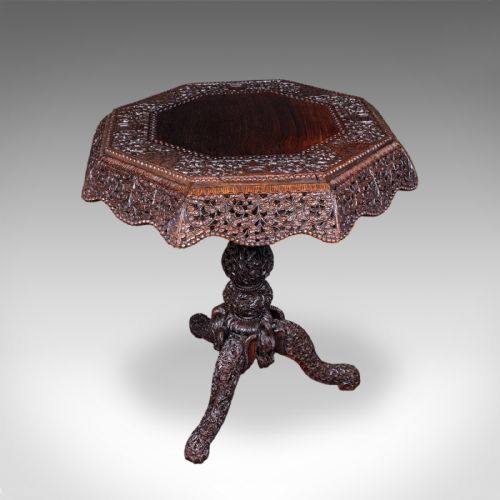
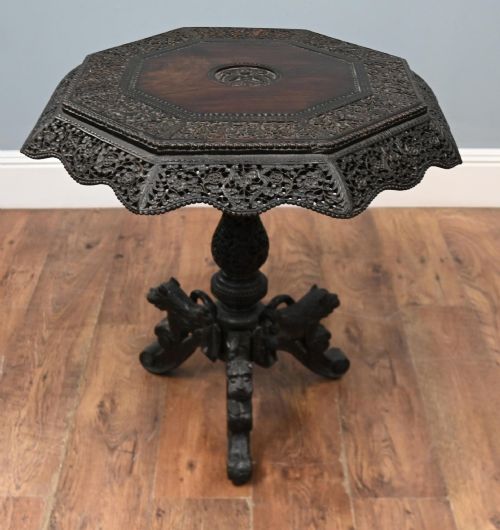
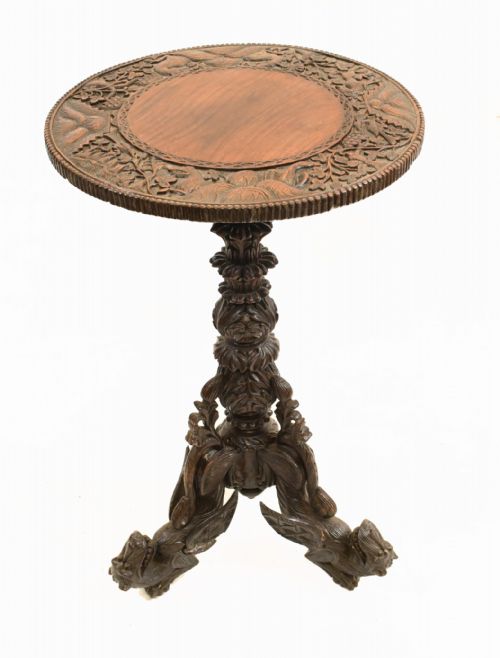
Antique Burmese furniture encompasses heavily carved tables, seating, and cabinets originating from Myanmar during the nineteenth and early twentieth centuries. Side tables and occasional tables appear most frequently alongside armchairs, buffets, and console tables.
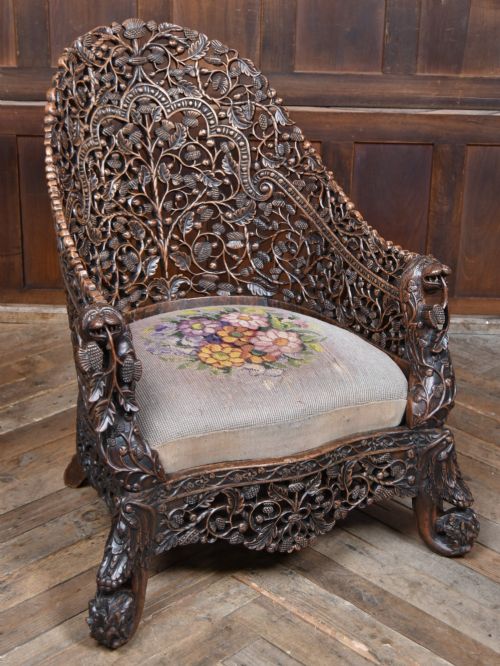
The aesthetic bridges indigenous Burmese vernacular traditions and colonial influences, often categorised under Anglo-Burmese or Anglo-Indian styles. Makers utilised regional aesthetics featuring deep relief carving and figural motifs like elephants, peacocks, and harps.
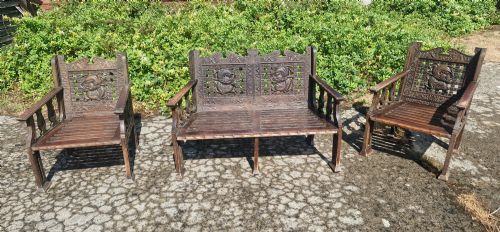
Pieces span several decades from the mid-nineteenth century through the 1930s, reflecting shifts in production from village workshops to colonial export pieces. Standard forms range from simple teak village tables to elaborate conservatory suites and temple chairs.
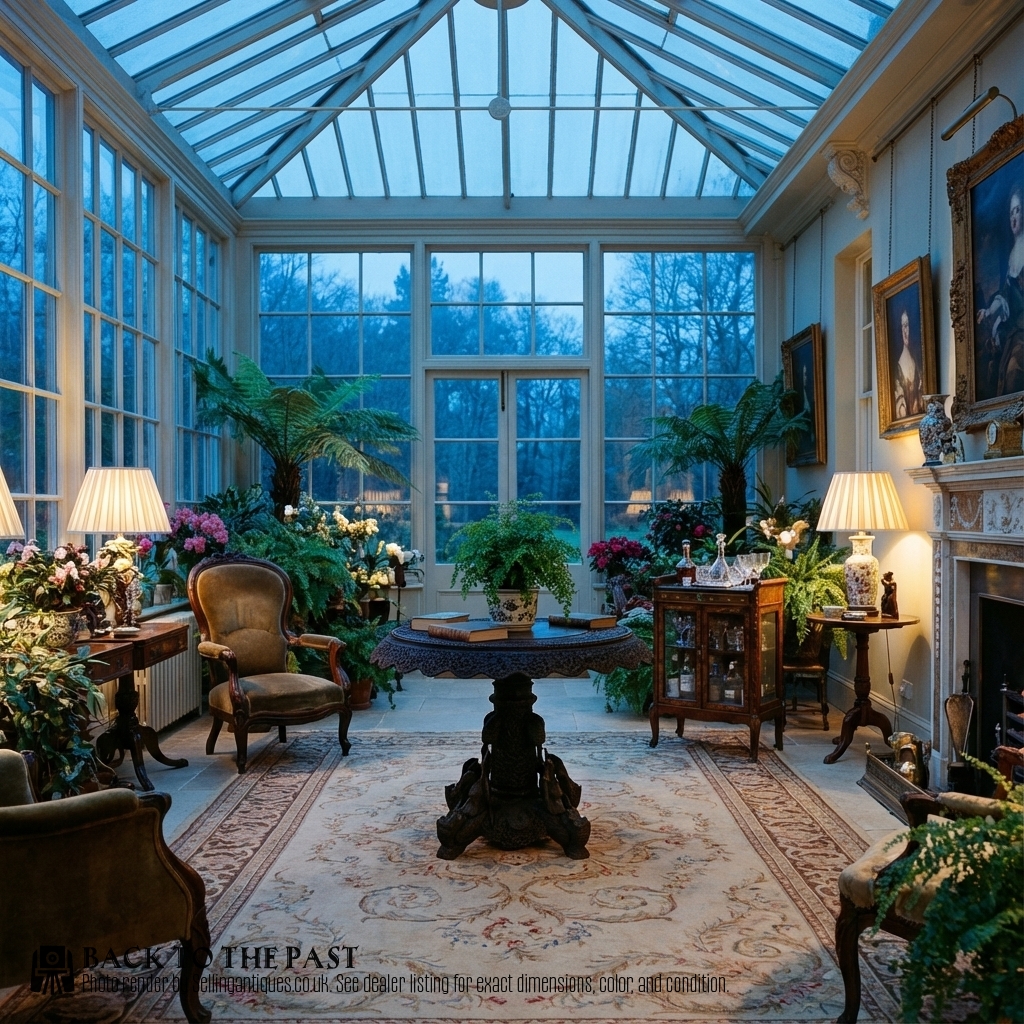
How they were made
Makers constructed these pieces primarily from dense tropical timbers including teak, padauk wood, and general hardwoods, occasionally incorporating oak. These heavy woods provided the stable foundation necessary for deep, intricate hand-carving across table tops, panels, and chair frames.
Brass hardware and occasional tapestry elements supplemented the carved timber construction on specific cabinets, seating suites, and folio stands. Joinery relied on traditional hand-tool methods suited to dense timbers, allowing artisans to execute elaborate surface ornamentation without modern machinery.
Antique Burmese Furniture Retail Price Guide 2026
Typical asking prices for burmese furniture among the pieces listed under this phrase on Sellingantiques today, from the lower quarter to the upper quarter. They describe what is for sale here now, not the wider market.
Materials documented across these listings include teak, padauk wood, oak, brass, and tapestry.
What varies in quality
The depth, crispness, and complexity of the hand-carving dictate the primary visual tier of these pieces. Deep relief work depicting specific figures such as elephants, peacocks, or harpists demonstrates greater artisan skill than shallow geometric patterning.
Selection of timber heavily influences overall quality, with dense padauk wood and seasoned teak commanding distinct presence compared to standard mixed hardwoods. The structural integrity of multi-tiered buffets, folding mechanisms, and heavy seating suites separates utilitarian village items from grander commission pieces.
The Antique Burmese Furniture Glossary
- Padouk wood
- A dense, durable tropical hardwood with a reddish hue utilised for high-end carved tables and cabinets. It accepts intricate hand-carving without splintering.
- Teak
- A primary structural timber native to Southeast Asia prized for its oil content and strength. It forms the foundation of numerous village tables and sideboards.
- Tilt top table
- A table featuring a hinged mechanism that allows the top to pivot vertically for storage. This form appears across nineteenth-century side tables.
- Folio stand
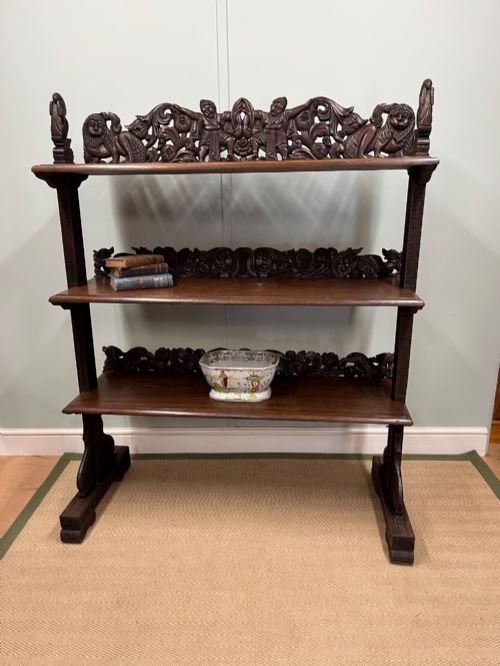
- A specialised rack designed for newspapers, folios, or documents. Examples constructed in teak feature slatted or carved dividers.
- Anglo-Burmese
- A design classification describing pieces made in Burma during British colonial rule. These items combine local carving techniques with European furniture forms.
Antique Burmese Furniture: Frequently Asked Questions
What is Burmese furniture?
Burmese furniture comprises hand-carved wooden items produced in Myanmar during the nineteenth and early twentieth centuries. These pieces typically feature dense tropical timbers and deep relief carving.
Common forms include side tables, armchairs, console tables, and buffets reflecting indigenous and colonial design influences.
How do I identify teak from padauk wood?
Teak generally exhibits a golden-brown tone that deepens with age, while padauk wood displays a distinct reddish-orange colouration that matures to a deeper brown. Both timbers possess significant weight and density.
Examining the grain under natural light helps reveal the specific timber species utilised by the maker.
Where were these pieces used?
Original contexts ranged from colonial bungalows and administrative offices to temple spaces and traditional village homes. Grand conservatory suites and temple chairs served formal entertaining areas.
Smaller side tables and folio stands functioned as practical household furnishings in studies and reception rooms.
How do I care for antique tropical wood furniture?
Maintain stable indoor humidity levels to prevent the dense timbers from splitting or moving over time. Avoid placing items near direct heat sources or strong sunlight.
Apply occasional microcrystalline wax to nourish the wood surface and preserve the intricate hand-carved details.