



Anglo Burmese Carved Table
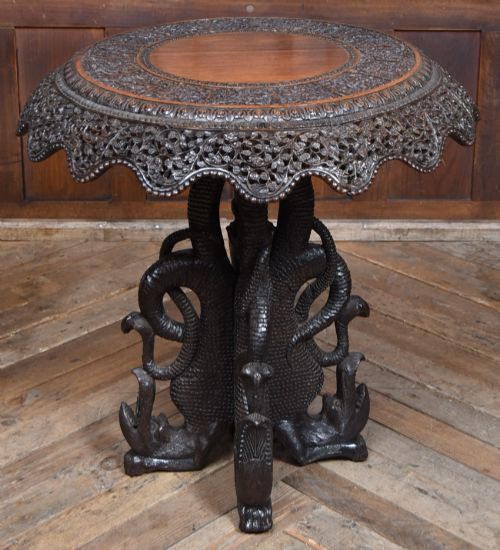
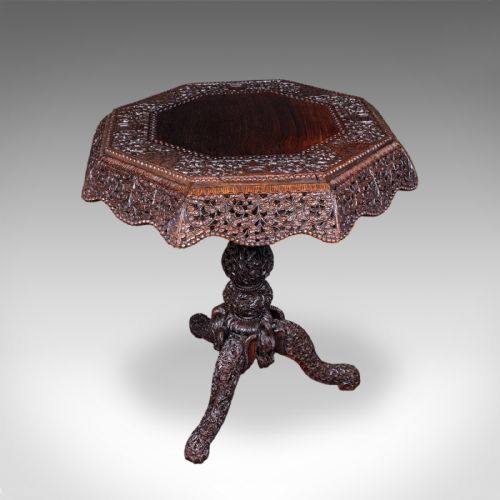
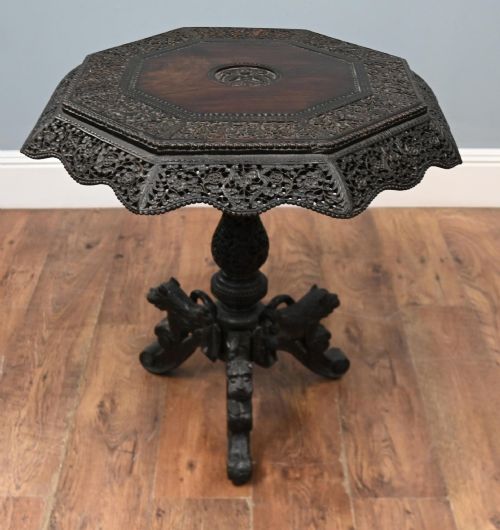
An anglo burmese carved table brings colonial craftsmanship into a room, offering dense floral relief and rich native timber.
Anglo Burmese Carved Table
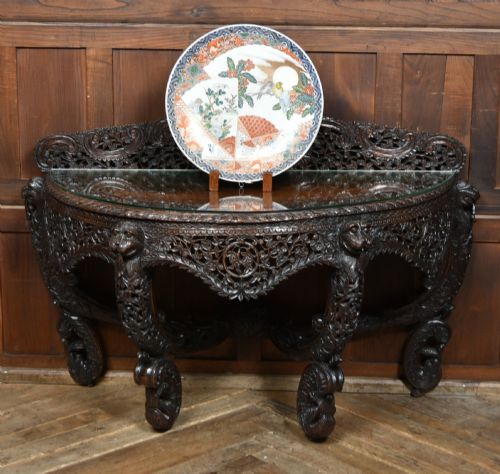
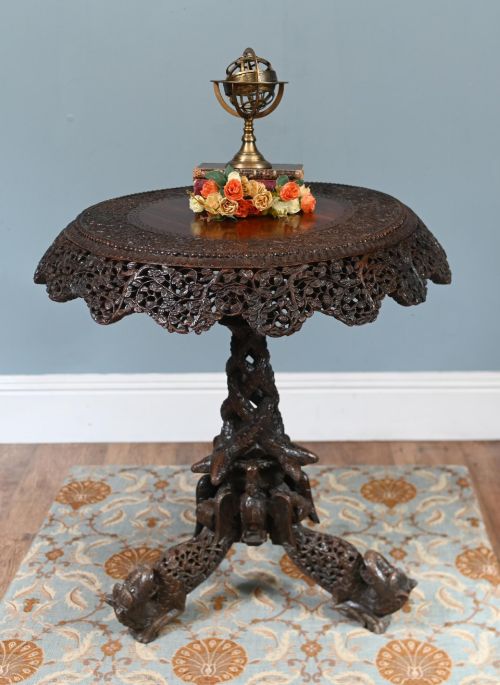
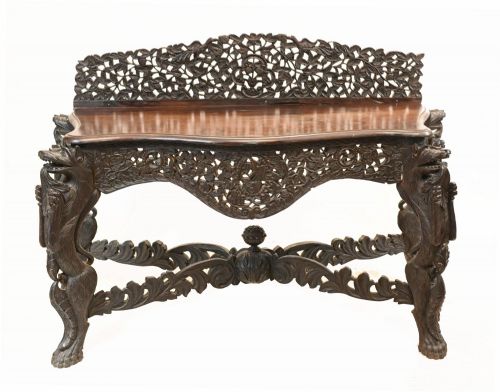
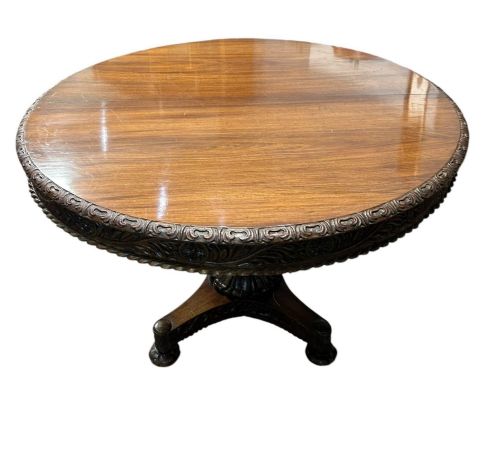
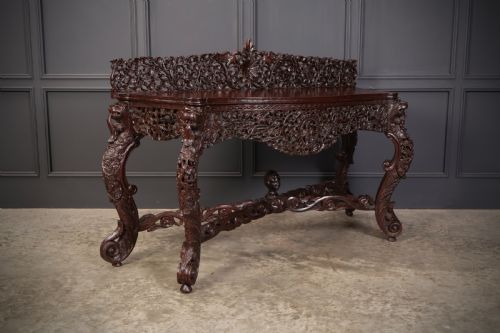
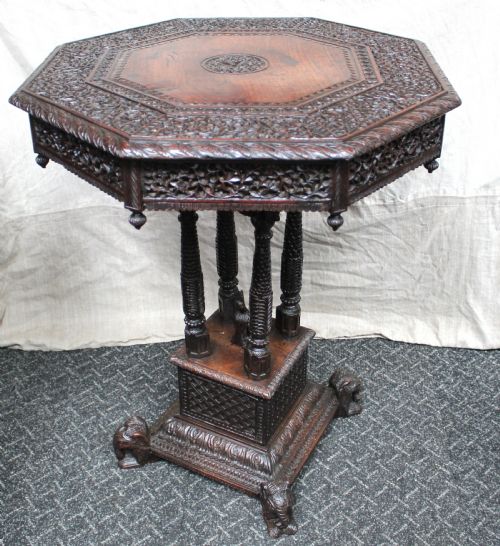
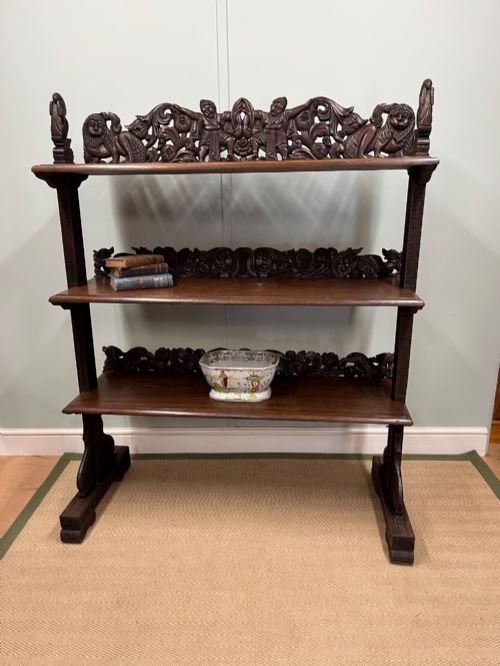
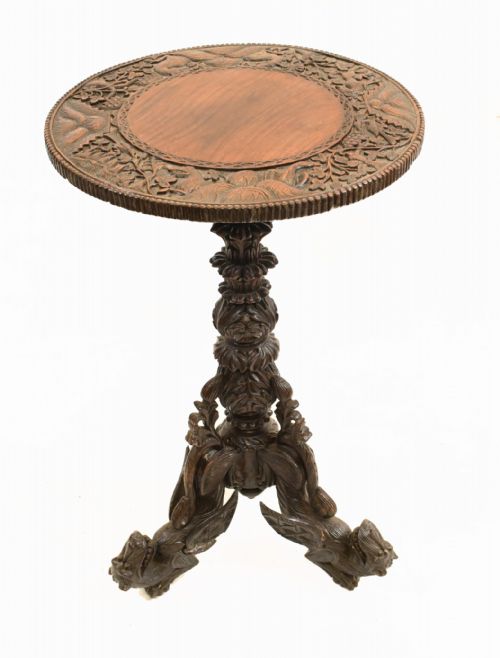
An anglo burmese carved table represents nineteenth-century colonial furniture production, combining traditional Eastern carving motifs with British domestic forms. These pieces typically take the shape of occasional tables, side tables, consoles, and multi-tiered buffets designed for European households in the region or export to Britain. The construction frequently incorporates tilt-top mechanisms, folding book stands, and round tables supported by elaborate figural legs.
The domestic forms seen in these listings span from the mid nineteenth century through the early twentieth century, with Victorian examples appearing regularly. Makers adapted local furniture styles to suit British interior tastes, resulting in versatile items such as coffee tables, centre tables, and side tables. These furnishings served practical functions in colonial drawing rooms while showcasing intricate regional woodworking traditions.
How these tables were made
Makers utilised dense tropical timbers such as teak, padauk wood, and general hardwood to construct these pieces. These durable woods provided a stable canvas for deep, sculptural relief work that defined the colonial aesthetic. Bone inlays occasionally appeared to highlight specific decorative elements within the overall design.
Carpenters employed hand-carving techniques to cover surfaces in dense floral, foliate, and sometimes figural motifs, including elephant legs on support structures. Lacquer finishes were also applied to certain surfaces, adding sheen and colour variation to the timber. Tilt-top mechanisms and multi-tiered bracket assemblies required precise joinery to support the heavy carved tops.
Anglo Burmese Carved Table Retail Price Guide 2026
Typical asking prices for anglo burmese carved table among the pieces listed under this phrase on Sellingantiques today, from the lower quarter to the upper quarter. They describe what is for sale here now, not the wider market.
Several occasional tables feature carved elephant legs supporting the heavy timber tops.
What varies in quality
The depth and clarity of the hand carving separate standard examples from exceptional ones. Superior pieces feature undercut relief work where foliage and figures stand clear of the background timber, whereas lesser examples show shallow, flat incisions. The complexity of the structural form, such as multi-tiered buffets or articulated tilt-top mechanisms, also indicates the ambition of the original maker.
The choice of material influences the overall quality, with dense padauk and select teak displaying superior grain patterns and weight compared to standard mixed hardwoods. The crispness of detail on figural elements, such as carved animal supports, demonstrates the artisan's skill level. Surface preservation, particularly the retention of original polish or lacquer without modern intervention, affects the integrity of the piece.
The Anglo Burmese Carved Table Glossary
- Padauk wood
- A dense, durable tropical timber known for its reddish-brown colour and heavy weight. Artisans utilised this wood extensively for high-end colonial furniture.
- Tilt top table
- A table featuring a mechanism that allows the surface top to pivot into a vertical position when not in use. This design saved space in nineteenth-century interiors.
- Buffet
- A multi-tiered shelving unit used for display or storage. Examples from this tradition feature tiered platforms supported by carved columns.
- Console table
- A wall-mounted or freestanding table designed to sit against a flat surface. These pieces frequently functioned as decorative display furniture in hallways and reception rooms.
Anglo Burmese Carved Table: Frequently Asked Questions
How do I date an anglo burmese carved table?
Dating relies on stylistic markers, timber choice, and historical documentation associated with the piece. Mid-nineteenth-century examples often feature heavier padauk construction and deep figural carving.
Later Victorian and turn-of-the-century pieces tend to incorporate lighter teak frames and refined occasional table formats. Comparing the joinery methods and hardware to known period exemplars helps narrow the production window.
What rooms suit an anglo burmese carved table?
These tables function well as statement pieces in living rooms, studies, or entrance halls. Occasional and tilt-top variants fit easily beside seating areas or against blank wall spaces.
Console tables and multi-tiered buffets provide functional surface area for display while introducing rich timber textures and colonial character to neutral interiors.
How do I care for padauk and teak furniture?
Maintenance involves dusting with a soft cloth and avoiding direct exposure to strong sunlight or fluctuating heat sources. Excessive dryness causes timber to split.
Applying occasional appropriate wax preserves the natural sheen of the wood without sealing the grain beneath a heavy synthetic coat.
Were these tables made in Burma or Britain?
Production occurred primarily in Burma during the colonial period, executed by local craftsmen for British expatriates and the export market. The designs merged indigenous carving traditions with Western furniture forms.
Export networks distributed these goods directly to British households, where they became popular additions to Victorian and Edwardian interiors.