


Teak Coffee Table
A teak coffee table brings solid timber grain and carved historical character straight into a modern sitting room.

Teak Coffee Table
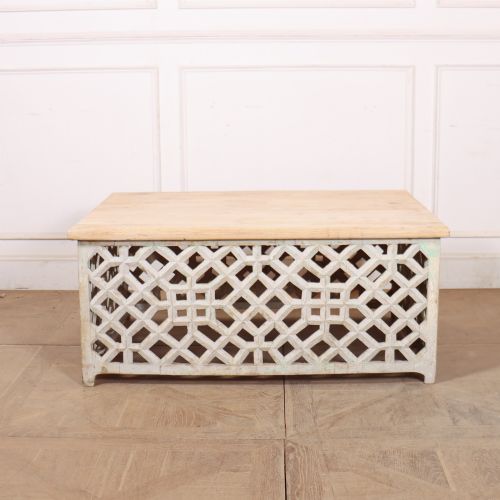
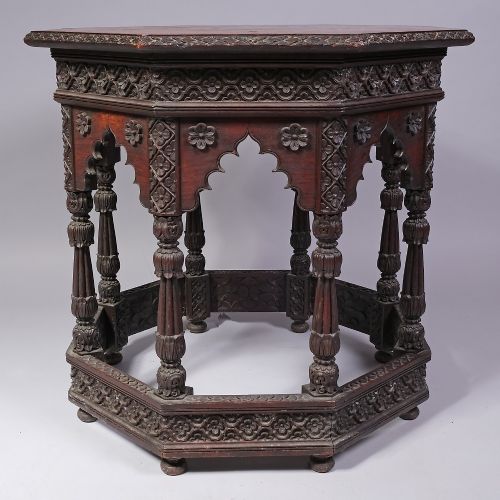
A teak coffee table encompasses a broad range of low-slung surfaces adapted from older forms, including low Indian tables, campaign chests, and traditional trunks. Buyers searching for a teak coffee table most frequently encounter Anglo-Indian and colonial pieces featuring intricate hand-carved details or brass inlay from the nineteenth and early twentieth centuries.
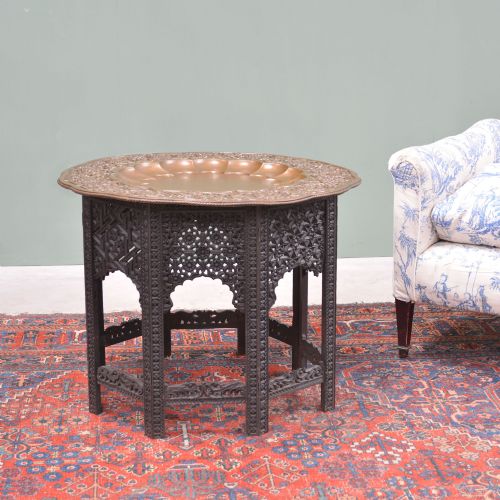
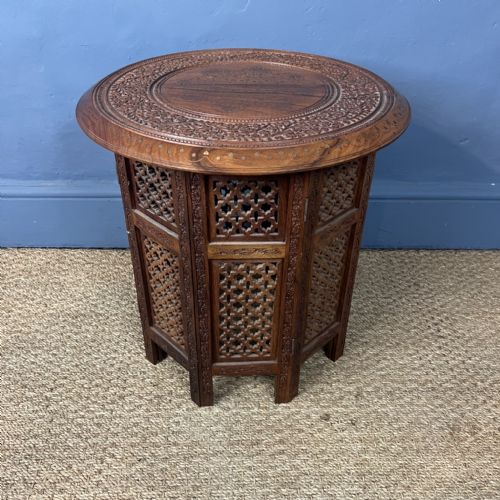
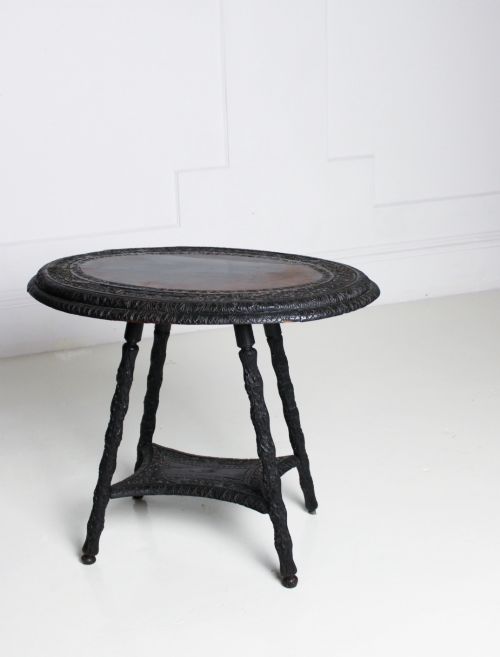
The selection ranges from circular occasional stands and octagonal folding tables to repurposed chests and low takhat platforms. These items bridge historical craftsmanship and modern utility, serving as functional centrepieces with distinct regional origins.
How they were made
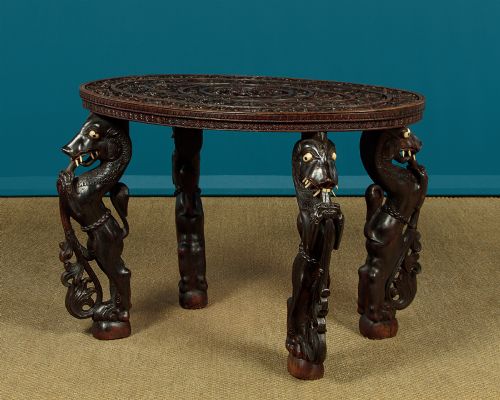
Construction relies heavily on dense tropical hardwoods like teak and rosewood, often reinforced with brass mounts, iron straps, and internal bone inlay. Artisans utilised traditional joinery alongside hand-carved detailing, shaping panels with intricate fretwork and figurative motifs such as elephants and camels.
Many examples incorporate folding tray tops or collapsible bases designed for travel and colonial administration. Surface finishes highlight the natural grain of the wood, complemented by metalwork and contrasting inlays.
Materials paired with teak across these listings include brass, bone, iron, glass, and rosewood.
What varies in quality
Quality rests upon the crispness of the hand-carving and the integrity of the timber frame. Superior examples display deep, sharp relief work and secure brass or bone inlays that sit flush with the wood surface.
The stability of the structure and the retention of original fittings distinguish finer specimens. Pieces that maintain their original patination and structural soundness command greater interest from collectors.
The Teak Coffee Table Glossary
- Anglo-Indian
- Furniture produced in India during the British colonial period, often combining British furniture forms with local carving traditions. These pieces frequently utilise native hardwoods and detailed foliage motifs.
- Hoshiarpur
- A style of woodwork originating from Punjab, characterised by dense geometric patterns formed from inlaid brass and bone. The intricate work covers the entire surface of the table.
- Takhat
- A traditional low Indian platform or seating furniture adapted into a sturdy coffee table format. They feature heavy timber construction and simple, robust proportions.
- Campaign chest
- Portable military furniture designed to dismantle or fold for transport during the Victorian era. They typically feature recessed brass handles and reinforced corners.
- Fretwork
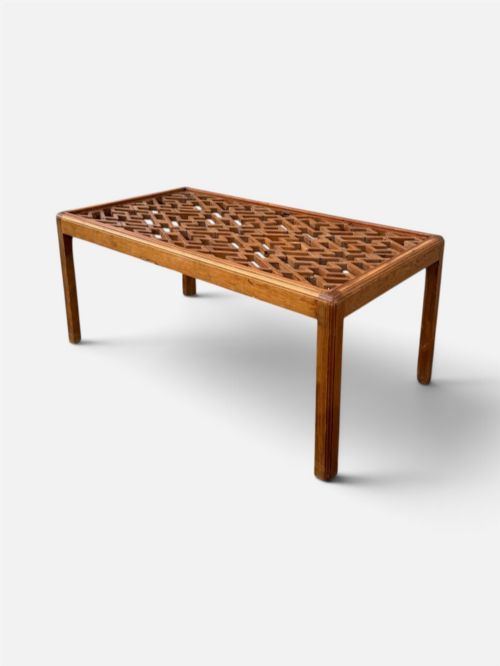
- Ornamental perforated woodwork created by cutting intricate patterns through the timber panel. It appears frequently on panels and screens adapted into modern table tops.
Teak Coffee Table: Frequently Asked Questions
How do I clean a carved teak table?
Dust the carved surfaces regularly using a soft, dry brush to prevent dirt from settling in the recesses. Apply a modest amount of beeswax occasionally to nourish the timber without building up a heavy film.
Avoid using harsh chemical polishes or excessive water on antique wood. A damp cloth followed immediately by a dry one is sufficient for removing minor marks.
Are these tables suitable for everyday use?
Solid teak construction makes these tables durable enough for daily living room placement. The dense nature of the hardwood resists standard wear from cups and books.
Protect delicate glass inserts or inlaid brass sections with coasters where appropriate. Regular placement away from direct heat sources preserves the stability of the timber.
How do I date an antique teak table?
Examine the construction methods, tool marks, and metal fittings to determine the era of manufacture. Nineteenth-century examples often feature hand-cut joinery and heavy brass or iron hardware.
Compare the decorative style against documented regional motifs, such as Victorian campaign pieces or early twentieth-century Hoshiarpur inlay work. Consulting archive records for similar forms offers further chronological context.
What is a tray top table?
A tray top table consists of a removable upper tray resting on a folding or fixed wooden stand. This design originated for serving tea or transporting items easily within a colonial household.
Many surviving examples feature raised edges with carved handles or brass inlay. The collapsible stands allow for convenient storage when not in active use.