

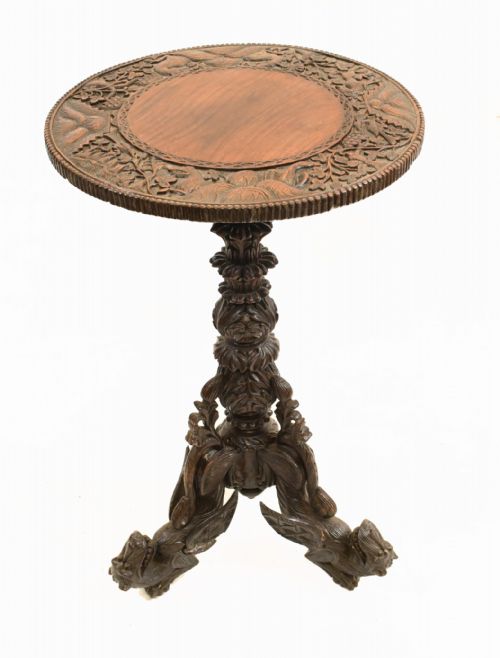


Carved Teak Accent Table
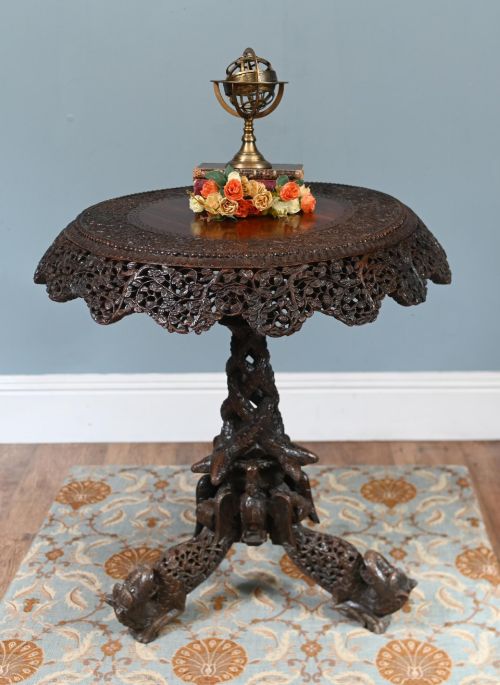
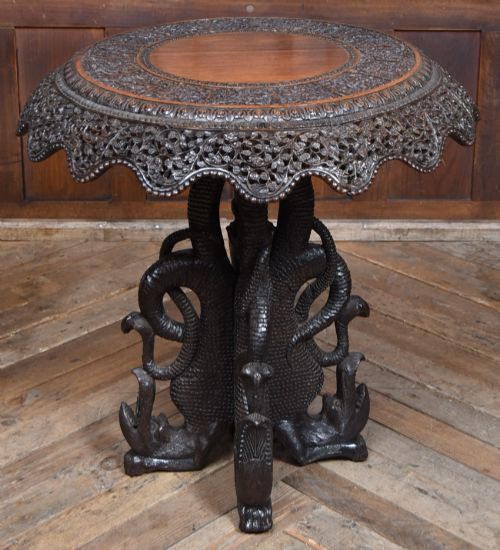
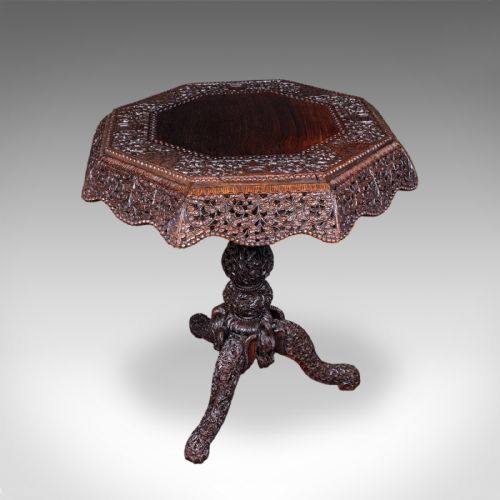
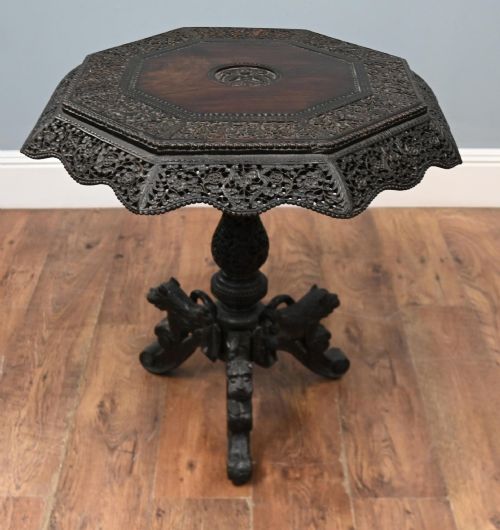
A carved teak accent table brings dense foliage relief and rich colonial heritage into a modern room.
Carved Teak Accent Table
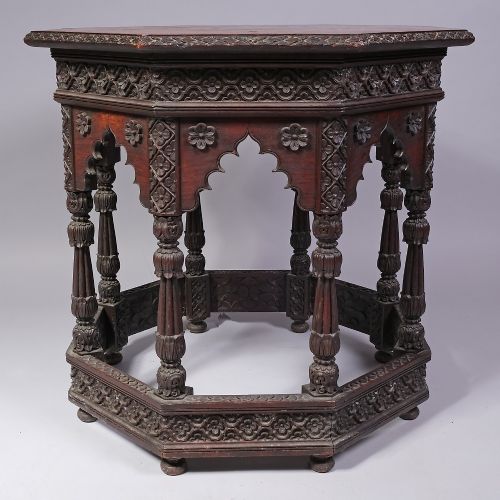
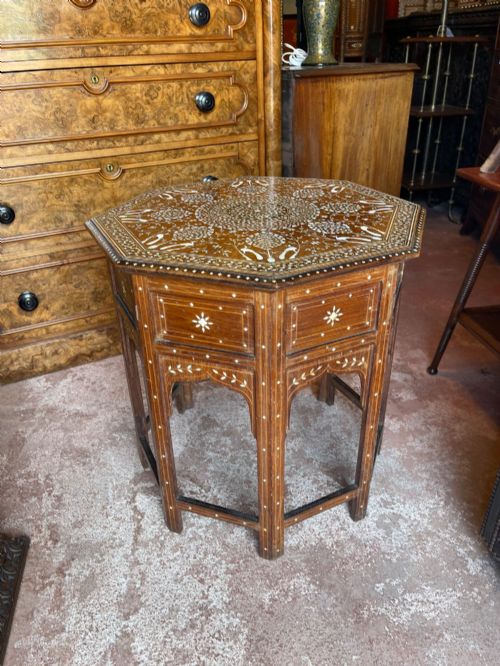
A carved teak accent table takes many forms across this selection, appearing most frequently as an octagonal side table, an occasional table, or a low coffee table. These pieces emerge primarily from nineteenth and early twentieth century workshops in India and Burma, reflecting colonial periods and styles such as Anglo-Indian and Anglo-Burmese.
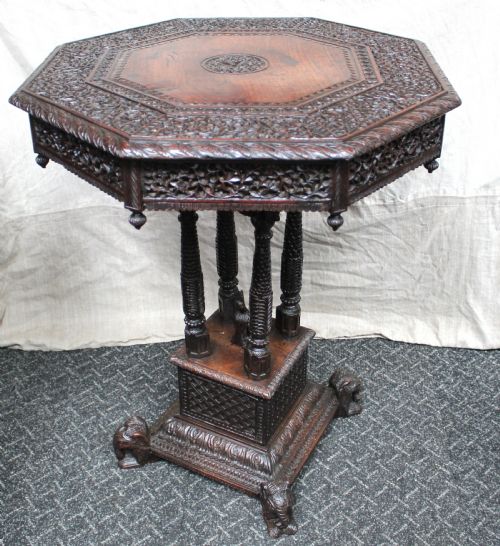
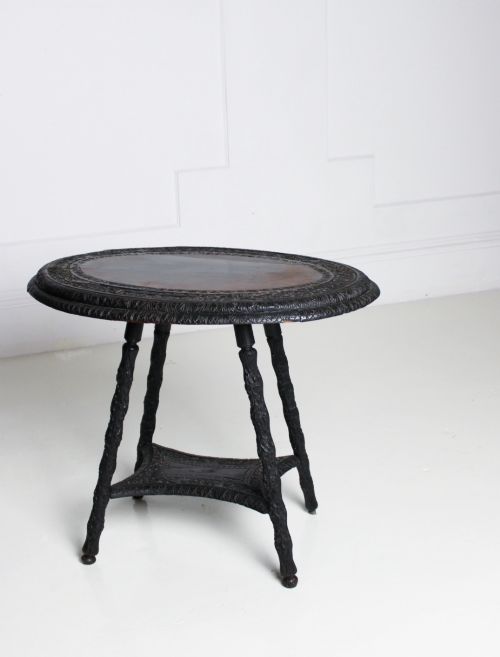
Makers shaped these items into specific regional silhouettes, including elephant tables with carved legs, folding tables, and two tier side tables. The inventory spans from smaller pedestal surfaces up to full size tables, drawing heavily on oriental and Chinese export influences alongside South Asian vernacular traditions.
What varies in quality
Quality separates along the depth and precision of the chisel work, distinguishing shallow mechanical scoring from crisp, deeply undercut relief carving that creates distinct shadow and dimension. The intricacy of inlaid brass or bone components, alongside the symmetry and tightness of folding or tiered joints, further marks superior workshop output.
The choice of primary timber and the preservation of original surface patination dictate the standing of an individual piece. Heavier gauge teak, well-matched rosewood sections, and complete, undamaged inlay define the higher tier of surviving examples.
Carved Teak Accent Table Retail Price Guide 2026
Typical asking prices for carved teak accent table among the pieces listed under this phrase on Sellingantiques today, from the lower quarter to the upper quarter. They describe what is for sale here now, not the wider market.
Several tables rely entirely on carved wooden camels and elephants to hold up the tea.
The Carved Teak Accent Table Glossary
- Anglo-Indian
- A descriptive term for furniture made in India during the British colonial period, combining traditional local craftsmanship with European forms. These pieces often feature dense surface carving.
- Hoshiarpur
- A town in Punjab renowned for intricate woodwork, specifically known for tables featuring detailed brass, wire, and bone inlay set into dark hardwood. The patterns typically comprise geometric and floral motifs.
- Tip top
- A descriptor for occasional tables featuring a hinged tabletop that tilts vertically for storage or transport when not in use. This mechanism relies on a wooden catch or latch beneath the surface.
- Elephant table
- A form of occasional table supported by carved wooden legs shaped as elephants, frequently found in nineteenth century Indian production. The trunks and heads often form the structural feet.
- Nesting tables
- A set of graduated tables designed to slide one beneath another to save floor space. The current selection includes sets of four cashmere tables built with this space-saving arrangement.
Carved Teak Accent Table: Frequently Asked Questions
How do I place a carved teak accent table?
These tables function well beside armchairs, sofas, or as standalone display surfaces for lamps and decorative objects. Their compact footprints suit smaller reception rooms and hallways.
Because the surfaces feature deep relief carving, placing a glass top over the wood protects the intricate channels from dust and provides a smooth writing surface.
What is an Anglo-Indian table?
An Anglo-Indian table is a piece manufactured in the Indian subcontinent during the British colonial era, merging British furniture types with local carving traditions. They frequently utilise dense hardwoods like teak and rosewood.
These items range from octagonal occasional tables to folding side tables, decorated with deeply carved foliage and inlaid metal or bone.
How do I care for carved teak?
Maintenance involves dusting regularly with a soft brush to reach inside the deep recesses of the carving. Avoid harsh chemical polishes that build up within the wooden grain.
Applying a light coat of natural beeswax occasionally helps nourish the hardwood and preserve the natural tone of the timber without darkening the carved details.
How do I distinguish Burmese from Indian tables?
Burmese pieces generally exhibit heavier, deeper relief carving covering nearly every visible surface of the teak framework, often featuring two tier structures or tip top mechanisms. Indian examples frequently incorporate contrasting inlay materials such as brass wire and bone.
Regional motifs also offer clues, with Burmese work leaning towards dense scrollwork and Indian workshops frequently utilising animal supports like elephants, camels, and peacocks.