


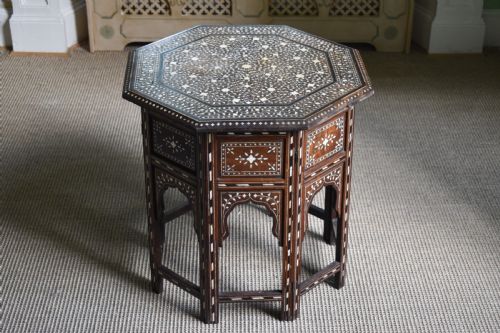
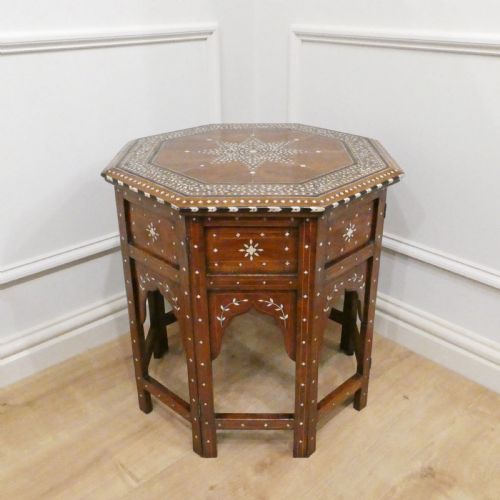


Hoshiarpur Folding Table
These hoshiarpur folding table pieces bring intricate inlay and carved woodwork into a room, offering both portability and distinct visual character.
Hoshiarpur Folding Table
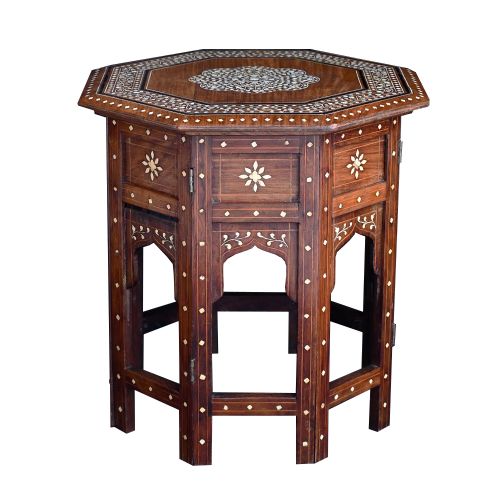
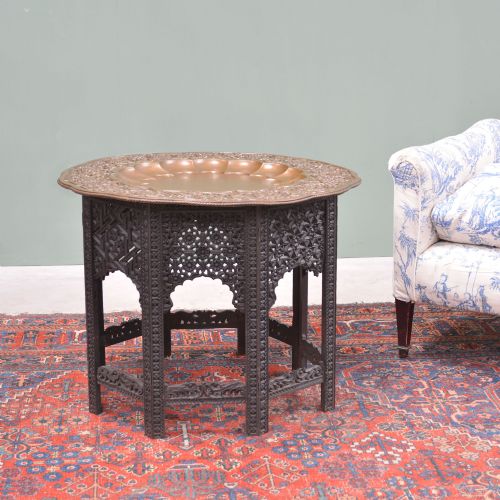
When you search for hoshiarpur folding table, you are looking at intricately decorated occasional furniture originating from the Punjab region of India during the British colonial period. Most examples you will meet on this page take an octagonal form with a removable tray top resting upon a collapsible, pierced wooden base.
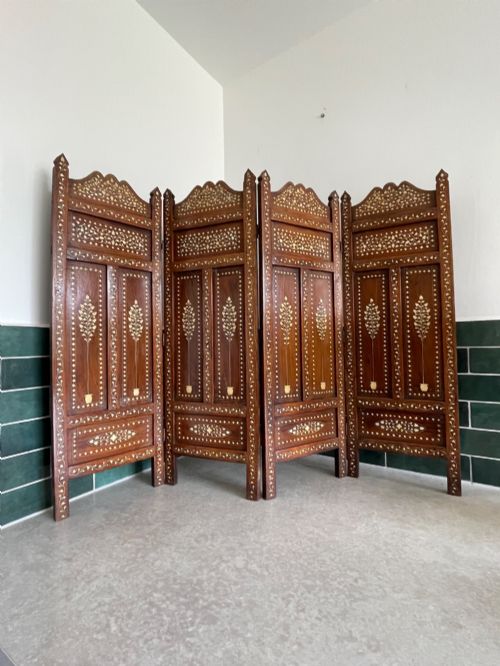
The inventory encompasses side tables, chess boards, and table screens, alongside classic occasional tables designed for easy storage. These items frequently display the Anglo-Indian design aesthetic, combining traditional Indian carving techniques with forms suited to Western drawing rooms of the nineteenth and early twentieth centuries.
How they were made
The construction relies on dense hardwoods such as teak, rosewood, ebony, padauk, and sandalwood, selected for their stability and fine grain. Artisans carved these woods deeply with botanical and geometric motifs before applying detailed geometric patterns.
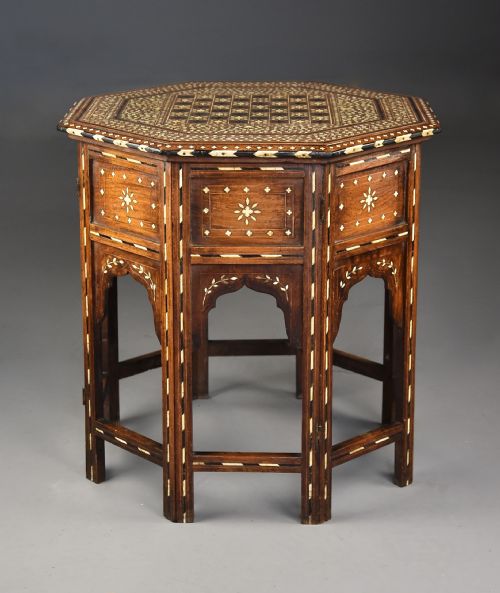
Surface decoration depends heavily on meticulous inlay work, utilising bone, brass, and copper pieces fitted precisely into the carved wooden recesses. The folding bases employ clever interlocking joints that allow the structural support to collapse flat without metal hinges.
Hoshiarpur Folding Table Retail Price Guide 2026
Typical asking prices for hoshiarpur folding table among the pieces listed under this phrase on Sellingantiques today, from the lower quarter to the upper quarter. They describe what is for sale here now, not the wider market.
Several examples include chess boards, proving that nineteenth-century visitors occasionally needed to settle arguments over a quick game.
What varies in quality
The distinction between standard and superior pieces rests upon the density and precision of the surface decoration. Finer examples feature dense, uninterrupted bone or metal inlay covering nearly the entire wooden surface, whereas simpler items rely more on carved relief alone.
Execution of the pierced woodwork on the folding base also dictates the standard of the piece, with sharper, deeper piercing representing superior craftsmanship. The choice of primary timber further separates the range, with heavier exotic hardwoods commanding greater respect than basic regional varieties.
The Hoshiarpur Folding Table Glossary
- Anglo-Indian
- A style designation for furniture made in India by local artisans for British colonial residents, combining Eastern motifs with Western forms. This crossover aesthetic defines the character of nineteenth-century decorative pieces.
- Tray top
- A removable table surface featuring a raised moulded rim designed to prevent items from sliding off. This feature allowed the top to double as a serving tray.
- Bone inlay
- The technique of embedding small, hand-cut pieces of animal bone into carved channels within a wooden ground. It creates high-contrast geometric and floral patterns.
- Octagonal
- Having eight sides. This geometry is standard for the tops of these folding tables.
- Padauk
- A heavy tropical hardwood valued for its durability and rich colour. It provides a stable foundation for intricate carving.
Hoshiarpur Folding Table: Frequently Asked Questions
How do you fold these tables?
The structural base is constructed with interlocking wooden panels that pivot or slide apart to collapse flat.
Once the folding base is stowed, the removable tray top can be stored alongside it vertically, making the entire assembly portable.
What materials are used in the inlay?
Makers utilised animal bone, brass, and copper to create intricate geometric and floral patterns across the wooden surfaces.
Bone provides a bright, contrasting white against the dark hardwoods, while metal wire and sheet additions introduce metallic warmth.
Where were these items made?
They were produced in Hoshiarpur, a city in the Punjab region of India renowned for its skilled woodworkers and inlaid craft.
Production peaked during the nineteenth century to satisfy export demand across the British Empire.
How do you care for inlaid wood?
Maintain these surfaces by dusting gently with a soft cloth and avoiding moisture or harsh chemical cleaning products.
Applying occasional natural wax helps preserve the dry hardwoods and keeps the bone and metal inlays secure within their channels.