



Anglo Burmese Side Table
An anglo burmese side table brings dense colonial-era carving and rich tropical timbers into a room, offering both surface utility and distinct regional character.
Anglo Burmese Side Table
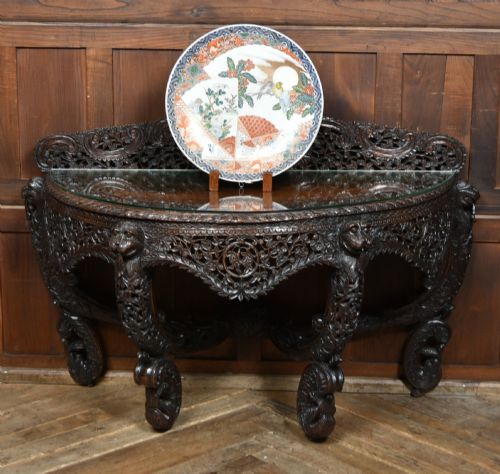
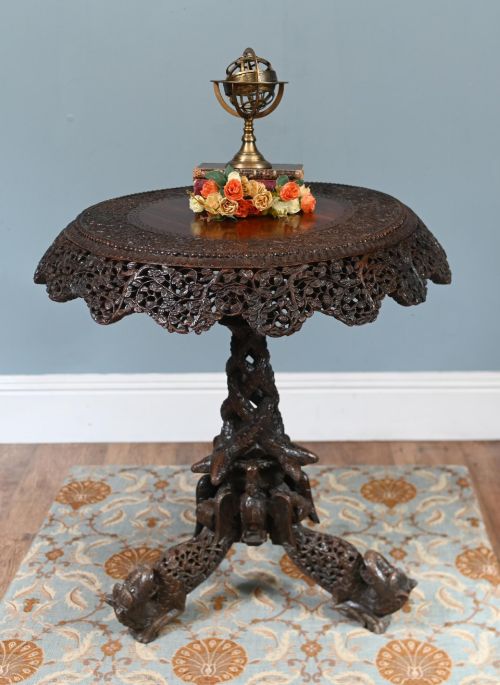
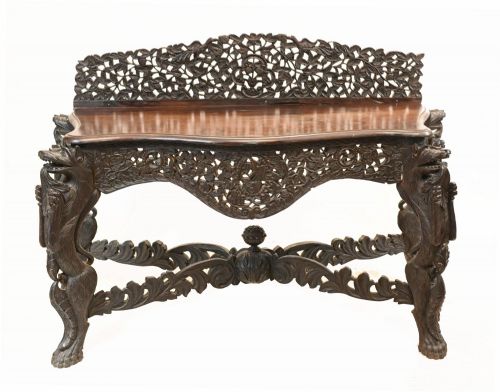
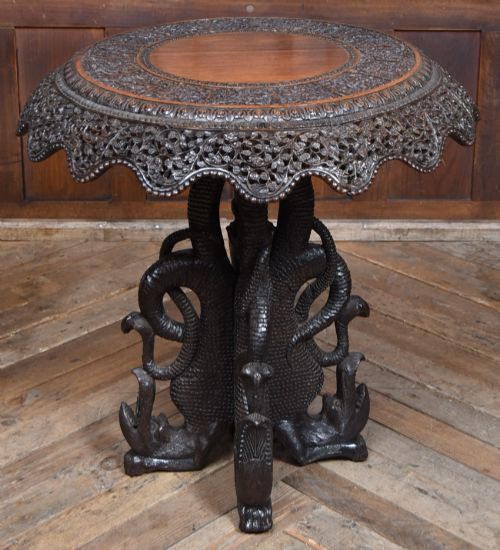
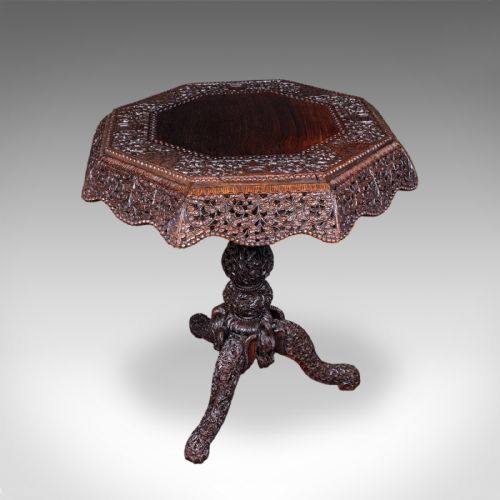
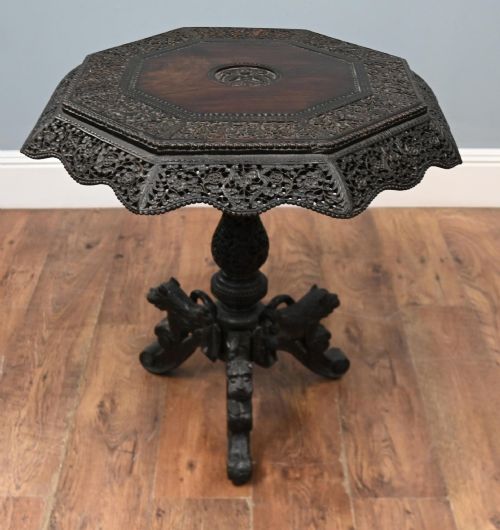
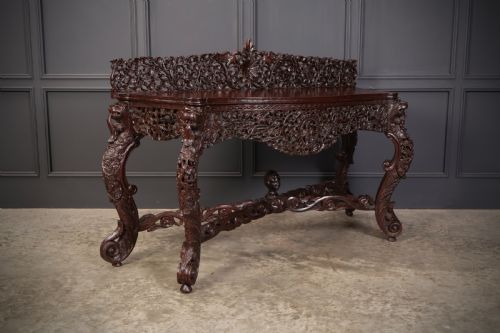
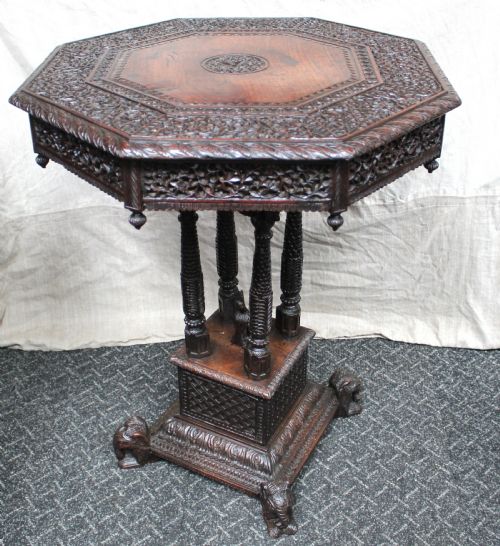
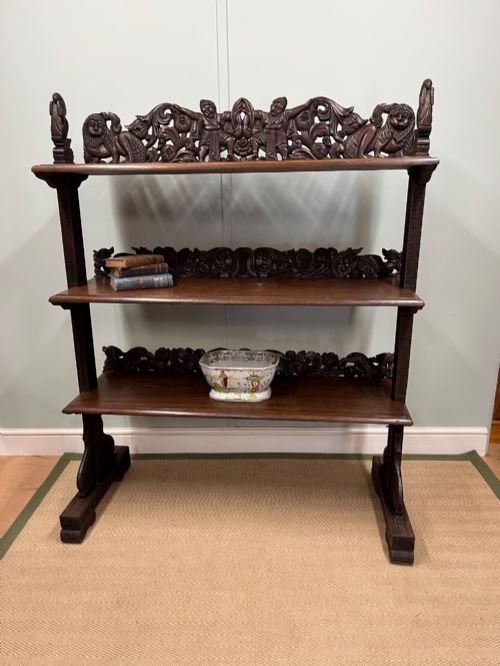
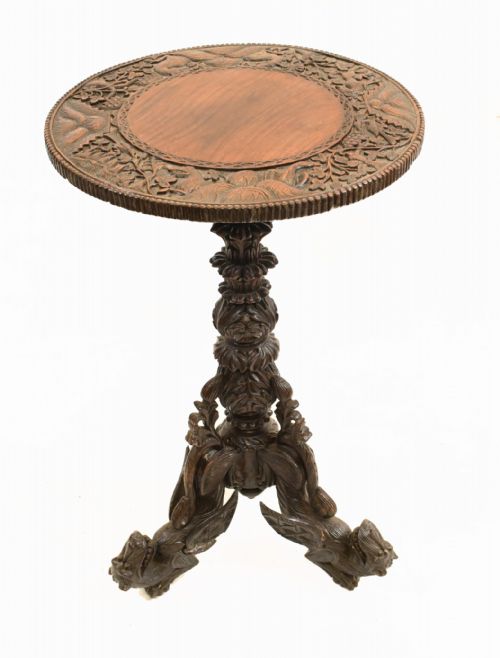
An anglo burmese side table represents a distinct intersection of British colonial taste and Southeast Asian craftsmanship dating primarily from the nineteenth century. These items appear in various formats on this page, including occasional tables, multi-tiered buffets, console tables, and tip-top designs.
Makers utilised resilient tropical timbers to construct these forms, applying intricate hand-carved ornamentation that frequently incorporates traditional motifs, foliage, and figural supports such as elephant legs. The resulting forms serve practical placement needs while displaying deep relief carving across tops, aprons, and structural tiers.
What varies in quality
The depth, sharpness, and discipline of the hand-carving separate standard utility pieces from finer examples. Superior specimens display crisp undercutting, balanced proportions, and well-integrated figural elements rather than rushed, shallow incisions.
The choice of primary timber also influences the standing of a piece, with dense padauk and well-figured teak commanding attention over simpler secondary woods. Furthermore, the retention of original surface finishes and the structural integrity of multi-tiered joints determine the overall caliber.
Anglo Burmese Side Table Retail Price Guide 2026
Typical asking prices for anglo burmese side table among the pieces listed under this phrase on Sellingantiques today, from the lower quarter to the upper quarter. They describe what is for sale here now, not the wider market.
Listings feature items dated from the mid-nineteenth century through the early twentieth century, constructed from teak, padauk, and lacquered wood.
The Anglo Burmese Side Table Glossary
- Padauk
- A heavy, durable tropical hardwood with a reddish-brown hue utilised for fine colonial furniture. This timber accepts deep carving without splintering.
- Tip-top
- A table construction featuring a hinged top that tilts vertically when not in use. This mechanism allowed tables to be stored flat against walls.
- Buffet
- A multi-tiered shelving unit or side table designed for display and storage. These pieces often feature three tiers supported by carved pillars.
- Lacquer
- A protective and decorative coating applied to wood surfaces in successive layers. Burmese examples utilise traditional resins to create smooth, sealed finishes.
Anglo Burmese Side Table: Frequently Asked Questions
What is an anglo burmese side table?
An anglo burmese side table is a nineteenth-century colonial furniture piece combining British domestic forms with traditional Burmese woodcarving techniques. These tables were typically produced in teak or padauk for export or colonial use.
They frequently feature dense floral carving, figural supports, and multi-tiered configurations suited for display in reception rooms.
How do I date an anglo burmese table?
Dating relies on examining the timber species, construction joints, and the style of the carving. Nineteenth-century examples generally exhibit heavier tropical hardwoods and hand-cut joinery.
Later pieces from the early twentieth century may show different finishing methods and modified proportions influenced by changing export markets.
How do I care for a carved wooden table?
Maintenance involves dusting intricate carved recesses regularly using a soft brush and avoiding direct sunlight to protect the timber and finish. Excessive humidity fluctuations should also be prevented.
Applying occasional appropriate wax helps preserve the natural sheen of woods like teak and padauk without clogging fine carving.