
Vintage Carved Accent Table
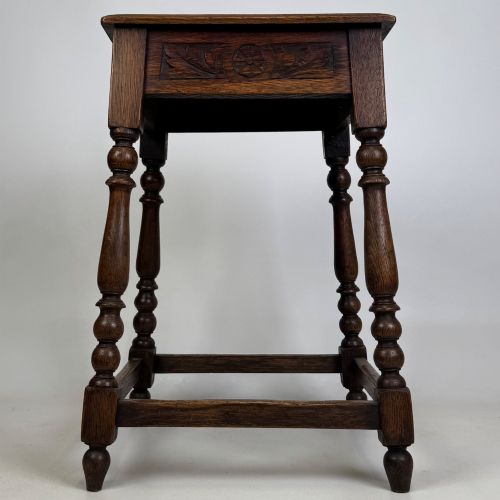
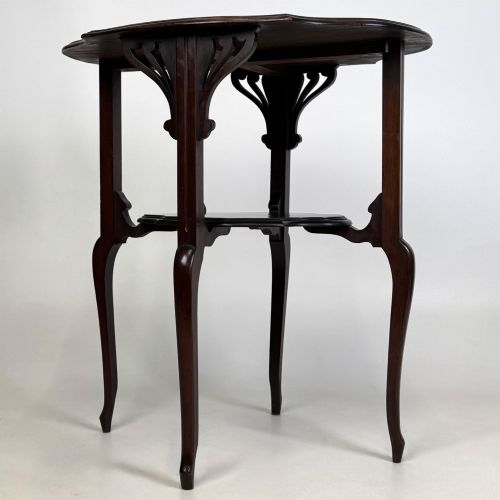
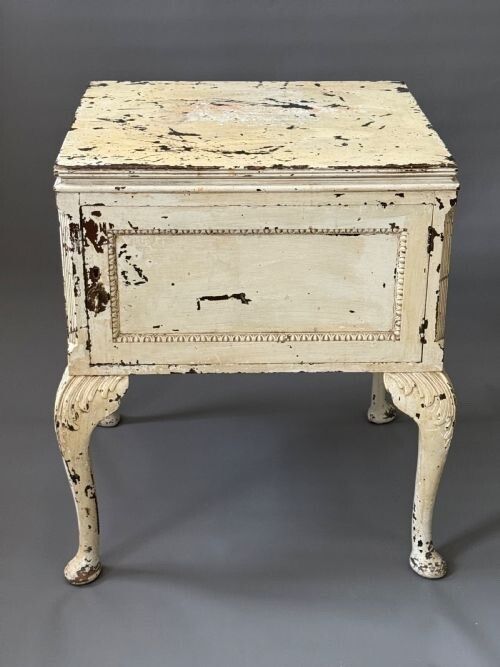
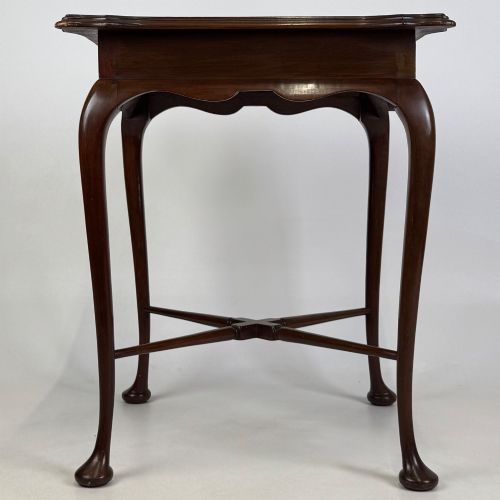
A vintage carved accent table brings distinctive surface space and regional character into a room, forged from rich timbers by 19th-century and Edwardian hands.
Vintage Carved Accent Table
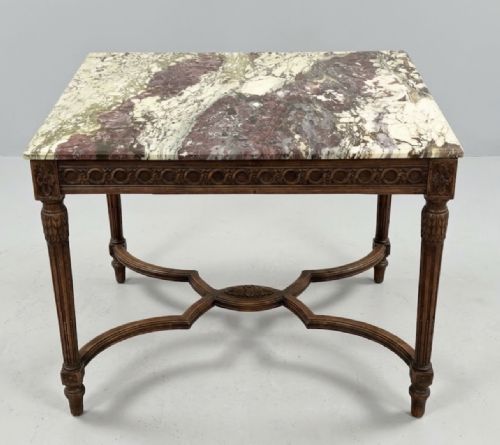
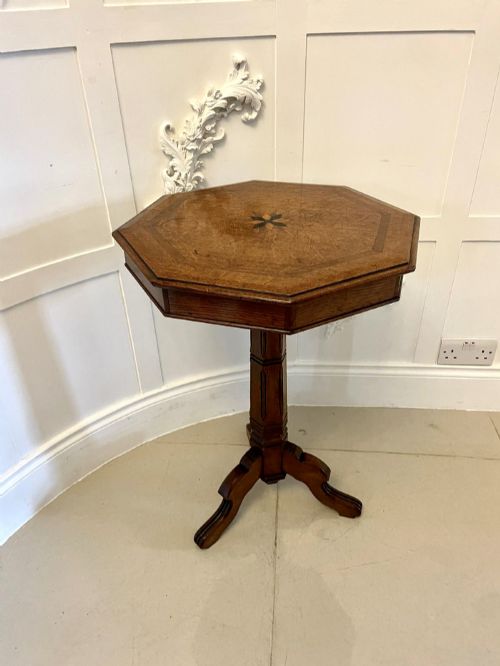
A vintage carved accent table encompasses a diverse group of occasional, side, and centre tables designed for flexible placement throughout the home. Buyers searching this phrase encounter forms spanning the Victorian era, the Edwardian period, and early 20th-century production.
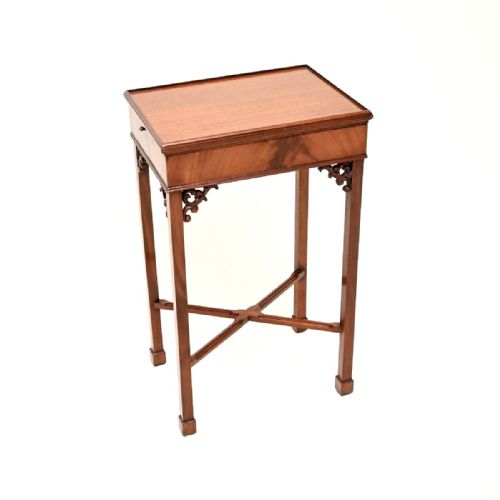
The selections on this page lean heavily towards versatile occasional and side tables rather than large dining formats. These smaller pieces accommodate lamps, books, or decorative objects while adding distinct period presence to an interior.
Origins stretch from English country workshops to distant international centres, incorporating styles such as Anglo-Indian, Italian Sorrento, and Jacobean Revival. This geographic breadth ensures that domestic utility meets eclectic decorative flair across the selection.
Assessing craftsmanship
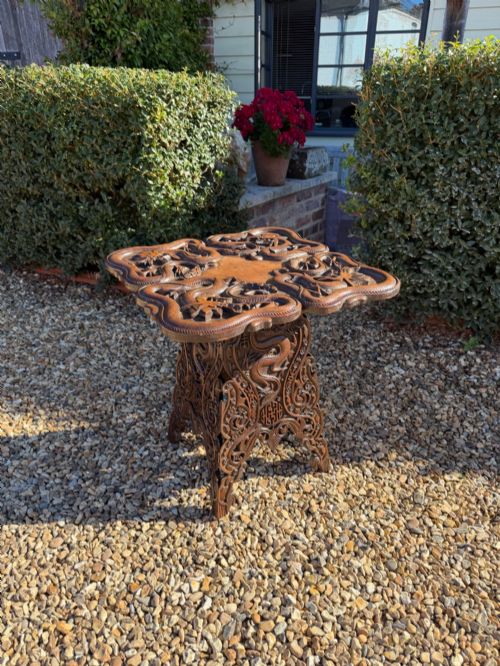
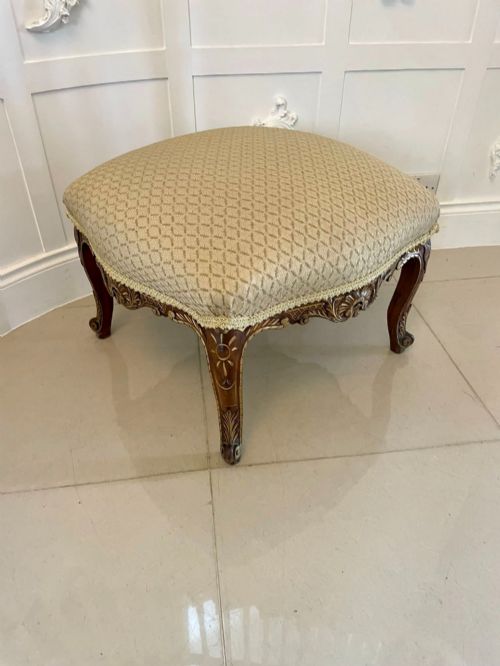
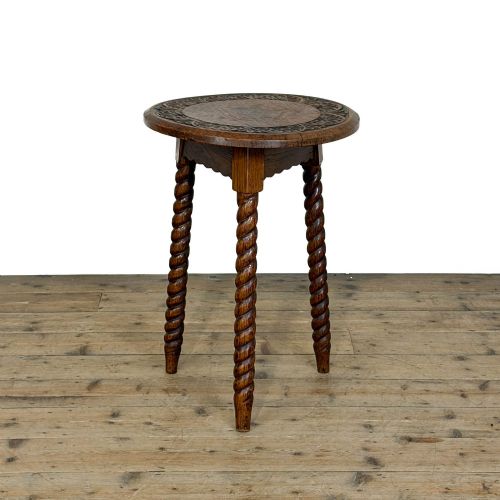
The distinction between standard utility items and exceptional examples lies in the depth and precision of the manual carving. Sharply defined details in chip-carved motifs or complex geometric bone and mother-of-pearl inlays signal superior workshop output.
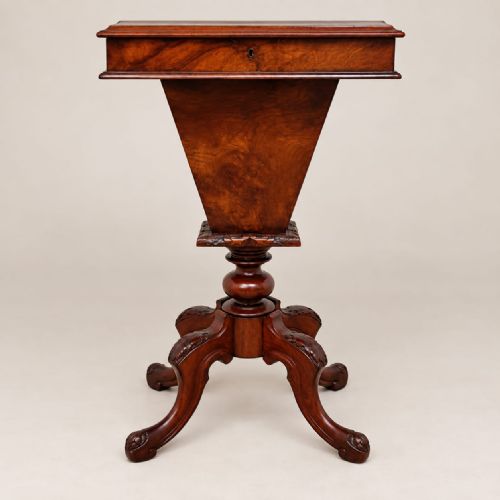
Material selection and timber figuring also dictate the upper tier of the range. Tables displaying carefully matched burr walnut veneers or solid rosewood construction demonstrate a higher grade of initial commissioning than plain secondary softwoods.
A whimsical folk art twig table brings raw woodland improvisation directly into the refined parlour.
The Vintage Carved Accent Table Glossary
- Occasional table
- A small, movable table designed for specific, intermittent use rather than permanent placement. These pieces easily shift between seating areas to hold drinks, books, or lamps.
- Marquetry
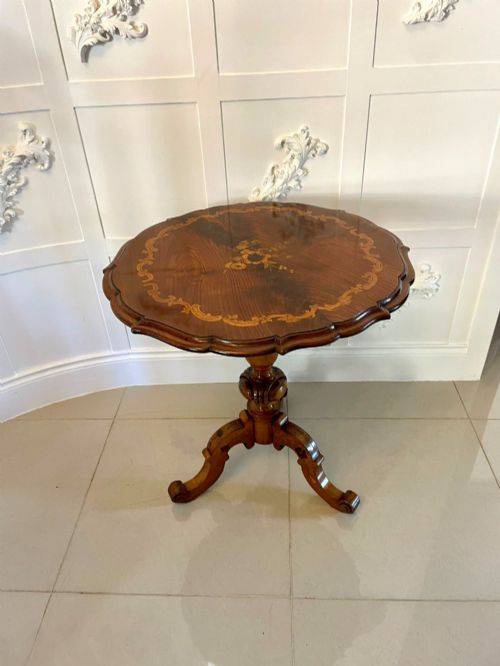
- The art of applying pieces of veneer to a structure to form decorative patterns and pictures. Craftsmen cut various tinted woods and insert them precisely into the primary surface.
- Tripod table
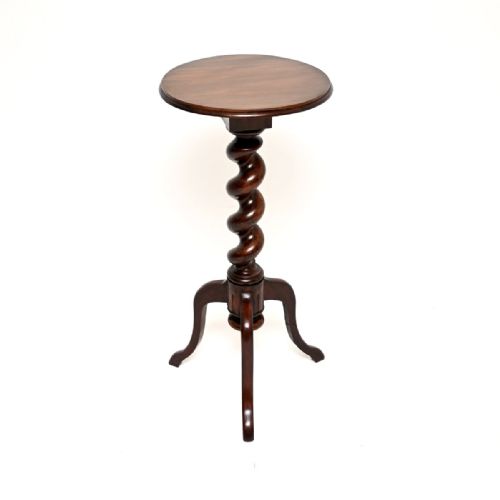
- A small stand supported by a central pillar resting on three legs. This specific base configuration provides stable balance on uneven floors.
- Lowboy
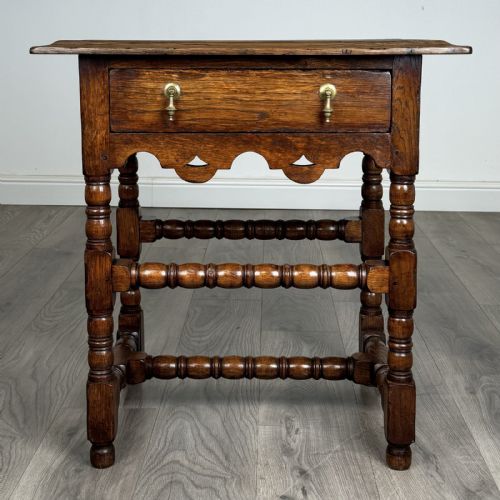
- A small occasional table featuring drawers, traditionally used as a dressing table or side storage unit. The low proportions make them adaptable as compact desks.
- Hoshiarpur table
- A folding or rigid occasional table originating from northern India, densely carved with geometric patterns. They often incorporate intricate bone or resin inlay work.
Vintage Carved Accent Table: Frequently Asked Questions
Where should I place a vintage carved accent table?
These compact tables fit naturally beside armchairs, in narrow hallways, or serving as bedside surfaces where floor space is limited. Their decorative detailing allows them to function as standalone display pedestals in empty corners.
Because they originate from diverse stylistic traditions, matching the timber tone to surrounding furniture creates a cohesive look. Alternatively, a distinct wood grain or inlaid surface provides a striking focal point against plain walls.
How do I care for antique wood surfaces?
Routine maintenance requires only a soft, dry cloth to remove dust from carved recesses and flat panels. Avoid chemical polishes that can build up a cloudy residue within detailed woodwork over time.
Maintaining stable room humidity prevents the solid timbers and delicate veneers from splitting. Direct sunlight should also be avoided to preserve the natural warmth of walnut and mahogany finishes.
What distinguishes Edwardian tables from Victorian pieces?
Victorian examples frequently display heavier proportions, darker finishes, and robust carving styles such as Jacobean Revival or deep scrollwork. Burr walnut and rosewood dominate the earlier part of the nineteenth century.
Edwardian production often favours lighter mahogany or oak frames with more restrained decorative elements. These later pieces reflect a growing preference for simplified forms and adaptable domestic utility.
Are regional styles difficult to integrate?
Regional pieces like Anglo-Indian or Italian inlaid tables introduce global textures that complement contemporary or traditional spaces alike. Their detailed bone inlay and marquetry act as pieces of functional art.
Pairing an ornate table with minimalist surroundings lets the manual craftsmanship stand out without visual clutter. They bridge the gap between utility and decorative exhibition.