




Antique Burmese Tripod Table
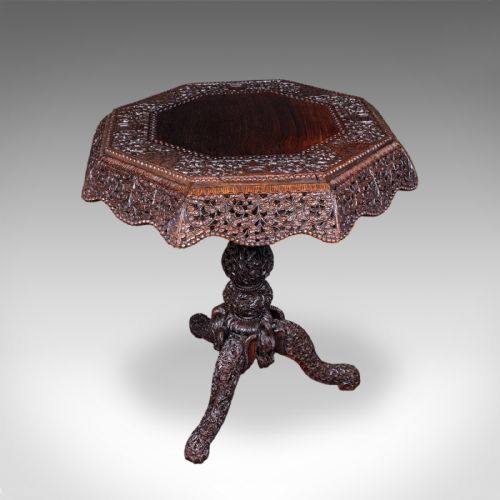
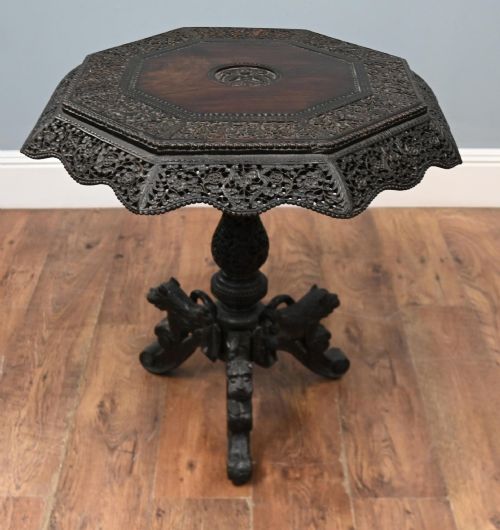
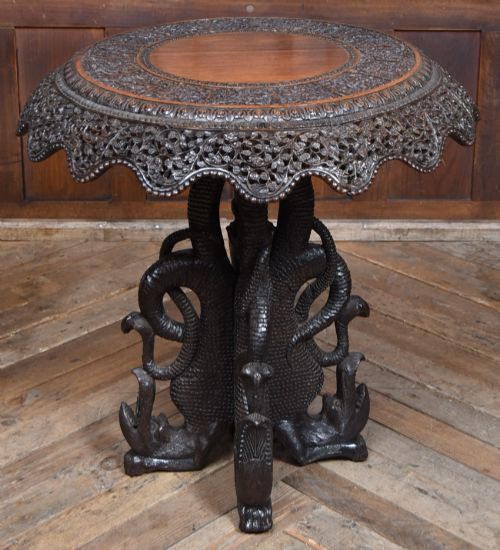
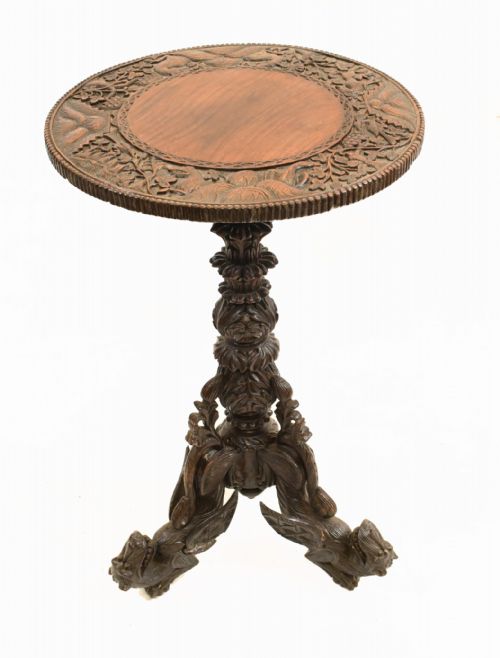
An antique burmese tripod table brings heavy carving and rich timber from nineteenth-century workshops directly into a modern room.
Antique Burmese Tripod Table
These pieces are distinct items of nineteenth-century colonial furniture, appearing on this page primarily as side tables, occasional tables, and tilt top tables. When searching for an antique burmese tripod table, a buyer encounters heavily carved wooden furniture originating from Myanmar, dating predominantly from the Victorian era between eighteen-forty and eighteen-ninety.
The forms span round and octagonal tops, often featuring tilt top mechanisms designed for easy storage against a wall when not in use. Anglo-Burmese and Anglo-Indian colonial styles dominate the selections currently visible, reflecting the stylistic exchanges of the nineteenth century.
Teak and various dense hardwoods form the structural foundation of these items, shaped by hand-carving techniques that define the regional aesthetic. The typical piece met here is a side or occasional table intended for lamp placement or general tea service within a Victorian interior.
Materials and construction methods
Makers utilised dense teak and native hardwoods to withstand intricate, deep-relief hand-carving across the top surfaces and pedestal bases. These timber selections provided the necessary structural integrity for elaborate sculptural details without compromising the stability of the central column.
Joinery and tilt top mechanisms were engineered to support heavy ornamental tops while allowing the surface to pivot horizontally. Artisans applied hand-carved motifs directly into the solid wood, creating dense surface textures characteristic of nineteenth-century colonial production.
Antique Burmese Tripod Table Retail Price Guide 2026
Typical asking prices for burmese tripod table among the pieces listed under this phrase on Sellingantiques today, from the lower quarter to the upper quarter. They describe what is for sale here now, not the wider market.
Victorian guests frequently marvelled at how a heavily carved table could instantly fold flat against the drawing room wall.
Judging the quality of the work
Depth and clarity of the hand-carving separate superior examples from simpler production, as skilled artisans achieved crisper undercut details and sharper motifs. The quality of the timber selection also dictates the piece, with tightly grained teak holding a more refined finish than secondary hardwoods.
Structural proportion in the central pedestal and tripod legs determines the overall grace of the table, ensuring that heavy ornamentation does not overpower the balance. The precision of the tilt top mechanism further distinguishes finer workshop output from more utilitarian regional items.
The Antique Burmese Tripod Table Glossary
- Tilt top table
- A table featuring a hinged top that pivots from vertical to horizontal. This mechanism allowed tables to be stored against walls when floor space was required.
- Occasional table
- A small, movable table designed for intermittent use in a principal room. These versatile pieces served for holding lamps, books, or tea.
- Anglo-Burmese
- A descriptive term for nineteenth-century furniture made in Burma under British colonial influence, combining local timber and carving with European forms.
- Hardwood
- Dense, durable timber derived from broad-leaved trees such as teak. This material resists splitting and supports complex, deep-relief carving.
- Pedestal base
- A central column support rising from a tripod foot. This configuration provides stability while leaving maximum floor clearance beneath the table.
Antique Burmese Tripod Table: Frequently Asked Questions
What is an antique burmese tripod table?
These items are nineteenth-century occasional and side tables featuring a central carved pedestal and three-legged base. They originated in Myanmar during the colonial period and display intricate hand-carved wooden surfaces.
Most examples date from the Victorian era and utilise dense regional timbers such as teak. Their distinctive aesthetic bridges British furniture forms with traditional Burmese carving techniques.
How were tilt top tables used?
The tilting mechanism allowed the heavy wooden top to be locked in a vertical position when the table was not in active use. This space-saving design let Victorian households clear floor space quickly in smaller drawing rooms.
When lowered horizontally, the tables functioned as side or tea tables for lamps and small objects. The pivot hinge required sturdy construction to support the weight of the carved top without wobbling.
What wood was used for these tables?
Carvers relied heavily on teak and other dense regional hardwoods native to Myanmar. These timbers possessed the strength needed to support deep-relief carving without splintering along the grain.
The natural oils and tight grain of mature teak also allowed artisans to achieve smooth finishes and sharp details that survive centuries of handling.
How do I date a nineteenth-century table?
Dating relies on examining the timber preparation, the style of the carving, and the mechanical construction of the pedestal and hinge. Nineteenth-century pieces typically exhibit hand-tool marks and specific colonial design motifs characteristic of the period between eighteen-forty and eighteen-ninety.
Stylistic labels such as Anglo-Burmese help place the piece within the context of nineteenth-century trade and production in Myanmar. Comparative analysis of similar surviving tables narrows the manufacturing decade.