







Dragon Carved Side Table
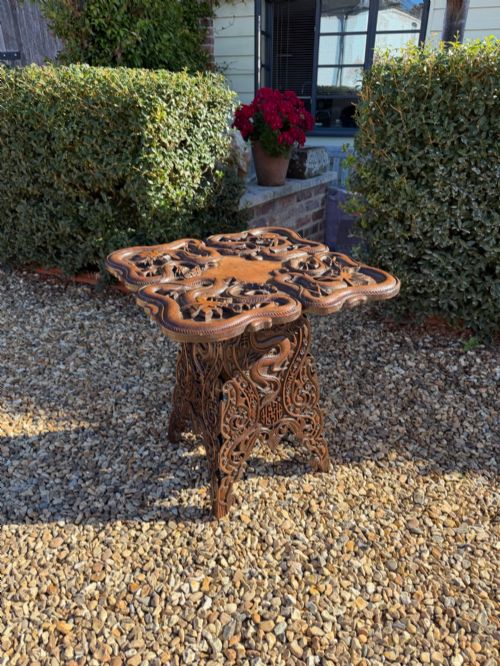
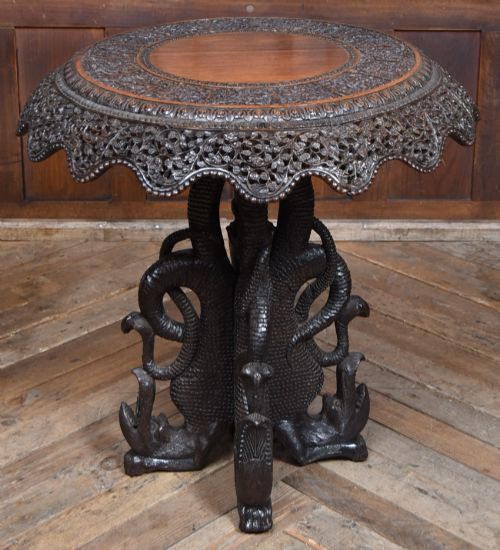
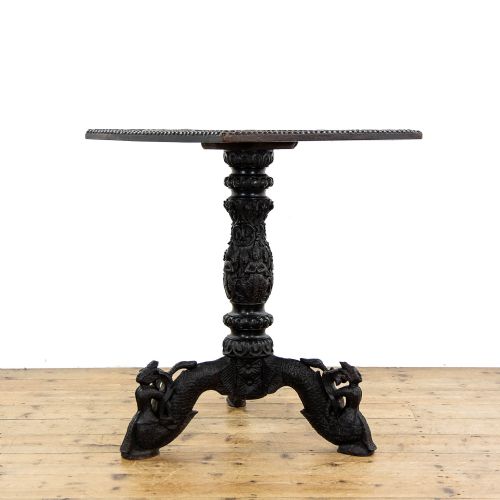
A dragon carved side table brings vigorous Far Eastern craftsmanship and deep relief work into a room.
Dragon Carved Side Table
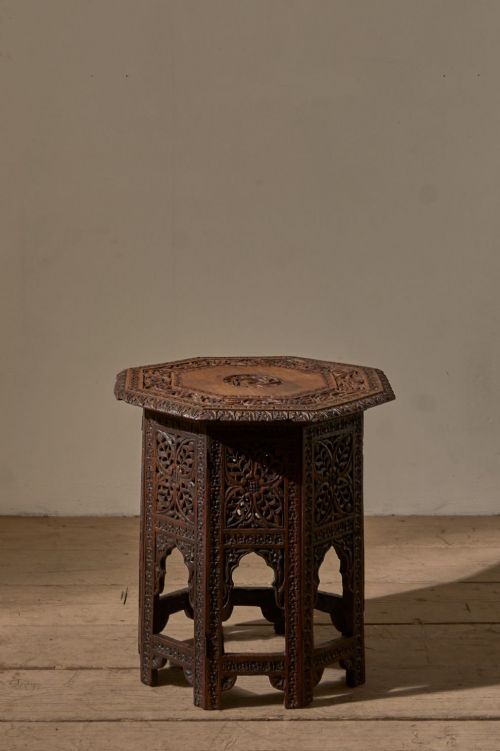
A dragon carved side table is an occasional piece, plant stand, or centre table originating from nineteenth-century workshops and later periods up to the 1920s. These items emerge from various traditions including Chinese Export, Anglo-Indian, Anglo-Burmese, and Japanese styles.
The form appears frequently as a side table, nest of tables, console, or octagonal occasional table. Tables with inset marble tops or glazed cinnabar surfaces also feature among the selection.
Makers in regions such as Burma, Kashmir, China, and Japan produced these tables for export and domestic use. Buyers meet pieces spanning Victorian times through to the early twentieth century.
Materials and construction
Construction relies heavily on dense timbers such as hardwood, teak, padauk wood, rosewood, and walnut. Ebonised finishes and glass inserts appear on specific regional examples.
Carvers executed deep relief dragon motifs by hand using traditional joinery methods suited to exotic hardwoods. Insets of rouge marble provide contrasting flat surfaces within heavily carved wooden frames.
Dragon Carved Side Table Retail Price Guide 2026
Typical asking prices for dragon carved side table among the pieces listed under this phrase on Sellingantiques today, from the lower quarter to the upper quarter. They describe what is for sale here now, not the wider market.
Dragons peer out from table skirts and legs, guarding cups of tea rather than ancient gold.
Quality variations
Choice of material influences the character of the piece, with dense padauk, rosewood, and teak providing stability for intricate undercutting. Integration of fitted marble tops or complex multi-tiered nests adds structural ambition.
The Dragon Carved Side Table Glossary
- Chinese Export
- Items manufactured in China specifically for Western markets during the nineteenth and early twentieth centuries. These pieces often blend traditional Eastern motifs with European furniture forms.
- Padauk Wood
- A heavy, durable tropical timber prized for its reddish-brown colour and strength. It takes fine detail during carving.
- Chinoiserie
- European decorative style reflecting Chinese artistic influences. It appears in furniture production alongside authentic imported Far Eastern goods.
- Cinnabar
- A carved lacquer material derived from mineral ore. It forms rich red surfaces on specialised tables.
Dragon Carved Side Table: Frequently Asked Questions
Where were dragon carved side tables made?
Production centres span across Burma, China, Japan, and regional workshops associated with Anglo-Indian and Anglo-Burmese trade. Artisans utilised local tropical timbers available in each area.
Export demand shaped the designs to fit European drawing rooms and halls while retaining traditional iconography.
How do I care for a hardwood carved table?
Maintain the timber by keeping it away from direct heat sources and sudden humidity changes. Dust the deep relief carvings gently with a soft brush.
Apply occasional suitable wax to nourish dense hardwoods like teak, rosewood, and padauk without clogging the carved crevices.
What periods do these tables date from?
The pieces available date predominantly from the nineteenth century, including Victorian examples, through to the 1920s. Qing Dynasty influences are visible on specific Chinese hardwood items.
Dates span from mid-nineteenth-century Burmese pieces to early twentieth-century Japanese and Chinese tables.
How are marble top tables structured?
Marble sections, such as rouge marble, sit inset within the solid hardwood frame of the table top. The stone provides a smooth, cool surface contrasting with the surrounding carved woodwork.
Support structures underneath are engineered to bear the substantial weight of the stone inset.