





Colonial Side Table
These colonial side table examples bring together distinctive regional carving and European forms, offering practical surfaces with rich historical character.
Colonial Side Table
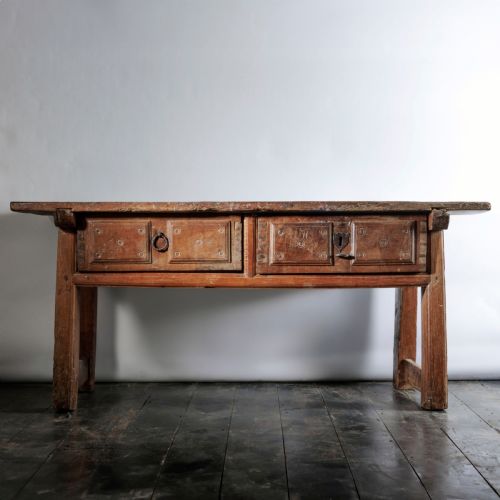
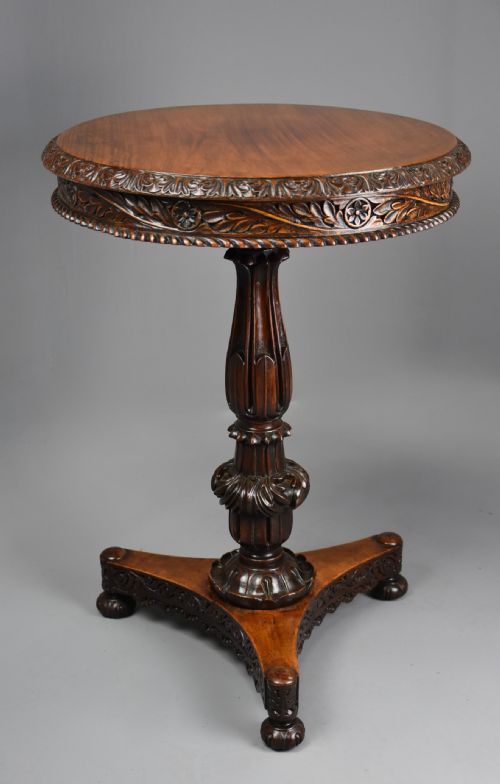
A colonial side table serves as a versatile accent surface, drawing on design traditions from various global regions under historical European influence. When you search for this phrase, you encounter pieces spanning multiple centuries, from seventeenth-century Spanish walnut and oak examples to nineteenth-century Anglo-Indian, Burmese, and Ceylonese productions.
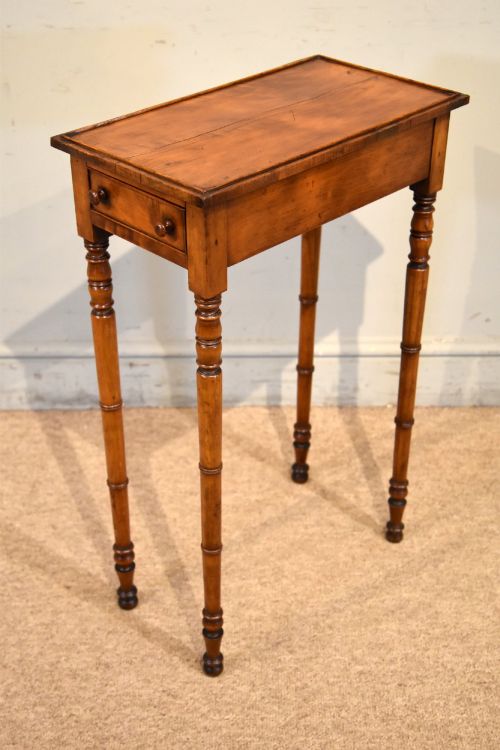
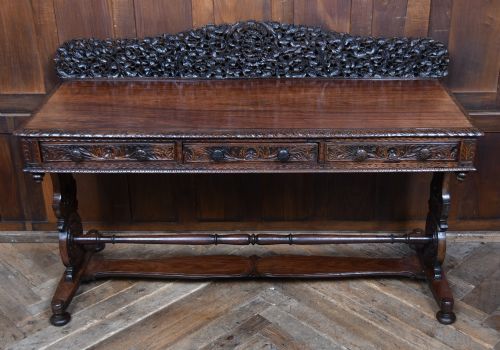
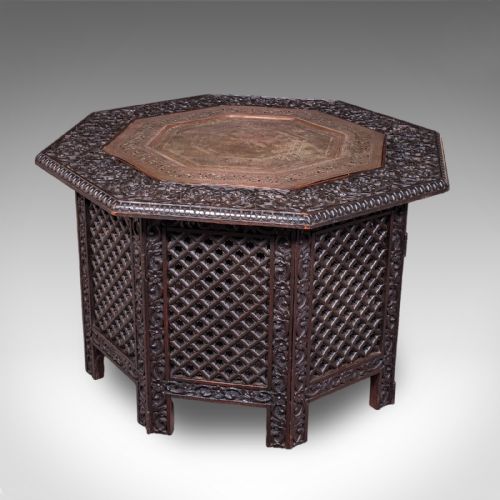
The selection on this page leans heavily towards nineteenth-century craftsmanship, alongside works from the late nineteenth and early twentieth centuries. Forms vary from simple occasional and low tables to elaborate carved pedestal designs, console tables, coffee tables, and multi-tiered buffets.
Geographic origins shape the visual vocabulary significantly. You will find pieces from Spain and Portugal alongside items originating in India, Burma, Ceylon, New Zealand, and the West Indies.
Materials and construction
Makers utilised dense regional timbers suited to carving and structural longevity. Hardwoods such as teak, padauk, rosewood, walnut, oak, mahogany, and sabicu form the primary structural foundations across the collection.
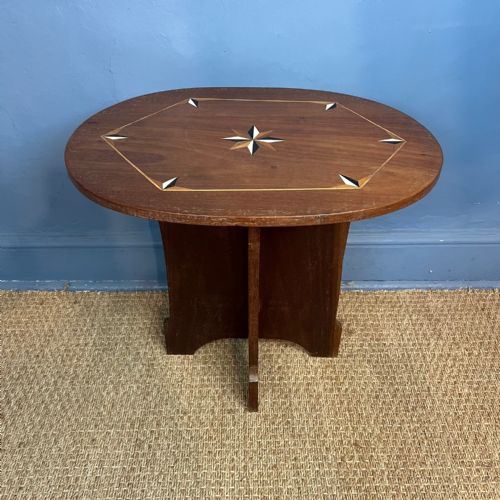
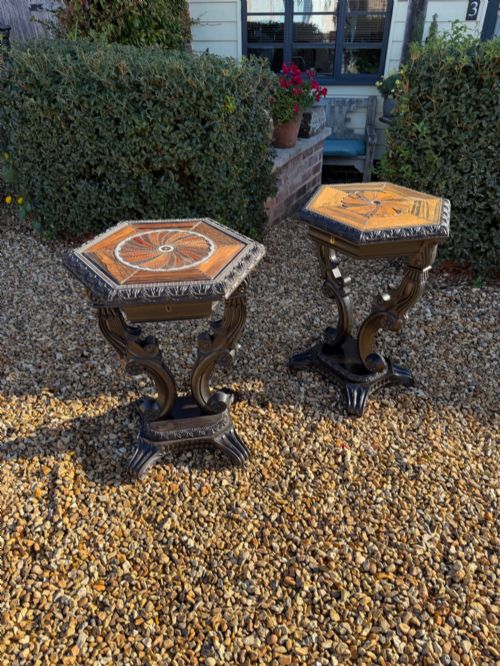
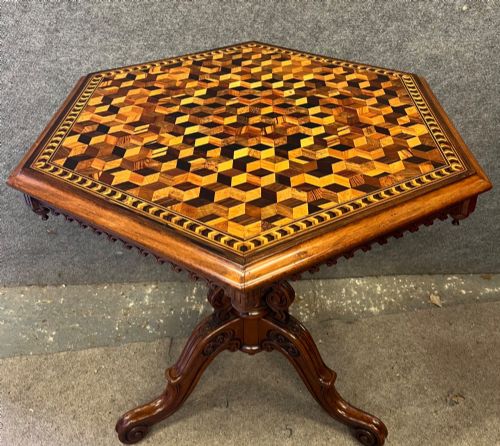
Decorative surface work defines many of these items through intricate inlay and marquetry. Workshops incorporated bone, brass, bone inlay, mother of pearl, and specimen woods to create detailed geometric and floral patterns.
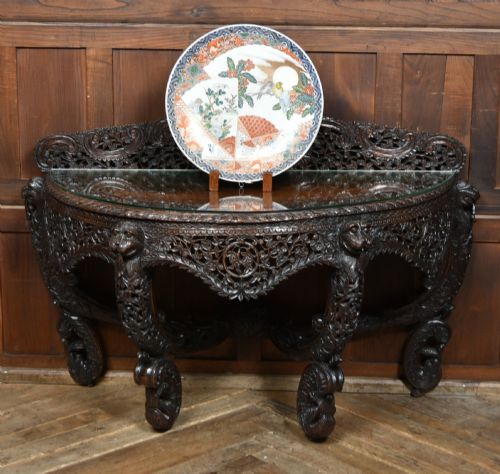
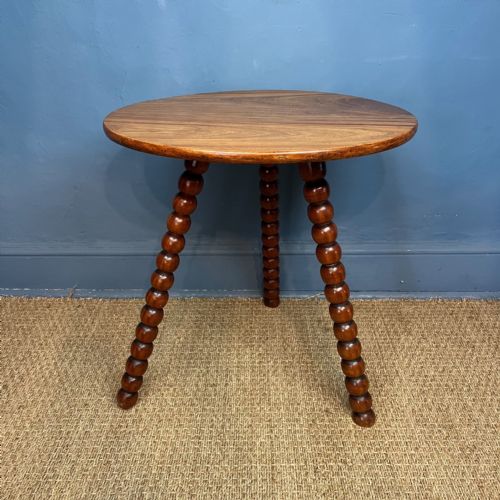
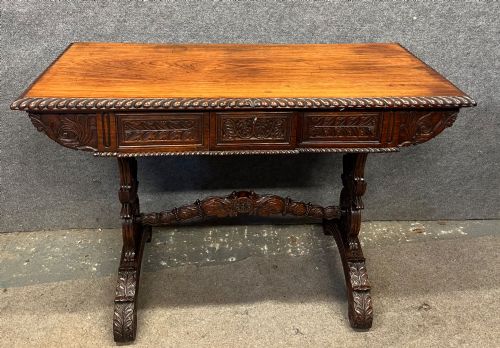
Carving technique ranges from deep relief motifs featuring foliage and animals to turned supports and pedestal bases. Folding mechanisms and multi-tiered constructions appear among specific regional forms for functional adaptability.
Colonial Side Table Retail Price Guide 2026
Typical asking prices for colonial side table among the pieces listed under this phrase on Sellingantiques today, from the lower quarter to the upper quarter. They describe what is for sale here now, not the wider market.
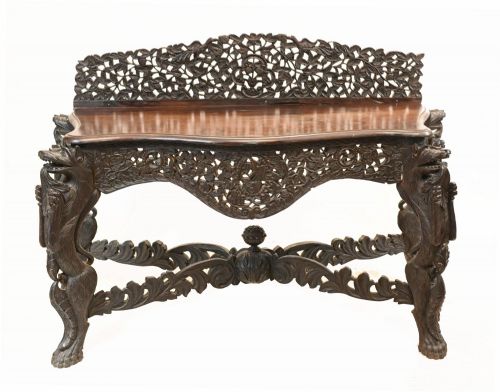
Several nineteenth-century tables include painted wooden tusks and elephant head motifs carved by regional workshops.
Differentiating the pieces
The standard of execution in the carved decoration dictates much of the visual success of a piece. Crisp, deeply undercut foliage and balanced proportions separate ambitious workshop output from simpler commercial production.
Material selection and the precision of inlaid elements also establish distinction. The integration of contrasting timbers, brass, bone, or mother of pearl requires exact fitting to maintain a cohesive surface texture.
Structural integrity and the retention of original surface finishes preserve the historical integrity of the furniture. Untouched patination on dense hardwoods reflects the age and handling of each item.
Anton Seuffert
The Colonial Side Table Glossary
- Marquetry
- The art of applying pieces of veneer to a structure to form decorative patterns and pictures. Specimen wood marquetry utilises various natural timber colours without artificial staining.
- Padauk
- A durable tropical hardwood with a reddish hue used extensively in nineteenth-century colonial furniture production. It accepts fine detail work particularly well.
- Teapoy
- A small table traditionally used for holding tea canisters and equipment. In colonial contexts, the term often applies to small occasional tables with specialised compartments or tops.
- Tripod table
- A freestanding table supported by a central pillar resting on three feet. This form allows for stable placement on uneven floors.
Colonial Side Table: Frequently Asked Questions
What defines a colonial side table?
These tables combine European furniture shapes with regional materials and carving traditions from areas influenced by European powers. They range from Spanish oak and walnut consoles to intricately carved Indian and Burmese occasional tables.
The use of native timbers like teak, padauk, and rosewood, alongside decorative inlays of brass or bone, gives these pieces their distinct character.
How were these tables used originally?
They served practical functions in domestic interiors as surfaces for holding lamps, serving tea, or displaying decorative objects. Different heights and top shapes accommodated specific rooms and social rituals.
Some portable versions featured folding frames or smaller proportions for ease of movement within colonial households.
How should I live with these tables?
Integrate them as accent pieces beside seating or against walls where their carved details and contrasting woods can be appreciated. Their compact forms suit modern living spaces as functional display surfaces.
Keep them away from direct heat sources and sudden humidity changes to protect the solid hardwoods and delicate inlaid elements.
How do I tell regional styles apart?
European colonial pieces from Spain and Portugal often show rustic or baroque forms in oak and walnut. Asian colonial furniture typically displays dense hand-carving, regional motifs like elephants, and detailed inlays.
Examining the primary timber and the style of the decorative carving usually reveals the geographic origin of the workshop.