


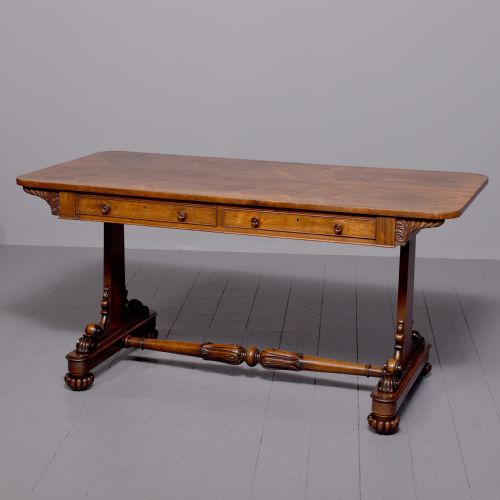
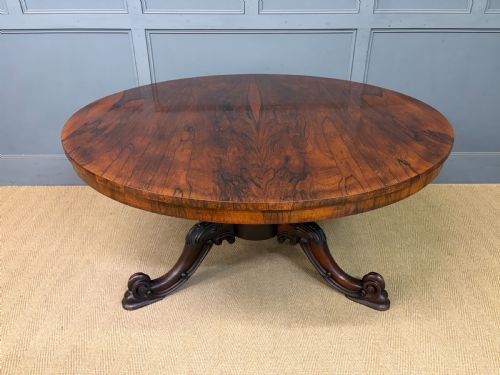
Carved Rosewood Centre Table
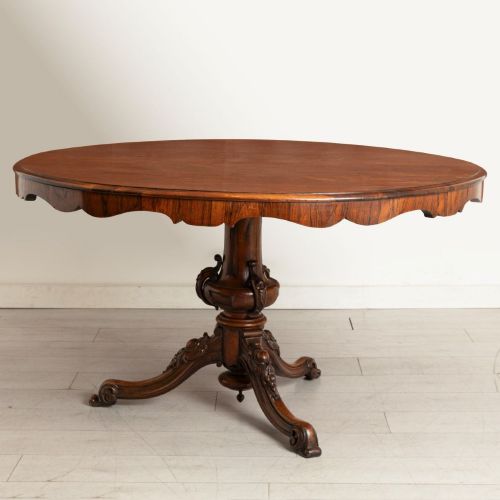
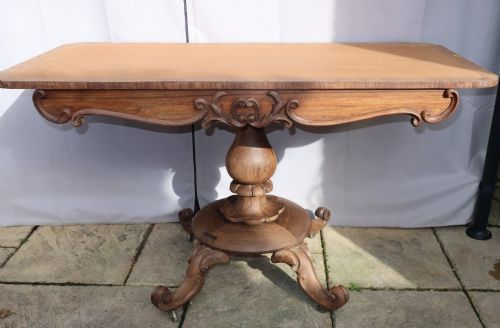
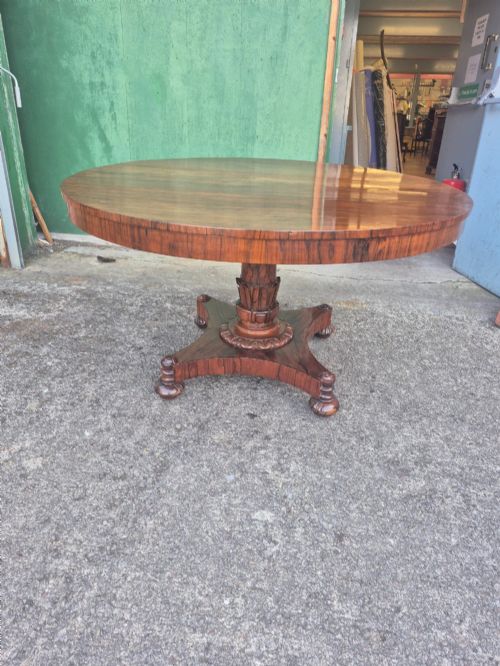
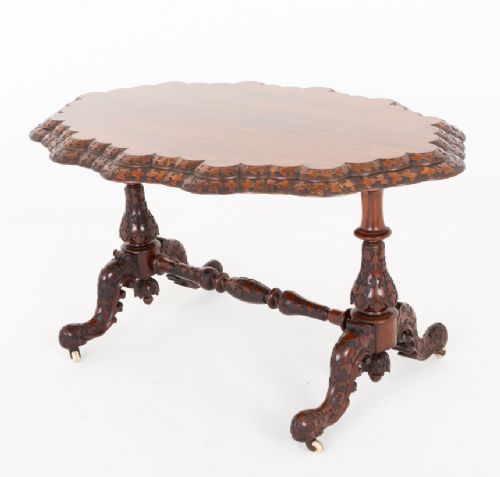
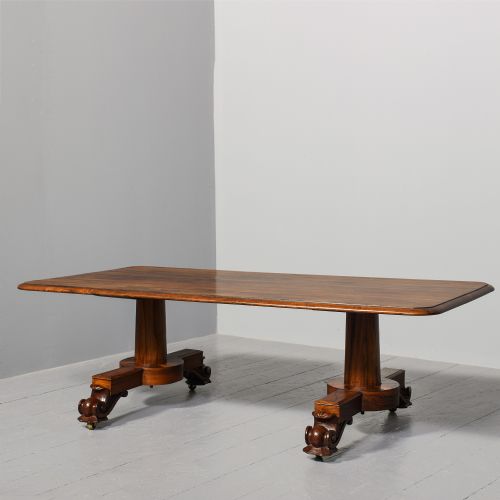
A carved rosewood centre table brings substance to a room, offering a freestanding piece designed to command attention from every angle.
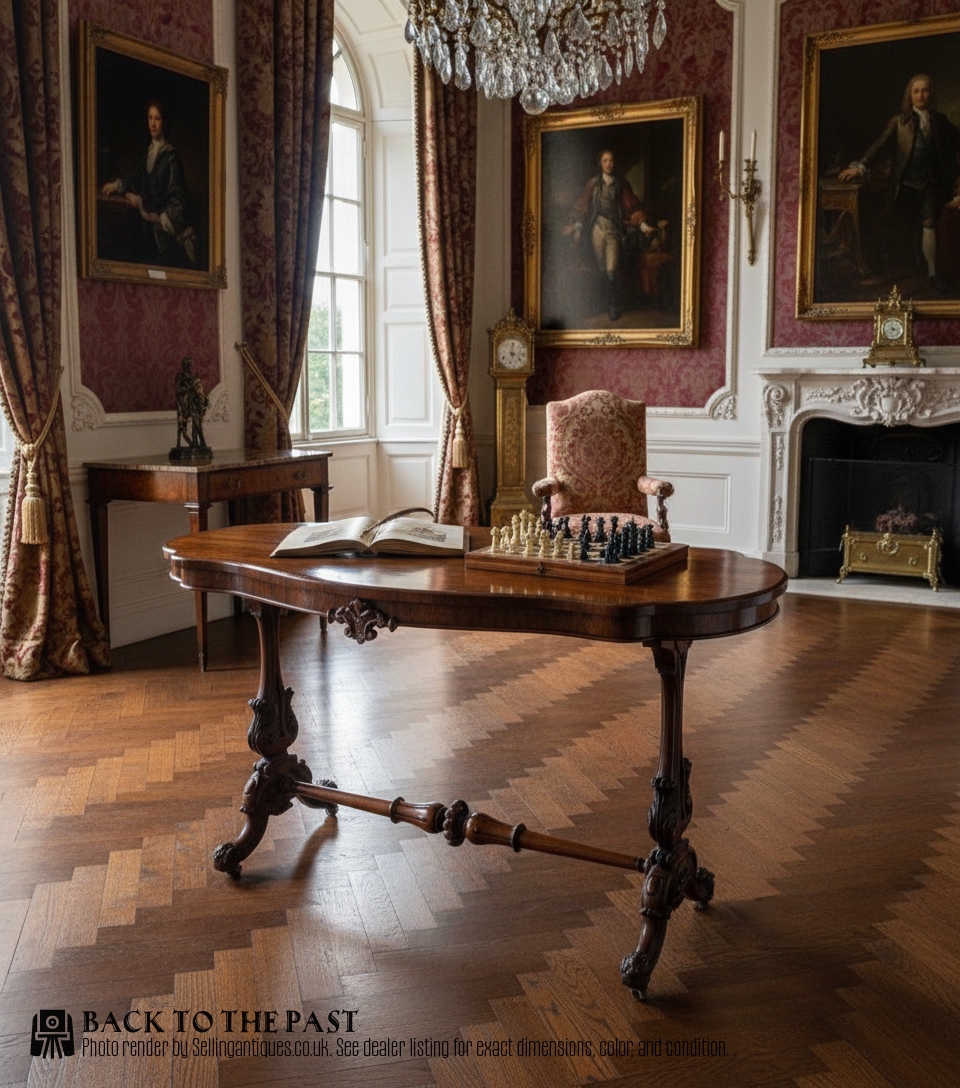
Carved Rosewood Centre Table
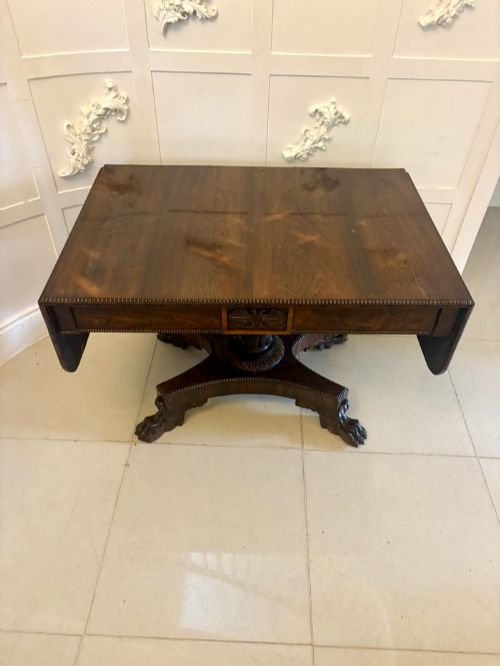
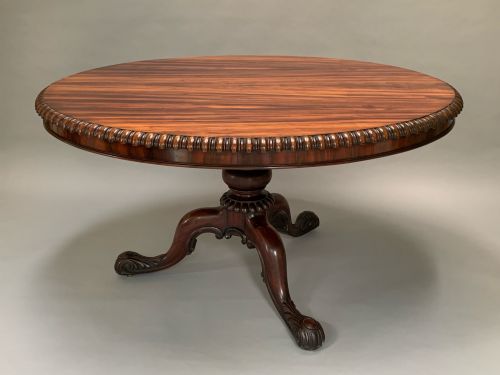
A carved rosewood centre table is a freestanding piece designed to sit in the middle of a room rather than against a wall. The selections seen here span the Georgian, Regency, William IV, and Victorian periods, alongside Anglo-Indian and East Asian examples.
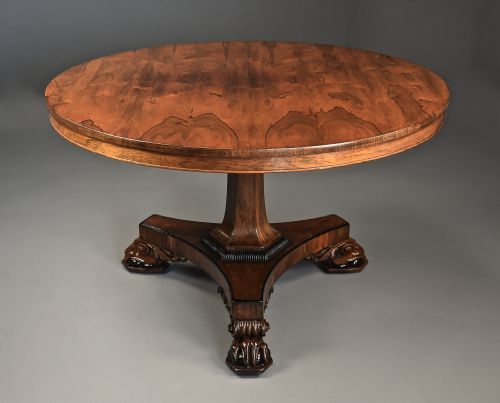
Buyers will most frequently encounter circular dining, breakfast, and loo tables supported by central pedestals or triform bases. Rectangular sofa tables, library tables, and writing tables also appear regularly across the nineteenth century.
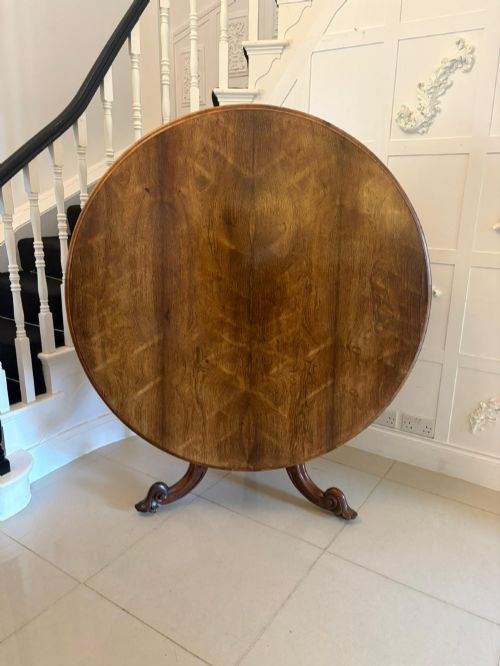
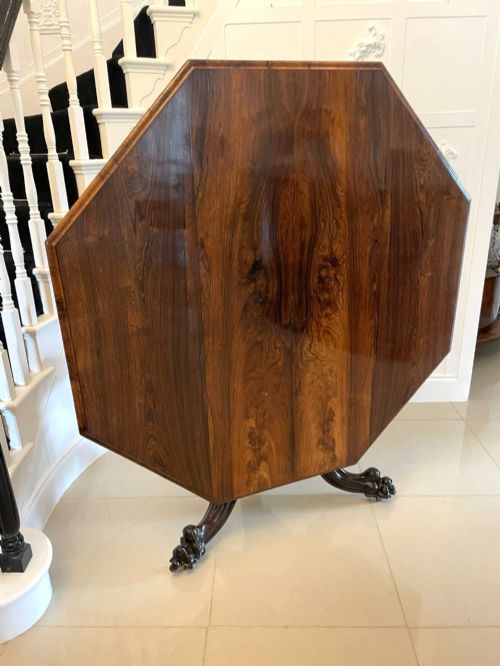
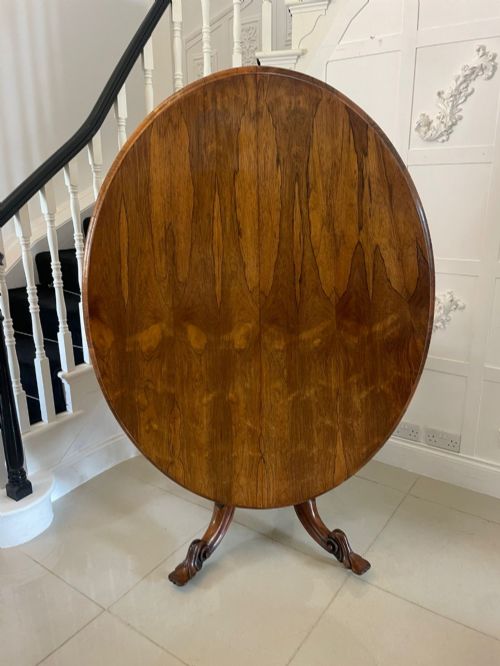
The form functions as both a practical surface and a focal point, often incorporating tilt-top mechanisms for convenience when not in use.
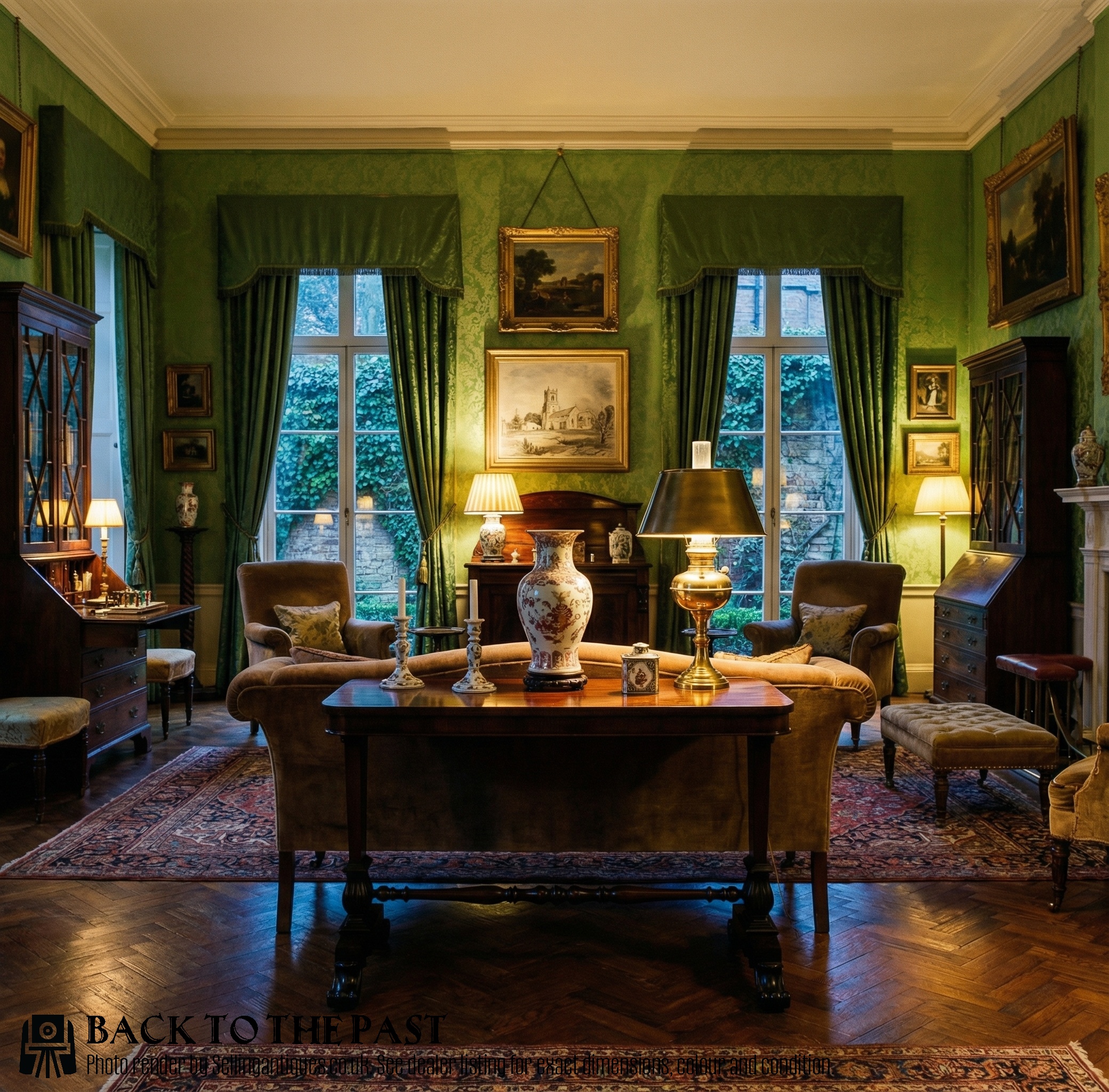
How they were made
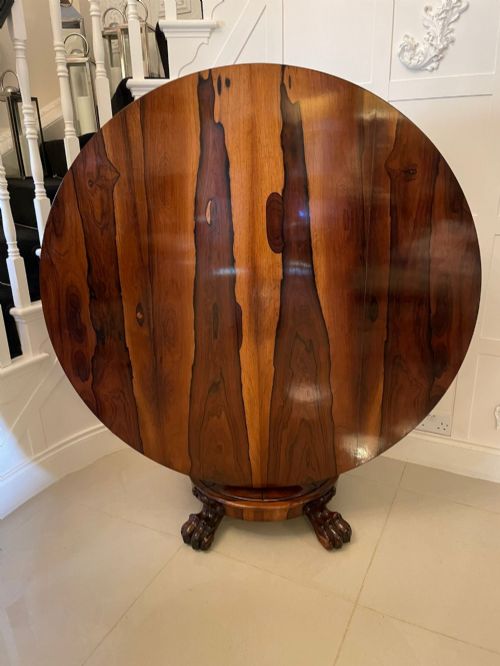
Cabinet makers utilised dense timbers such as rosewood, mahogany, and padouk, frequently selecting figured veneers for the main surface. Solid timber was carved for pedestals, legs, and borders, showing the high standard of nineteenth-century joinery.
Decoration often involved intricate hand carving, brass mounts, and occasional inlay work utilising mother-of-pearl, satinwood, or parcel gilding. Tables with tilt-top mechanisms relied on robust iron or brass catches and blocks to secure the top firmly to the pedestal.
Carved Rosewood Centre Table Retail Price Guide 2026
Typical asking prices for carved rosewood centre table among the pieces listed under this phrase on Sellingantiques today, from the lower quarter to the upper quarter. They describe what is for sale here now, not the wider market.
Certain nineteenth-century tables arrived from Anglo-Indian workshops with extensive floral carving designed to impress dinner guests.
What varies in quality
The standard of a carved rosewood centre table depends significantly on the crispness and depth of the hand carving on the base and borders. Sharp, well-defined foliage and scrolls indicate a skilled hand, whereas softer, shallower carving suggests mass production.
The choice of timber grain and the quality of the veneer matching across the top surface separate standard examples from superior ones. Construction integrity, particularly the stability of the central pillar and the smoothness of any tilt-top mechanism, dictates daily reliability.
Gillows·Mein of Kelso·Peters of Genoa
The Carved Rosewood Centre Table Glossary
- Centre table
- A freestanding table finished on all sides, designed to stand in the middle of a room rather than flush against a wall.
- Tilt-top
- A hinged table top that pivots vertically to save space when the piece is not in active use.
- Triform base
- A three-sided pedestal base that provides stability and structural support for heavy circular tables.
- Loo table
- A large nineteenth-century round table originally used for the popular card game of loo, often featuring a tilt mechanism.
- Satinwood
- A durable, yellowish timber often used for contrasting inlay and decorative banding on darker woods like rosewood.
Carved Rosewood Centre Table: Frequently Asked Questions
Where should I place a centre table?
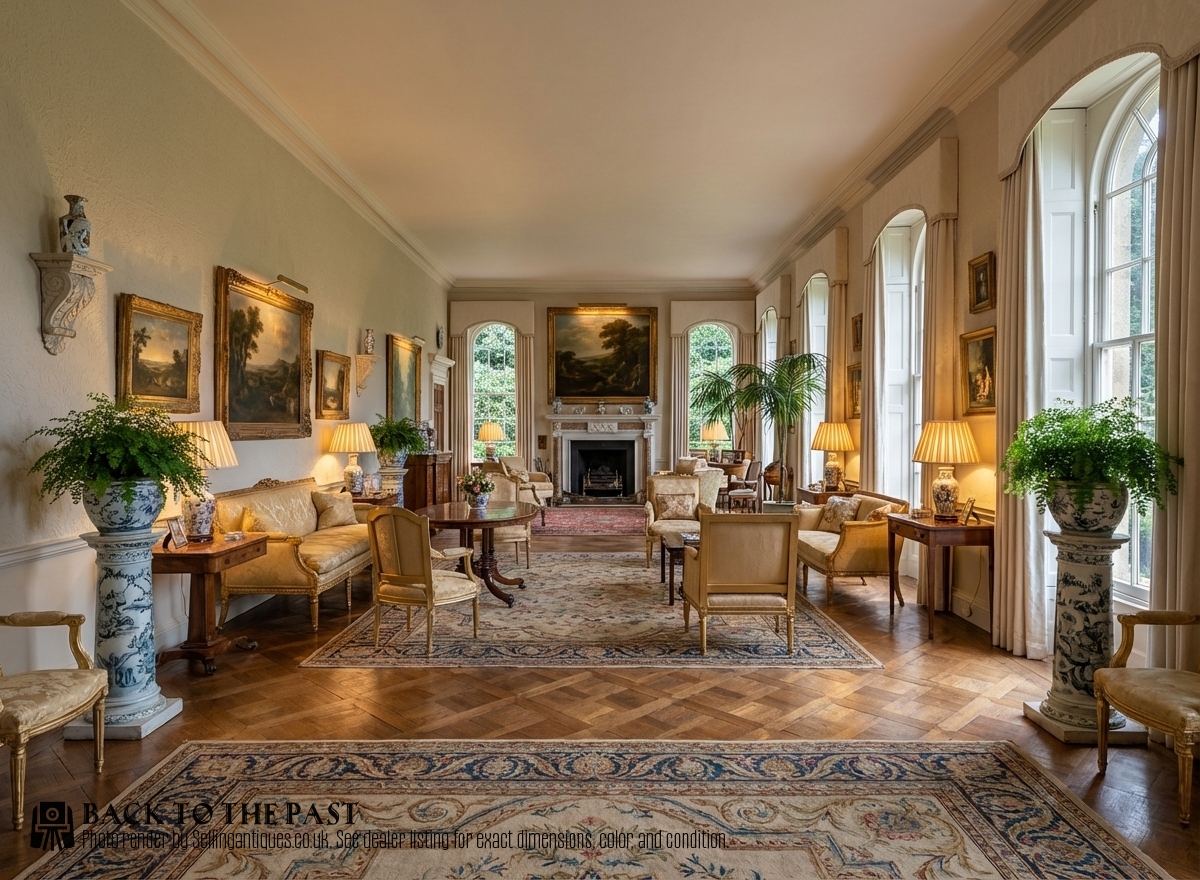
These pieces are designed to be viewed from all sides, making them ideal for the middle of a large drawing room or entrance hall.
Ensure there is enough walking space around the perimeter so the piece functions properly without obstructing movement.
How do I care for rosewood surfaces?
Keep timber away from direct sunlight and strong heat sources to prevent the rosewood from drying out or fading over time.
Dust regularly with a dry cloth and avoid silicone-based polishes that can build up on the French polished finish.
What is a tilt-top mechanism used for?
The hinged mechanism allows the top to lock flat for dining or display, and pivot vertically when the room needs to be cleared.
This practical feature was especially common on nineteenth-century breakfast and loo tables.
How do I distinguish Regency from Victorian examples?
Regency pieces often lean towards classical restraint, incorporating parcel gilding, brass inlay, and crisp architectural lines.
Victorian iterations tend to feature heavier proportions, deeper relief carving, and elaborate floral motifs on circular pedestals.