

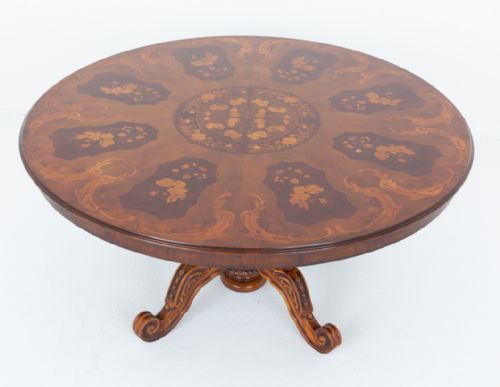


Carved Scroll Foot Table
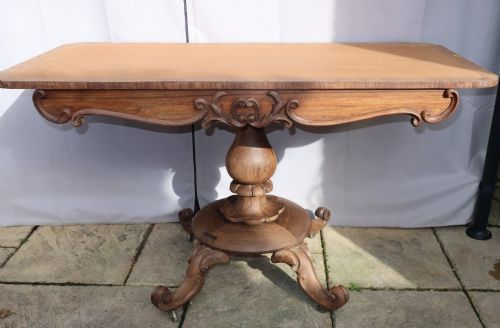
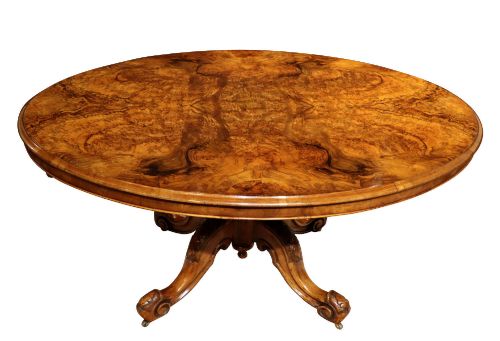
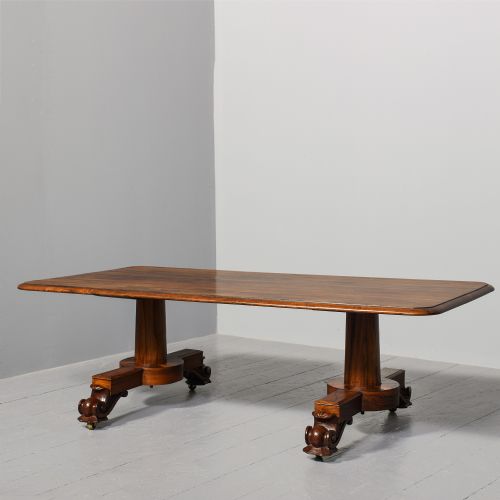
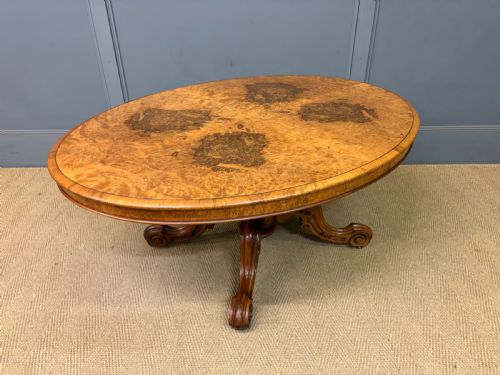
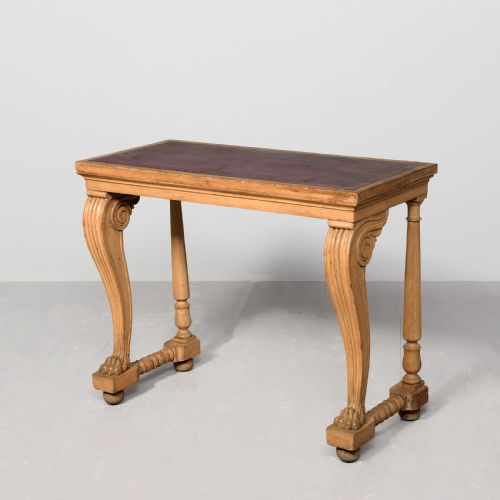
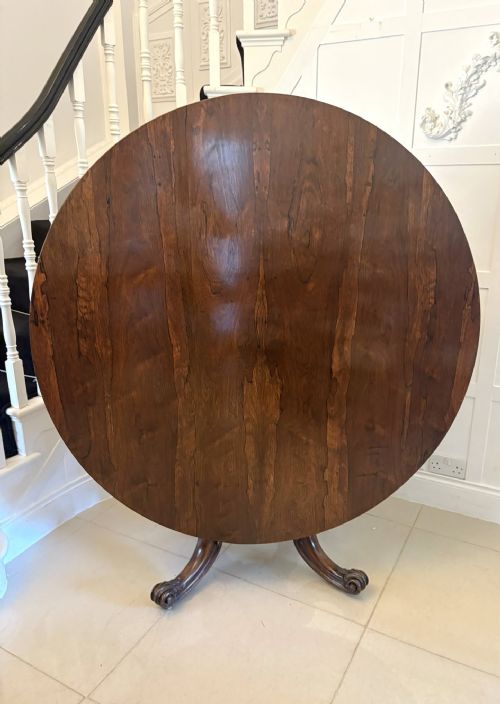
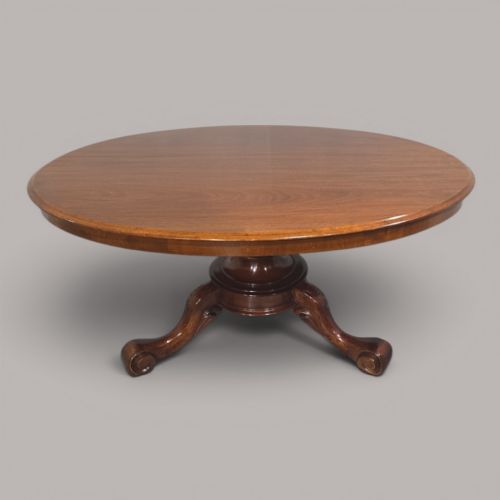
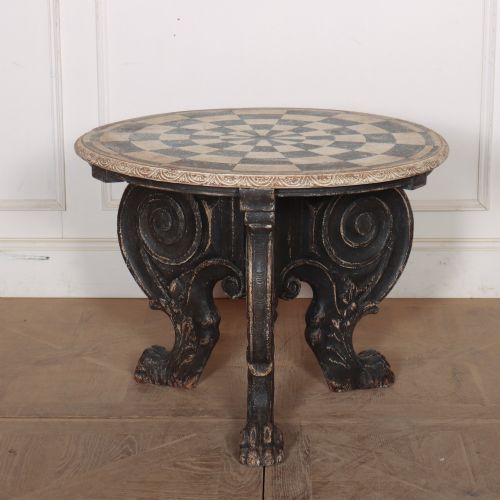
A carved scroll foot table brings grounded nineteenth-century presence to a room, offering robust timbers and sculptural pedestals that anchor a traditional interior.
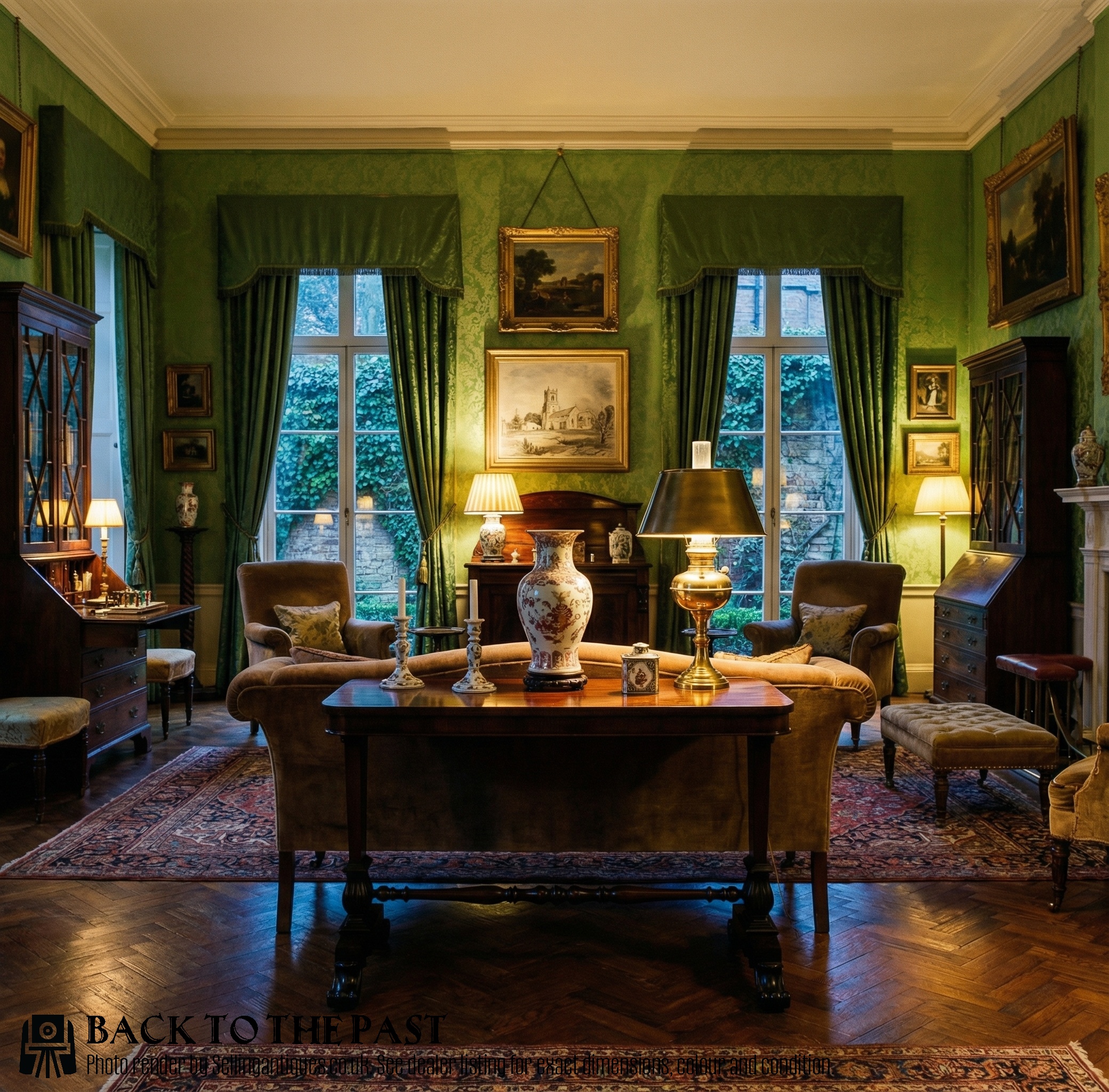
Carved Scroll Foot Table
A carved scroll foot table encompasses a variety of nineteenth-century forms, spanning robust dining tables, circular breakfast tables, and compact occasional pieces. Buyers seeking a carved scroll foot table frequently encounter Victorian and Regency examples configured as centre tables, console tables, and tea or card tables.
The selections originate across distinct periods including the Georgian era, the William IV period, and later nineteenth-century revivals. Woods such as mahogany, rosewood, walnut, and burr walnut dominate the structural forms across these diverse origins.
Materials and construction
Cabinet makers utilised dense hardwoods including mahogany, rosewood, walnut, and burr walnut for the primary frames and surfaces of a carved scroll foot table. Decorative veneers such as gonçalo alves, calamander, and marquetry enrich specific tabletops alongside solid timber constructions.
Pedestal bases and support structures incorporate hand carving to shape the characteristic scroll feet, frequently paired with brass mounts, leather inserts, and painted wood finishes.
Carved Scroll Foot Table Retail Price Guide 2026
Typical asking prices for carved scroll foot table among the pieces listed under this phrase on Sellingantiques today, from the lower quarter to the upper quarter. They describe what is for sale here now, not the wider market.
Factors of distinction
The refinement of the hand carving on the pedestal base and feet separates standard production from superior examples. Crisp execution of the scroll motif indicates skilled joinery and thoughtful design during manufacture.
The choice of timber figure significantly elevates the presence of the piece, particularly with burr walnut, radially veneered mahogany, and figured rosewood surfaces. Cohesion between the timber selection and the proportions of the base dictates overall success.
James Mein of Kelso·Whytock and Reid
The Carved Scroll Foot Table Glossary
- Centre table
- A freestanding table finished on all sides intended to sit in the middle of a room rather than against a wall.
- Quadrapod base
- A four-legged pedestal support system frequently utilised on nineteenth-century dining and breakfast tables.
- Tilt top
- A tabletop mechanism that pivots vertically to allow the table to be stored flat against a wall when not in use.
- Gonçalo Alves
- A dense exotic hardwood with striking contrasting grain patterns utilised for fine nineteenth-century cabinet work.
- Huali
- A traditional Chinese hardwood noted for its figured grain, seen in historical furniture such as low kang tables.
Carved Scroll Foot Table: Frequently Asked Questions
Where should I place a centre table?
A centre table works best in the middle of a room where its finished sides and carved base remain fully visible from all angles.
Ensure there is sufficient clearance around the perimeter for movement and seating.
How do I maintain rosewood and mahogany?
Dust timber surfaces regularly with a soft, dry cloth to prevent particulate accumulation on the polished grain.
Apply traditional wax polish sparingly to nourish the wood and maintain the natural lustre without building up heavy residues.
What is a tilt top table used for?
A tilt top table allows the surface to lock vertically so the piece occupies minimal floor space against a perimeter wall.
Historical spaces utilised this mechanism to clear rooms for alternative activities when dining or card playing concluded.
How do I distinguish Regency from Victorian styles?
Regency pieces often display neoclassical restraint with cleaner architectural lines, classical mounts, and simpler pedestal configurations.
Victorian designs tend toward heavier proportions, exuberant carving, and elaborate revivalist details such as Baroque or Gothic influences.