



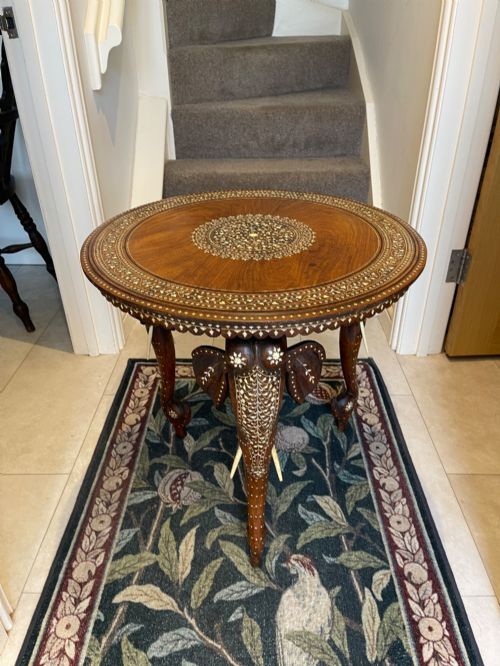
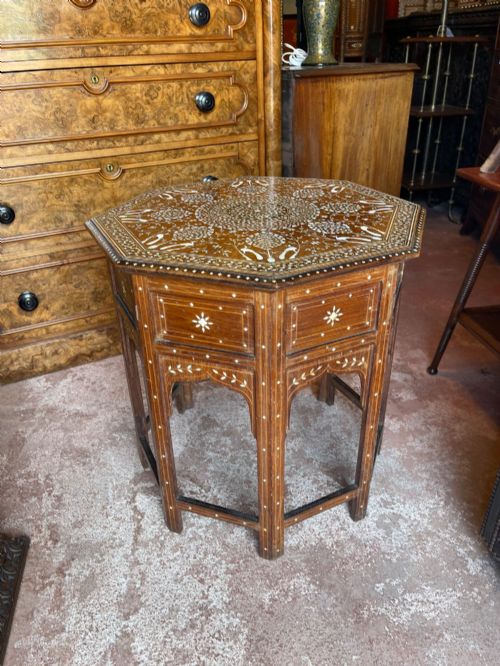
Bone Inlaid Side Table
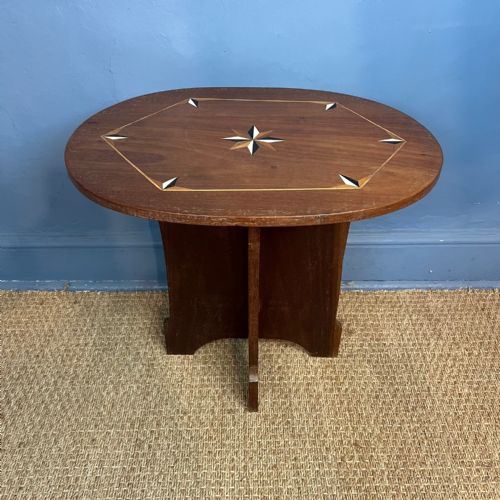
A bone inlaid side table brings intricate geometric pattern and exotic materials into a room, offering both a functional surface and a striking focal point.
Bone Inlaid Side Table
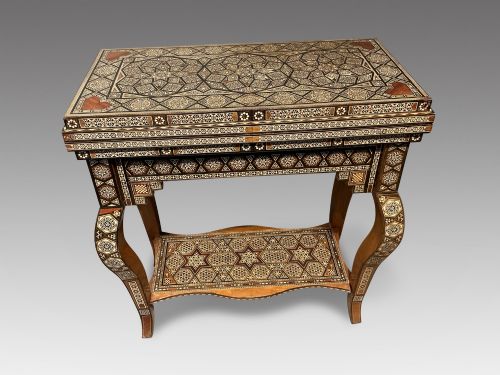
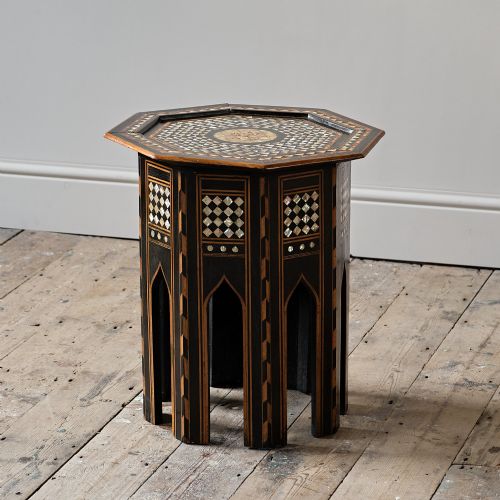
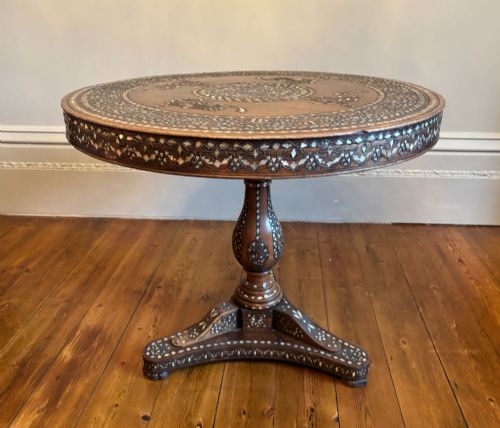
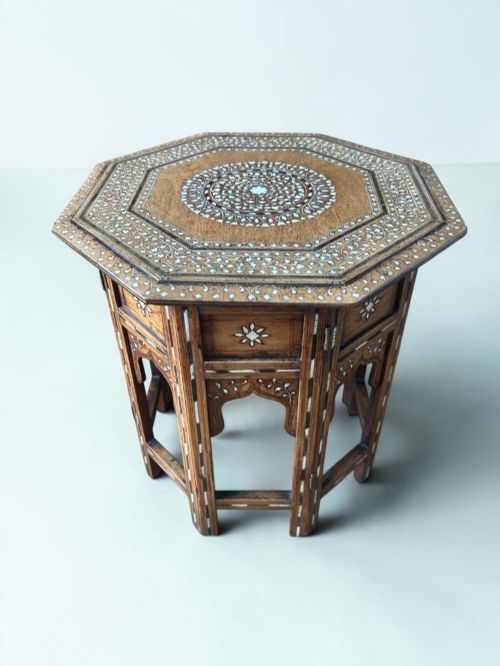
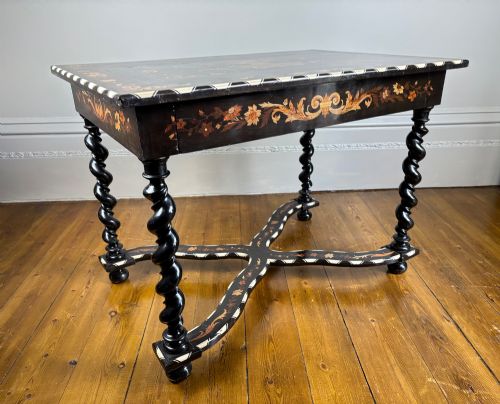
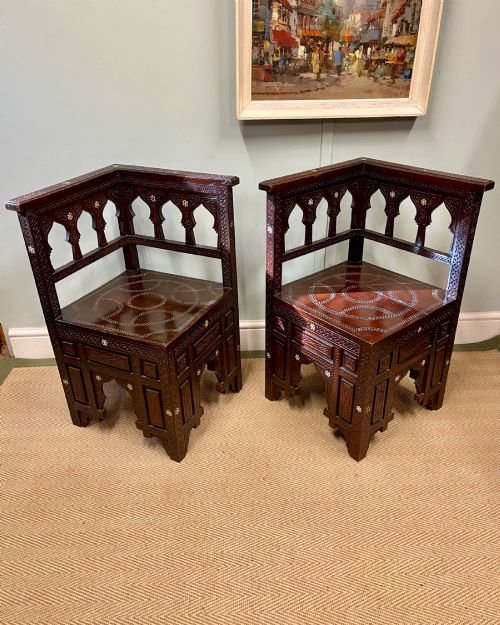
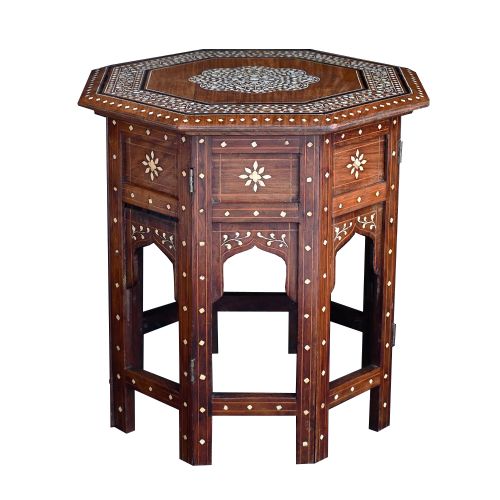
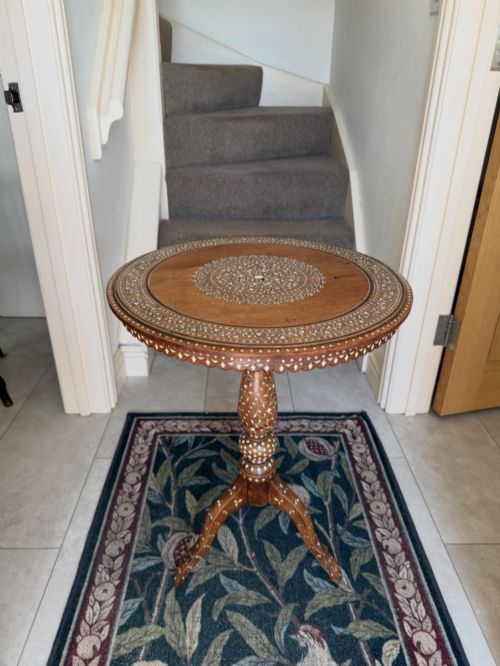
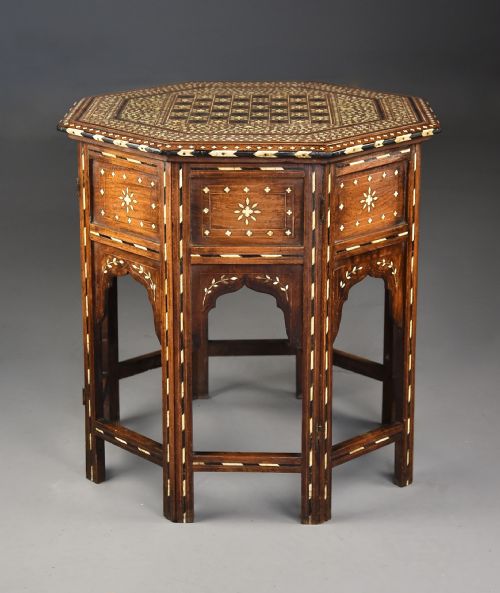
A bone inlaid side table combines sturdy timber frames with detailed surface ornamentation, appearing in forms such as occasional tables, games tables, and square or octagonal shapes. These pieces frequently emerge from the Anglo-Indian and Moorish Revival traditions, reflecting international design exchanges during the nineteenth and twentieth centuries.
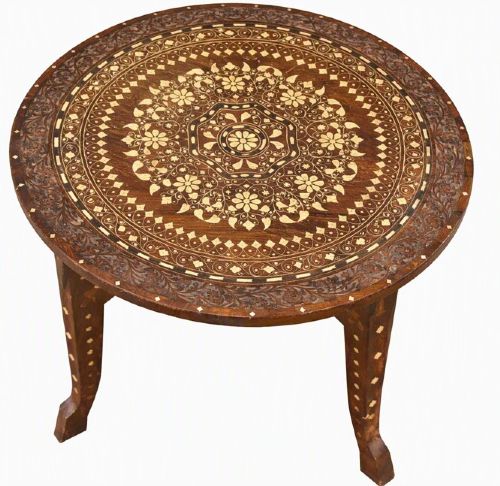
The evidence shows examples spanning from the nineteenth century through the 1920s and 1930s, encompassing circular, oval, and octagonal occasional tables. Buyers most often encounter intricately carved occasional tables that blend traditional eastern motifs with British domestic furniture forms of the period.
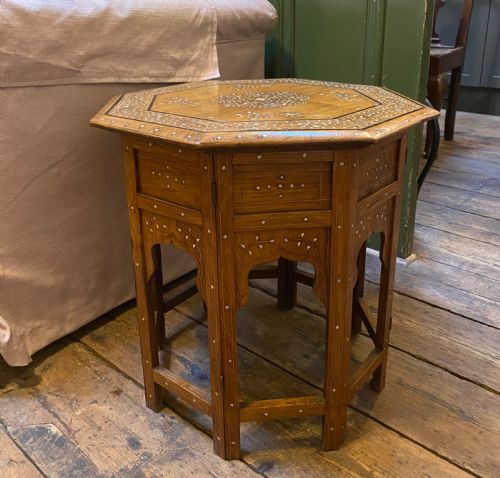
Originating from craft centres like Hoshiarpur as well as Syrian workshops, these tables served both export markets and domestic interiors. Their enduring appeal lies in the dense, contrasting patterns created by skilled artisans working with natural materials.
How they were made
Craftsmen built the structural frames using dense hardwoods such as rosewood, ebony, walnut, fruitwood, and sandalwood. These timbers provided a dark, stable base that contrasted sharply with the pale decorative elements.
Intricate pieces of bone and mother of pearl were meticulously cut and pressed into hand-carved recesses within the wood. The surrounding surfaces were then heavily carved with floral, geometric, and scrolling patterns to integrate the inlay seamlessly.
Bone Inlaid Side Table Retail Price Guide 2026
Typical asking prices for bone inlaid side table among the pieces listed under this phrase on Sellingantiques today, from the lower quarter to the upper quarter. They describe what is for sale here now, not the wider market.
Some nineteenth century tables arrived in British drawing rooms via Hoshiarpur, having travelled thousands of miles packed flat in wooden crates.
What varies in quality
Quality rests upon the precision of the carving and the density of the inlay work. Finer examples display crisp, deeply carved wooden grounds where the bone and mother of pearl elements fit flush without excessive filler.
The choice of secondary woods and the complexity of the geometric arrangement also distinguish superior items. Tables featuring documented workshop origins or stamped retailer marks demonstrate a higher tier of craftsmanship and design ambition.
Liberty & Co
The Bone Inlaid Side Table Glossary
- Anglo-Indian
- Furniture made in India for British residents or for export to Britain, combining British forms with traditional local craftsmanship. This style heavily incorporates dense carving and intricate inlay.
- Hoshiarpur
- A Punjabi town renowned for its specialised woodworking and inlay traditions. Artisans there produced distinctive tables and decorative objects using bone and shisham wood.
- Mother of pearl
- The iridescent internal layer of certain mollusc shells, utilised alongside bone to create luminous highlights in geometric designs. It adds a pearlescent contrast to the darker timber grounds.
- Tabouret
- A low stool or small side table without arms or back, often associated with Syrian and Middle Eastern designs. These pieces served versatile functions in Victorian and Edwardian reception rooms.
- Moorish Revival
- An architectural and decorative style popular in the nineteenth century that drew inspiration from Islamic art. It manifested in furniture through intricate lattice work, arched motifs, and extensive surface inlay.
Bone Inlaid Side Table: Frequently Asked Questions
What is a bone inlaid side table?
A bone inlaid side table is a decorative small table featuring intricate patterns formed from pieces of animal bone pressed into wooden frames. These tables often originate from nineteenth and early twentieth century workshops in India and the Middle East.
They combine functional surfaces with dense, hand-carved ornamentation, making them distinctive additions to both traditional and eclectic interiors.
How do I style a bone inlaid table?
These tables work effectively as occasional or side tables in living rooms, hallways, or studies where their detailed surfaces can be appreciated. Their strong visual texture allows them to stand alone as statement pieces or complement neutral furnishings.
Keep surrounding decor relatively simple to let the intricate bone and mother of pearl patterns remain the focal point of the space.
How do I identify Hoshiarpur tables?
Hoshiarpur tables are characterised by dense, overall floral and geometric carving on woods like walnut or shisham, filled with intricately shaped bone inlay. They frequently appear in octagonal or square configurations with folding or fixed bases.
The regional style is distinguished by the complete coverage of the wooden surface, leaving almost no plain areas visible beneath the dense ornamentation.
What materials are used in these tables?
The structural frames are constructed from hardwoods such as rosewood, ebony, walnut, sandalwood, and fruitwood. These provide a dark, durable base that contrasts with the pale decorative elements.
Surface decoration consists primarily of animal bone and mother of pearl nacre shell, shaped into geometric or floral motifs and secured within hand-carved recesses.