






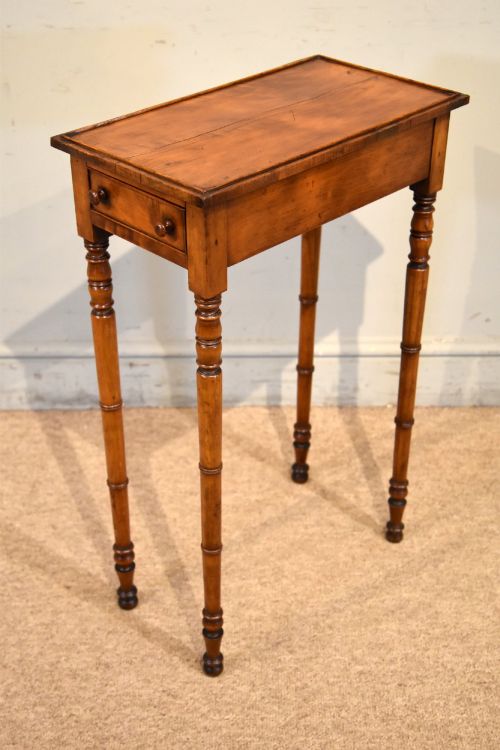


Hardwood Side Table
These pieces bring solid substance and varied grain to a room, offering a functional surface rooted in global tradition.

Hardwood Side Table
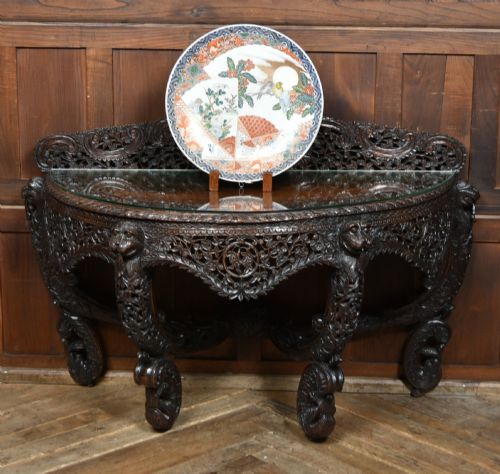
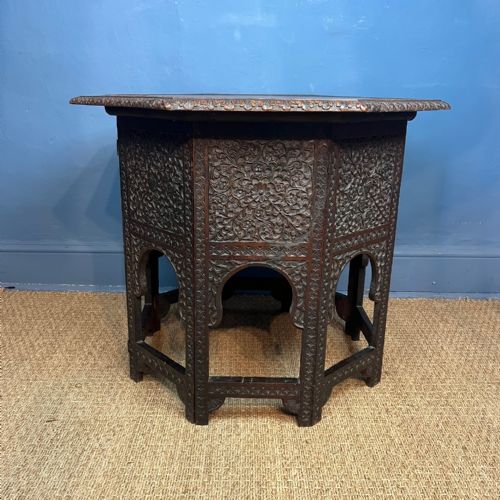
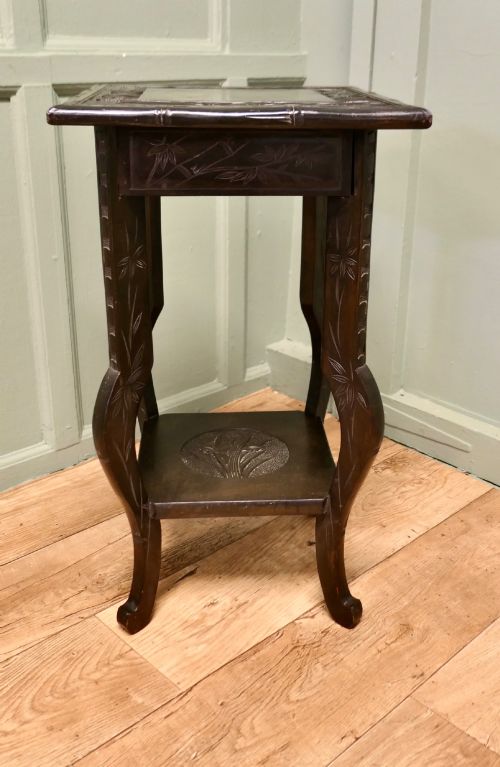
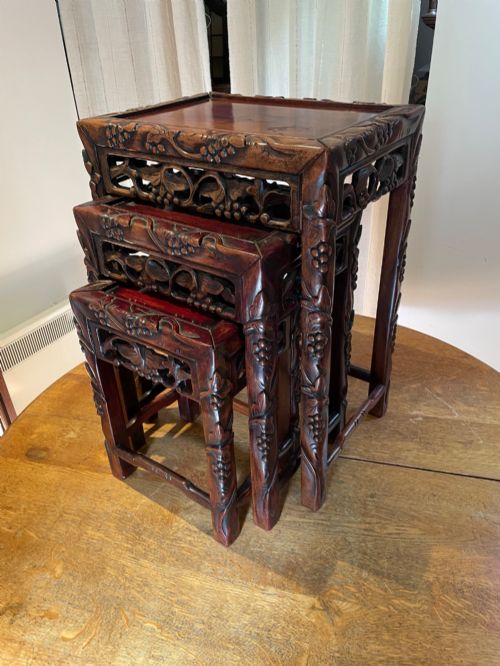
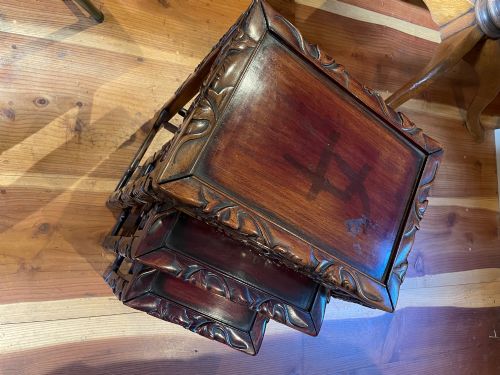
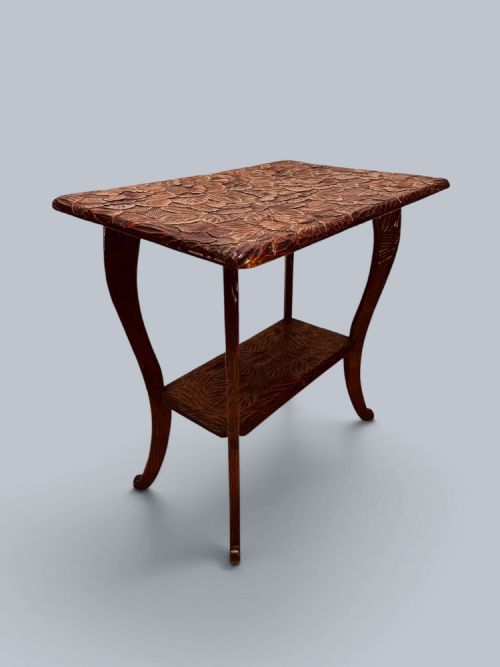
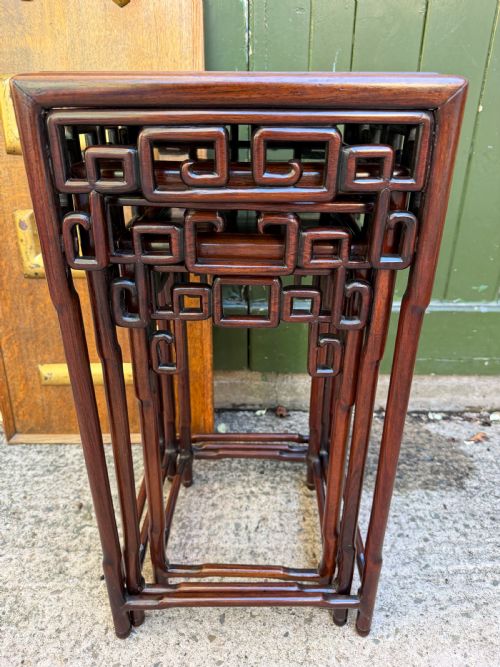
A hardwood side table serves as a sturdy auxiliary surface, appearing frequently in forms such as low tables, plant stands, nests, and altar tables. These pieces span the nineteenth and early twentieth centuries, drawing heavily on Chinese export, Anglo-Indian, and Victorian design traditions.
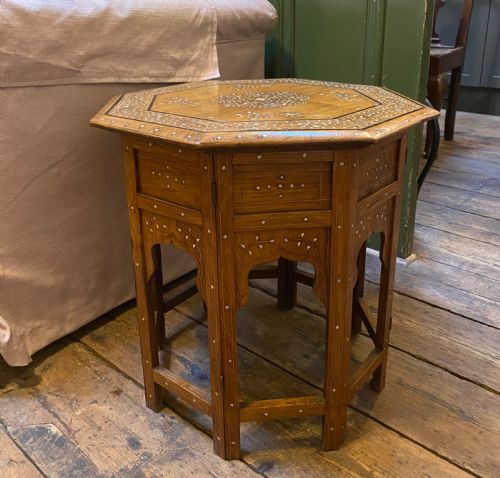
Buyers most commonly encounter Chinese carved items alongside Anglo-Indian colonial pieces. The selection ranges from compact nests and occasional tables to heavy marble-top stands and console tables.
Originating from diverse workshops across Asia and Europe, these items function equally well as display pedestals or general utility tables in contemporary interiors.
Materials and construction methods
Makers utilised dense timbers such as rosewood, hongmu, padauk, and huanghuali, chosen for their weight and rich natural grain. These structural elements are frequently enhanced through deep hand-carving and complex joinery.
Surfaces often incorporate contrasting materials, pairing dark wood with inset marble panels, mother-of-pearl inlay, bone detailing, or brass accents. Such combinations required precise fitting to accommodate the shifting of dense timber over time.
Hardwood Side Table Retail Price Guide 2026
Typical asking prices for hardwood side table among the pieces listed under this phrase on Sellingantiques today, from the lower quarter to the upper quarter. They describe what is for sale here now, not the wider market.
The selection spans nineteenth-century Victorian designs alongside Chinese export and Anglo-Indian colonial styles.
Distinctions in construction and finish
The standard of a piece rests upon the crispness of the hand-carved detail and the selection of the timber. Superior examples display deep, deliberate relief work without the soft edges typical of hurried production.
Grain alignment and the integrity of the secondary materials, such as closely fitted marble inserts or secure bone and mother-of-pearl inlay, separate standard utility items from exceptionally finished pieces.
Liberty & Co·Gabriel Viardot
The Hardwood Side Table Glossary
- Hongmu
- A dense, dark tropical hardwood traditionally favored in Chinese furniture making. It translates literally to red wood and develops a rich patina with age.
- Altar table
- A long, narrow rectangular table originating from domestic or temple settings in China. They feature distinctive upturned ends or elaborate corner spandrels.
- Padauk
- A heavy, durable timber displaying vibrant reddish-brown tones. It resists decay and accepts fine carving exceptionally well.
- Nest of tables
- A graduated set of several tables designed to slide neatly beneath one another. This form maximises surface area while occupying a minimal footprint.
- Jardiniere stand
- A tall, slender support designed specifically to hold heavy plant pots or floral arrangements. They frequently incorporate inset marble tops to prevent water damage.
Hardwood Side Table: Frequently Asked Questions
How were these tables used originally?
These tables served multiple domestic purposes, acting as display surfaces for porcelain, urns, and scholar's objects in elite households. Their sturdy construction also suited them for everyday holding tasks in formal reception rooms.
In colonial contexts, similar forms functioned as tea tables or smoking stands, adapting traditional regional craftsmanship to European domestic habits. They moved easily around rooms to support lamps, books, or decorative arrangements as needed.
Where should I place one today?
A compact stand or low table fits neatly beside a sofa or armchair to hold lighting and everyday items. Taller plant stands work effectively in corners or empty hallways to elevate sculptures and potted greenery.
Nested sets offer flexibility, allowing you to separate the tables across a room when entertaining guests and stack them together afterward to save floor space.
How do I care for the wood?
Keep these tables away from direct heat sources and strong sunlight to prevent the dense timber from drying and splitting. Dust regularly with a soft, dry cloth rather than applying heavy silicone polishes.
Treat marble inserts gently by wiping spills immediately with a damp cloth and mild soap. Avoid acidic cleaners that might etch the polished stone surface.
How can I tell the period?
Dating relies on examining the timber preparation, tool marks, and stylistic indicators such as Qing Dynasty motifs or Victorian proportions. Construction methods often reveal whether a piece dates to the nineteenth century or the early twentieth century.
Wear patterns on the feet and the patina of the wood further help establish age, alongside any maker stamps or retailer marks preserved on the underside.