


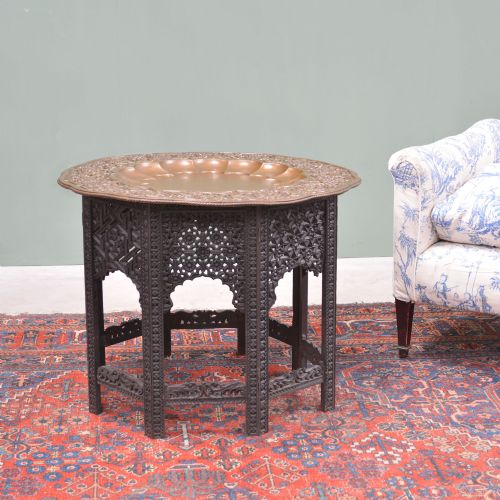
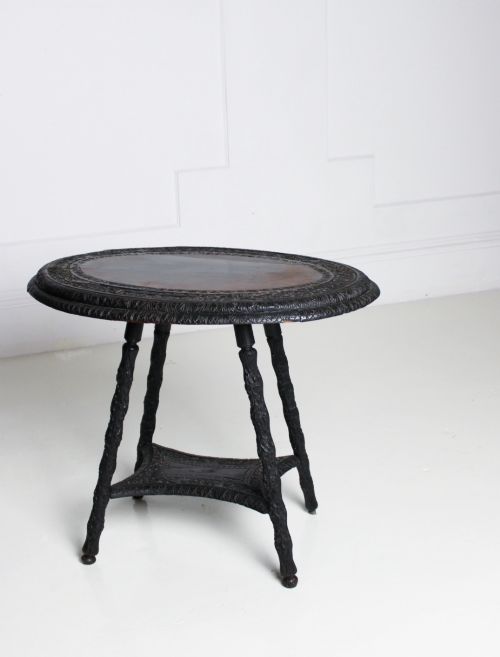


Carved Teak Coffee Table
A carved teak coffee table brings dense colonial craftsmanship and rich timber grain straight to a modern sitting room.
Carved Teak Coffee Table
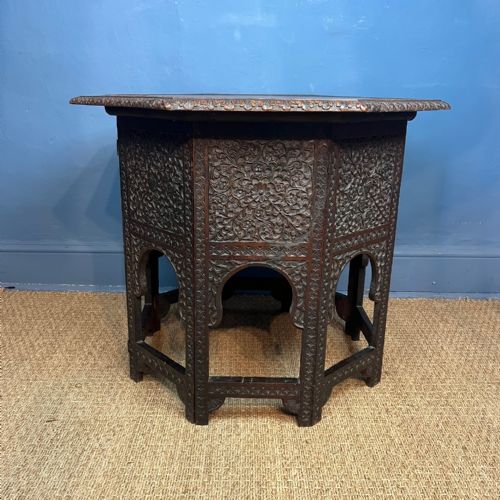
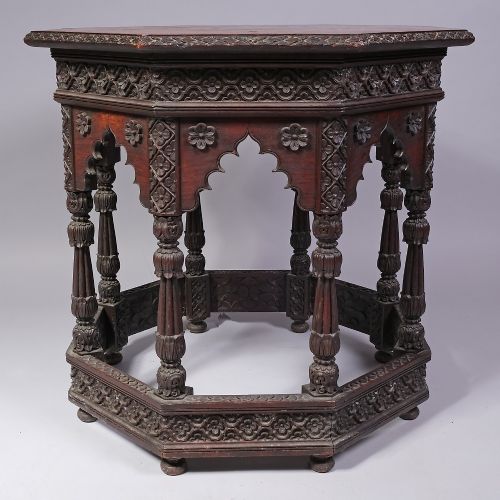
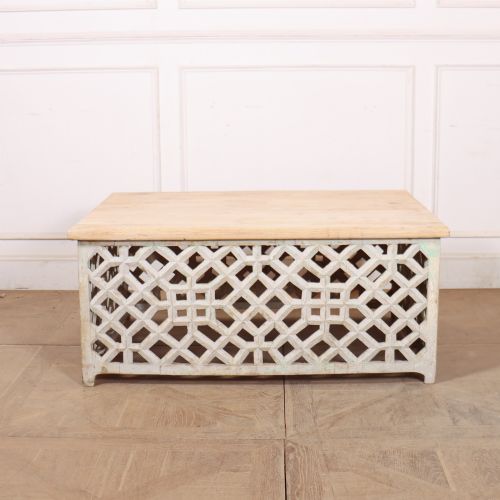
A carved teak coffee table combines robust tropical hardwood with intricate surface decoration, ranging from low occasional forms to traditional low tables. These pieces emerge from Anglo-Indian, Colonial Indian, and Chinese Export traditions, frequently drawing on regional design vocabularies like the low takhat or figural elephant supports. The items seen on this page span the nineteenth century through to the early decades of the twentieth century, with examples dating from eighteen-fifty, nineteen-hundred, nineteen-ten, and nineteen-thirty.
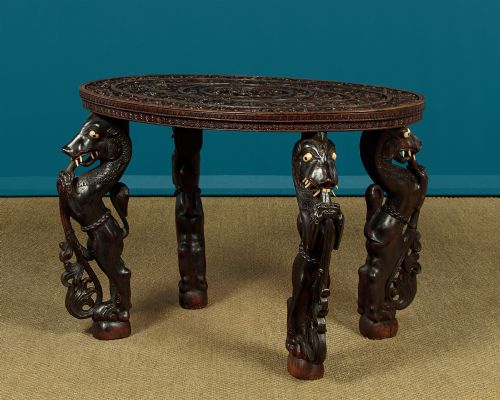
Buyers will encounter several distinct silhouettes among these listings, including circular brass-inlaid surfaces, massive centre tables, and occasional side tables. Elephant motifs appear regularly, forming carved figural bases or detailed friezes that anchor the low coffee table height. Each piece reflects the cross-cultural exchange of the colonial period, translating traditional craftsmanship into functional furniture for Western domestic spaces.
How they were made
Makers constructed these pieces primarily using dense teak and allied hardwoods, selected for their stability and capacity to hold fine detail. Artisans carved deep relief patterns directly into the timber, sometimes accentuating the surface with contrasting pigment. Metal elements such as brass and iron were integrated into the design, appearing as inlaid wirework, patterned plates, or removable serving trays inset into the wooden frames.
Additional materials including bone and glass occasionally supplement the primary woodwork, creating varied textural contrast across the tabletops. Joinery and structural elements rely on traditional hardwood framing techniques suited to low tables and sturdy occasional forms. The combination of heavy carved timber and metal inlay demonstrates the specialised workshop practices of the period.
Carved Teak Coffee Table Retail Price Guide 2026
Typical asking prices for carved teak coffee table among the pieces listed under this phrase on Sellingantiques today, from the lower quarter to the upper quarter. They describe what is for sale here now, not the wider market.
The inventory encompasses Anglo-Indian, Colonial Indian, and Chinese Export styles across coffee, side, and centre table forms.
What varies in quality
Quality rests in the depth and sharpness of the hand-carved detail, where crisp, undercut foliage and well-proportioned figural motifs distinguish finer workshop output. The density and grain of the teak itself also play a role, alongside the precision with which brass inlay or fitted metal trays are integrated into the timber surface. Tables displaying confident structural proportions and harmonious integration of carved elements command greater appreciation.
The sophistication of the stylistic synthesis - whether Anglo-Indian, Colonial Indian, or Chinese Export - dictates the visual impact of the piece. Superior examples maintain structural integrity in the heavy hardwood while preserving delicate surface ornamentation across the top and legs.
The Carved Teak Coffee Table Glossary
- Takhat
- A traditional low Indian platform table adapted in the nineteenth century as a coffee table. These pieces sit close to the floor and often feature heavy carving.
- Anglo-Indian
- A style of furniture produced in India during the British colonial period for both local British residents and export to Britain. It combines indigenous carving techniques with European furniture forms.
- Centre table
- A freestanding piece designed to be viewed from all sides, often placed in the middle of a room rather than against a wall. In teak, these are frequently substantial in scale.
- Brass inlay
- The technique of recessing thin sheets or wire of brass into channels cut in the wood surface. This creates geometric or floral patterns contrasting with the dark teak.
Carved Teak Coffee Table: Frequently Asked Questions
What is an Anglo-Indian coffee table?
An Anglo-Indian coffee table is a low wooden piece created in India during the nineteenth or early twentieth century for British colonial homes. These items utilise dense local hardwoods like teak and feature deep, traditional carving.
Many of these pieces were adapted from traditional low tables or occasional stands to suit Western sitting room heights. They bridge eastern craftsmanship and western domestic utility.
How do I care for a teak table?
Care for a teak table involves dusting with a soft, dry cloth and avoiding harsh chemical polishes that can damage the aged timber surface. Natural oils in the hardwood help protect the material, but excessive moisture should be kept away from inlaid brass and carved crevices.
Keep the table out of direct sunlight to prevent the timber from drying out or fading. Periodic gentle conditioning with appropriate wax maintains the rich tone of the wood.
What periods do these tables date from?
The pieces listed on this page primarily date from the nineteenth century through to the early decades of the twentieth century. Specific periods represented include eighteen-fifty, nineteen-hundred, nineteen-ten, and nineteen-thirty.
Earlier examples often display deeper hand-carving and heavier hardwood construction. Later pieces from the nineteen-thirties continue colonial export traditions with varied occasional forms.
Where were these tables made?
These tables were manufactured in workshops across the Indian subcontinent and through Chinese export channels during the colonial era. Centres like Bombay produced large quantities of heavily carved furniture destined for international markets.
Local artisans executed the intricate woodwork, combining indigenous motifs such as elephants with European furniture shapes.