

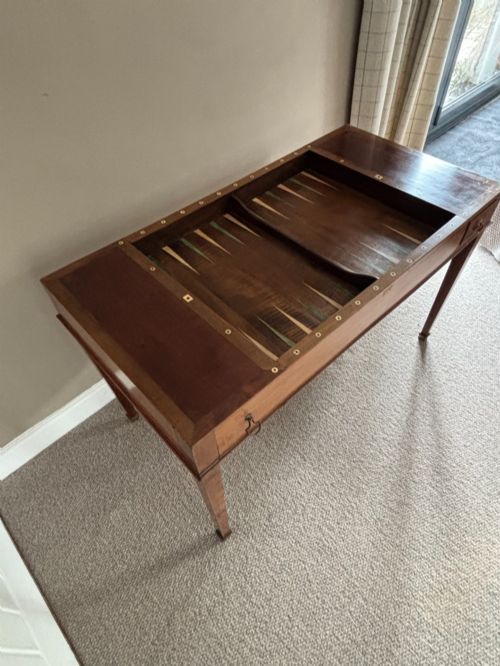
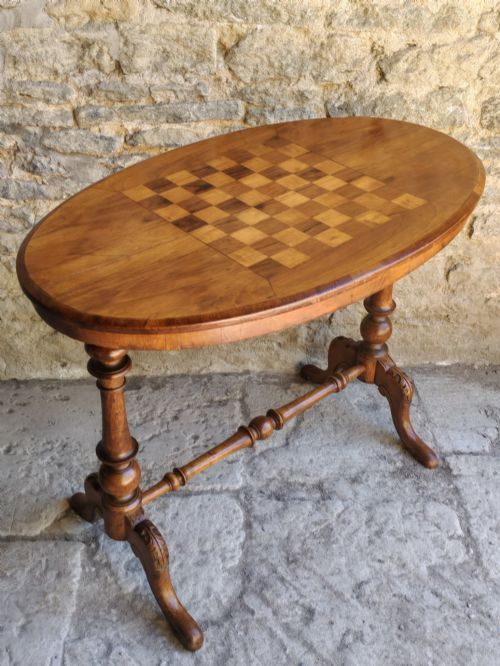
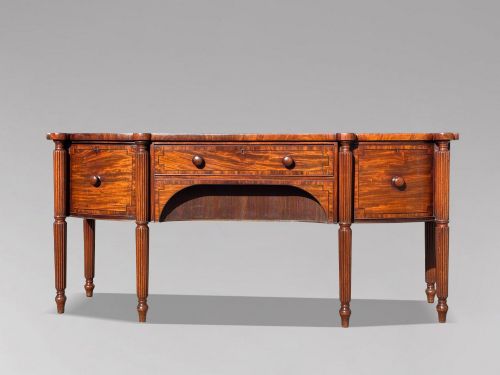
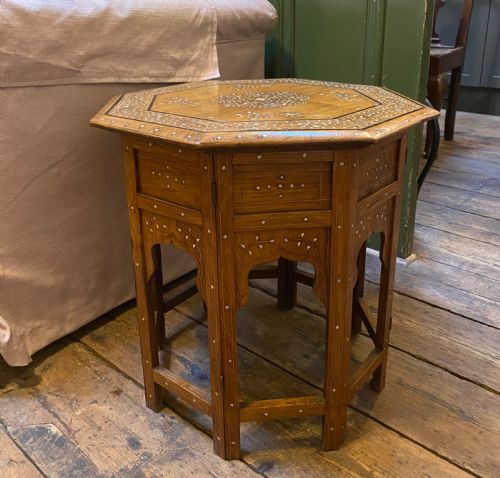


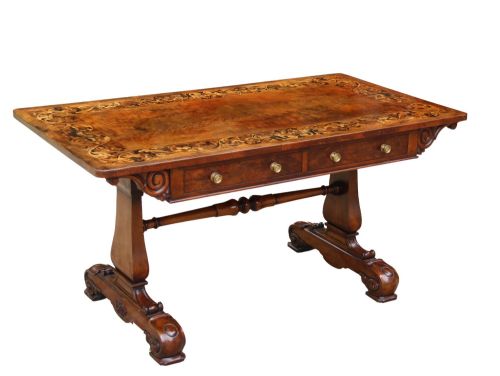
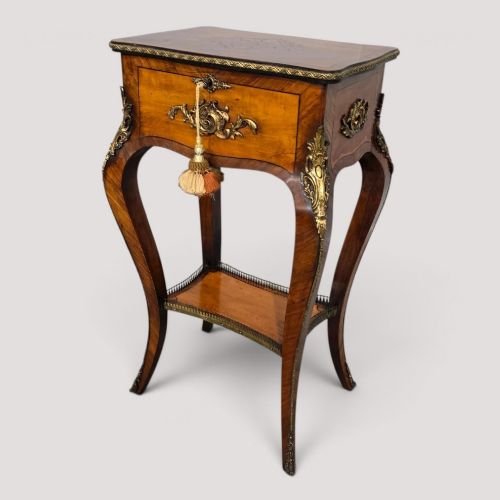
19th Century Inlaid Table
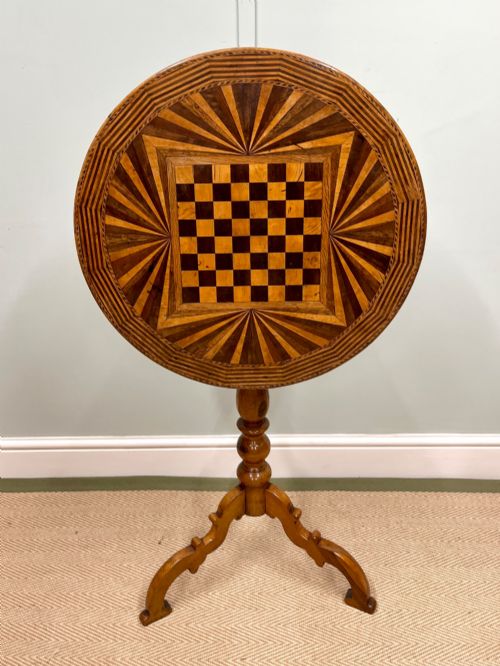
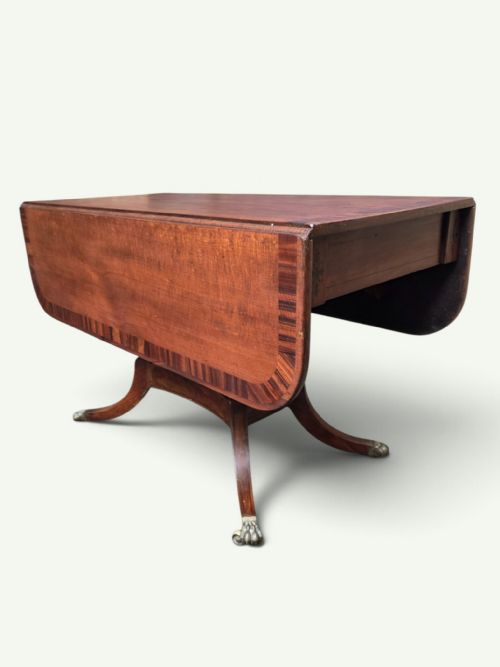
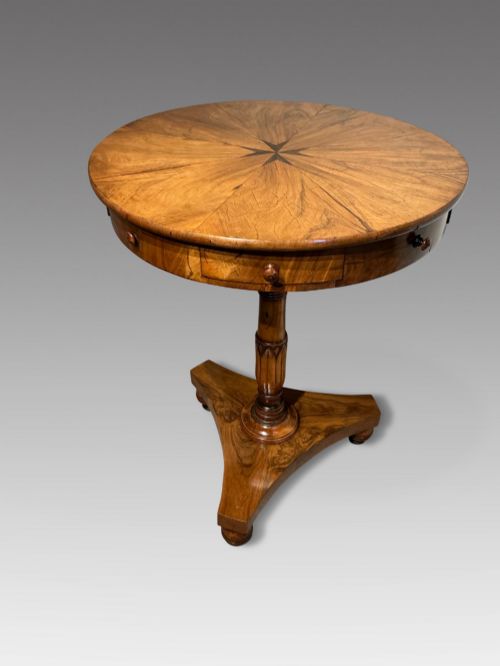
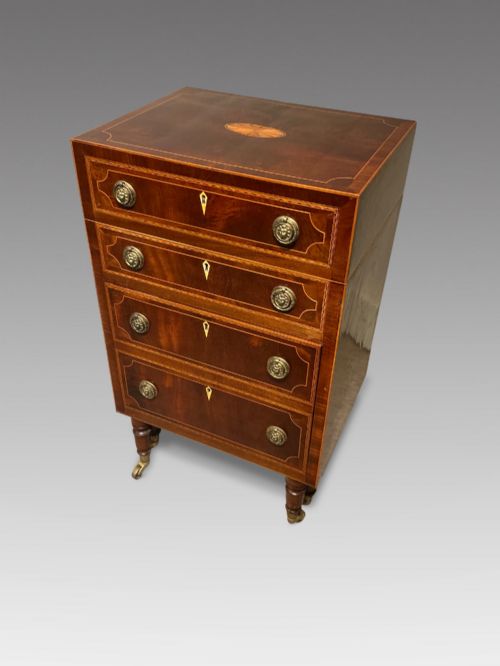
A 19th century inlaid table brings intricate woodwork and period character into a room.
19th Century Inlaid Table
A 19th century inlaid table encompasses a diverse array of utilitarian and decorative furniture designed for drawing rooms, libraries and boudoirs. Buyers encountering this selection will frequently find occasional, centre and card tables alongside specialised desks and lamp tables.
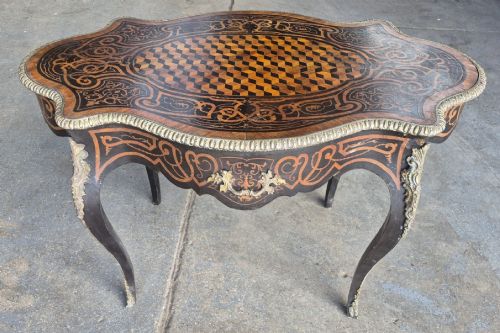
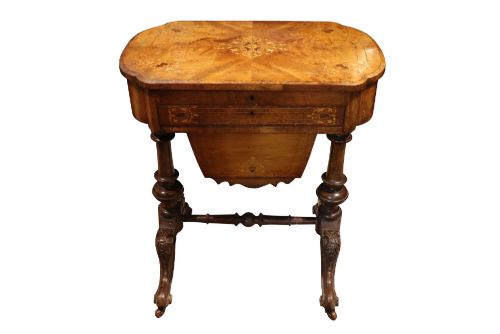
The objects originate from English, French, Swedish and Anglo-Indian workshops, reflecting distinct regional tastes from the Regency era through to the late Victorian period. Walnut, mahogany and rosewood forms dominate the selection, often enriched with elaborate surface ornament.
Versatile in function, these pieces served variously for writing, games, display or holding small lamps. Surviving examples demonstrate the enduring appeal of patterned timber surfaces in domestic interiors.
How They Were Made
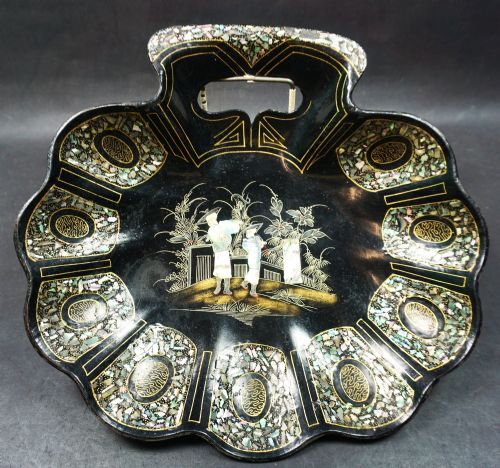
Cabinetmakers constructed these tables using solid timber frames and stable carcases faced with carefully sliced veneers of walnut, mahogany, kingwood or satinwood. Craftsmen then executed intricate designs by recessing contrasting woods, brass, bone or mother-of-pearl into the primary surface.
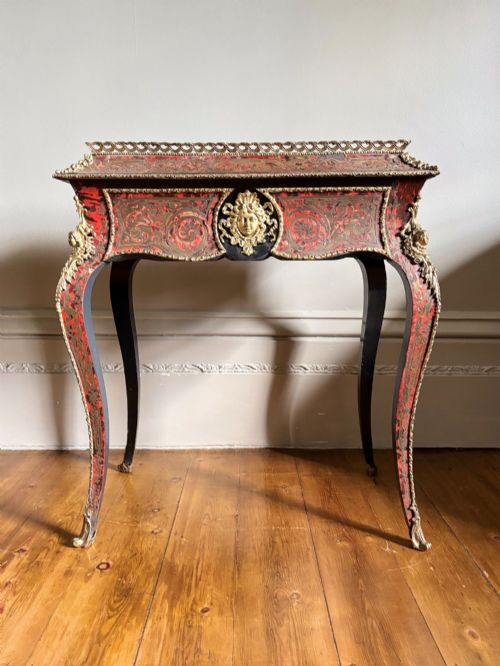
French workshops frequently augmented timber marquetry with cast ormolu mounts, brass banding and boullework in tortoiseshell and brass. Anglo-Indian and Moorish pieces utilised dense woods inlaid with intricate geometric patterns of brass or bone wire.
19th Century Inlaid Table Retail Price Guide 2026
Typical asking prices for 19th century inlaid table among the pieces listed under this phrase on Sellingantiques today, from the lower quarter to the upper quarter. They describe what is for sale here now, not the wider market.
Some tables hid clever folding mechanisms for patience games or secret compartments for cards, keeping nineteenth-century guests thoroughly entertained between bouts of polite conversation.
What Varies in Quality
The distinction between ordinary and exceptional examples rests upon the precision of the cutting and the choice of timbers used for the design. Superior pieces display seamless integration of contrasting veneers where individual floral or geometric elements fit tightly without excessive filler.
Makers known for high standards, such as Edwards & Roberts or Edward Holmes Baldock, employed select burr walnut, figured mahogany or richly coloured kingwood alongside refined cast metal mounts. Lesser examples rely on simpler stamped decoration and plain secondary timbers with straightforward veneering.
Edward Holmes Baldock·Gillows·Edwards & Roberts·Liberty & Co
The 19th Century Inlaid Table Glossary
- Marquetry
- The art of forming decorative patterns on a wooden carcase by applying veneers of different woods, metals or shells. This technique creates pictorial or abstract surface designs.
- Ormolu
- Gilt bronze mounts applied to furniture edges, feet and aprons during the 18th and 19th centuries. These cast metal additions provide structural accent and visual contrast.
- Parquetry
- Geometric mosaic woodwork arranged in regular patterns such as cubes, lozenges or herringbone. It differs from marquetry through its strict adherence to repeating geometric grids.
- Boullework
- A type of marquetry utilising contrasting inlays of tortoiseshell and engraved brass, named after the French cabinetmaker André-Charles Boulle. The technique yields a rich, reflective surface pattern.
- Bijouterie Table
- A glazed display table designed to hold small treasures, medals or jewellery beneath a glass top. These pieces often feature velvet-lined interiors and hinged lids.
19th Century Inlaid Table: Frequently Asked Questions
What is a centre table?
A centre table is finished on all sides so that it can stand freely in the middle of a room rather than against a wall. These pieces frequently served as display surfaces for lamps or books.
Originating in larger formal rooms, they anchor the spatial arrangement of period interiors. Their visible timber grain and inlay demand careful placement away from direct heat sources.
How do I care for inlaid surfaces?
Inlaid timber requires stable humidity and protection from direct sunlight to prevent the veneers and delicate stringing from lifting or drying out. Regular dusting with a soft, dry cloth maintains the polish without harming the wood.
Applying a traditional beeswax polish sparingly nourishes the timber and preserves the depth of the marquetry. Avoid using modern silicone-based sprays on antique finishes.
What distinguishes French furniture from English pieces?
French furniture from this period often incorporates curved serpentine forms, elaborate ormolu mounts and intricate floral marquetry inspired by Louis XV and Louis XVI revivals. Cabinetmakers favoured exotic woods such as kingwood, tulipwood and rosewood.
English pieces tend to emphasise architectural proportions, solid mahogany or burr walnut construction, and restrained brass inlay. Regional variations reflect the distinct aesthetic priorities of each country's workshops.