



Syrian Inlaid Side Table
A syrian inlaid side table brings intricate geometric craft into a room, offering surface space layered with pearl and timber.
Syrian Inlaid Side Table
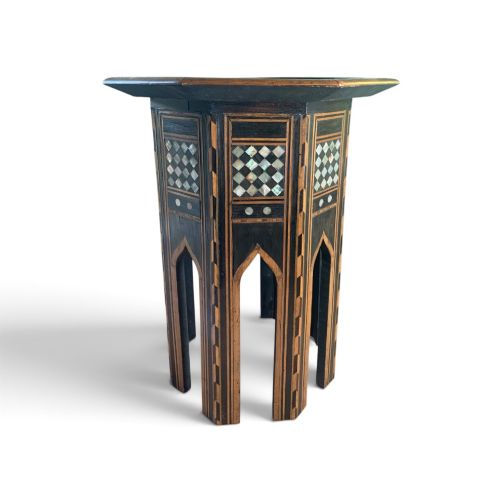
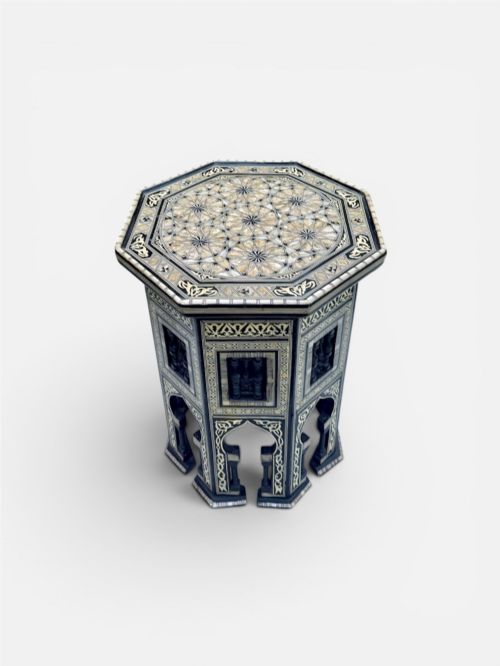
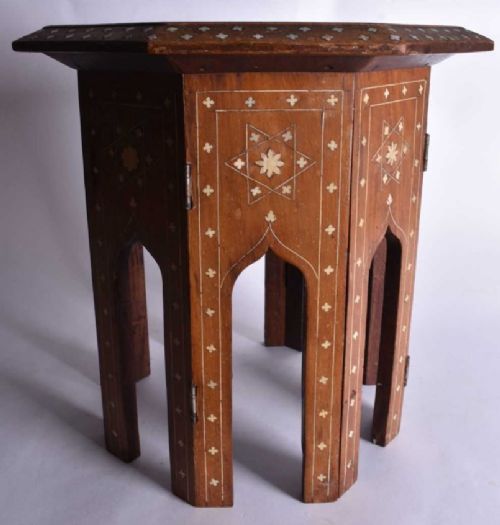
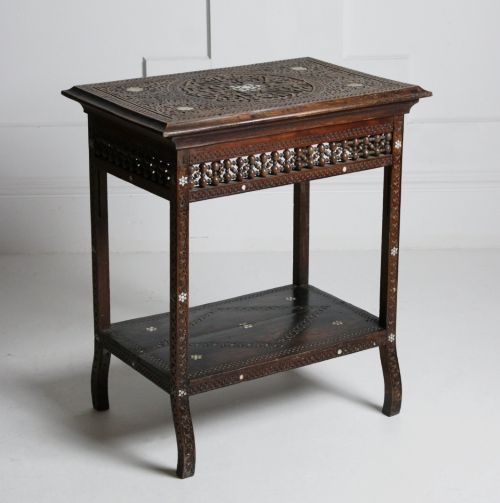
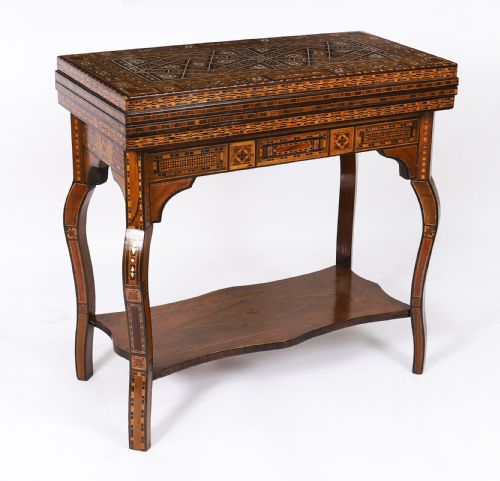
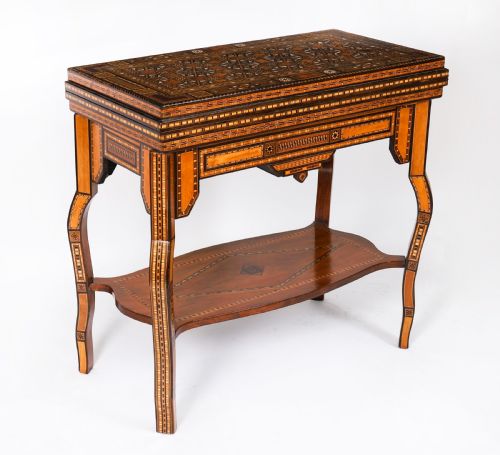
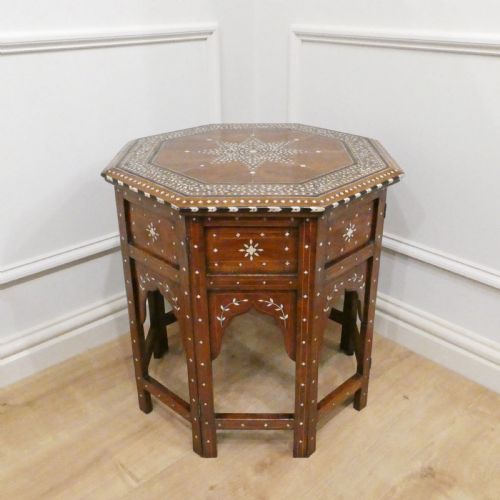
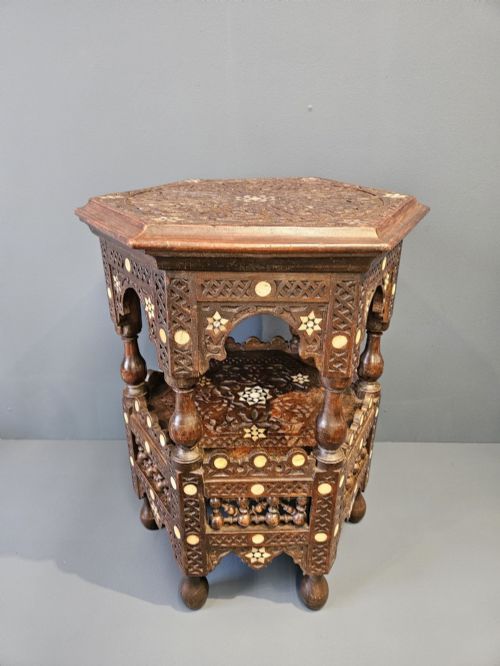
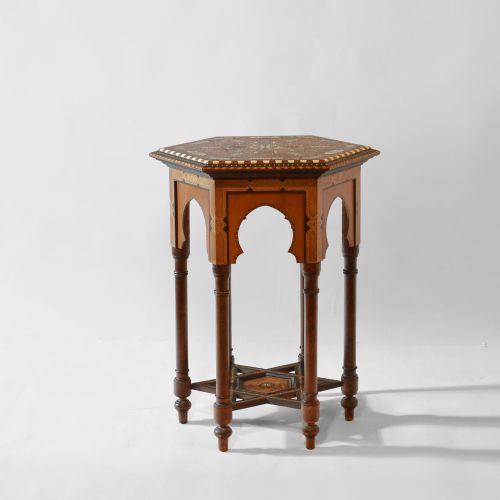
A syrian inlaid side table is typically encountered as an octagonal or hexagonal occasional piece constructed during the nineteenth or early twentieth century. These furnishings range from simple folding tabourets to multi-tier variants and specialised games surfaces for chess and backgammon.
The aesthetic bridges several overlapping movements, appearing in Moorish Revival, Ottoman, Levantine, and Liberty style iterations. Makers utilised diverse regional influences, producing geometric frameworks intended to serve as lamp stands or low centre tables.
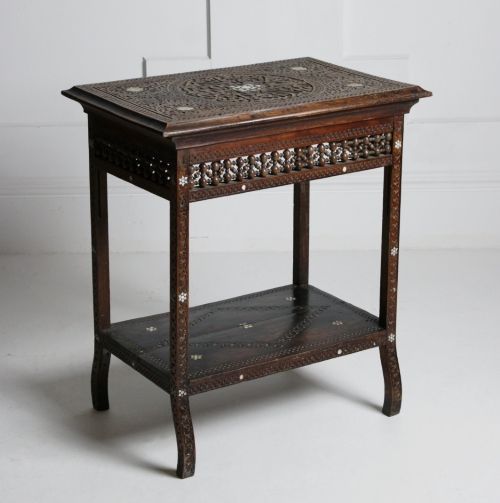
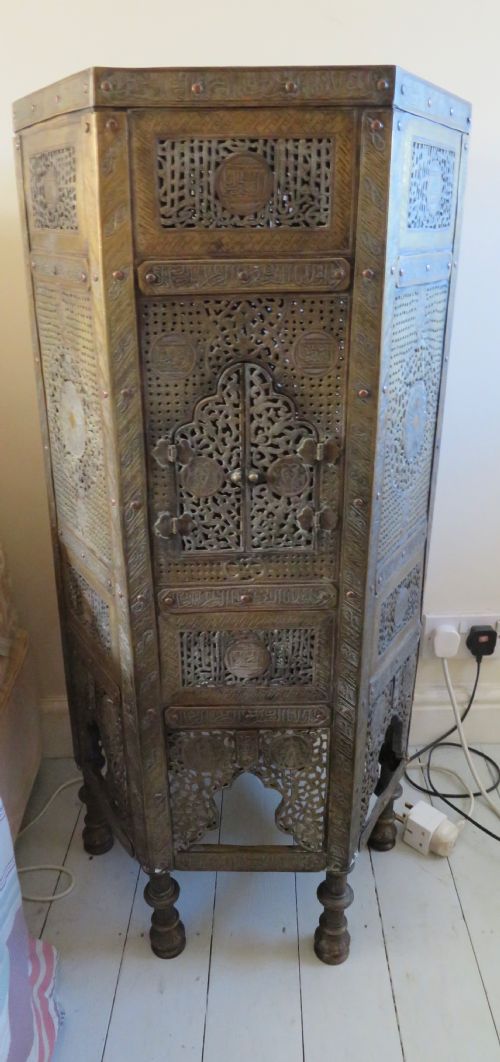
Octagonal top folding Damascus tables represent a particularly common form within this category. Buyers frequently discover pieces featuring enclosed cupboards or intricate openwork structures designed for domestic utility.
Materials and construction methods
Artisans constructed these furnishings using hardwoods such as walnut, ebonised wood, and fruitwood as a foundational structure. This timber framework was then meticulously channelled to receive complex decorative inserts.
Surface decoration relies heavily on delicate pieces of mother-of-pearl and bone secured within the wooden matrix. Craftsmen also incorporated white-metal and copper in certain regional variants to heighten the visual contrast across the panels.
Syrian Inlaid Side Table Retail Price Guide 2026
Typical asking prices for syrian inlaid side table among the pieces listed under this phrase on Sellingantiques today, from the lower quarter to the upper quarter. They describe what is for sale here now, not the wider market.
Listings demonstrate a strong prevalence of nineteenth-century and early twentieth-century dates, with materials centred on walnut, fruitwood, bone, and mother-of-pearl.
Assessing craftsmanship and execution
The standard of a piece depends upon the density and precision of the geometric tessellation. Superior examples display tightly fitted pearl and bone fragments with minimal intervening adhesive filler.
Structural integrity of the folding mechanisms and the crispness of the carved lattice panels distinguish finer workshops from mass-market output. The depth of the relief carving on the wooden base further separates standard utility items from masterwork creations.
The Syrian Inlaid Side Table Glossary
- Tabouret
- A low stool or small side table without arms or back. These low supports are frequently found in folding formats originating from Damascus.
- Moorish Revival
- An architectural and decorative style popular in the nineteenth century. It adapts elements from Islamic architecture, notable for intricate geometric ornamentation.
- Mother-of-Pearl
- An iridescent internal layer of shells used extensively for decorative inlay. Artisans cut this material into delicate polygons to catch the light.
- Hoshiarpur
- A North African and Indian production centre known for intricate wood and bone inlay work. Items from this tradition often mirror Syrian geometric compositions.
- Octagonal
- Having eight sides and eight angles. This polygon shape forms the predominant surface geometry for these tables.
Syrian Inlaid Side Table: Frequently Asked Questions
Were these tables made for export?
Many examples from the late nineteenth and early twentieth centuries were produced specifically for the European and British markets. Retailers such as Liberty and Co imported these furnishings to satisfy a strong domestic demand for exotic interior decoration.
At the same time, similar forms continued to serve traditional domestic functions within regional households. This dual purpose explains the wide variety of folding games tables and lamp stands found today.
How can I date an older piece?
Examine the underlying timber construction, joinery methods, and the type of fasteners used within the frame. Nineteenth-century examples often display hand-cut elements and aged nut woods, while later twentieth-century iterations show different workshop practises.
The specific style attribution, such as Mamluk Revival or Moorish influences, can also help narrow the production window alongside any associated retail labels.
Can these tables support heavy lamps?
Most occasional and lamp tables are structurally sound for normal daily use, but their intricate tops require careful weight distribution. Folding versions, in particular, should be handled with care when moved to ensure the hinges remain stable.
Placing extremely heavy decorative objects on older framework risks straining the delicate joints. Use common sense regarding the balance and load capacity of each specific table.