
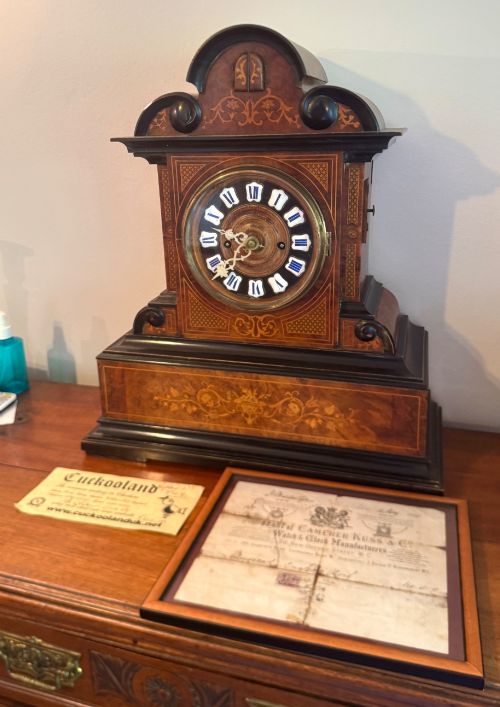
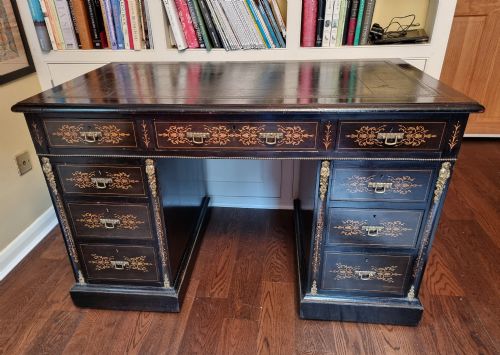
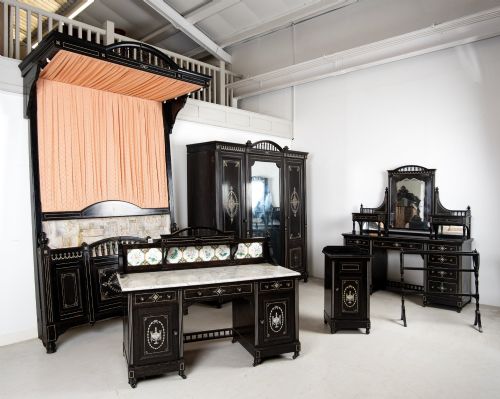
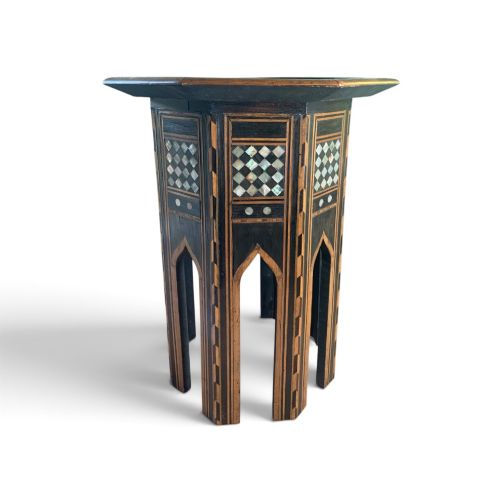
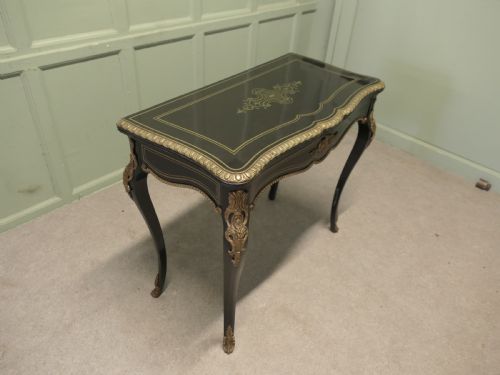
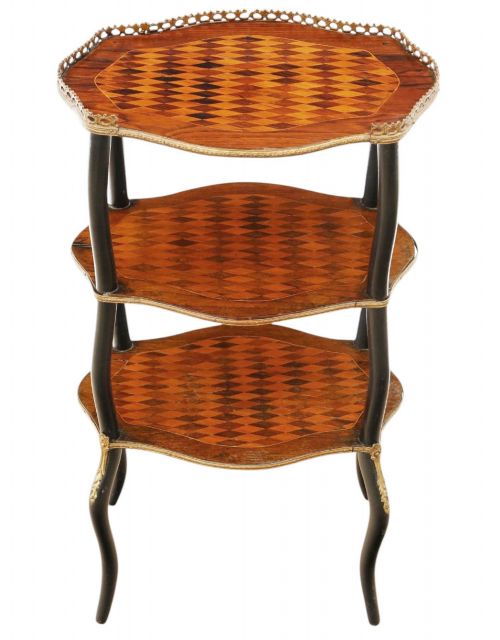

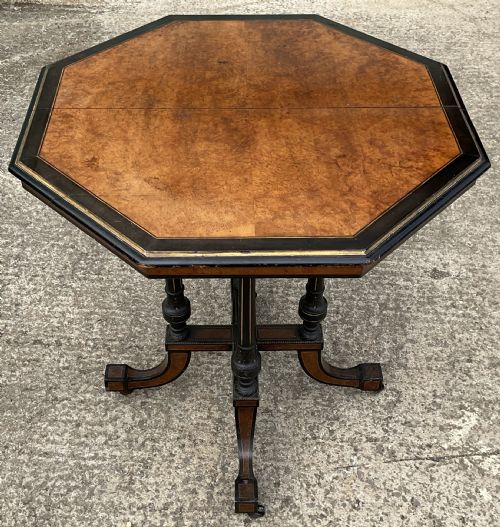
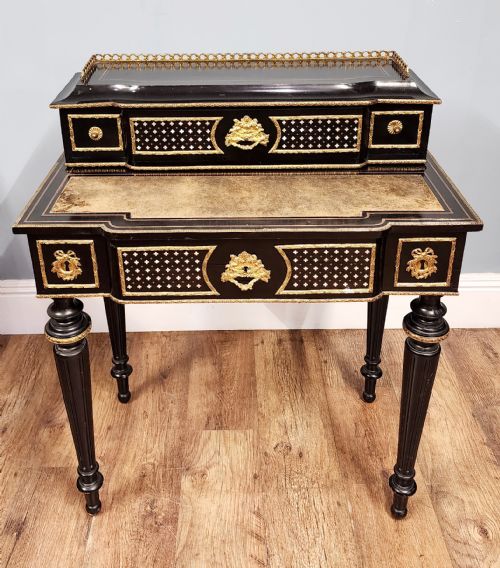
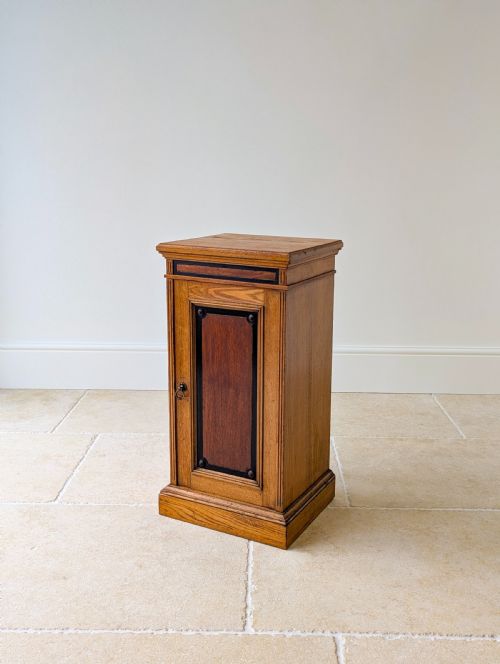


Ebonised Inlaid Table
An ebonised inlaid table brings together dark, polished surfaces and precise contrasting ornamentation, drawing the eye in any room.
Ebonised Inlaid Table
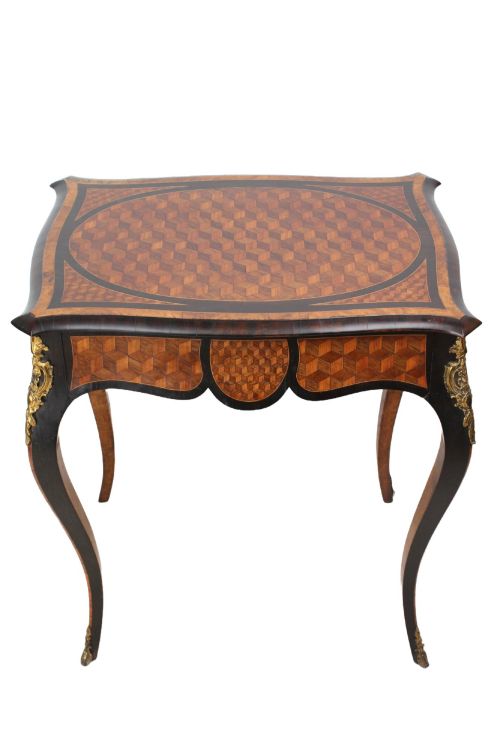
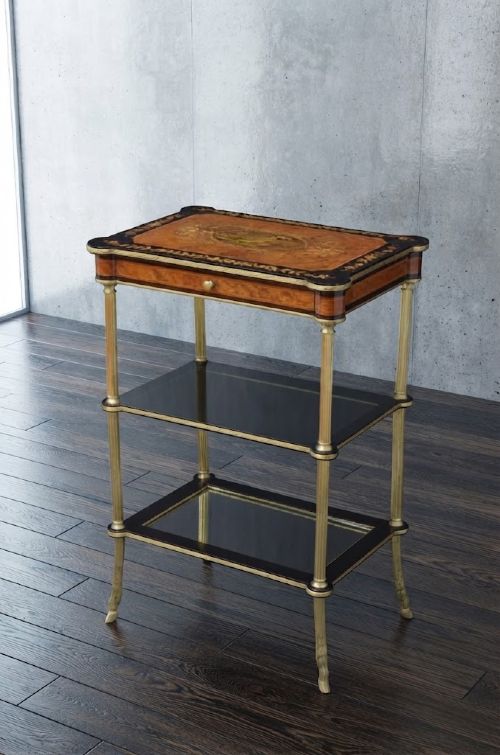
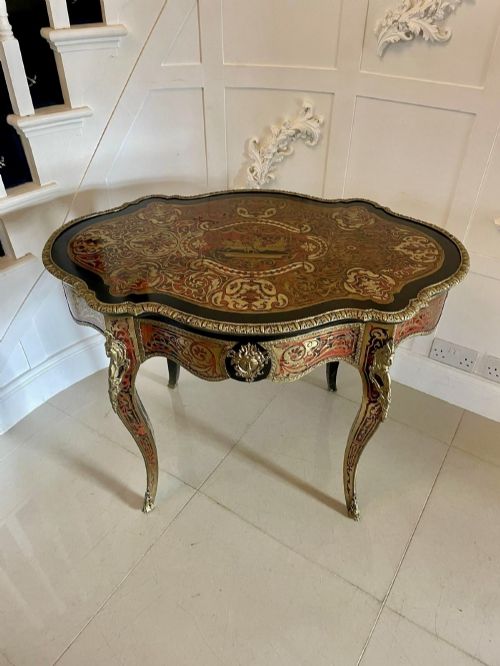
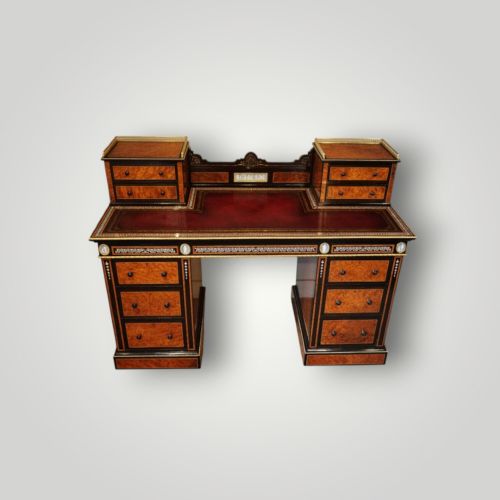
When searching for an ebonised inlaid table, collectors encounter pieces primarily originating from the nineteenth century, including Victorian and Napoleon III periods. These items appear in various forms, most commonly as centre tables, occasional tables, side tables, and games or writing tables.
French workshops and English makers alike produced these designs, often incorporating diverse influences such as Moorish Revival and Aesthetic Movement styles. The domestic interior benefits greatly from such pieces, which function as both practical furniture and decorative focal points.
Materials and Technique
The construction relies heavily on ebonised wood as a dark base, contrasted against intricate inlay work using brass, mother of pearl, ivory, bone, and lighter woods like walnut and amboyna. Artisans frequently added ormolu mounts and gilt bronze details to enrich the structural composition.
Cabinetmakers utilised specialised marquetry and parquetry techniques to embed fine geometric or floral patterns directly into the dark timber surface. French and English makers combined these contrasting materials to achieve high visual depth and textural variety.
Listings feature nineteen-century periods alongside materials like burr walnut, tortoise-shell, and ormolu across various side and centre tables.
Assessing Quality
Quality rests upon the precision of the inlay work and the depth of the ebonised finish applied to the timber. Superior examples exhibit tightly fitted brass, shell, or wood segments with minimal gaps and harmonious grain alignment.
The refinement of cast ormolu mounts and the integrity of secondary woods further distinguish finer pieces from standard production. Master workshops maintained strict standards in joinery and surface preparation that remain visible in the finished proportions.
JAS Shoolbred·Jackson & Graham·Edwards & Roberts·Liberty & Co·Maison Millet
The Ebonised Inlaid Table Glossary
- Ebonised
- Wood treated to imitate ebony, usually through staining or painting to achieve a deep black finish. This technique became popular during the Victorian and Napoleon III periods for dramatic contrast.
- Marquetry
- Decorative veneer applied to furniture structures in patterned wood designs. Craftsmen cut various tinted woods together to form pictorial or geometric motifs.
- Ormolu
- Gilded bronze mounts applied to furniture edges, feet, and corners. This decorative hardware elevates the status of nineteenth-century French and English tables.
- Parquetry
- Geometric mosaic woodwork used for tabletops and panels. It differs from marquetry by utilising strict angular shapes like squares, triangles, and diamonds.
- Boulle
- A specific type of marquetry utilising tortoiseshell and brass inlay. Named after André-Charles Boulle, it reappeared frequently in nineteenth-century Revival pieces.
Ebonised Inlaid Table: Frequently Asked Questions
Where were these tables placed?
These pieces usually served as centre tables in grand reception rooms or as occasional tables in drawing rooms. Their finished all-round designs allowed them to stand free of walls.
Smaller variants functioned as writing desks, sewing tables, or display surfaces for decorative objects and clocks.
How do I date an ebonised table?
Dating relies on combining the stylistic period, such as Victorian or Napoleon III, with construction methods and secondary timbers. Nineteenth-century pieces often reflect specific revival movements like Louis XV or the Aesthetic Movement.
Maker marks, where present, help pinpoint the exact workshop or retail house responsible for the piece.
What inlay materials are common?
Common inlay elements include brass lines, mother of pearl, ivory, bone, and contrasting light woods like boxwood or satinwood. These materials were chosen for their bright contrast against the dark ebonised background.
French pieces frequently feature gilt brass and tortoiseshell, while English and Anglo-Indian variants often incorporate bone and mother of pearl.
How do I care for ebonised wood?
Maintenance requires gentle dusting with a soft, dry cloth to protect the dark polished surface from scratches. Avoid using abrasive cleaning agents or excessive moisture that might damage delicate inlay work.
Keeping the table away from direct sunlight and steady heat sources preserves both the ebonised finish and the underlying wood.