



Anglo Moorish Side Table
An anglo moorish side table brings nineteenth-century geometric carving and intricate inlay into a modern interior as a striking occasional piece.
Anglo Moorish Side Table
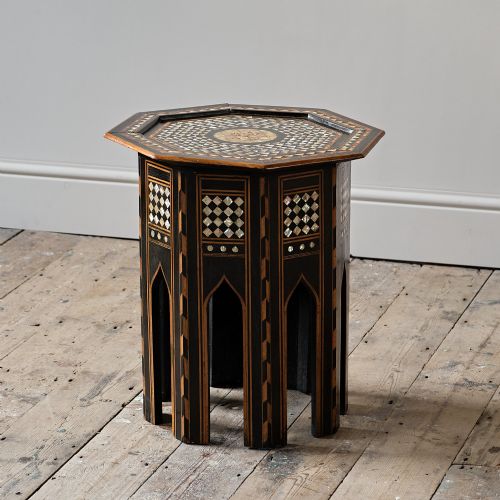
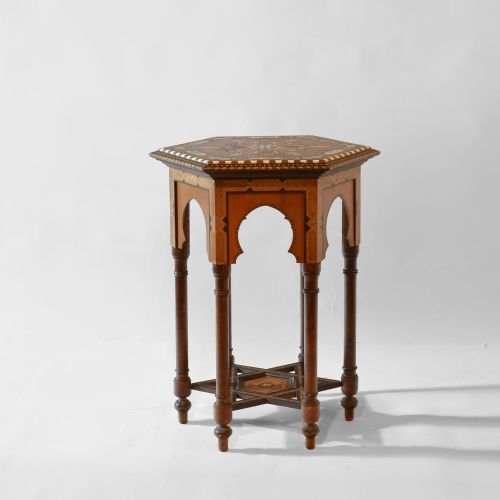
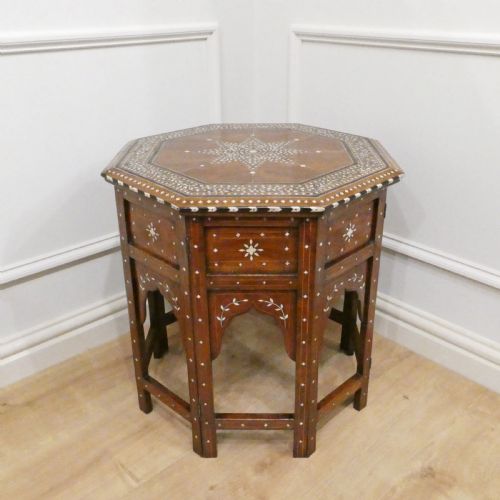
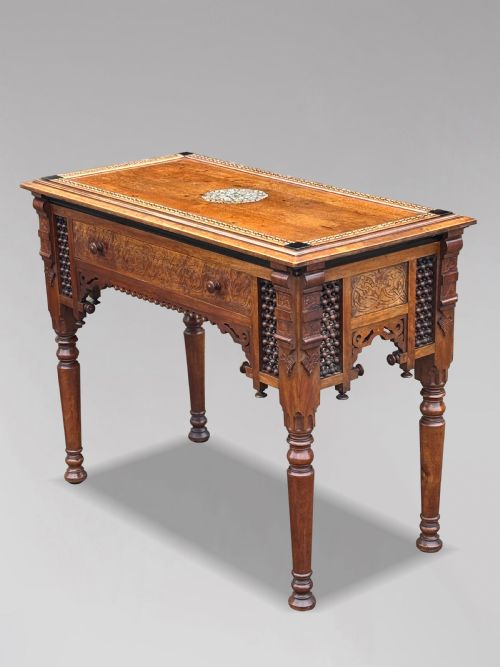
An anglo moorish side table combines British aesthetic tastes of the nineteenth century with traditional woodworking techniques from North Africa, India, and the Middle East. Buyers encounter octagonal, hexagonal, and square occasional forms designed to function as lamp tables, coffee tables, or games tables.
The majority of these pieces originate from the late nineteenth and early twentieth centuries, spanning the Victorian era through the nineteen-thirties. Maker attribution frequently points to Liberty style workshops alongside regional production in Hoshiarpur, Damascus, and Morocco.
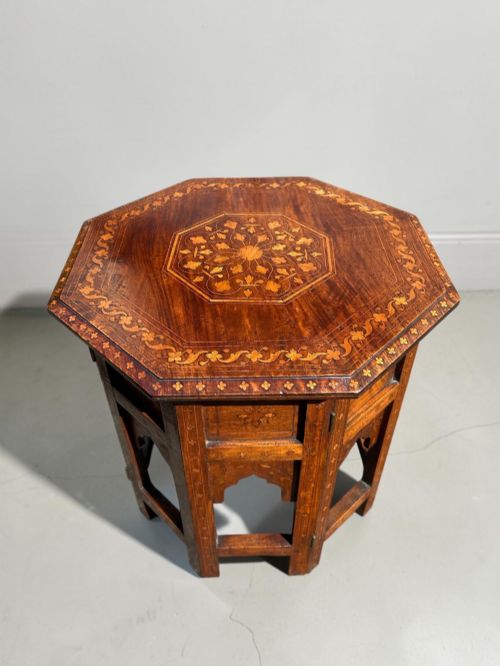
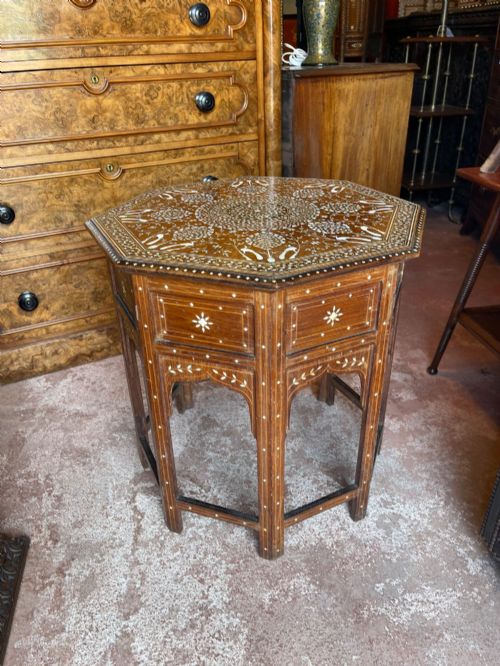
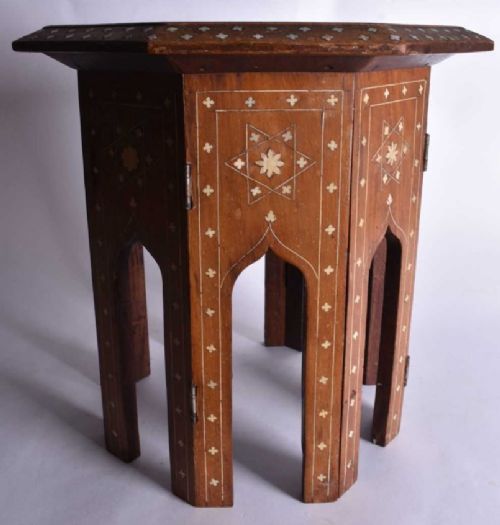
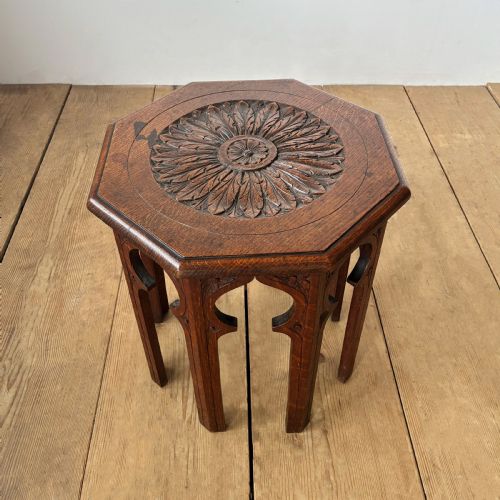
Octagonal folding tables dominate the selection, often featuring low profiles suitable for use beside seating. These items reflect a Victorian fascination with exoticism, resulting in compact furniture built for drawing rooms and studies.
Materials and technique
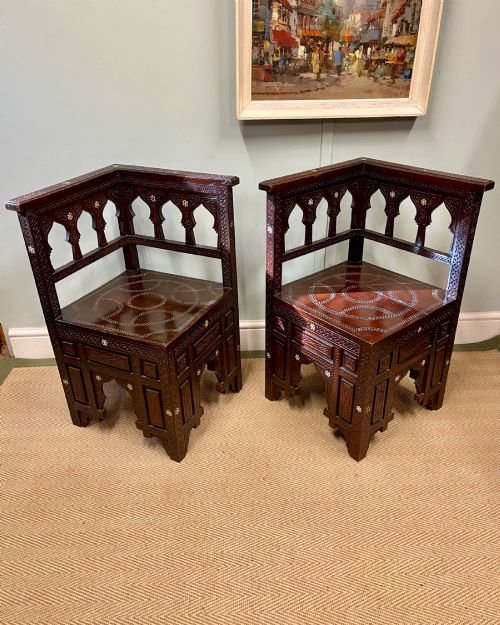
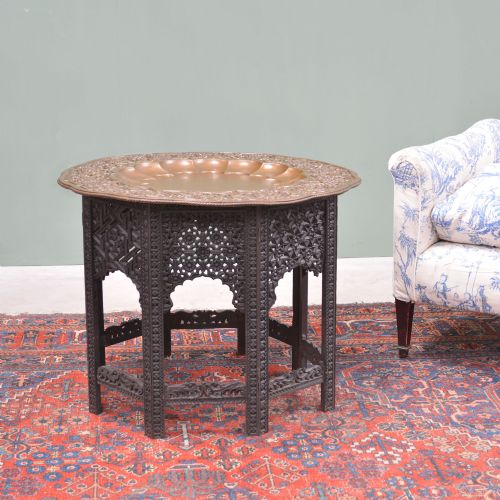
Hardwoods such as teak, walnut, mahogany, rosewood, and sandalwood form the structural carcase of these tables. Artisans carved these dense timbers deeply into geometric fretwork and dense interlacing patterns.
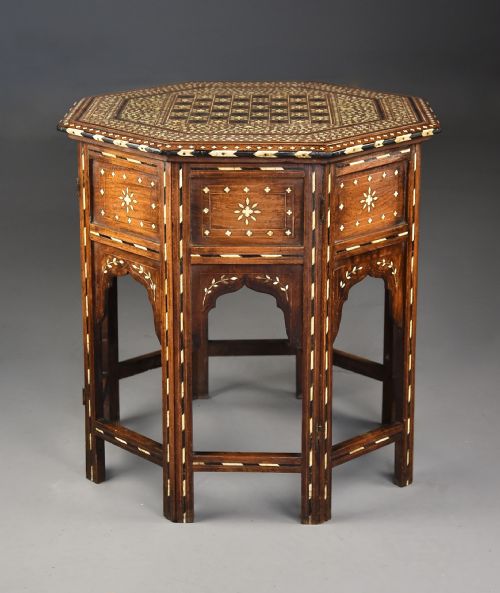
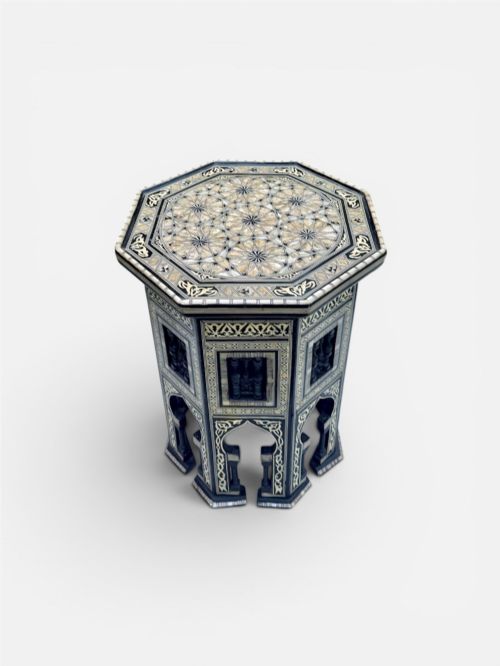
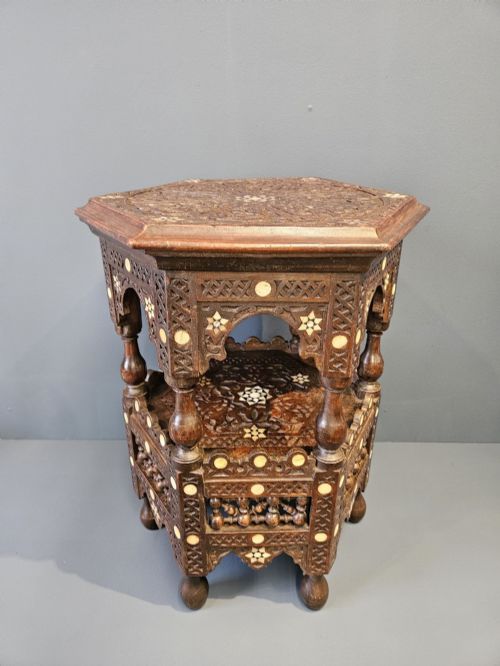
Inlay work defines the surface decoration, utilising contrasting organic materials like bone and mother-of-pearl. These pieces of shell and bone are cut into intricate geometric tiles and embedded firmly into the wooden ground.
Folding mechanisms and drop flaps appear frequently, constructed to allow the octagonal or hexagonal tops to collapse flat for storage or transport. Brass elements and copper tops also feature occasionally to accent the wooden frames.
Anglo Moorish Side Table Retail Price Guide 2026
Typical asking prices for anglo moorish side table among the pieces listed under this phrase on Sellingantiques today, from the lower quarter to the upper quarter. They describe what is for sale here now, not the wider market.
Folding tables arrived ready to pack flat, designed for Victorian travellers who simply could not leave their intricate joinery behind.
Distinctions in execution
The precision of the surface inlay marks the difference between standard production and superior craftsmanship. Finer examples display tightly fitted bone and mother-of-pearl tiles with minimal filler, whereas lesser pieces show wider gaps and simpler stamped motifs.
Depth and crispness of the hand carving separate the work of skilled regional ateliers from mass-produced items. Sharp undercutting and symmetrical geometric balance indicate a higher standard of workshop output.
Structural stability in the folding bases and integrity of the joints determine longevity. Tables that retain their original hinges and tight geometric alignment without wobble represent the upper tier of the range.
The Anglo Moorish Side Table Glossary
- Hoshiarpur
- A city in Punjab, India, known for producing intricately carved wooden furniture inlaid with bone. Tables from this region typically feature dense floral and geometric piercing.
- Damascus
- A Syrian centre for metal and wood craftsmanship where artisans produced inlaid tables using mother-of-pearl. These items often display star and polygon motifs.
- Aesthetic Movement
- A late nineteenth-century British design movement that championed art for art's sake and embraced exotic decorative influences. Furniture from this circle frequently utilised ebonised finishes.
- Octagonal
- Having eight sides. This geometric shape is standard for the tops of these occasional tables to accommodate complex border inlay.
- Fretwork
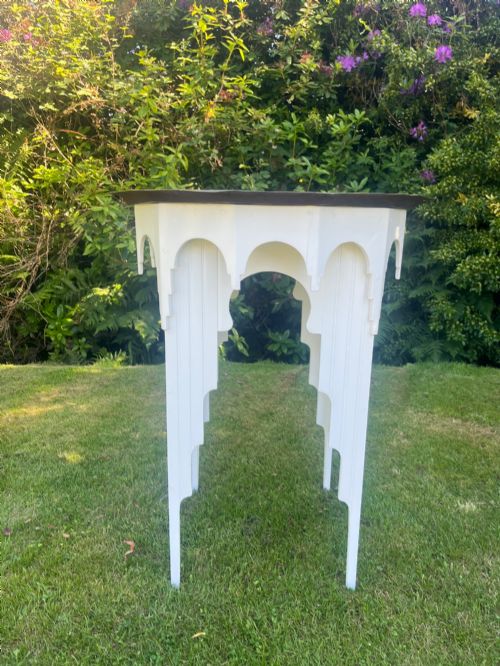
- Ornamental design created by cutting patterns through wood with a scroll saw or chisel. This technique creates the openwork screens characteristic of Moorish styles.
Anglo Moorish Side Table: Frequently Asked Questions
Where should I place an anglo moorish side table?
These tables suit sitting rooms as low lamp stands or coffee surfaces where their detailed tops remain visible. Their compact footprints allow them to fit easily beside armchairs or sofas.
Because many feature folding bases, they offer flexibility for occasional use in tighter spaces or hallways.
How do I clean an inlaid wooden table?
Dust the carved surfaces regularly with a soft, dry brush to prevent dirt settling into the recesses of the fretwork. Avoid wet cloths or harsh chemical polishes that can loosen bone and mother-of-pearl inlay.
Apply a microcrystalline wax sparingly on the hardwood frame to nourish the timber without harming the delicate mosaic work.
Are these tables sturdy enough for daily use?
Most of these occasional tables are built from solid hardwoods and withstand normal placement of books or lamps. However, folding versions require careful handling when moving to prevent strain on the hinges.
Placing heavy objects on folding stands can destabilise the central leg assembly over time.
How can I identify a Liberty and Co piece?
Liberty style tables often feature ebonised or dark lacquered finishes combined with subtle Moorish or Aesthetic Movement shapes. Documentation or attribution relies on characteristic joinery and stylistic links to London retail catalogues from the late nineteenth century.
Many pieces lack physical stamps, so identification depends on matching documented design forms and material quality.