
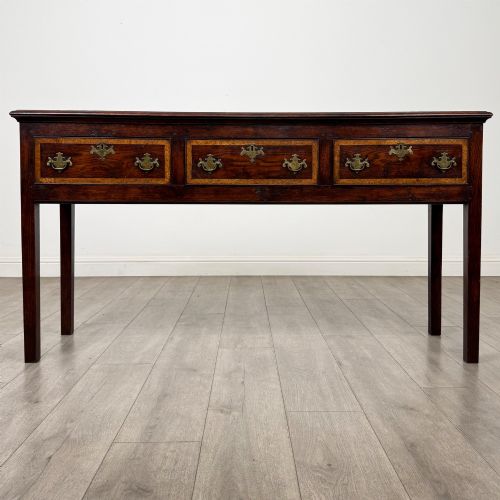
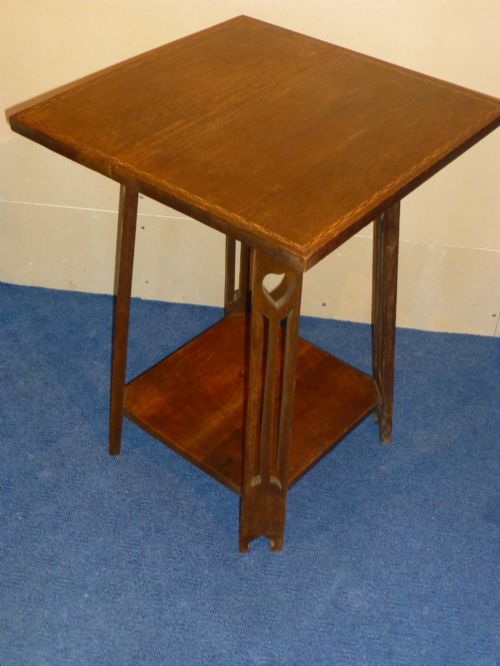
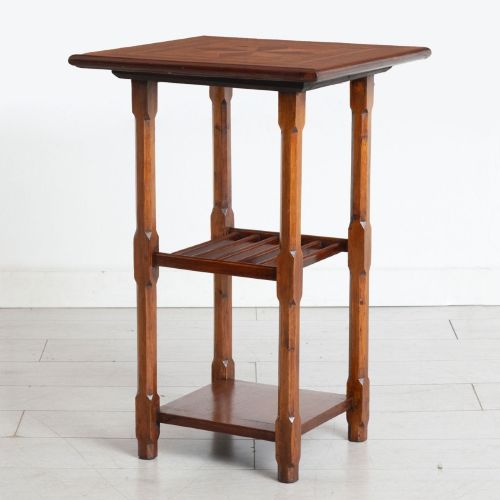
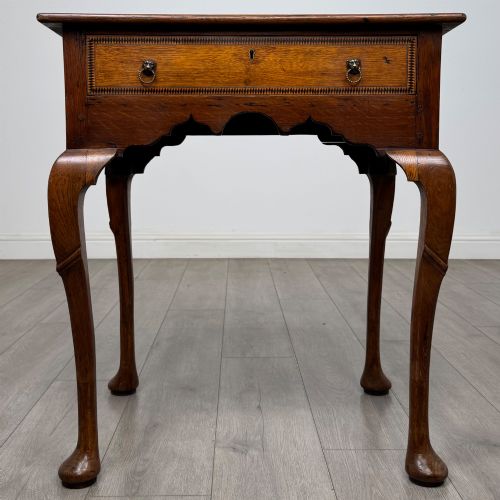
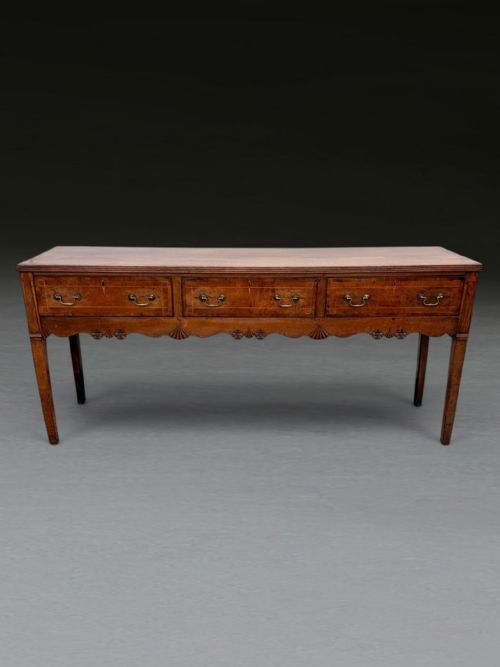
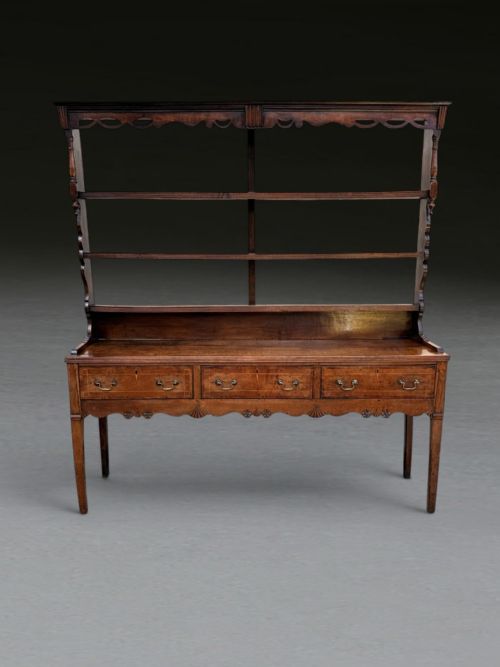
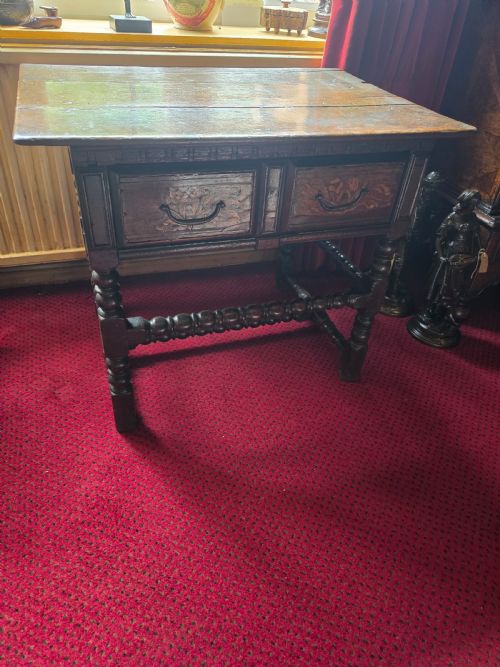
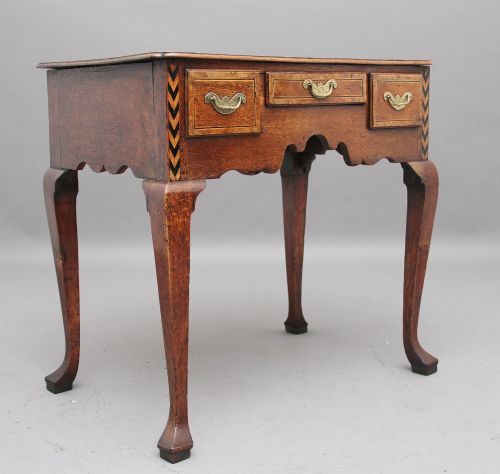


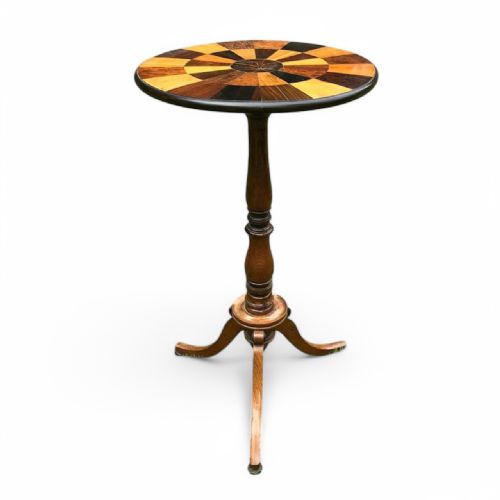
Inlaid Oak Side Table
These inlaid oak side table examples combine sturdy timber with decorative contrast, offering practical surface space alongside historic craftsmanship.
An introduction to the inlaid oak side table
When you search for an inlaid oak side table, you encounter practical furniture pieces created from durable oak timber and embellished with decorative contrasting details. These items range from regional Welsh country pieces to refined Georgian examples and later Arts and Crafts or Moorish revival designs.
You are most likely to meet nineteenth-century or Georgian versions on this page, reflecting both country house utility and later artistic movements. Forms include round occasional tables, lowboys, hall tables, and compact side tables that integrate marquetry, timber inlay, or mother-of-pearl.
The combination of a robust oak carcass and decorative surface ornamentation defines this category, bridging the gap between utilitarian storage and aesthetic expression. Makers and workshops utilised contrasting woods to elevate simple domestic furniture into focal points.
Materials and construction methods
Makers constructed these tables primarily using solid oak timber, relying on its natural strength and distinct grain patterns for the primary structure. Artisans then integrated decorative elements such as brass fittings, mother-of-pearl, and diverse wood veneers to create intricate patterns across the surfaces.
Techniques ranged from traditional country joinery found in eighteenth-century Welsh lowboys to specialised marquetry and timber inlay seen in later nineteenth-century revival styles. These decorative veneers were carefully recessed into the solid oak top to ensure a flush, enduring finish.
Retail Price Guide 2026
Typical UK retail prices for inlaid oak side table, calculated from the Sellingantiques database of over a million retail prices indexed since 2003. This retail price guide relies exclusively on Sellingantiques data; no external sources or auction records are used, so the figures do not describe the wider market.
Listings feature oak tables spanning the Georgian era, the nineteenth century, and the Arts and Crafts movement, incorporating brass and mother-of-pearl.
Distinguishing quality across the range
The standard of an inlaid oak side table depends heavily on the precision of the joinery and the complexity of the decorative inlay. Superior examples demonstrate seamless integration of contrasting woods and mother-of-pearl, where the decorative motifs remain stable within the solid timber substrate over centuries.
Proportion and material selection further separate simpler country utility items from ambitious workshop productions. A balanced form, combined with refined timber selection and crisp inlay work, distinguishes the finest interpretations from standard domestic furniture.
Liberty & Co.·William Birch
The Inlaid Oak Side Table Glossary
- Oak
- A durable hardwood native to temperate regions, prized for its strength and prominent growth rings. It forms the structural foundation for the majority of these pieces.
- Inlay
- A decorative technique where pieces of contrasting material, such as wood, brass, or mother-of-pearl, are inserted into a recessed surface to form a pattern. This creates visual richness on otherwise plain timber.
- Lowboy
- A small table with drawers, typically standing on four legs, originating in the eighteenth century. These practical items often served as dressing or side tables in country homes.
- Marquetry
- The art of applying veneer pieces to a structure to form decorative patterns and pictures. It differs from basic inlay by covering entire surfaces with fitted wooden elements.
- Georgian
- A period spanning the eighteenth and early nineteenth centuries, defined by architectural proportion and classical revival styles. Furniture from this era often balances utility with refined decorative restraint.
Frequently Asked Questions
What is an inlaid oak side table?
An inlaid oak side table is a functional domestic furnishing built from durable oak and decorated with contrasting wood veneers, brass, or mother-of-pearl. These surfaces display patterns ranging from simple geometric borders to complex marquetry.
Craftsmen across different centuries adapted these tables for halls, bedrooms, and living spaces, combining everyday utility with decorative appeal.
How were these tables used originally?
Historically, these tables served practical roles in domestic interiors as surfaces for lighting, serving, or holding personal items. Versions with drawers, such as lowboys, also functioned as writing or dressing desks.
Their compact size allowed them to fit easily into hallways, parlours, and bedchambers where larger furniture pieces would prove impractical.
How do I live with antique oak?
Living with antique oak involves placing tables away from direct heat sources and rapid humidity changes to protect the timber and delicate inlay work. Regular gentle dusting and occasional waxing maintain the natural lustre of the wood.
These durable pieces integrate smoothly into modern interiors, functioning effectively as bedside surfaces, hall stands, or occasional accent tables.