



Oak Window Seat
An oak window seat brings solid timber and tailored upholstery to a bright recess, combining sturdy everyday seating with period craftsmanship.
The Oak Window Seat
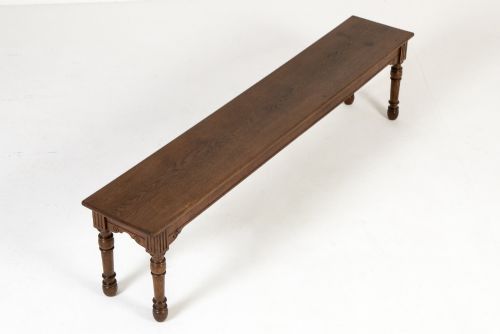
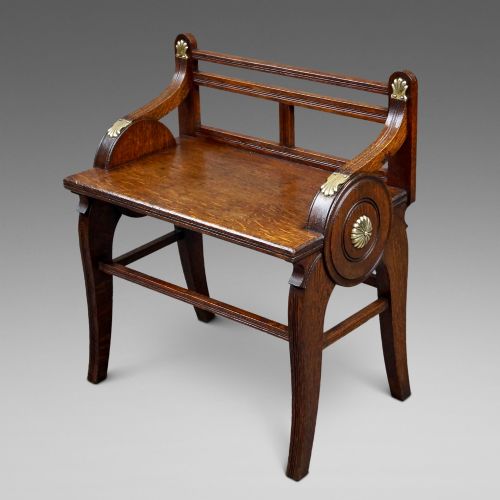
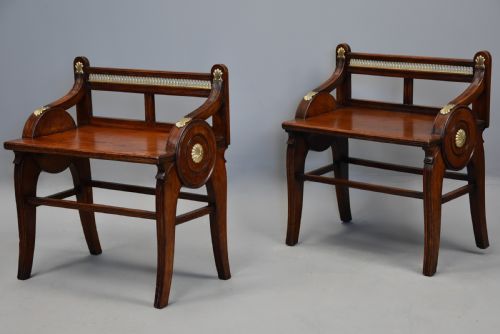
When you search for an oak window seat, you are looking at low benches and long stools designed specifically to sit beneath sills, drawing character from nineteenth-century country houses and town residences. The pieces meeting you on this page span the Regency era, the Victorian period, and the later Arts and Crafts movement, often doubling in utility as hall benches or compact settles.
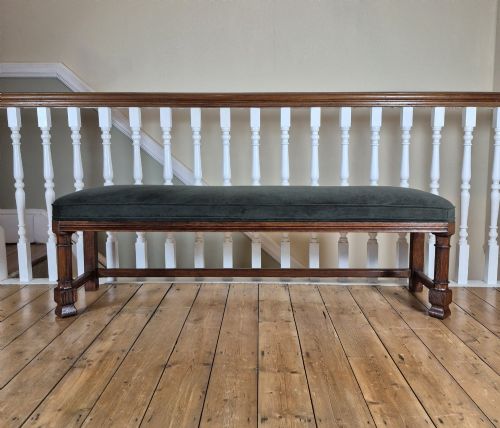
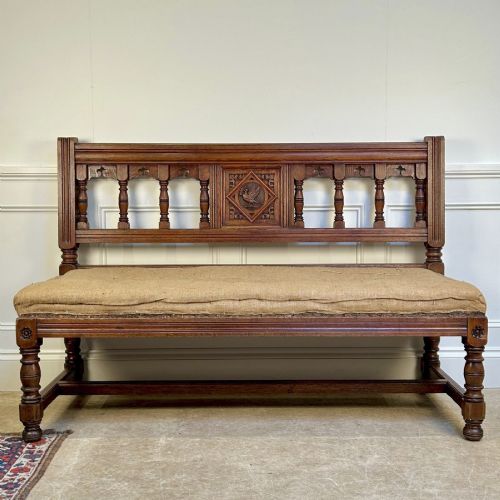
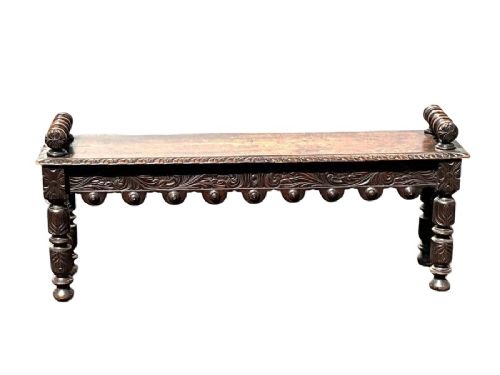
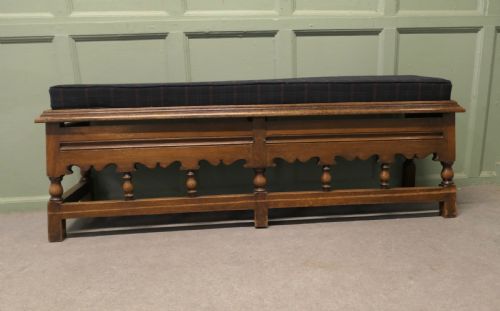
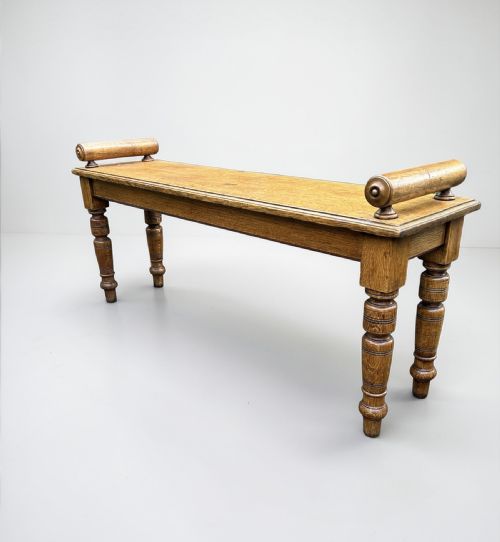
The standard form relies on a solid timber frame, sometimes detailed with Gothic tracery, turned bobbin legs, or clean-lined movement joinery. You will encounter upholstered tops in velvet or leather alongside plain plank surfaces, reflecting whether the piece was meant for formal drawing rooms or practical hallways.
Materials and Construction
The primary timber across these pieces is oak, frequently paired with secondary woods like elm for seats or brass for decorative mounts and handles. Joinery methods lean on traditional pegged mortise and tenon joints, ensuring structural rigidity across long spans without excessive bulk.
Upholstered versions integrate textile coverings such as velvet or leather over padded foundations, while wooden versions showcase carved panels, turned spindle supports, or clean plank tops. The integration of ebonised details and brass accents appears in select Regency and later nineteenth-century examples.
Retail Price Guide 2026
Typical UK retail prices for oak window seat, calculated from the Sellingantiques database of over a million retail prices indexed since 2003. This retail price guide relies exclusively on Sellingantiques data; no external sources or auction records are used, so the figures do not describe the wider market.
Apprentice pieces let young trainees show off their joinery skills by building tiny, perfectly proportioned window seats.
Judging Quality
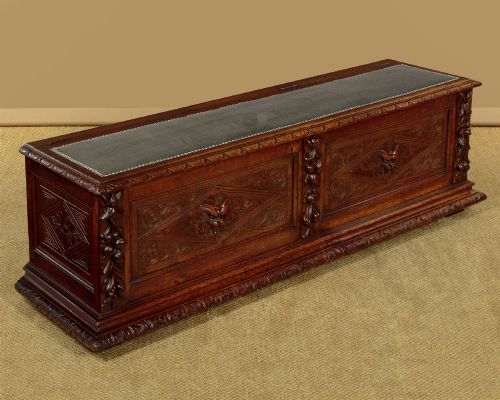
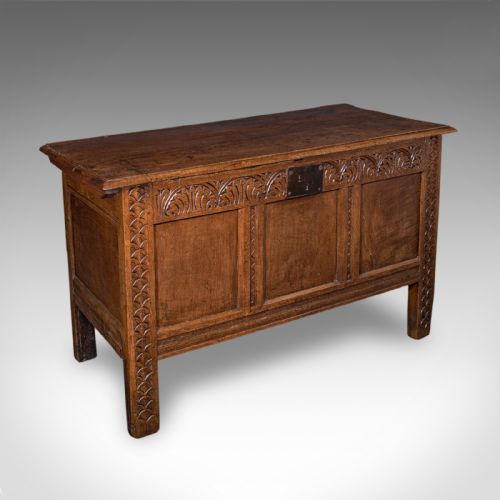
Quality in an oak window seat rests upon the selection of the timber and the crispness of any carved detailing, from geometric panels to Gothic arches. Pieces at the upper end show tight, straight grain in the oak and hand-carved elements that integrate cleanly into the structural frame rather than appearing as applied decoration.
The integrity of the construction also separates fine examples from ordinary utility pieces, visible in the tightness of the joints and the handling of secondary woods like elm. Upholstered versions reveal quality in the firmness of the build and the selection of appropriate textiles like velvet or leather that suit the period style.
Liberty and Co·Shoolbred
The Oak Window Seat Glossary
- Gothic Revival
- A nineteenth-century design style drawing on medieval architectural motifs such as pointed arches and heavy carved tracery. It appears frequently on Victorian oak seating.
- Arts and Crafts
- A movement prioritising traditional craftsmanship and simple forms over mass production. Pieces from this tradition often feature exposed joinery and honest timber construction.
- Bobbin Turning
- A method of lathe-turning wood into a series of rounded spheres resembling bobbins or spools. This decorative turning is common on Victorian leg supports.
- Regency
- A style period spanning the early nineteenth century defined by classical restraint and occasional Egyptian or Gothic revivals. Examples often feature clean architectural lines or X-frame supports.
- Apprentice Piece
- A small-scale model or scaled-down furniture item created by a trainee to demonstrate mastery of joinery techniques. These pieces mirror the design of full-sized window seats.
Frequently Asked Questions
What is an oak window seat used for?
These pieces provide low-profile seating designed to fit beneath window sills or along narrow hallways. They serve as functional benches for putting on shoes or as decorative ledges in living spaces.
Historically, they also doubled as blanket chests or hall benches depending on the depth of the frame and whether the top lifted for storage.
How do I date an antique oak window seat?
Dating relies on identifying stylistic markers such as Gothic Revival tracery, Arts and Crafts simplicity, or Regency X-frames. Tool marks, timber selection, and construction methods also help place a piece in the nineteenth century.
Comparing the turned legs, upholstery style, and joint construction against documented pieces from the same era provides further clarity on the age of the woodwork.
Where should I place a window seat at home?
Positioning one beneath a low window makes the most of natural light while keeping floor space open in a room. They also function effectively in entryways as hall benches for daily use.
Ensure the depth of the bench matches the recess of your window or the proportions of your hallway to maintain a balanced room layout.
Are these seats comfortable for daily sitting?
Upholstered versions featuring velvet or leather pads offer cushioned support suitable for relaxing by a window. Plain plank or carved wooden versions provide a firmer sit intended for shorter periods.
Adding loose squab cushions can soften wooden plank surfaces if you plan to use the bench for extended reading or lounging.