
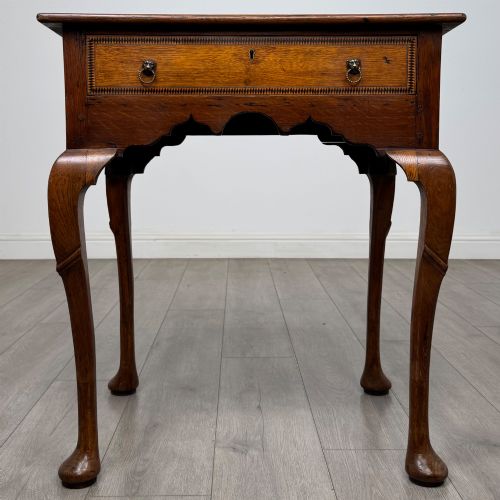
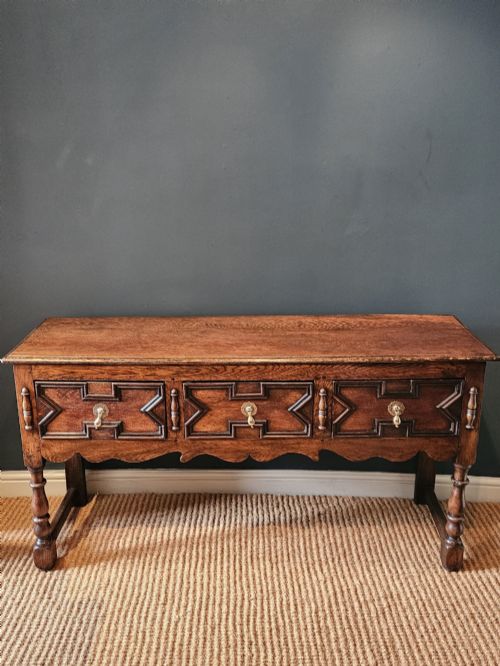
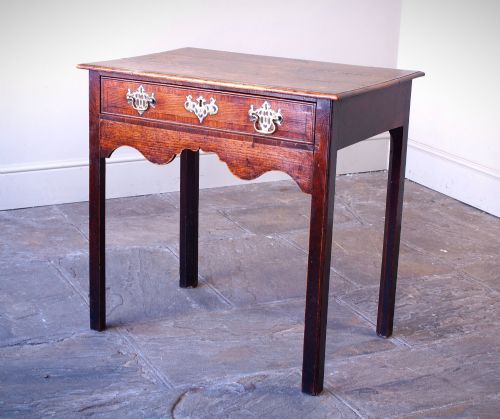
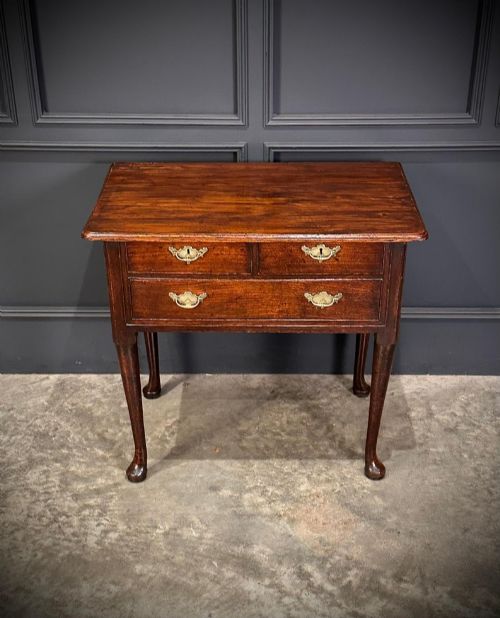

Carved Oak Lowboy Table
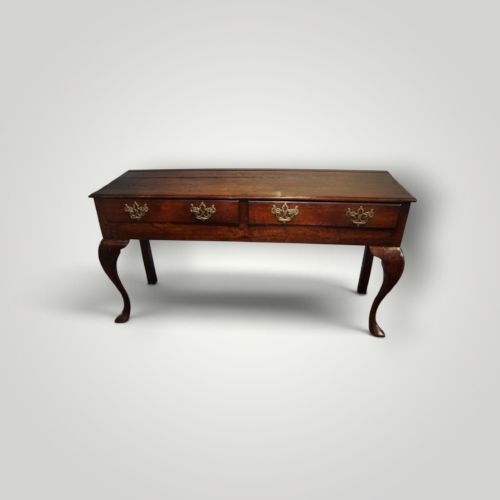
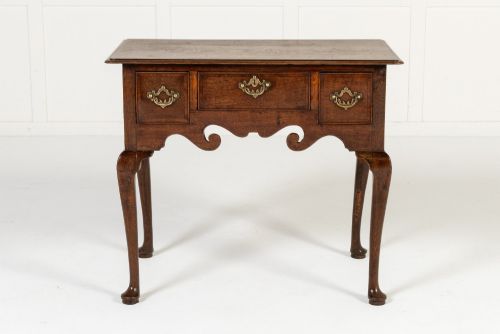
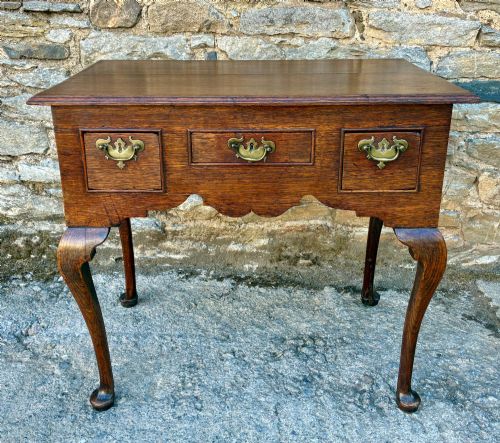
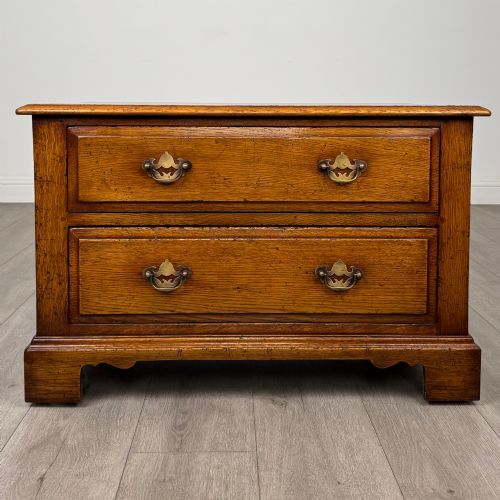
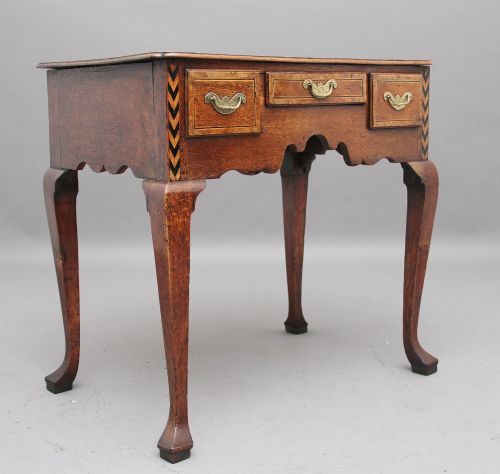
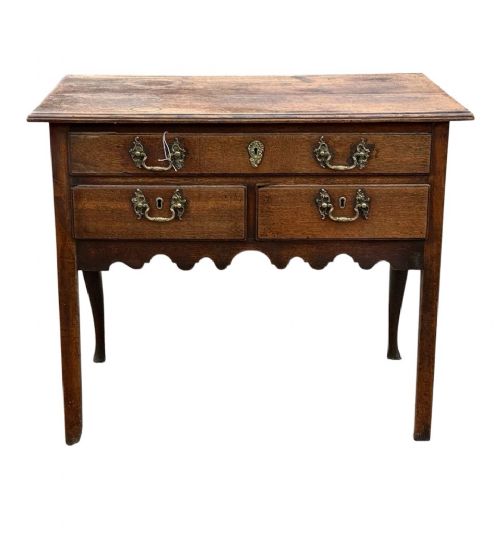
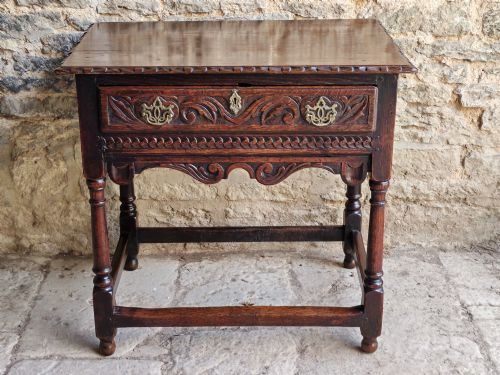
These pieces give you a carved oak lowboy table, offering compact drawers and period proportions for a hallway or bedroom.
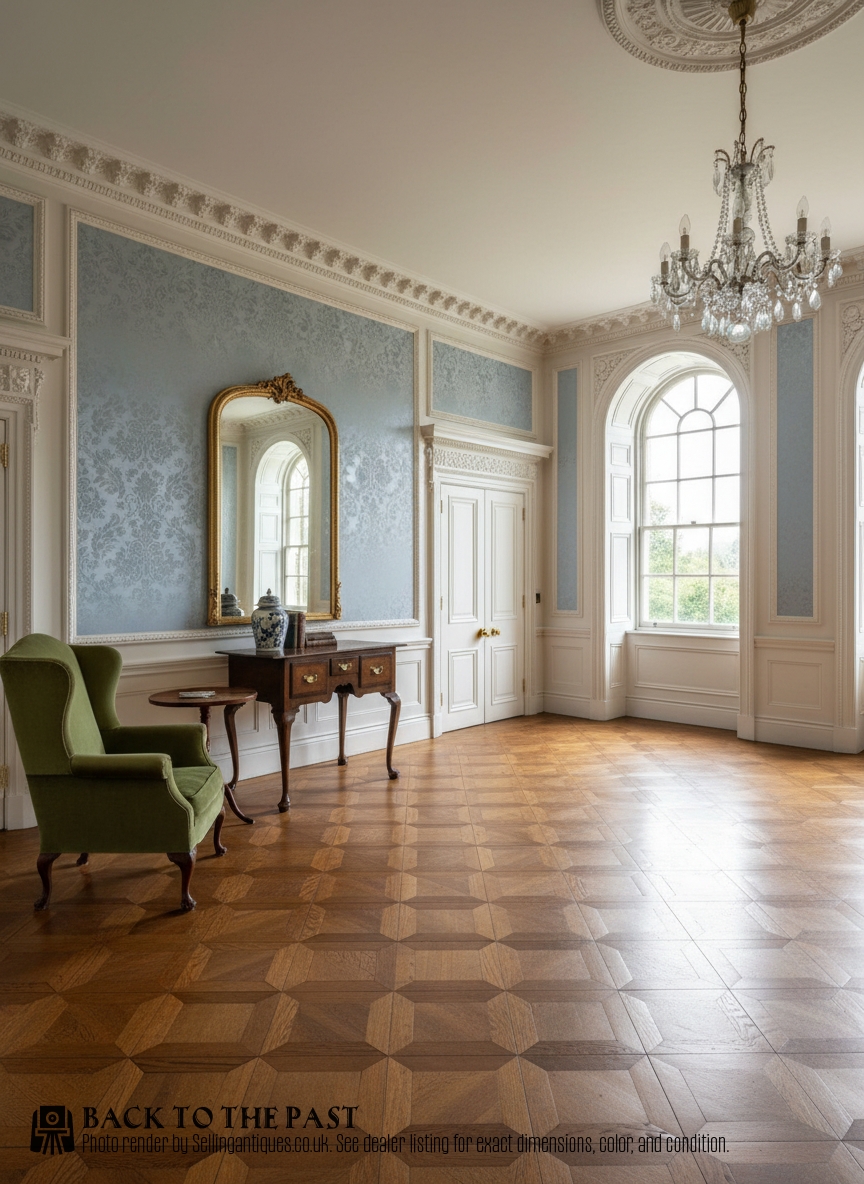
Carved Oak Lowboy Table
A carved oak lowboy table provides a low side table fitted with drawers, originating primarily in the seventeenth and eighteenth centuries during the Georgian, Queen Anne, and William and Mary periods. You will encounter these forms catalogued variously as side tables, dresser bases, or dressing tables.
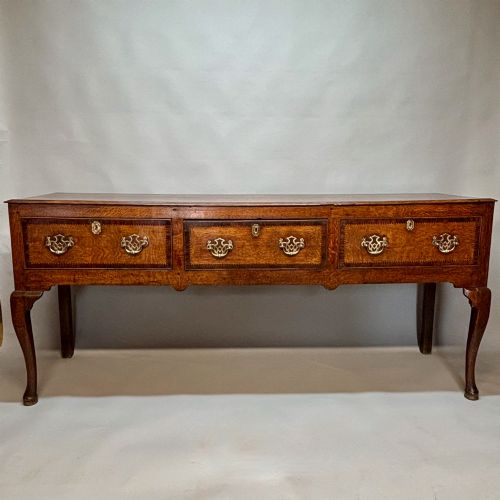
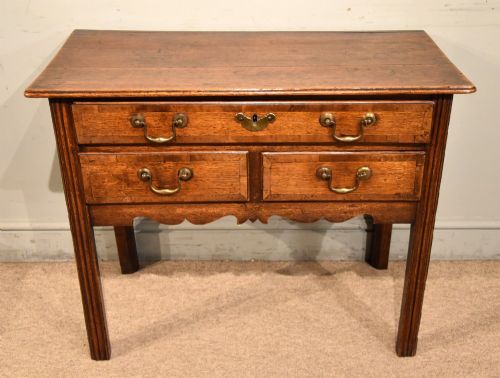
The most common versions on this page date from the eighteenth century and feature three drawers arranged beneath a planked top. Regional variations appear from Wales and the Isle of Man alongside standard English country workshop pieces.
Makers such as Gillows contributed to the later tradition, while other examples date to the Edwardian era and the twentieth century in traditional styles. Buyers select these items for their versatility as writing tables, lamp tables, or small dressing surfaces.
How they were made
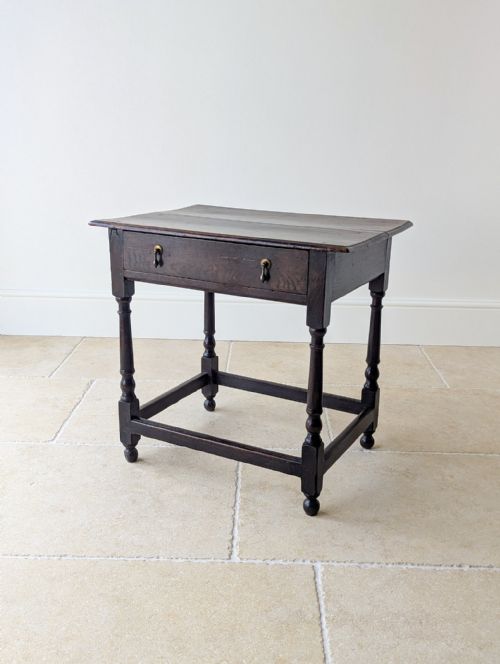
Carpenters built these tables predominantly from solid oak, occasionally incorporating fruitwood, walnut, or burr walnut veneer for drawer fronts and decorative surfaces. Timber inlay added contrasting tones to the primary wood structure.
Hardware typically included brass drop handles and escutcheons secured to drawer mounts, while structural joints relied on pegged mortise and tenon construction. Iron fastenings also reinforced internal framing where necessary.
Carved Oak Lowboy Table Retail Price Guide 2026
Typical asking prices for carved oak lowboy table among the pieces listed under this phrase on Sellingantiques today, from the lower quarter to the upper quarter. They describe what is for sale here now, not the wider market.
Object types recorded include lowboys, side tables, dresser bases, writing tables, and lamp tables.
What varies in quality
The sophistication of the surface carving distinguishes finer examples from plain utilitarian tables, with crisp detail on friezes and drawer fronts indicating higher workshop standards. Geometric mouldings and panel arrangements also reveal the skill of the original joiner.
Proportion and leg form dictate the visual balance of the piece, ranging from simple straight uprights to shaped cabriole legs with pad feet. The choice of secondary timbers, such as fruitwood accents or figured walnut veneers, marks out superior construction.
Gillows
The Carved Oak Lowboy Table Glossary
- Lowboy
- A small low table with drawers, used historically as a dressing table or side table.
- Cabriole leg
- A furniture leg that curves out and then in, typically ending in a pad or hoof foot.
- Dresser base
- The lower section of a kitchen or dining room dresser, often functioning independently as a side table.
- Geometric moulding
- Raised wooden profiling applied in symmetrical patterns to drawer fronts and door panels.
- Timber inlay
- Pieces of contrasting wood fitted flush into the surface to form decorative patterns.
Carved Oak Lowboy Table: Frequently Asked Questions
What was a lowboy used for?
These tables served primarily as small dressing tables for personal grooming or as convenient side tables for writing and holding small household items. Their compact height and drawer space made them adaptable to various rooms.
Over time, owners moved them from bedrooms to hallways and living spaces where surface area and drawer storage were required without taking up significant floor space.
How do I tell a Georgian lowboy from earlier periods?
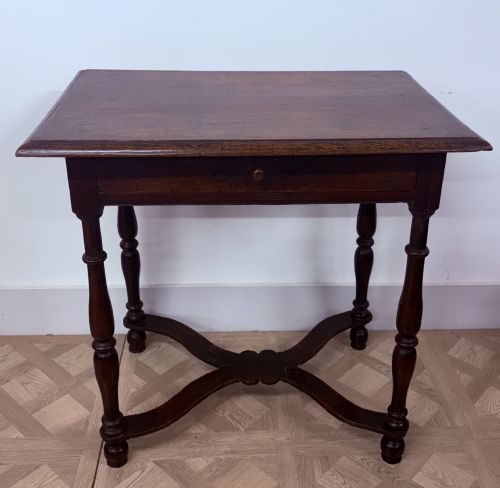
Seventeenth-century pieces from the William and Mary or Jacobean periods often display sharper geometric mouldings, heavily turned legs, and austere rectilinear structures. Oak and walnut were common during this phase.
Georgian examples frequently introduce cabriole legs, smoother drawer arrangements, and occasionally more refined carving along the apron or drawer rails.
Are all lowboys made of oak?
While oak is the predominant timber found in these listings, cabinetmakers also utilised fruitwood and walnut for specific surfaces and veneers. Burr walnut veneer appears on selected decorative drawer fronts.
Secondary timbers inside the drawer construction often include softer woods or local hardwoods depending on the regional workshop where the table was built.
Where were regional lowboys made?
Makers across England produced these tables, with distinct regional variants recorded from Wales and the Isle of Man. Country workshops adapted metropolitan styles to local tastes and available materials.
These regional pieces frequently display subtle variations in drawer configuration, leg profile, and the depth of carving compared to London-made items.