
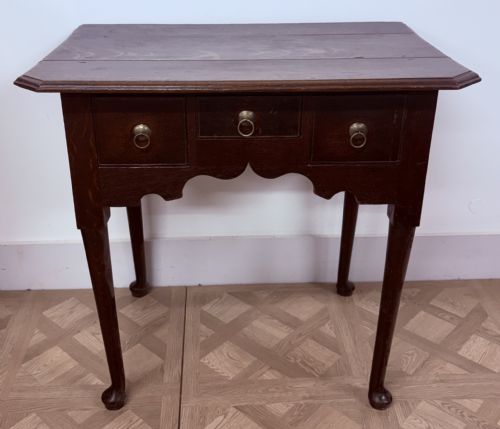
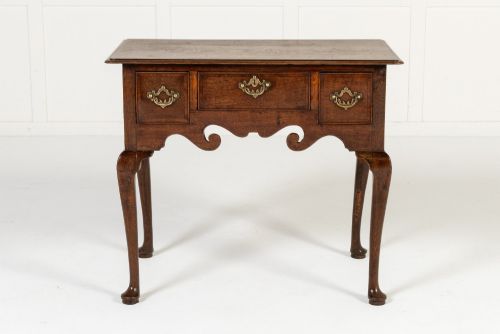
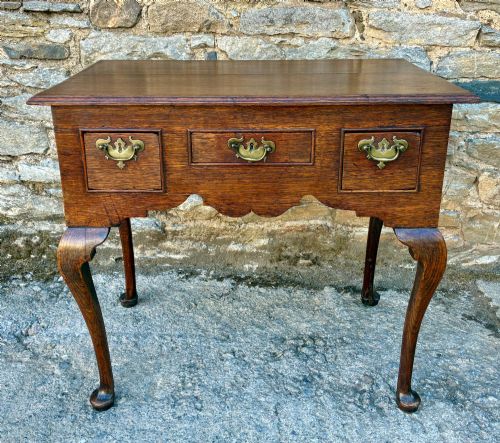
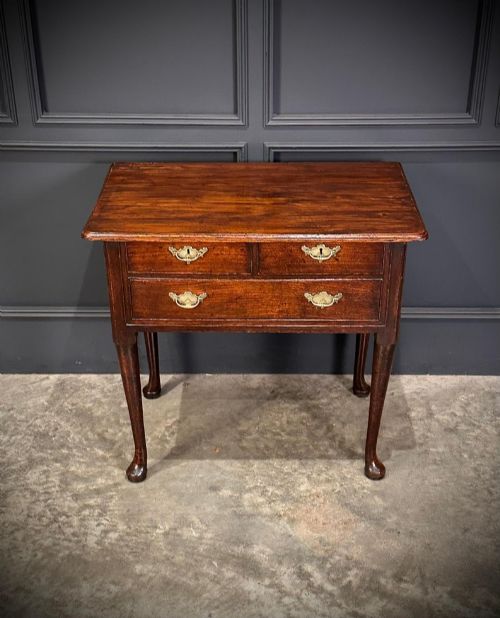


Queen Anne Oak Lowboy
These queen anne oak lowboy examples offer timeless utility and sturdy character, making them essential finds for period interiors.
What a queen anne oak lowboy is
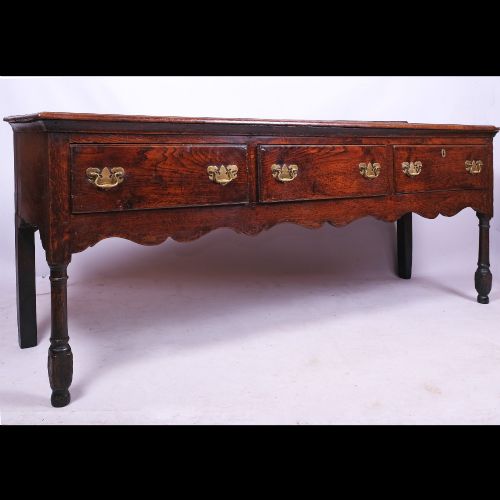
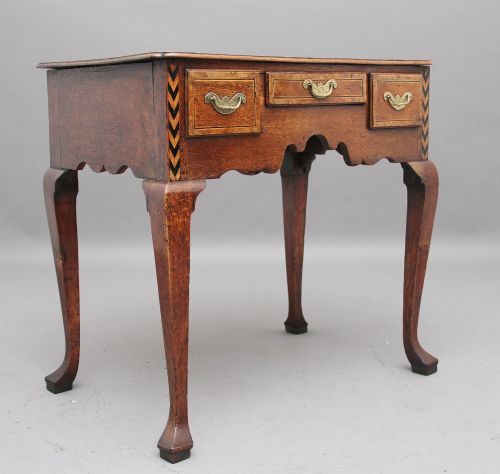
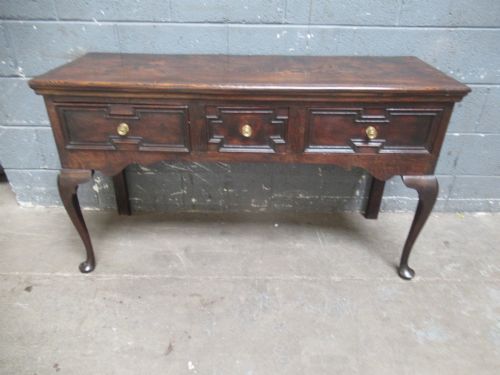
A queen anne oak lowboy functions as a compact side table or dressing surface, typically equipped with useful drawers beneath the top. You encounter these pieces most frequently in 18th century forms, spanning the Georgian era and earlier periods.
The construction draws on traditional side table and chest of drawers formats, originating primarily from English workshops. These items serve effectively in hallways, bedrooms, or reception spaces as console and lamp tables.
Makers from the early 18th century onwards shaped these objects to balance domestic practicality with restrained elegance. The survivals in this category reflect centuries of daily service in country houses and period properties.
How they were made
The primary material across these listings is solid oak, occasionally paired with secondary woods like elm and fitted with brass hardware. Artisans constructed the frames using traditional joinery methods suited to domestic furniture of the period.
Surfaces demonstrate the natural grain of timber, finished to highlight the warm tones characteristic of early 18th century cabinet making. Brass handles and escutcheons punctuate the drawer fronts, providing functional contrast to the wood.
Retail Price Guide 2026
Typical UK retail prices for queen anne oak lowboy, calculated from the Sellingantiques database of over a million retail prices indexed since 2003. This retail price guide relies exclusively on Sellingantiques data; no external sources or auction records are used, so the figures do not describe the wider market.
Early cabinet makers occasionally misjudged drawer depths, leaving enough room inside to hide a smuggled miniature.
What varies in quality
Distinctions in quality rest upon the proportion of the proportions, the integrity of the timber, and the retention of original brass fittings. Pieces retaining their early surface patination and authentic structural fixings command greater appreciation among collectors.
The refinement of the leg profile and the crispness of the drawer construction separate standard utility items from finer examples of the period. Subtle variations in execution reflect the individual hand of provincial and metropolitan makers.
The Queen Anne Oak Lowboy Glossary
- Lowboy
- A small dressing table or side table featuring one or more tiers of drawers beneath a flat top. This form became popular during the late 17th and early 18th centuries.
- Oak
- A durable hardwood native to Britain, utilised extensively in furniture making before mahogany gained prominence. Its distinct grain pattern defines the character of early English vernacular pieces.
- Georgian
- The period spanning the reigns of the first four British monarchs named George, encompassing diverse stylistic shifts from the baroque to neoclassicism. Furniture from this era emphasises proportion and classical restraint.
- Escutcheon
- A protective plate surrounding the keyhole of a drawer or door, usually cast in brass. These details offer secure mounts for pulls and add decorative accent to the timber surface.
Frequently Asked Questions
What is a lowboy used for?
These pieces function primarily as compact side tables, serving efficiently in hallways or as lamp tables. Historically, they also acted as dressing tables or writing surfaces in domestic chambers.
Their modest footprint allows them to fit into tight architectural spaces while providing concealed storage through integrated drawers.
How do I date an oak lowboy?
Dating relies on examining construction techniques, timber selection, and hardware styles. Early 18th century examples often display hand-cut joinery and specific moulding profiles characteristic of the period.
Comparing the patination of the wood and the presence of original brass fixtures helps narrow the timeframe of manufacture.
Are these tables solid oak?
The listings demonstrate that primary surfaces and frames utilise solid oak, sometimes combined with elm for structural components. Cabinet makers of the era relied on these domestic hardwoods for their strength and availability.
Checking the drawer linings and internal framing confirms the consistent use of traditional timber species throughout the construction.
How do I place one in a modern interior?
A lowboy works well as an accent piece in entrance halls, living rooms, or bedrooms. Its neutral wood tones and straightforward silhouette complement contemporary spaces without overwhelming the room.
Use the surface for lamps or decorative objects while utilising the drawers for everyday storage.