
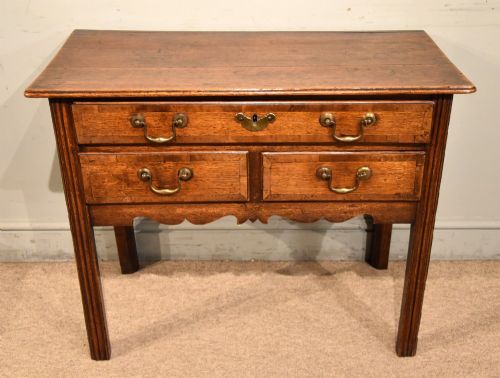
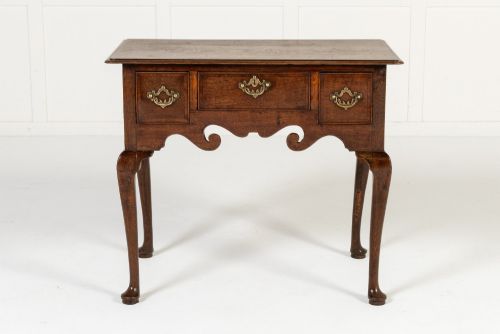
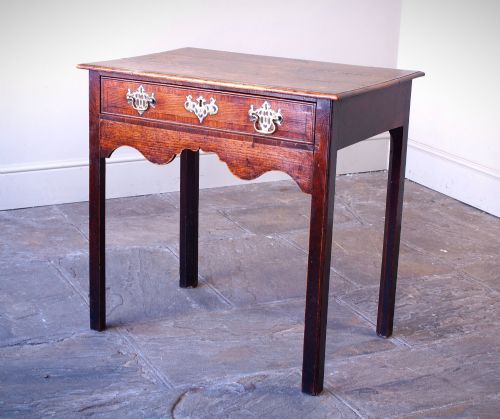
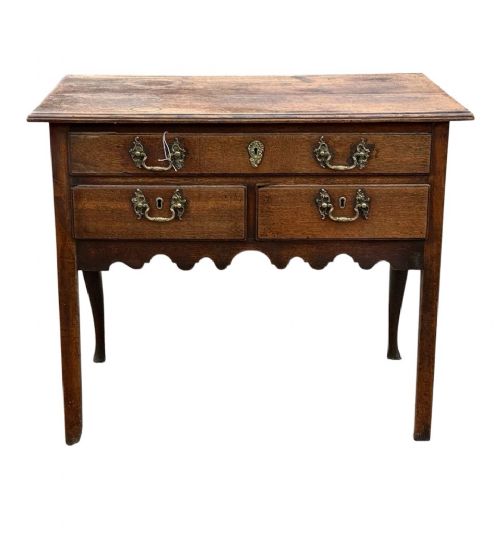


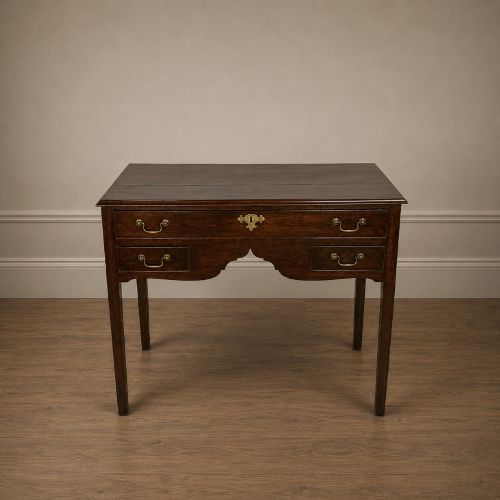
Carved Apron Oak Lowboy
A carved apron oak lowboy brings seventeenth and eighteenth century craftsmanship into a modern interior as a practical side table.
Carved Apron Oak Lowboy
A carved apron oak lowboy is a low side table or dresser base designed with drawers beneath the surface and decorative woodwork framing the lower edge. These pieces emerge predominantly from the eighteenth century, spanning the Georgian and Queen Anne periods, alongside regional Welsh vernacular examples.
Regional variations appear frequently, particularly through Welsh vernacular pieces that display distinct proportions and timber handling. Most examples serve today as functional hallway tables or bedside surfaces that retain centuries of domestic history.
How they were made
Maker construction relies heavily on solid oak, selected for its durability and prominent grain, shaped using traditional hand tools and joinery. Workshops integrated timber inlay and brass hardware, such as drop handles and drawer pulls, to complete the functional storage compartments.
Surface finishing involves natural wax polishing over bare timber, allowing the dark patination and grain depth to develop organically over centuries of use. Carved details around the lower apron showcase chisel work unique to each regional school of woodworking.
Listings span the late seventeenth century through the Georgian era, utilising solid oak, brass fittings, and occasional timber inlay.
What varies in quality
Quality rests upon the crispness of the carved apron detail and the integrity of the original oak timber. Pieces maintaining untouched surface patination and period brass hardware hold greater visual harmony than those with heavily restored or replaced elements.
Proportion and stance dictate the elegance of the silhouette, particularly where cabriole legs meet the lower rail. Master cabinetmakers balanced the weight of the drawers against slender leg geometry, creating pieces that feel resolved rather than heavy.
The Carved Apron Oak Lowboy Glossary
- Lowboy
- A small domestic table fitted with one or more rows of drawers, commonly used as a dressing table or side table during the seventeenth and eighteenth centuries.
- Apron
- The horizontal timber member beneath the table top or drawer frame, frequently shaped or carved in regional vernacular furniture.
- Cabriole leg
- A furniture leg featuring a double curve, typically swelling outward at the knee and tapering inward to a foot.
- Vernacular furniture
- Domestic pieces made by local craftsmen for regional use, displaying traditional local styles rather than metropolitan fashions.
- Patina
- The surface sheen and colour developed on timber over decades of handling, exposure to light, and application of wax.
Carved Apron Oak Lowboy: Frequently Asked Questions
What was a lowboy used for originally?
These tables served primarily as small dressing tables for grooming or as compact writing and serving surfaces in polite rooms.
Over time their utility shifted across households, functioning wherever a low surface with drawer storage was required.
How do I date an oak lowboy?
Dating relies on observing construction methods, timber patination, drawer dovetailing, and stylistic indicators such as leg shapes.
Comparing the hardware piercings and timber thickness against known period examples helps narrow the decade of manufacture.
Can I use a lowboy as a bedside table?
The compact proportions and drawer storage make these tables suitable for bedside use alongside higher contemporary beds.
Their open lower clearance and shallow depth allow them to fit comfortably without overwhelming smaller bedrooms.
What is the difference between Georgian and Welsh vernacular lowboys?
Georgian pieces generally follow formal metropolitan design rules with refined cabriole legs and restrained mouldings.
Welsh vernacular examples often exhibit bolder proportions, rustic timber selection, and distinctive local carving on the apron.