


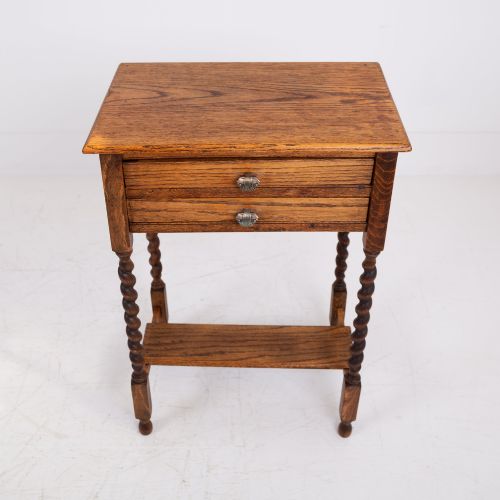
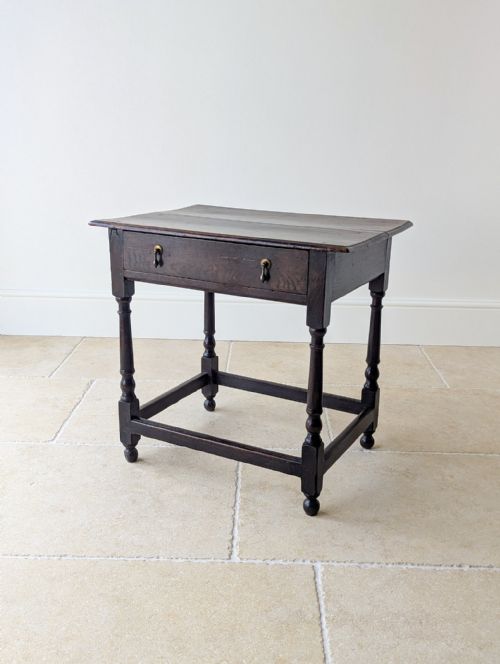
Oak Hall Table with Drawers
An oak hall table with drawers provides a practical surface and useful storage in an entrance, drawing on centuries of British cabinet-making tradition.
Oak Hall Table with Drawers
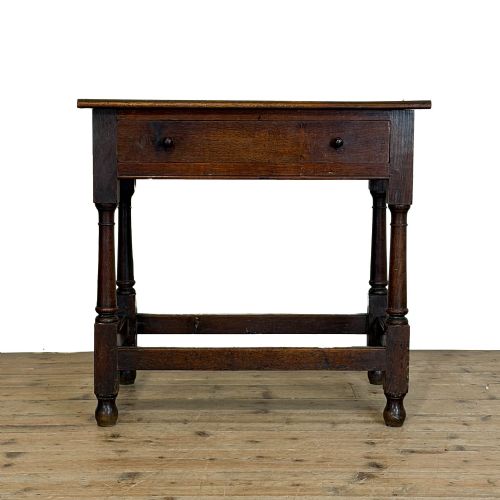
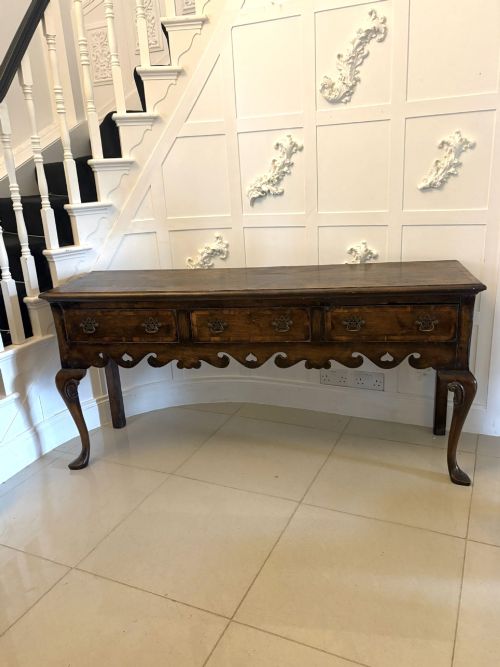
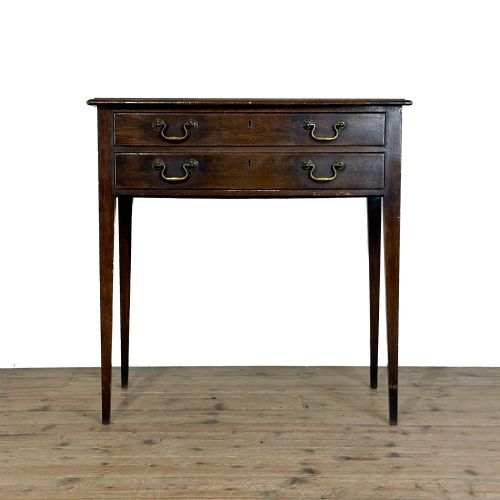
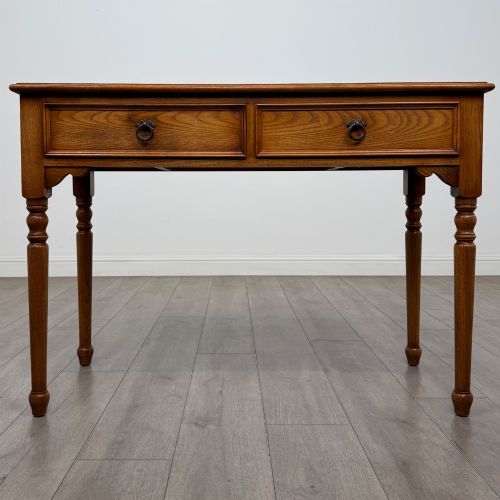
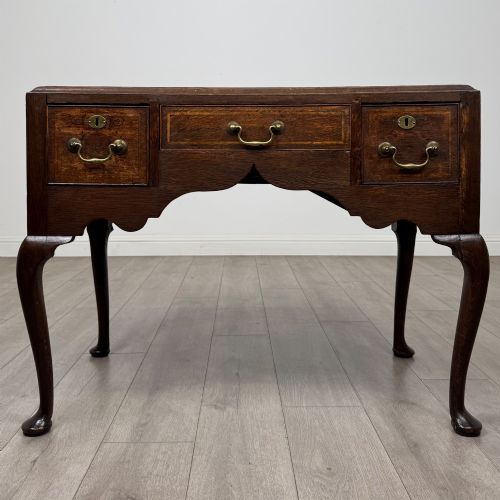
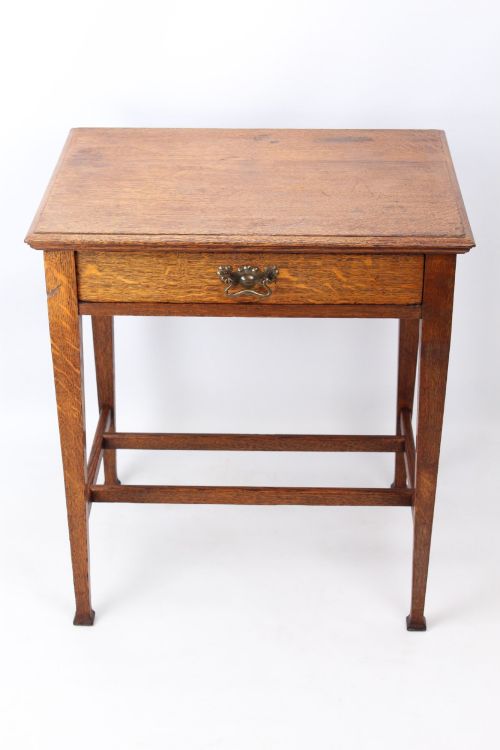
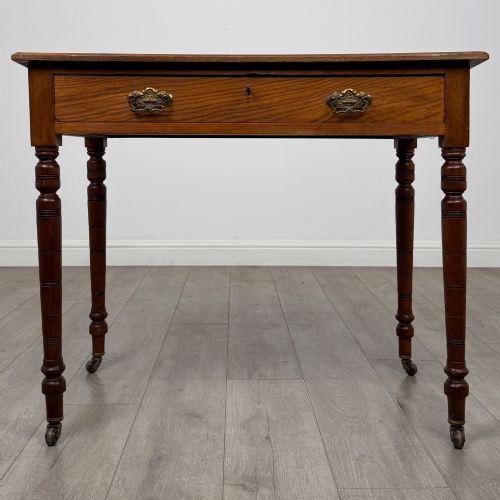
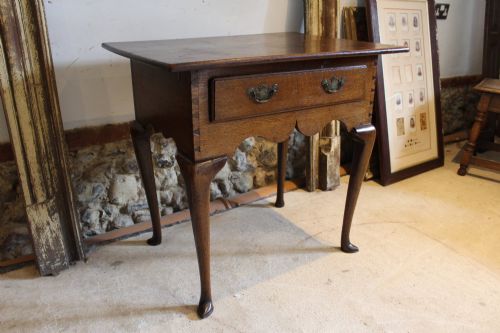
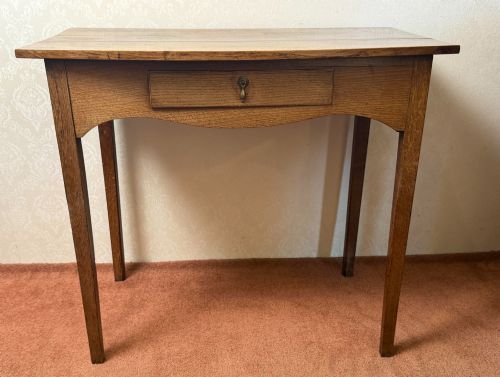
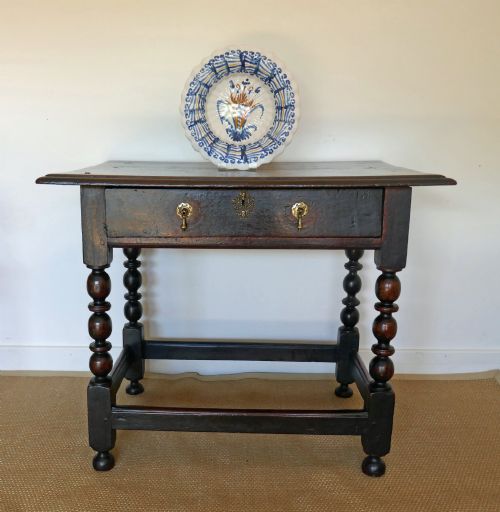
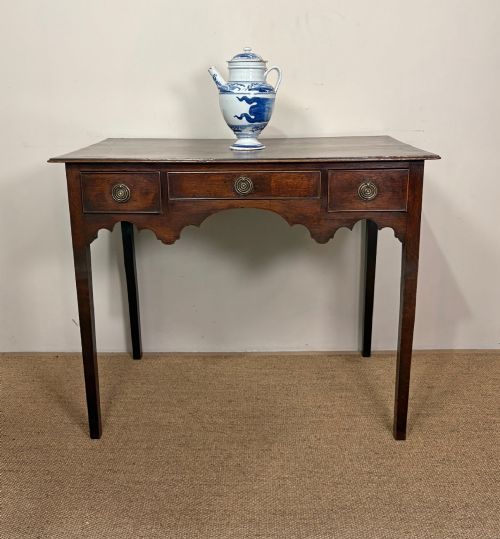
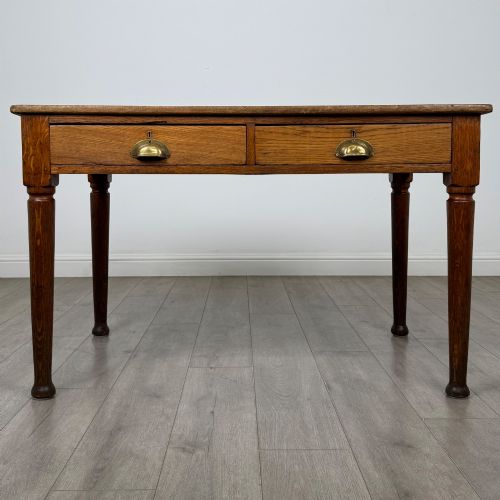
An oak hall table with drawers encompasses robust side tables, lowboys, writing desks, and narrow console surfaces designed for narrow thoroughfares and reception spaces. The pieces appearing here span from the 17th century through the Georgian era, the Victorian period, and into early twentieth-century revivals.
The most frequent examples encountered on this page date from the Georgian period and the 1920s, reflecting both provincial 18th-century country craftsmanship and later Jacobean revival output. Early forms often present as lowboys or dresser bases, while later iterations favour slim proportions suited to hallway placement.
Makers and makers' workshops throughout these periods utilised indigenous timber, adapting regional styles from simple English country designs to more ornate Gothic revival and Arts and Crafts interpretations.
Materials and construction
Carpenters relied primarily on solid oak, occasionally augmented by secondary timbers such as fruitwood, walnut, or mahogany, alongside brass and iron hardware for drawer pulls and handles. Drawer construction typically involved hand-cut dovetails, while frames utilised mortise and tenon joints secured with wooden pegs in earlier examples.
Surface ornamentation varied from geometric mouldings and cushion fronts to deep relief carving featuring motifs like the Green Man, particularly in Victorian Gothic revival and continental styles. Finishing involved traditional waxing or polishing that highlighted the natural grain and golden tones of the timber.
Listings feature oak hall tables spanning from the 17th century to the 1920s, incorporating brass, iron, walnut, and fruitwood elements.
Craftsmanship and proportion
Quality resides in the integrity of the construction, where hand-shaped joinery and well-fitted drawer linings distinguish master cabinet work from utilitarian regional output. Superior examples maintain crisp carving and balanced proportions that respect the natural limitations of heavy timber.
The choice of material also dictates distinction, as select cuts of golden oak or carefully figured grain elevate a piece above standard country furniture. Original hardware, untouched patination, and structural honesty set finer examples apart from heavily restored or later altered items.
Beresford & Hicks London
The Oak Hall Table with Drawers Glossary
- Lowboy
- A small table with one or more drawers, typically standing on four legs and originating in the late 17th or 18th century as a dressing or side table.
- Dresser base
- A lower sideboard or table section of a traditional dresser, featuring deep drawers and occasionally cupboards beneath the main surface.
- Dovetail
- A traditional interlocking joint used in drawer construction, prized for its tensile strength and resistance to being pulled apart.
- Cushion front
- A raised, rounded drawer front profile popular in the 17th century, creating a pronounced three-dimensional geometric effect across the facade.
- Green Man
- A sculptural architectural motif representing a human face entwined with foliage, frequently carved into the woodwork of Victorian and revival furniture.
Oak Hall Table with Drawers: Frequently Asked Questions
How do I date an oak hall table?
Dating relies upon examining the construction methods, such as hand-cut dovetails, peg joinery, and tool marks left by the maker. The style of drawer moulding, handles, and leg turnings also provides clear chronological markers.
Early pieces from the 17th century display heavier framing and geometric mouldings, whereas Georgian and later revival pieces exhibit lighter proportions and refined cabriole or straight legs.
Were these tables meant for hallways originally?
Many early tables functioned as side tables, lowboys, or writing desks rather than designated hallway furniture. The narrow proportions and drawer storage made them easily adaptable for entrance spaces over subsequent generations.
Victorian and Edwardian makers eventually began producing dedicated hall stands and narrow console tables specifically tailored for greeting guests and storing correspondence.
How should I care for antique oak?
Maintain antique oak by applying a traditional beeswax polish sparingly and buffing with a soft cloth to nourish the wood. Avoid placing the table near direct heat sources or strong sunlight, which can dry out the timber and cause splitting.
Using coasters and felt pads protects the historic surface from moisture rings and scratching during daily use in a busy entrance.
What is the difference between Georgian and revival pieces?
Genuine Georgian pieces possess the inherent wear, material density, and construction traits characteristic of 18th-century provincial workshops. Revival pieces, common from the 1920s, imitate these earlier styles using period machinery alongside traditional hand methods.
Examining the interior drawer boards, timber shrinkage, and patina helps separate authentic period items from later 20th-century interpretations.